
Table of contents
Open Table of contents
Lingyin Temple: 1700 Years of Buddhist History
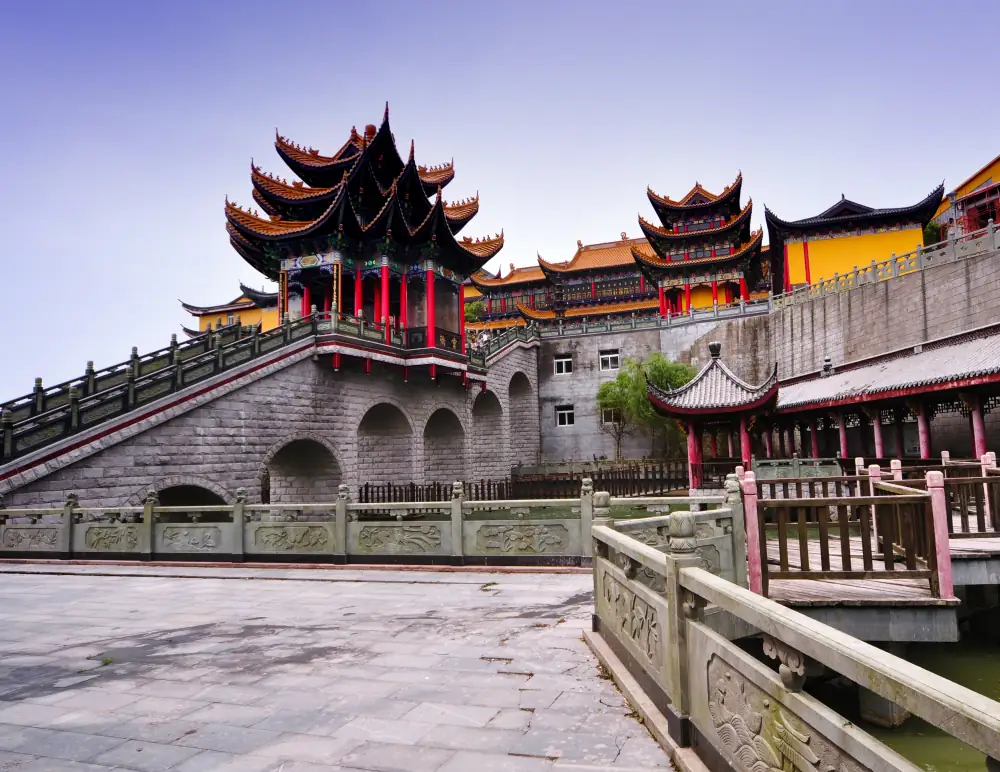
Lingyin Temple (灵隐寺, Líng Yǐn Sì) translates as “Temple of the Soul’s Retreat” — a name that suggests the mood of the place perfectly. Nestled in forested hills 5km west of Hangzhou’s famous West Lake, the temple was founded in 326 AD by an Indian Buddhist monk named Huili who, according to tradition, looked at the forested valley and declared that this must be a place where immortals dwell.
For seventeen centuries, Lingyin has been a major centre of Chinese Buddhism. It has been destroyed and rebuilt multiple times — the existing main halls date primarily to the Qing dynasty — and at its height housed three thousand monks within its extensive complex of halls and pavilions. Zhou Enlai, China’s first Premier, reportedly intervened personally to save the temple from destruction during the Cultural Revolution.
Today Lingyin is one of the most visited Buddhist temples in China, receiving several million visitors annually. This popularity means it can be genuinely crowded, particularly on weekends and during Buddhist festivals. But the temple’s setting — deep green hills, clear stream running alongside the approach path, the smell of incense and cedar — maintains a sense of sanctity even in crowds.
Peak Flying Clouds: The Stone Buddha Grottos
Before entering the temple, visitors pass through the dramatic limestone cliff face of Feilai Feng (飞来峰) — Peak Flying Clouds. The cliff is honeycombed with 345 Buddhist relief carvings dating from the Five Dynasties through Yuan periods (10th–14th centuries). These carvings are considered among the finest examples of Buddhist rock art in eastern China.
The Most Famous Carvings
The Laughing Buddha (布袋和尚): A large relief carving of the fat, laughing Maitreya Buddha — the popular Chinese image of “the Laughing Buddha” — set in a deep recess with attendant figures. This is among the most beloved Buddhist images in China.
The Qinghui Grotto (青林洞): A cave penetrating deep into the cliff, its walls lined with smaller carvings. The cave’s interior lighting changes the quality of the stone and gives the carvings an otherworldly appearance.
Song Dynasty Carvings: The oldest intact carvings date to the Northern Song period and show stylistic influences from India and Central Asia transmitted through the Silk Road Buddhist networks.
Yuan Dynasty Tantric Carvings: The Yuan dynasty additions include distinctive Tibetan Buddhist iconographic influences, reflecting the Mongolian rulers’ patronage of Tibetan Buddhism.
Best Way to Experience the Grottos
Walking slowly along the cliff face and into the caves takes about 45–60 minutes. Audio guides are available at the entrance (¥30) and provide context for the main carvings. English signage is adequate but the audio guide adds considerable depth.
The early morning light striking the west-facing cliff face from 8–10 AM gives the best natural illumination for photography. Later in the day, the cliff falls into shadow and the carvings are harder to read.
The Temple Complex
Hall of the Heavenly Kings (天王殿)
The first main hall encountered after the stone grottos. Inside is the large Maitreya Buddha flanked by the Four Heavenly Kings — fierce protective deities. The gilded figures are impressively large.
Grand Hall of the Great Sage (大雄宝殿)
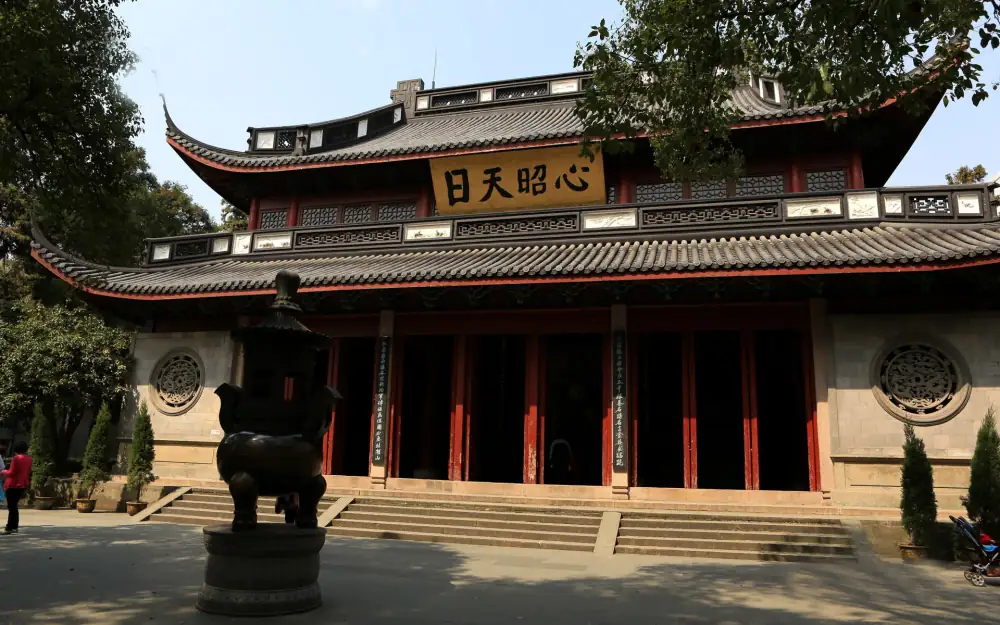
The main hall is one of the largest wooden Buddhist halls in China, rebuilt in the early Qing dynasty and impressively scaled. Inside, the seated Sakyamuni Buddha is 9.1 metres tall and carved from 24 pieces of camphor wood. The gold-leaf gilding catches the light filtering from high windows.
The hall is an active place of worship. Monks perform morning chanting rituals at 6 AM and evening chanting at 5 PM. Observing these rituals (respectfully, from the side aisles) is one of the more profound experiences available at the temple.
Medicine Buddha Hall (药师殿)
The second major hall contains the Medicine Buddha (Bhaisajyaguru) — dark blue-skinned, carrying a lapis lazuli medicine bowl. This hall is less visited than the main hall and somewhat more contemplative.
Pavilion of Guanyin (观音殿)
A hall dedicated to Guanyin, the Bodhisattva of Compassion. This is where women and families most often light incense and pray, particularly for matters of health and childbirth.
Lodging and Retreat Facilities
Lingyin Temple maintains a Buddhist retreat programme where qualified practitioners can spend several days in intensive study and meditation. This is not a tourist programme and requires application in advance through Buddhist networks. Contact the temple directly if interested.
Tickets and Opening Hours (2026)
Feilai Feng Scenic Area (includes grottos access): ¥45 Lingyin Temple (main halls): ¥30 Combined ticket: ¥75
Special note: You must enter the Feilai Feng scenic area to reach the temple — you cannot bypass it and access the temple independently. The combined ticket is the practical choice.
Opening hours: 7:00 AM – 6:00 PM daily (7:30 PM in summer) Morning ritual: Main prayer rituals at 6:00–7:00 AM (temple opens for worshippers before tourist hours)
Crowd Management
Lingyin Temple has a ticketed entry limit. On peak days (weekends, national holidays, Buddhist festivals — particularly during the Lunar New Year period), tickets sell out online before the day begins. Book through the official WeChat mini-program or third-party platforms in advance.
The morning slot (7–10 AM) is consistently the most serene and best-lit period for both the grottos and the temple interior.
Seasonal Highlights
Spring (February–April)
Plum blossoms bloom in the valley in February. Cherry trees follow in March. The forest above the temple turns bright green with new growth. Spring rain creates atmospheric mist in the valleys.
Summer (June–August)
Hot and humid by Hangzhou standards (30–38°C), but the forest provides relative coolness. The stream running alongside the Feilai Feng path is particularly pleasant in summer. Cicadas fill the air with their distinctive sound.
Autumn (October–November)
The best season for visiting. Temperatures drop to 15–25°C, foliage colours develop across the hills, and crowds thin after the October Golden Week. The autumn light in the forest is particularly beautiful.
Winter (December–February)
The temple in occasional snow is extraordinarily atmospheric. Reduced crowds. The Lunar New Year period (typically January–February) brings large numbers of worshippers — this is a major time for temple visits in Chinese Buddhism.
Getting to Lingyin Temple
Bus from West Lake
Bus routes Y1, Y2, and several others connect West Lake’s Huancheng North Road bus stops to Lingyin Temple. Journey approximately 20–30 minutes. Fare ¥1–2.
Taxi/Didi
From Hangzhou West Railway Station: 15–20 minutes, ¥25–40. From West Lake (Quyuan Fenghe area): 10 minutes, ¥15–20. From Hangzhou East Station: approximately 40 minutes, ¥60–80.
Cycling
West Lake is a famous cycling destination, and a path runs from the western West Lake shore area to Lingyin through the North Peak area. The ride is pleasant through tree-lined paths and takes about 30 minutes by electric bike.
Combining Lingyin Temple with Other Hangzhou Attractions
Lingyin is best combined with the West Lake area for a full Hangzhou day.
West Lake (西湖): A UNESCO World Heritage landscape of causeways, islands, and pagodas. 5km east of Lingyin. The Broken Bridge (断桥) and Su Causeway (苏堤) are must-visit areas. Boat hire from the main pier ¥50–80. Free access to lakeside areas.
Longjing Tea Village (龙井村): About 4km southeast of Lingyin, the village surrounded by famous Dragon Well tea plantations offers tea-picking experiences (April–May) and tastings. A beautiful detour for tea lovers.
North Peak Aerial Tramway (北高峰缆车): Near Lingyin, a small cable car to the North Peak summit provides panoramic views over West Lake, Lingyin valley, and surrounding hills. Entry ¥50 return.
Leifeng Pagoda (雷峰塔): The partially rebuilt pagoda on the southern shore of West Lake, famous in Chinese legend. Good sunset views. Entry ¥40.
Practical Tips
Dress code: There is no strict dress code but clothing covering shoulders and knees shows appropriate respect. A light scarf is useful for women.
Photography: Permitted throughout the temple and grottos except during active rituals. The staff generally guide you on any restrictions in the moment.
Incense: Vendors sell incense sticks outside the temple for ¥10–30 bundles. Burning incense is a core part of Chinese Buddhist practice and visiting without participating is fine, but participating even in a nominal way is appreciated by temple staff.
Language: English signage is good throughout. Most young temple staff have some basic English. The audio guide is available in English.
Shoe caution: Temple floors can be polished smooth and become slippery with foot traffic. Flat-soled shoes are recommended.