
Hangzhou’s cuisine is Zhejiang cuisine, one of the Eight Great Traditions of Chinese cooking, and it’s characterised by ingredients that are fresh, preparations that are restrained, and flavours that are subtly sweet-savoury rather than bold and aggressive. This is not the food of the north or of Sichuan. If you come to Hangzhou expecting heat, spice, or robust seasoning, adjust your expectations. This is refinement.
Table of contents
Open Table of contents
West Lake Vinegar Fish (西湖醋鱼, Xī Hú Cù Yú)
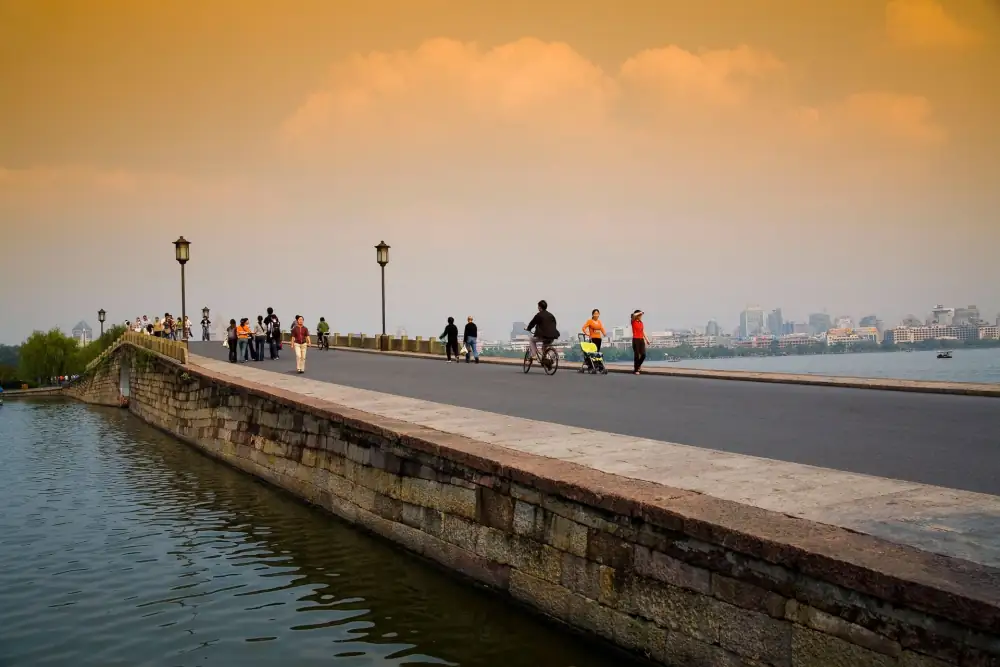
The dish most associated with Hangzhou is a whole freshwater grass carp cooked in sweet-and-sour sauce — the vinegar providing sharpness, sugar and soy providing depth, ginger cutting the fishiness. The sauce glazes the fish with a slight stickiness.
The fish should taste of the lake — fresh, clean, not muddy. The sauce should balance sharp and sweet without either dominating. At the best versions, the flesh is just barely cooked through and slips off the bone in clean pieces.
Where to eat it: Lou Wai Lou (楼外楼) restaurant at West Lake is the most famous address for this dish. It’s been operating since 1848 and is a genuine Hangzhou institution. The restaurant overlooks the lake from the Gu Shan hillside. Expect to pay ¥120-180 for the whole fish. It is slightly expensive and slightly tourist-facing — but it’s also genuinely the real thing, which not all famous restaurants can claim.
The tourist trap versions are in the cheap restaurants around the Hefang Street area charging ¥40-60 for a version made with frozen fish. The difference is significant.
Dongpo Pork (东坡肉, Dōngpō Ròu)
Dongpo Pork is named after Su Dongpo (Su Shi), the Song dynasty poet and governor of Hangzhou, who supposedly created or perfected this method. The pork belly is tied with string to hold its shape, braised slowly in Shaoxing rice wine (绍兴黄酒), soy sauce, rock sugar, and spices until the fat is completely transformed — yielding, gelatinous, deeply flavoured.
It’s served in individual clay or ceramic vessels, just the cubed pork belly in its rich braising liquid. You eat it over plain white rice. The fat is the point — if you’re someone who trims fat from pork, this dish is not for you. If you appreciate what long-braised pork fat does, this is among the best versions of it in China.
Price: ¥65-100 per individual portion (about 150g of pork) at Hangzhou restaurants. Lou Wai Lou again does a reliable version. Zhiweiguan (知味观) on Renhe Road is another traditional address.
What tourist versions get wrong: Insufficient braising time. The fat needs 2-3 hours of slow cooking to fully convert. Rushed versions have fat that’s merely soft rather than completely yielding. If you press with chopsticks and it doesn’t dissolve, it wasn’t cooked long enough.
Beggar’s Chicken (叫化鸡, Jiàohuā Jī)
Beggar’s Chicken is the theatrical dish — a whole chicken stuffed with mushrooms, ham, and preserved vegetables, wrapped in lotus leaves, then encased in clay and baked for several hours. When served at your table, the clay shell is broken with a mallet.
The steam inside the clay-and-lotus wrapping has nowhere to go, so the chicken essentially steams in its own juices and the aromatic flavour of the lotus leaf. The meat is extremely tender, the skin impossibly soft, the interior fragrant.
Where to eat it: This dish requires advance ordering at most restaurants — call ahead, or book online. Many traditional Hangzhou restaurants offer it. Tianxianglou (天香楼) is a reliable address. Cost around ¥180-350 for the full chicken, feeding 2-4 people.
The tourist area shortcut versions wrapped in foil instead of lotus leaf and not actually baked in clay exist — they’re fine but they’re not the same experience.
Longjing Tea Cuisine (龙井虾仁)
Hangzhou is the home of Longjing tea (龙井茶, Dragonwell tea), China’s most prized green tea, grown in the hills west of the city. What makes Hangzhou food unique is the practice of incorporating fresh Longjing tea leaves into cooking.
Longjing shrimp (龙井虾仁) is the most famous expression of this — freshwater shrimp stir-fried with new spring Longjing tea leaves, minimal seasoning. The tea leaves impart a faint grassiness and cut the richness of the shrimp. The dish relies entirely on ingredient quality: the shrimp must be live river shrimp, the tea must be the spring harvest. ¥90-180 per portion.
Tea-smoked duck (茶熏鸭) — duck smoked over Longjing tea leaves and camphor wood. The tea smoke gives a subtle floral character to the skin.
Where to find tea cuisine: Restaurants near the Longjing Village (龙井村) and the Tea Museum in the western lake area offer the most serious versions. The village itself has restaurant terraces where you can eat overlooking the tea fields.
Shaoxing Wine in Cooking
Hangzhou and the wider Zhejiang region use Shaoxing rice wine (绍兴黄酒) in cooking the way French cuisine uses white wine — as a base for braising, for deglazing, for flavour depth. The wine is amber, slightly sweet, and nuttily flavoured. It comes up repeatedly in dishes.
Drunken chicken (醉鸡, zuìjī) — cold poached chicken marinated in Shaoxing wine for 24+ hours. Served as a cold starter. ¥35-65 per plate.
Shaoxing wine-braised pork — a variation on the Dongpo theme with more wine, less sugar.
You can also drink Shaoxing wine warm as an accompaniment to a meal. Ask for re huang jiu (热黄酒, warm yellow rice wine) at traditional Hangzhou restaurants.
Hefang Street Area: Historical Snacks
Hefang Street (河坊街) near the Drum Tower is a pedestrian food and souvenir street that’s somewhat touristy but has some genuinely traditional snacks.
Zongzi (粽子) — sticky rice dumplings wrapped in bamboo leaves. The Zhejiang version is filled with pork belly and salted egg yolk, wrapped in a distinctive flat shape. ¥8-20 each.
Xi shi tofu (西施豆腐) — soft tofu in a clear sweet-and-sour sauce, named after the legendary beauty Xi Shi who was born nearby. ¥15-25.
Ding sheng gao (定胜糕) — a pink and white rice cake steamed in a decorative mould. Slightly sweet, slightly chewy. ¥5-8 each. A traditional Hangzhou snack from the Song dynasty.
Stinky tofu (臭豆腐) — fermented tofu, deep-fried, served with sweet chilli sauce. It smells alarming and tastes excellent. ¥10-18.
Practical Hangzhou Food Notes
Eating near West Lake: The restaurants immediately adjacent to the lake charge a significant premium for the view. Lou Wai Lou is expensive but legitimate; the other lakeside options are expensive and not worth it. For better value, head to Nanshan Road or the Guan Xiang Tang area.
Tea purchasing: If buying Longjing tea, visit the tea farmers directly in Longjing Village rather than tourist shops. Expect to pay ¥80-400 per 50g for genuine pre-Qingming (明前) spring harvest. The ¥30 tins sold everywhere near tourist sights are not Longjing.
When to visit for food: Longjing shrimp is strictly seasonal — only possible April-May when new tea leaves are harvested and river shrimp are abundant. This is the best time to eat in Hangzhou.
Budget: Breakfast ¥10-25. Local lunch ¥30-60. Traditional Hangzhou restaurant dinner ¥120-250 per person. Street snacks ¥5-25 per item.