
Marco Polo called Hangzhou “the finest and most splendid city in the world.” He may have been exaggerating, but Hangzhou’s reputation in Chinese culture is equivalent: it appears in classical poetry, painting, and literature as the standard for beauty. The city centers on West Lake — a 6km-wide UNESCO World Heritage lake ringed by pagodas, gardens, forested hills, and causeways that cross it like calligraphy strokes. All of this is about 1 hour from Shanghai by high-speed train.
Table of contents
Open Table of contents
Getting There from Shanghai
High-speed train from Shanghai Hongqiao: Departures roughly every 15–30 minutes from early morning. Journey time: 45–55 minutes. Cost: ¥73–78 second class.
Also possible from Shanghai Station or Shanghai South Station, but Hongqiao is most central for most visitors staying in Jing’an or Pudong.
Which Hangzhou station: Hangzhou East (杭州东) is the main high-speed station, well-connected to the city by metro. Hangzhou Station is the older facility near the western part of the city, closer to West Lake. Either works — take the metro from whichever side.
Metro to West Lake area: From Hangzhou East, Metro Line 1 to Longxiang Bridge (龙翔桥) station, then walk 10 minutes to the lake. Takes 30–35 minutes total.
Taxi from Hangzhou East: ¥30–50, 20–30 minutes to the West Lake area depending on traffic.
West Lake: How to See It
West Lake is large enough that you need to make choices about how to spend your time on it. The circumference is about 15km — possible to cycle in 2 hours or walk in 4–5 hours, but for a day trip you want to focus on the best sections.
The Su Causeway and Bai Causeway
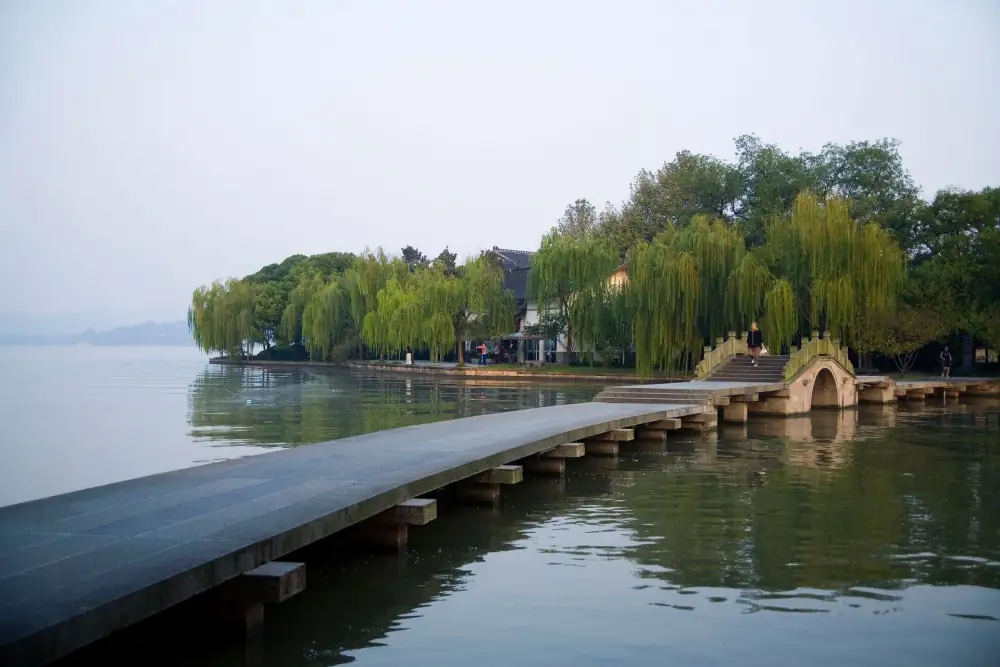
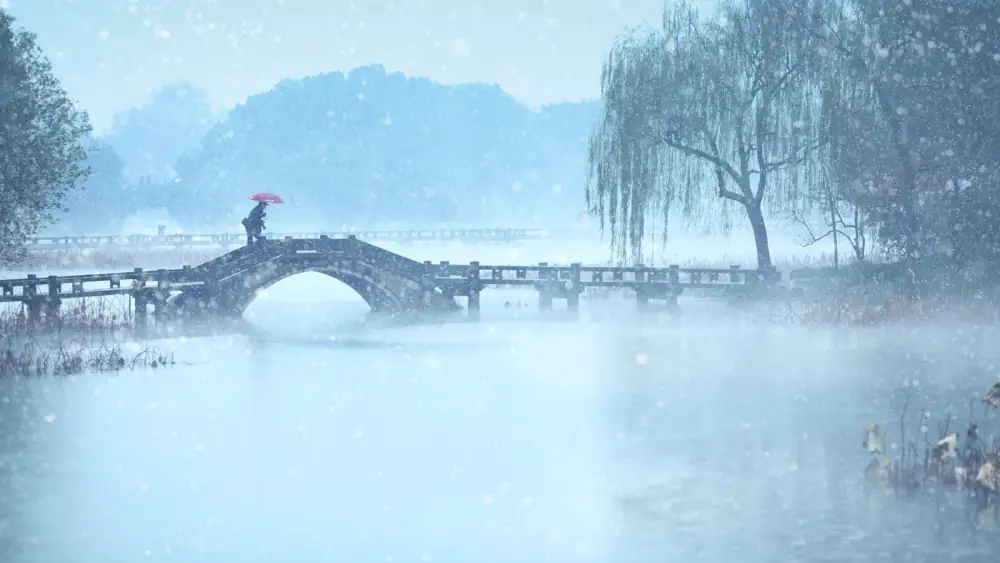
Two ancient causeways cross the lake, named after Tang and Song Dynasty poets (Bai Juyi and Su Dongpo) who served as governors of Hangzhou and built the causeways as flood control projects. Walking the Su Causeway from south to north takes about 45 minutes and is the best way to experience the lake from water level — willows trail into the water, stone arched bridges cross side ponds, and fishermen sit on the bank.
Bai Causeway is shorter and connects to Solitary Hill Island (孤山), which has the Zhejiang Provincial Museum (free) and the historic Crane Pavilion area.
Boat Trip
Tourist boats run across the lake from several points, stopping at the Three Pools Mirroring the Moon (三潭印月) island in the middle of the lake — an island ringed by stone lanterns that creates reflections at night, one of the “Ten Scenes of West Lake.”
Boat tickets: ¥45–70 depending on route. Purchase at the docks along the northern or southern banks. The circuit takes 45–60 minutes.
By Bicycle
Electric bikes and regular bicycle rental is available at several points around the lake (¥5–20 per hour). This is excellent for covering the full circumference comfortably and at your own pace.
The Southern Shore — Leifeng Pagoda Area
The southern portion of the lake is quieter and has the best views across open water toward the hills. Leifeng Pagoda (¥40) stands on the southern bank and was originally built in 975 AD, collapsed in 1924, and rebuilt in 2002 in a faithful reconstruction. The elevator up provides panoramic views and the pagoda at sunset, reflected in the lake, is one of Hangzhou’s signature images.
Practical tip: Position yourself near Leifeng Pagoda about 30 minutes before sunset. The light on the lake in the last half-hour before dark is exceptional.
Longjing Tea Village
Twenty minutes by bus or taxi from West Lake’s western shore, up into the hills along the lake, is Longjing village — the birthplace of Dragon Well tea (龙井茶), arguably China’s most famous and most expensive green tea.
The village is an active tea-growing community where farmers tend steep terraced hillside plots. In spring (late March–early April), the harvest period, you can watch the hand-picking and pan-firing process in village kitchens. Outside harvest season, the village is quieter but still functions as a working tea community.
What to do:
- Buy tea directly from village farmers or the cooperative — you’ll be offered multiple tastings. Prices vary enormously by grade. A reasonable gift-quality tea runs ¥80–200 per 50g.
- Walk the tea fields on the hillside trails above the village (free, just walk up)
- Visit a family tea house for a proper tasting session (free or ¥20–40 depending on the family)
Beware: Tea sellers in the village adjacent to the main tourist entry will try to sell you expensive tea using high-pressure tactics. Walk further into the village to find families who sell at more honest prices and are more interested in conversation.
Getting there: Bus 27 from near the lake shore to Longjing village (20–30 minutes, ¥2), or Didi (¥20–30).
The Pagodas and Temples
Beyond Leifeng, Hangzhou has several other sites worth brief visits:
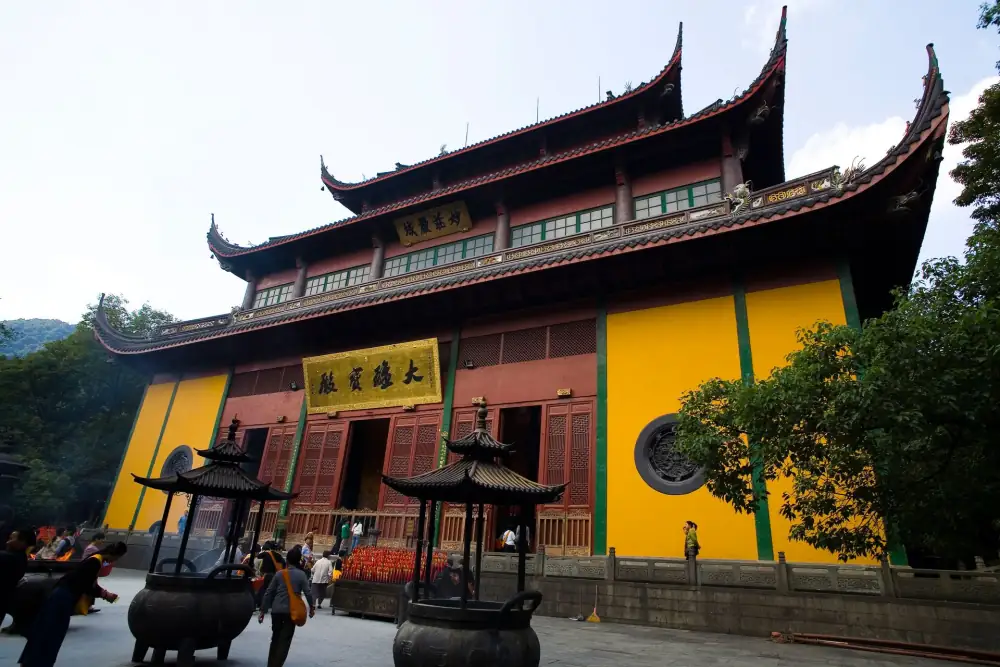
Lingyin Temple (灵隐寺): One of China’s most important Buddhist temples, set deep in a forested valley with a stream running past. The main hall houses one of China’s largest indoor Buddha statues (24.8m gilded camphor wood). Access requires both a scenic area fee (¥45) and temple entry (¥30). Allow 1.5–2 hours.
The Fei Lai Feng Stone Carvings: The rockface adjacent to Lingyin Temple is carved with hundreds of Buddhist figures from the 10th–14th centuries. Covered under the general Lingyin scenic ticket.
Note: Lingyin is a 30-minute bus ride from the lake’s western shore. Including it in a single day requires sacrificing Longjing or an early start.
Where to Eat
West Lake Fish in Vinegar Sauce (西湖醋鱼)
The dish that defines Hangzhou cuisine. Grass carp from the lake, cooked and served with a sweet-vinegar sauce. It sounds simple and it is — the quality depends entirely on the freshness of the fish and the finesse of the sauce. Every proper Hangzhou restaurant serves it (¥60–150 depending on fish size).
Lou Wai Lou Restaurant (楼外楼): The most famous Hangzhou restaurant, on the lakeside at Solitary Hill. Has been serving West Lake fish since 1848. Expensive by local standards (¥200+ per person) but the setting is extraordinary and the food is genuinely good.
Alternative: Mid-range Hangzhou cuisine restaurants along the south shore or in the Nanshan Road area (南山路) are half the price with similar quality.
Dongpo Pork (东坡肉)
Rich braised pork belly named after poet Su Dongpo, who supposedly invented it while governor. Fat and lean layers alternate, cooked until the fat is transparent and the meat falls apart. Every Hangzhou restaurant has it. ¥30–60 per serving.
Dragon Well Tea and Simple Meals at Longjing Village
Several village tea houses in Longjing serve simple Hangzhou-style lunches alongside their tea — steamed fish, bamboo shoot dishes, vegetable stir-fries. Budget ¥60–100 per person.
Day Trip Itinerary
8:30am: Depart Shanghai Hongqiao, arrive Hangzhou East ~9:30am 10:00am: West Lake arrival. Walk Su Causeway toward Solitary Hill. 11:30am: Boat trip to Three Pools Mirroring the Moon and back. 1:00pm: Lunch at a lakeside restaurant (West Lake fish). 2:30pm: Bus to Longjing tea village. Tea tasting, walk the fields. 4:30pm: Return to lake, head toward Leifeng Pagoda. 5:30pm: Watch sunset from Leifeng area or nearby pavilion. 6:30pm: Dinner at Nanshan Road restaurants. 8:00pm: Depart Hangzhou East back to Shanghai.
The day is full but not rushed. The West Lake in good weather and evening light genuinely earns its reputation.