
Xingyi (兴义) sits in the southwestern corner of Guizhou Province, where the plateau begins to break apart into dramatic karst formations before descending toward the Yunnan border. It’s the capital of Qianxinan Buyi and Miao Autonomous Prefecture (黔西南布依族苗族自治州) — a jurisdiction that’s a mouthful in English and reflects the ethnic complexity of the region.
Two things make Xingyi exceptional. The first is Wanfenglin (万峰林, “Forest of Ten Thousand Peaks”) — a karst landscape of extraordinary density and scale, where thousands of conical limestone peaks rise from an agricultural plain in a panorama that dwarfs even Guilin’s Li River valley. The second is Maling River Canyon (马岭河峡谷), a 20km gorge where the Maling River has carved through the karst plateau to a depth of 150–280 meters, creating a hidden world of waterfalls, swimming holes, and vertical cliff faces. Together they make a compelling case for Xingyi as one of Guizhou’s most underrated destinations.
Table of contents
Open Table of contents
Getting to Xingyi
By air:
- Xingyi Wanfeng Airport (兴义万峰机场): Direct flights from Guiyang (50 minutes), Kunming (50 minutes), Chengdu (1.5 hours), Guangzhou (1.5 hours), and Beijing (2.5 hours)
- The airport is about 10km from the city center; taxis ¥30–40
By high-speed train:
- Xingyi is now connected to the national high-speed rail network via the Guiyang-Nanning high-speed railway
- From Guiyang: About 2 hours; ¥120–180
- From Nanning (Guangxi): About 2.5 hours; ¥150–200
By bus:
- From Guiyang: About 5–6 hours by express bus; ¥100–150
- From Kunming: About 4–5 hours (via G320)
Wanfenglin (万峰林) — Forest of Ten Thousand Peaks
Wanfenglin is the more famous of Xingyi’s two major natural attractions, and it lives up to the hype. The landscape consists of over 20,000 individual karst peaks — smooth-sided, typically 60–150 meters high — rising from a flat valley floor scattered with rice paddies, vegetable gardens, and Buyi minority villages. The density of peaks is what’s remarkable: this isn’t the isolated dramatic peaks of Guilin but a continuous sea of them extending to every horizon.
Getting there from Xingyi: Bus from the city center (¥8–10, 30 minutes), or taxi (¥20–30 one-way). The scenic area is east of the city.
Entry fee: ¥75 per person
Opening hours: 8:00am–6:00pm
Two viewing areas:
East Wanfenglin (东峰林): The main and most dramatic viewing area. The signature experience is cycling through the valley between the peaks — electric bikes are available to rent at the entrance for ¥50–80/day — on a network of dedicated paths that pass through Buyi villages, past working rice paddies, and between rows of karst peaks. The cycling circuit is about 15km.
West Wanfenglin (西峰林): Less visited and more rugged; the peaks are closer together and the valley paths more irregular. Good for photography and those wanting to escape the crowds that gather at the main East viewing platforms.
Best viewpoints:
- Jianshan Terrace (剑山台): A high platform with panoramic views across the entire peak forest; particularly spectacular at sunset when the last light catches the limestone tops
- Wanfenghu (万峰湖) viewpoint: The reservoir created by a dam downstream provides reflections of the peaks — best in early morning
Buyi Villages: The valley between the peaks is dotted with Buyi minority villages (布依族寨子) whose distinctive architecture — stone-walled houses with slate roofs — blends into the karst landscape. The villages are inhabited and semi-functioning agricultural communities; cycling through them is one of the best aspects of the Wanfenglin experience.
Maling River Canyon (马岭河峡谷)
The Maling River Canyon is the geological counterpart to Wanfenglin — where Wanfenglin is about peaks rising above you, the canyon is about the same limestone plateau collapsing below. The Maling River has cut a gorge 280 meters deep through the karst plateau, creating what feels like a secret world invisible from the surface.
The canyon walk:
- The standard tourist circuit descends from the plateau rim into the canyon, follows the river for about 6km, and ascends by a different route back to the rim
- Total time: 3–4 hours for the full circuit
- The descent involves steep stone steps cut into the cliff face — physically demanding going down; even more so coming up on the return
Waterfalls: The canyon walls are studded with waterfalls — more than 100 are counted in the scenic area. The most dramatic are fed by springs emerging from the canyon walls rather than surface rivers, creating waterfalls that appear from mid-cliff with no apparent source. The flow rate peaks in June–August after heavy rain.
Suspension bridges: Multiple suspension bridges cross the gorge at various heights, providing different perspectives on the canyon and its scale.
The river itself: The Maling River runs crystal-clear green at the canyon bottom (it’s the discharge point for underground river systems from the karst plateau above, naturally filtered through limestone). Swimming is possible at the deeper pools in summer — local guides know the best spots.
Entry fee: ¥100 per person
Opening hours: 7:30am–5:30pm
Physical note: The canyon descent and ascent involves about 400 meters of elevation change; good footwear essential; not recommended for those with knee problems.
The Old Town & Daily Life
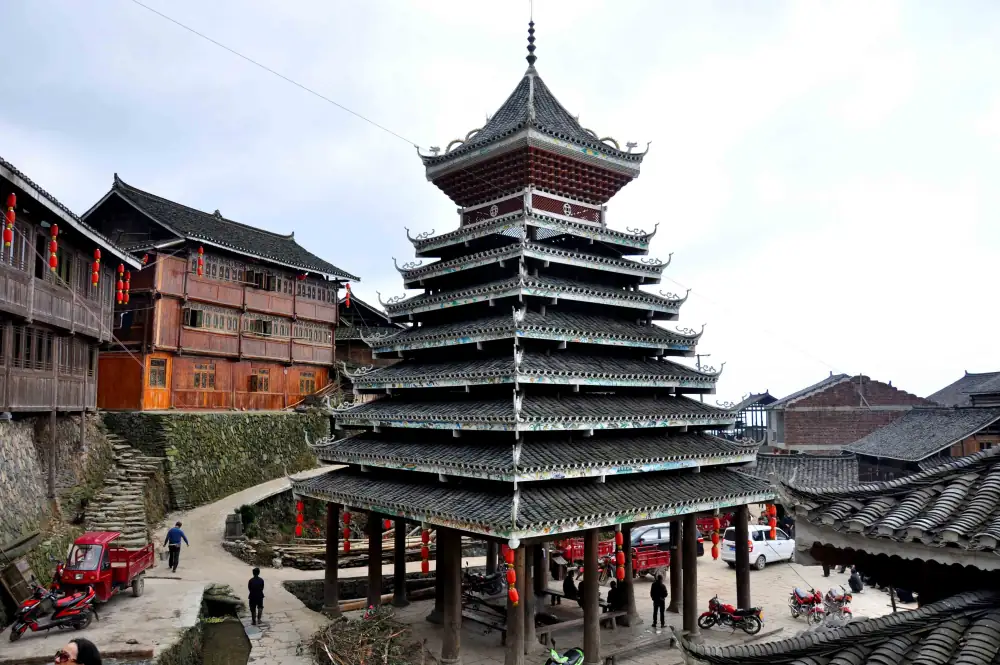
Xingyi’s old town area, while less spectacular than the natural sights, has a functional charm that rewards an afternoon walk:
Central market (中心市场): A daily covered market selling local produce, dried mushrooms, Guizhou snacks, and minority handicrafts. The best time is morning (7–10am) when local farmers bring in fresh produce.
Xingyi Museum (兴义博物馆): Houses a significant collection of Guizhou minority artifacts, including Buyi and Miao traditional dress, silver jewelry, and agricultural tools. The natural history section covers the geology of the Wanfenglin karst. Entry free.
Minority cultural performances: Several restaurants and tea houses in the old town area offer evening performances of Buyi and Miao music and dance — quality varies; ask your hotel for current recommendations.
Buyi Minority Culture (布依族)
The Buyi people are the largest ethnic minority in southwestern Guizhou, and the villages in the Wanfenglin valley and surrounding countryside preserve aspects of their traditional culture — textile weaving, architectural style, and festival traditions.
Buyi handicrafts:
- Wax-resist dyeing (蜡染): Traditional fabric dyeing using beeswax to resist indigo dye; the resulting geometric patterns are characteristic of Buyi textile art. Workshops in the Wanfenglin villages sell wax-resist cloth at ¥100–500 depending on size and complexity.
- Batik cloth: Similar technique with slight variations; widely sold in Xingyi craft shops
Major Buyi festivals:
- Third Month Third (三月三): Spring festival with singing competitions, folk games, and elaborate costume displays
- Sixth Month Six (六月六): Summer festival celebrating the Buyi new year with water activities and traditional music
Food in Xingyi
Xingyi food is a variant of Guizhou cuisine with a stronger Yunnan influence and distinctive Buyi flavors:
Buyi rice noodles (布依族米线): Thick rice noodles served in a spicy, sourish broth with ground pork and pickled vegetables; a breakfast staple throughout the region.
Barbecued tofu (烤豆腐): Cubes of soft tofu grilled over charcoal and served with a dipping sauce of chili, garlic, and Sichuan pepper — a universal Guizhou street snack, done particularly well in Xingyi.
Sour fish hotpot (酸汤鱼): The Miao sour soup (酸汤) — a fermented rice water and tomato broth — forms the base for a hotpot with freshwater fish from the Maling River area. Intensely flavored and genuinely good.
Night market: The main Xingyi night market runs along Guizhou Road (贵州路) from about 7:00pm; stalls selling grilled meats, barbecued skewers, cold noodles, and local snacks.
When to Visit Xingyi
Best season: April to October
Spring (April–May): The Wanfenglin valley is green and lively; Buyi spring festivals; comfortable temperatures (15–22°C)
Summer (June–August): Hot (28–32°C) but manageable; the canyon waterfalls are at their most powerful; rain is frequent (typically afternoon showers rather than all-day rain)
Autumn (September–October): The finest season — golden rice in the paddy fields between the karst peaks creates extraordinary colors; clear skies; the best photography conditions
Winter (November–March): Cool (8–15°C) but not cold; the karst scenery is stark and beautiful; few visitors; some services reduced
Practical Tips
Accommodation:
- Multiple mid-range hotels in Xingyi city (¥150–350/night)
- Guesthouses inside the Wanfenglin scenic area (¥200–400/night) — staying inside the scenic area allows early morning access before the day-trippers arrive, and sunset views from the peaks are exceptional
Getting between sites: Wanfenglin and Maling Canyon are both accessible by taxi from the city center (¥20–35 each way); a hired car for a full day (¥300–400) gives flexibility to combine both in one day.
Circuit options: Xingyi works well as part of a Guizhou circuit combining Guiyang, Anshun (Huangguoshu Falls), Kaili (ethnic festivals), and Congjiang (Dong villages). The total circuit takes 8–12 days by train and bus.