
Table of contents
Open Table of contents
Wulong District: Where Karst Becomes Art
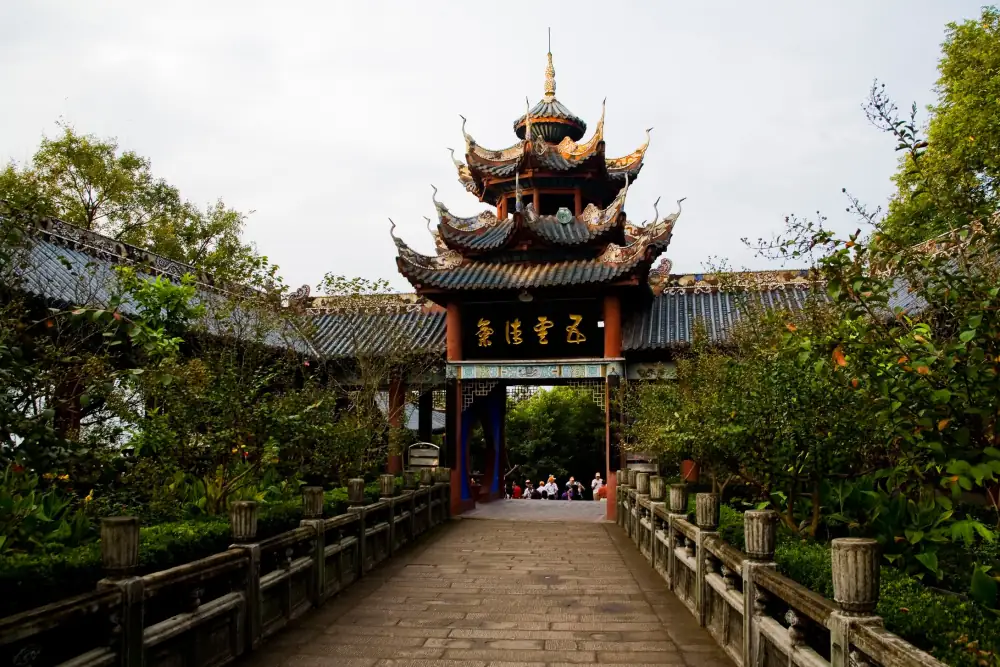
The Three Natural Bridges (天生三桥)
Tiansheng Sanqiao — literally “heaven-born three bridges” — is the centrepiece of Wulong’s appeal. Three enormous natural stone arches span a hidden valley: Tianlong, Qinglong and Heilong, each named after the celestial, green and black dragons of Chinese legend. The largest arch rises 235 metres above the valley floor and spans 300 metres. That’s not a typo.
The approach involves a steep descent via lift and staircase into a gorge that feels genuinely prehistoric. Ferns coat the walls, mist rolls through in the mornings and the scale of the arches only registers once you’re standing beneath them. Zhang Yimou filmed parts of The Curse of the Golden Flower here — which tells you something about the visual drama on offer.
Tickets: ¥135 (around $19) for the scenic area; cable car down is ¥20 extra. Opening hours: 08:00–18:00 daily. Allow at least 3 hours.
Furong Cave (芙蓉洞)
One of China’s most decorated show caves, Furong Cave runs for 2.7 kilometres and contains a jaw-dropping density of speleothems — stalactites, stalagmites, cave coral, moon milk, shield formations. The cave receives about 600,000 visitors a year and has been rated by Chinese geologists as one of the top three caves on the planet.
The temperature inside stays at a constant 15°C year-round, so bring a light layer even in August. The lighting is theatrical but not too garish — the cave management has actually shown restraint, which is not always the case in Chinese geological attractions.
Tickets: ¥120 ($17). Best visited as an add-on to the Three Bridges on the same day. The cave is 30 km from the bridges; taxis run regularly between sites.
Fairy Mountain (仙女山)
Wulong’s Fairy Mountain sits at 2,000 metres above sea level and hosts a grassy plateau that transforms into a ski resort in winter. In summer the meadows are blanketed with wildflowers; in autumn the birch forests turn golden. It’s popular with Chinese tourists seeking cooler air to escape the inferno of a Chongqing summer.
Horse riding is available on the plateau (¥80 for a 30-minute guided ride), and there are hiking trails ranging from a gentle 2-hour loop to a full-day ridge walk. Camping is permitted in designated areas and there are several glamping resorts on the mountain that have become Instagram favourites.
Best time to visit Fairy Mountain: June–August for wildflowers; December–February for skiing.
Houping Tiankeng (后坪天坑)
Lesser-known than the Three Bridges but arguably more dramatic, Houping is a cluster of giant sinkholes — tiankeng in Chinese — that plunge over 300 metres into the karst plateau. The approach requires a 10-km hike through bamboo and oak forest, which weeds out the less committed visitors and rewards those who make the effort with a profound sense of geological wonder.
This is one of China’s best examples of a collapse tiankeng cluster, and the sense of standing at the rim of a cathedral-sized hole in the earth is hard to convey in photographs. Go early and be prepared for mud after rain.
Fengdu: The Ghost City on the Yangtze
History and Mythology
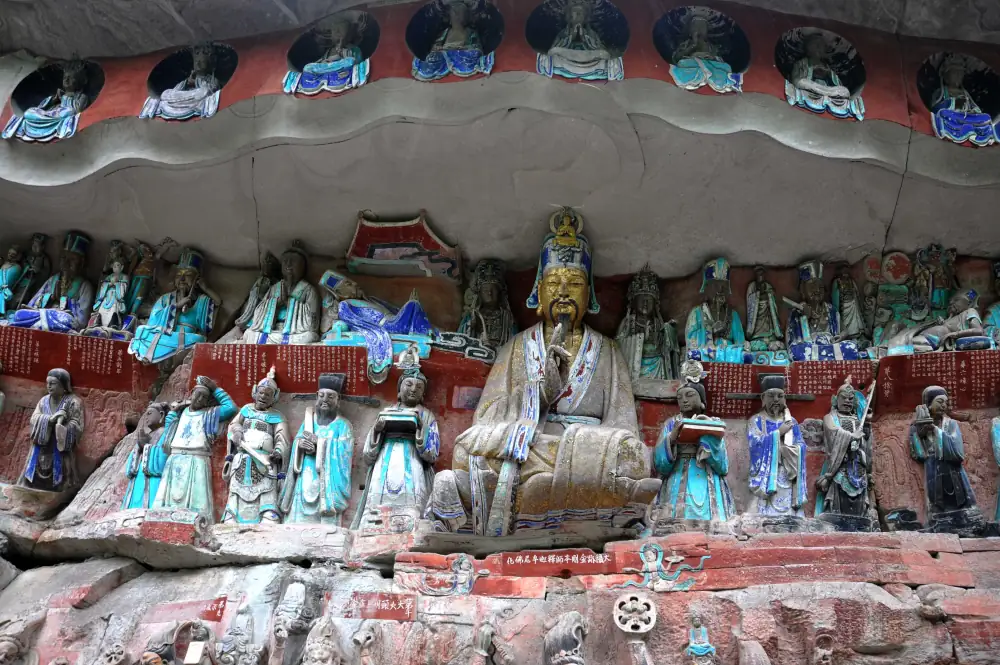
Fengdu’s reputation as the “Ghost City” (鬼城) stems from a Han Dynasty story about two imperial officials — Wang Fangping and Yin Changsheng — whose combined surnames formed “King of Hell” (阴王). Over centuries, Taoist and Buddhist beliefs about the afterlife merged here, and Mingshan Hill became home to an extraordinary collection of temples, statues and tableaux depicting the underworld, the Ten Courts of Hell and the journey of souls.
It’s macabre, colourful, theologically confused and genuinely fascinating. Think less horror movie, more Dante’s Inferno illustrated by a committee of Taoist monks who’d been at the baijiu.
Mingshan Hill and Its Temples
The main attraction is a hike or cable-car ride up Mingshan Hill, which takes you through a sequence of temple courtyards populated with vivid statues of demons, judges, ghost-officials and tortured sinners. The iconography is explicit — this is not a sanitised heritage attraction. Scenes of punishment in the underworld are rendered in surprising detail.
Key sites include:
- Tianzi Palace (天子殿): The palace of the King of Hell, presided over by an enormous gilded deity
- Ghost-Torturing Pass (鬼门关): A gateway that souls must pass through, flanked by snarling generals
- Nothing-to-Be-Done Bridge (奈何桥): A traditional Chinese afterlife symbol; crossing it while balancing is said to bring good luck
The entire hill takes about 2–3 hours to explore at a relaxed pace.
Tickets: ¥120 ($17) including cable car; or ¥80 for walking access only.
The New Fengdu and the Three Gorges Reservoir
The original Fengdu town was submerged when the Three Gorges Dam raised reservoir levels. A new town was built on higher ground, and the old Ghost City temples on Mingshan Hill were preserved above the waterline. Arriving by Yangtze cruise ship gives you the classic view of Mingshan rising dramatically from the flood-line — it’s the recommended approach if your schedule allows.
Most Yangtze river cruises (Chongqing to Yichang or vice versa) include a Fengdu stop as standard. If you’re doing it as a standalone day trip from Chongqing, the express bus or high-speed rail is more practical.
Getting to Wulong and Fengdu
From Chongqing to Wulong
High-speed rail: The dedicated Zhengpian High-Speed Railway opened in 2021 and reduced Chongqing North Station to Wulong Station to just 45 minutes. Tickets from ¥68–¥120 ($10–$17) depending on class. This is easily the most comfortable option.
Bus: Long-distance buses from Chongqing’s Nanping Bus Terminal run to Wulong Town in 2.5–3 hours for ¥55–¥75. Useful if the train timing doesn’t suit.
Self-drive: The expressway from Chongqing is straightforward and takes about 1.5–2 hours in light traffic. Car hire in Chongqing starts from ¥250–¥350/day ($35–$49).
From Chongqing to Fengdu
High-speed rail: Fengdu Station is 55 minutes from Chongqing North; tickets from ¥55–¥90 ($8–$13).
Yangtze cruise: If you’re on a multi-day cruise from Chongqing, Fengdu is typically day two. This is the most atmospheric but least efficient option if time is short.
Combining Wulong and Fengdu
The two destinations are about 90 km apart by road. A logical route is:
- Day 1: Arrive Wulong, Three Natural Bridges + Furong Cave
- Day 2: Fairy Mountain or Houping Tiankeng
- Day 3: Drive/bus to Fengdu, Mingshan Hill, overnight Fengdu or return Chongqing
Where to Stay
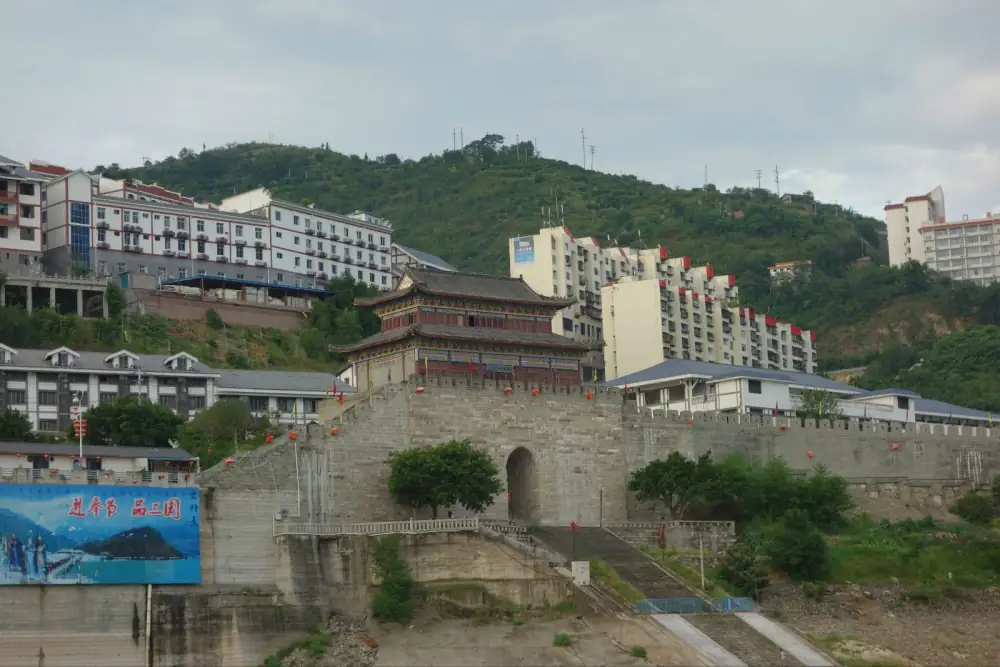
In Wulong
Yama Hotel (雅玛酒店): A solid mid-range choice near Wulong Town, rooms from ¥280–¥380/night ($39–$53). Clean, reliable WiFi, helpful staff.
Fairy Mountain Glamping Resorts: Several operators offer transparent bubble tents and wooden cabins on the plateau from ¥580–¥1,200/night ($81–$167). Book 2+ weeks ahead for peak season (July–August).
Budget hostels in Wulong Town: Dorm beds from ¥60–¥80/night ($8–$11) in several guesthouses near the bus station.
In Fengdu
Fengdu is primarily a day-trip destination; accommodation options are limited. The best choice is the Fengdu Impression Hotel near the river, rooms from ¥320–¥480/night ($45–$67).
Best Time to Visit
Spring (March–May): Mild temperatures in Wulong’s valleys; rhododendrons blooming on Fairy Mountain. Good visibility for cave photography.
Summer (June–August): Hot in the gorges but comfortable on Fairy Mountain. Expect crowds and higher prices. Thunderstorms can close the tiankeng trails.
Autumn (September–November): My personal recommendation. Golden forest colours, cooler temperatures, thinner crowds after the October Golden Week rush subsides.
Winter (December–February): Fairy Mountain skiing season. Ice formations can appear inside Furong Cave. Fengdu is atmospheric in winter mist.
Practical Tips
- Altitude note: Wulong Town sits at 700–900m above sea level; Fairy Mountain peaks at 2,100m. The temperature difference can be 8–12°C, so always carry a layer.
- Photography: The Three Bridges are spectacular in morning mist. Arrive at opening time (08:00) for the best light and smallest crowds.
- Fengdu mythology: If you have even a passing interest in Chinese religious culture, hire a local guide for the Ghost City (¥80–¥150 for 2 hours). The iconography is dense and easy to miss without context.
- Connectivity: China Mobile and Unicom have good coverage in Wulong Town but can drop out on Houping trails. Download offline maps before departing Chongqing.
- Local food: Wulong is famous for its smoked pork (腊肉) and wild mushroom dishes. Look for restaurants near the Three Bridges ticket office. A solid meal for two costs ¥80–¥120 ($11–$17).
Day-Trip Option from Chongqing
If you have only one day and are based in Chongqing, Fengdu works as a solo day trip (30-minute high-speed rail + half-day on the hill). Wulong demands at least an overnight stay to see more than one attraction. Trying to squeeze both into a single day from Chongqing is possible but exhausting and unsatisfying — you’ll be running between sites rather than experiencing them.
Final Word
Wulong and Fengdu represent two sides of Chongqing that most visitors never reach. The city’s reputation as a mountain-sprawling megalopolis of elevated motorways and neon-lit hot pot restaurants is deserved — but an hour down the high-speed rail line, an entirely different Chongqing waits: one of geological drama, mythological depth and landscapes that have nothing to do with urban density.
If you’re spending more than three days in Chongqing municipality, make this trip. You won’t be sorry.