
Looking to escape China’s summer heat without battling crowds? This summer, venture off the beaten path to two hidden gems: Guangze (光泽, Guāngzé) in Fujian and Hunchun (珲春, Húnchūn) in Jilin. One is a lush, river-laced paradise in the Wuyi Mountains, the other a border town where you can see three countries at once. Both offer cool temperatures, rich culture, and unforgettable experiences.
Table of contents
Open Table of contents
Guangze: The ‘Farthest Jiangnan’ in Fujian

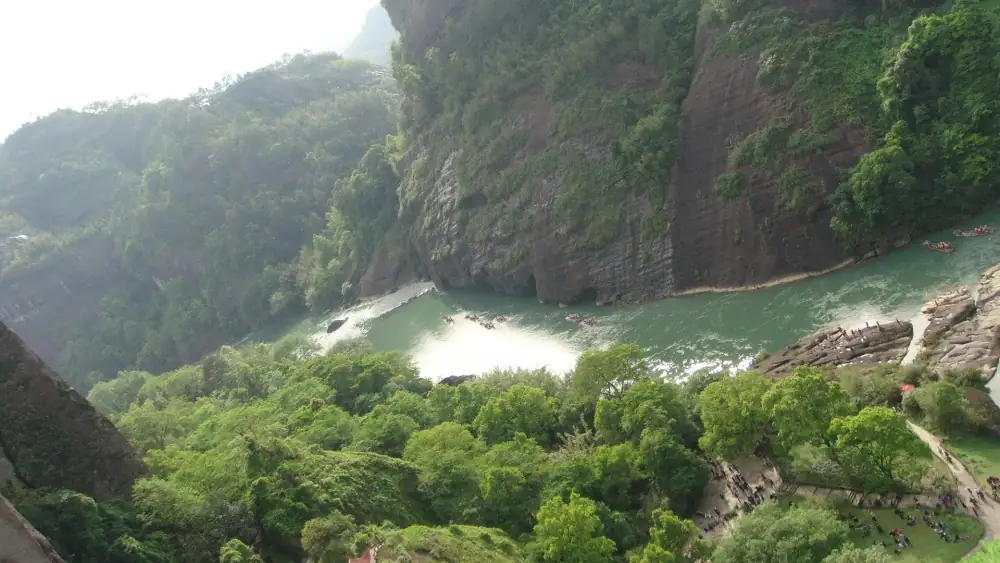
Nestled in the heart of the Wuyi Mountains (武夷山, Wǔyí Shān) and at the source of the Min River (闽江, Mǐn Jiāng), Guangze County is often called the “Farthest Jiangnan” – a reference to the classic watery landscapes south of the Yangtze. Here, emerald peaks, crystal-clear streams, and ancient forests create a natural air conditioner, with summer temperatures averaging around 25°C.
Top Things to Do in Guangze
- Boat on the Beixi Wetland (北溪湿地, Běi Xī Shīdì): Glide through shimmering waters surrounded by reeds and hills. The gentle breeze and reflections make for a serene escape.
- Cycle along Linglong Bridge (玲珑桥, Línglóng Qiáo): A scenic path that winds through bamboo groves and past rice paddies – perfect for a leisurely ride.
- Hike Mount Wujun (乌君山, Wūjūn Shān): The summit offers panoramic views of rolling green peaks. The trail is well-marked and suitable for beginners.
- Explore Qingxi Village (清溪村, Qīngxī Cūn): Wander through this traditional village where old stone houses line babbling brooks. Learn about local tea culture and the area’s literary heritage.
- Visit Chongren Ancient Town (崇仁古镇, Chóngrén Gǔzhèn): A well-preserved Ming and Qing dynasty town with cobblestone streets, ancestral halls, and a peaceful atmosphere. Sip a cup of local Gankeng black tea (干坑红茶, Gānkēng Hóngchá) at a teahouse.
Guangze Food: A Soybean Feast
Guangze’s cuisine is simple but full of flavor, with soybeans playing a starring role thanks to the pure mountain water. Must-tries include:
- Moldy tofu (霉豆腐, méi dòufu): Fermented tofu with a spicy, umami kick – great as a condiment.
- Wenzi (文子, wénzi): Thin-skinned dumplings filled with pork and vegetables, served steamed or boiled.
- Paofen (泡粉, pàofěn): Rice noodles in a savory broth, often topped with pickled vegetables and chili.
Where to Stay in Guangze
For a true immersion, book a minsu (民宿, mínsù) – a rural guesthouse. Many are tucked into the hills, offering rooms with mountain views and home-cooked meals. Waking up to birdsong and misty peaks is the norm.
Hunchun: Where Three Countries Meet
Now let’s cross China to the far northeast. Hunchun (珲春, Húnchūn) in Jilin Province sits at the tripoint of China, Russia, and North Korea. It’s a place of dramatic contrasts: dense forests roamed by Siberian tigers, a bustling seafood market, and a skyline where you can spot three nations at once.
Why Hunchun is a Summer Paradise
Hunchun enjoys a mild maritime-influenced climate, with average summer highs around 21°C. The city is surrounded by forests (86% coverage) and is part of the Northeast China Tiger and Leopard National Park, home to the largest wild population of Amur tigers and leopards in China.
Top Attractions in Hunchun
- Fangchuan Village (防川村, Fángchuān Cūn): The highlight. Climb Longhu Pavilion (龙虎阁, Lónghǔ Gé) for the famous “one glance, three countries” view. To the southeast is Russia; to the southwest, North Korea; on clear days, you can even see the Sea of Japan.
- Hunchun River Waterfront Park (珲春河滨水公园, Húnchūn Hé Bīnshuǐ Gōngyuán): A lovely riverside promenade with the “Eye of Hunchun” Ferris wheel and Vostok Amusement Island.
- Waxingke Joy Island (哇斯托克欢乐岛, Wā sī tuō kè huānlè dǎo): A family-friendly theme park with rides and cultural shows.
- Hunchun Northeast Asia International Commodity City (珲春东北亚国际商品城, Húnchūn Dōngběi Yà Guójì Shāngpǐn Chéng): Shop for Russian, Korean, and Japanese goods – from chocolates to cosmetics.
Hunchun’s Unique History
Hunchun was once the eastern capital of the Balhae Kingdom (Bohai, 渤海, Bóhǎi) in the 8th-10th centuries, serving as a key hub on the maritime Silk Road. Today, the Bohai Ancient Town (丝绸之路渤海古镇, Sīchóu Zhī Lù Bóhǎi Gǔzhèn) offers a glimpse into that era with reconstructed buildings and cultural exhibits.
Wildlife Watching
For nature lovers, Hunchun is a dream. The surrounding forests are prime habitat for Amur tigers and leopards. While sightings are rare, you can visit the Northeast Tiger and Leopard National Park visitor center to learn about conservation efforts. Birdwatchers flock to the Jingxin Wetlands (敬信湿地, Jìngxìn Shīdì) during migration seasons.
Hunchun Food: The Land of King Crab
Despite being landlocked, Hunchun is famous for seafood – especially king crab (帝王蟹, dìwáng xiè). Russian crabs are imported via the nearby ports, making them fresher and cheaper than in most Chinese cities. Head to Seafood Street (海鲜街, Hǎixiān Jiē) for a feast.
Other must-eats:
- Korean-style cold noodles (冷面, lěngmiàn): Buckwheat noodles in a tangy, icy broth – perfect for summer.
- Hunchun-style BBQ (珲春大串, Húnchūn dà chuàn): Giant skewers of beef, pork, and lamb, grilled over charcoal and wrapped in perilla leaves with garlic and kimchi.
- Bibimbap (石锅拌饭, shíguō bànfàn): A Korean classic – rice topped with vegetables, egg, and gochujang in a sizzling stone pot.
Getting to Hunchun
- By air: Fly to Yanji Chaoyangchuan International Airport (延吉朝阳川国际机场, Yánjí Cháoyángchuān Guójì Jīchǎng) , then take a 1.5-hour bus or taxi to Hunchun.
- By train: High-speed trains from Changchun (2.5 hours) and Beijing (6 hours) arrive at Hunchun Railway Station (珲春站, Húnchūn Zhàn) .
- By car: Hunchun is on the famous G331 National Highway (国道331, Guódào 331) , a scenic route along the border.
Practical Tips for Hunchun
- Visa: Most foreigners need a visa to visit China. However, if you’re transiting through Yanji, check if you qualify for the 144-hour visa-free transit policy.
- Language: Chinese, Korean, and Russian are common in tourist areas. Learn a few phrases: “Hello” (你好, nǐ hǎo) and “Thank you” (谢谢, xièxiè).
- Mobile payment: Alipay and WeChat Pay are widely accepted. Set them up before your trip.
- Currency: Chinese Yuan (RMB). ATMs are available, but carry some cash for small vendors.
- Etiquette: When visiting temples or minority villages, dress modestly and ask before taking photos.
Best Time to Visit
Both destinations shine in summer (June to September). Guangze is pleasant from May to October, while Hunchun’s peak season is July and August. Spring and autumn are also lovely but cooler.
Suggested Itinerary: 5 Days in Guangze & Hunchun
Day 1: Arrive in Guangze
- Morning: Arrive via Nanping (nearest high-speed rail station) or drive from Wuyishan. Check into a minsu.
- Afternoon: Boat on Beixi Wetland, then cycle to Linglong Bridge.
- Evening: Dinner of local specialties – try the moldy tofu and paofen.
Day 2: Guangze Nature & Culture
- Morning: Hike Mount Wujun (allow 3-4 hours).
- Afternoon: Visit Qingxi Village and Chongren Ancient Town. Sip Gankeng tea.
- Evening: Enjoy a farm-to-table dinner at your minsu.
Day 3: Travel to Hunchun
- Morning: Fly or train to Yanji, then transfer to Hunchun (total travel time ~6 hours).
- Afternoon: Check into a hotel near Hunchun River. Stroll along the waterfront park.
- Evening: Seafood feast on Seafood Street.
Day 4: Hunchun Border & Culture
- Morning: Visit Fangchuan Village and Longhu Pavilion (allow half day).
- Afternoon: Explore Bohai Ancient Town and the Northeast Asia International Commodity City.
- Evening: Korean BBQ dinner.
Day 5: Wildlife & Departure
- Morning: Visit the Northeast Tiger and Leopard National Park visitor center or birdwatch at Jingxin Wetlands.
- Afternoon: Depart from Yanji or continue your journey along the G331 highway.
Estimated Costs
- Accommodation: Minsu in Guangze: ¥200-400/night; hotel in Hunchun: ¥250-500/night.
- Food: ¥80-150 per person per day.
- Transport: High-speed rail from Nanping to Yanji: ~¥600; local buses and taxis: ¥50-100/day.
- Attractions: Most sites are free or under ¥50.
For more travel ideas, check out our China itineraries and nature guides. If you’re interested in Fujian and Jilin specifically, explore our south China and northeast China tags.
FAQ
Q: Do I need a visa to visit Guangze and Hunchun? A: Yes, most foreign nationals need a tourist visa (L visa) to enter China. However, if you’re transiting through certain cities like Yanji, you may qualify for the 144-hour visa-free transit. Check with your local Chinese embassy.
Q: How do I get around without speaking Chinese? A: Download translation apps like Google Translate or Pleco. In Hunchun, many signs are in Chinese, Korean, and Russian. In Guangze, English is limited, so prepare key phrases.
Q: Can I use credit cards in these places? A: Credit cards are accepted at major hotels and some restaurants, but mobile payments (Alipay/WeChat Pay) are preferred. Set up Alipay with your international card before arriving.
Q: Is it safe to travel to Hunchun given its border location? A: Absolutely. Hunchun is a safe, friendly city. The border areas are well-monitored, and tourism is encouraged. Just carry your passport at all times.
Q: What should I pack for summer in Guangze and Hunchun? A: Light layers, comfortable walking shoes, rain jacket (afternoon showers are common), insect repellent, sunscreen, and a reusable water bottle.
Q: Can I see tigers in Hunchun? A: Wild tiger sightings are extremely rare. Visit the national park visitor center for exhibits and track signs. For a guaranteed encounter, check zoos or rescue centers nearby.
Q: What is the best way to get from Guangze to Hunchun? A: The fastest route is fly from Nanping Wuyishan Airport to Yanji, then take a bus/taxi to Hunchun. Alternatively, take a high-speed train from Nanping to Changchun, then transfer to Hunchun (total ~10 hours).