
Jilin province in China’s northeast sits between Heilongjiang (Harbin) to the north and the Korean and Russian borders to the east. It’s one of China’s most scenically varied provinces — volcanic mountains, river ice phenomena, boreal forests, and a significant Korean cultural community that gives the eastern part of the province a distinct character.
Most visitors come for one of two things: Changbai Mountain and its volcanic crater lake, or the rime ice scenery along Jilin City’s Songhua River. Both are seasonal experiences — Changbai is best in summer (July–August), rime ice is a winter phenomenon (December–February). Either one justifies the trip; both together require two separate visits.
Table of contents
Open Table of contents
Changbai Mountain (长白山)
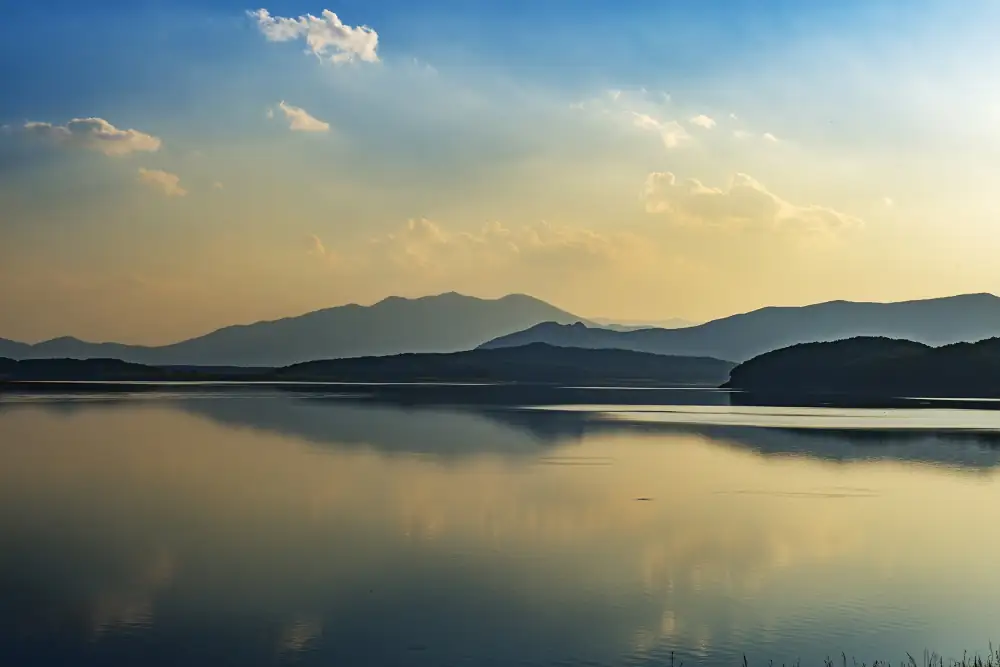
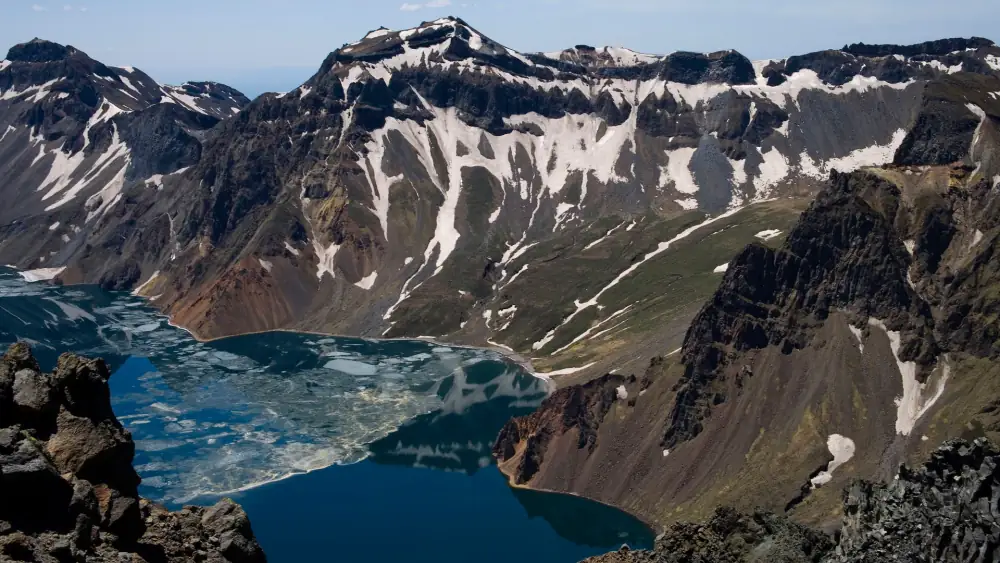
Changbai Mountain (literally “Ever-White Mountain”) straddles the border between China and North Korea. The caldera at the summit, formed by a massive volcanic eruption around 946 AD, contains Heaven Lake (天池) — a deep blue crater lake at 2,189 metres elevation that is one of the most visually striking landscapes in China.
The mountain is also culturally significant to Koreans (both North and South) as the legendary origin of the Dangun, the mythological founder of Korea. It’s one of the few mountains that Chinese and Koreans equally claim as culturally theirs.
Getting to Changbai Mountain
Nearest airports: Changbai Mountain Airport (长白山机场, IATA: NBS) has flights from several Chinese cities. Alternatively, fly to Yanbian (延边, IATA: YNJ) and take a bus.
By train: Take the high-speed train to Baihe (白河) or Changbai (长白) stations, then local bus or taxi.
From Changchun: Bus or train to Baihe, about 4–6 hours. Or fly from Changchun Longjia Airport (CGQ).
Scenic Area Structure
Changbai Mountain has three main tourism districts:
Northern Slope (北坡): The most developed and most visited. Cable car to near the crater rim, then a short hike to the lake viewpoint. This is where most visitors go.
Western Slope (西坡): Requires more hiking — a full-day walk up through sub-alpine meadows to the rim. More rewarding for those willing to put in the effort.
Southern Slope (南坡): Less developed, good for hiking through the volcanic plateau landscape.
Heaven Lake
At the summit, Heaven Lake is a crater lake approximately 10km in diameter, surrounded by 16 peaks. The deepest lake in China (at over 300 metres), it’s blue-black in colour with steam rising from volcanic vents. On clear days the reflections of the surrounding peaks in the water are extraordinary.
Clarity warning: The lake is frequently in cloud. Even in summer, clear-sky days at the crater rim are not guaranteed. Some visitors see perfect conditions; others see nothing but white mist. Check forecasts and hope for luck.
Entry fee: ¥245 per person (northern slope, includes cable car and shuttle bus)
Opening: Mid-June to late October for the main tourist season; some slope access year-round
Changbai Waterfall (长白瀑布)
At the northern slope, a 68-metre waterfall drops from the crater lake’s overflow — the beginning of the Songhua River. The waterfall is accessible on foot and is a spectacular sight, especially against the volcanic rock backdrop.
Other Changbai Attractions
Underground Forest (地下森林): Near the western slope, a forest growing inside an ancient volcanic crater, accessible via a wooden boardwalk. Eerie and beautiful.
Hot Springs (温泉区): Several geothermal hot springs bubble up near the waterfall area. Some are hot enough to cook eggs — locals and vendors do so for tourists. Others have been developed into hot spring pools for bathing (¥80–150 per session).
Jilin City Rime Ice (吉林雾凇)
About 90 minutes east of Changchun by train, Jilin City (not the same as Jilin province) is famous for the rime ice (雾凇) phenomenon that occurs along the Songhua River in December through February.
Rime ice forms when supercooled water vapour from the Fengman Reservoir (which stays warmer than the air temperature due to dam heating) encounters the sub-zero air temperature along the river banks. The result: trees along both banks of the Songhua River are coated in white frost crystals, sometimes 30–40 cm thick, creating an otherworldly winter landscape.
Best viewing: 8:00am–11:00am, when the morning sun hits the frost crystals at low angle. The display typically lasts until noon, when the frost begins to fall.
Key viewing spots:
- Songhua River banks around Jiangwan Bridge (江畔大桥): Best location
- Zhongjie (中街) area: Along the river through the city centre
- Tours from Changchun: Day trips operate from Changchun during the rime ice season, ¥150–250 per person including transport
The peak rime ice season is mid-December to mid-January (varies by year). The phenomenon requires sustained temperatures below -15°C to form properly.
Yanbian Korean Autonomous Prefecture (延边朝鲜族自治州)
In eastern Jilin, bordering North Korea, Yanbian is home to China’s largest Korean ethnic community (around 800,000 people). Crossing into Yanbian from Jilin feels noticeably different — Korean-language shop signs appear alongside Chinese, Korean food culture is everywhere, and the architecture of some towns has a distinctly Korean style.
Yanji (延吉): The prefecture capital, population about 400,000. A genuinely interesting border city with excellent Korean food and an accessible Korean cultural experience without requiring travel to Korea.
Korean food in Yanbian: Cold buckwheat noodles (냉면, lengmian in Chinese), Korean BBQ, rice cake soup, and the Yanbian specialty dog meat hotpot (for adventurous eaters) are all available and inexpensive. A full Korean BBQ meal costs ¥80–150 per person.
Tianchi entrance from the Korean side: Some Changbai Mountain tours connect to a crossing point into North Korea at Tumen or Hunchun — technically possible but requires specific tour arrangements.
Getting to Yanbian: Fly into Yanbian Chaoyangchuan Airport (YNJ) from Beijing, Shanghai, or Seoul. Or take the train from Changchun to Yanji (about 3–4 hours by regular train, or 2 hours by some faster options).
Changchun (长春)
Changchun is Jilin’s provincial capital and a useful transit hub, but isn’t a major tourist destination in itself. However, two specific sites are worth visiting if you have time:
Puppet Emperor’s Palace (伪满皇宫博物院): The palace complex where China’s last emperor, Puyi, was installed as a Japanese puppet ruler from 1932–1945. The complex is well-preserved and the exhibits are sobering — a detailed account of the Japanese occupation of Manchuria. Entry ¥80; open Tuesday–Sunday.
Changchun Film City (长影电影城): A large film studio and theme park complex. China’s film industry was largely based in Changchun during the 1940s–1960s. More of a curiosity than a must-see.
Suggested Jilin Itinerary
Summer focus (7 days):
- Days 1–2: Changchun (arrival, Puppet Emperor’s Palace)
- Days 3–4: Changbai Mountain (north slope)
- Days 5–6: Yanbian (Yanji, Korean food and culture)
- Day 7: Return via Yanji or Changchun
Winter focus (5 days):
- Day 1: Arrive Jilin City, afternoon along Songhua River
- Day 2: Rime ice morning viewing, afternoon at leisure
- Days 3–4: Harbin (easy train connection, 1 hour)
- Day 5: Return
Practical Notes
- Jilin province is cold year-round outside of summer: spring arrives late (April–May), winter starts early (October–November)
- The mountains near the North Korea border require careful border-zone registration; tourist routes are clear but be aware of the proximity
- Yanbian has Chinese mobile infrastructure but border areas can have patchy signal