
Changbai Mountain: China’s Sacred Volcanic Caldera Lake
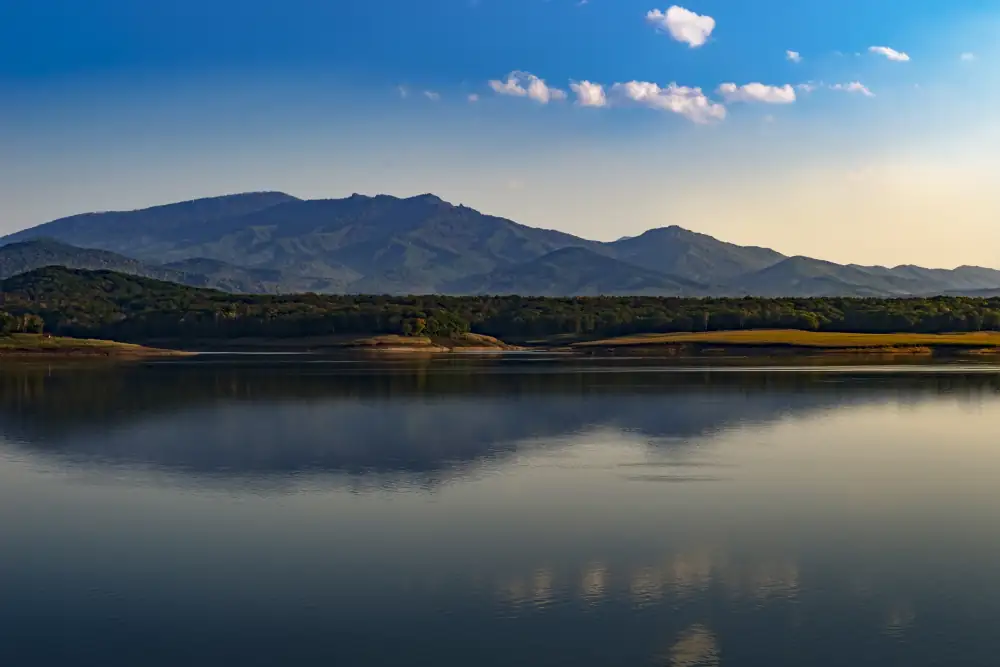
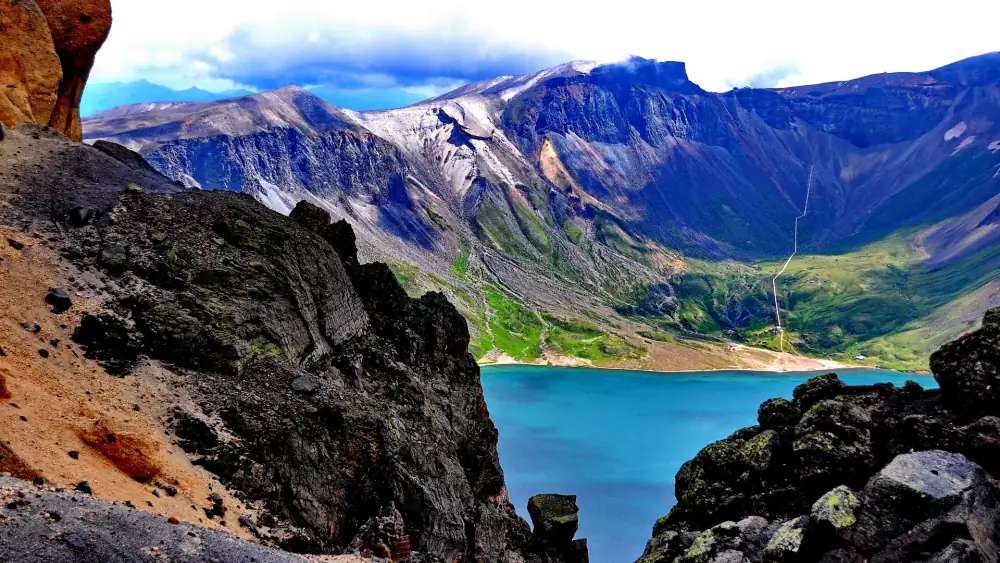
At the border between China and North Korea, a dormant stratovolcano rises to 2,744 metres and cradles in its caldera the largest alpine volcanic lake in the world. Tianchi (天池) — Heaven Lake — is 13 km in circumference, up to 384 metres deep, and filled with extraordinarily clear azure water that reflects the surrounding crater rim and the clouds that form above it daily.
For three ethnicities — Chinese Han, Korean, and Manchu — Changbai Mountain (长白山) is a sacred landscape. Korean tradition holds that the mythological founder of the Korean people descended from Baekdusan (the Korean name for the mountain); the Manchu emperors of the Qing dynasty regarded it as the spiritual home of their ancestry; Chinese mythology places it as one of the three sacred mountains of the northeast.
The Mountain
Geology
Changbai is an active stratovolcano — its last major eruption was in approximately 1000 CE (the “Millennium Eruption”), which produced the largest volcanic explosion in the world in the past 2,000 years. The eruption deposited ash as far as Japan and Korea, where it shows up as a distinct layer in ice cores and peat deposits.
The mountain is currently dormant but not extinct. A geothermal field on the northern slope provides the natural hot springs for which Changbai is also famous.
Tianchi (Heaven Lake)
The caldera lake fills the entire summit crater, with its southern shore in North Korea and its northern and western shores in China. The water temperature averages 8°C in summer; the lake freezes over December through May.
The lake is famous in folklore for a “lake monster” — several large animal sightings have been reported since the 1900s. Scientists generally attribute them to large trout or to visual distortion; the mystery remains unsolved to the satisfaction of local residents.
Getting to Tianchi: The Three Slopes
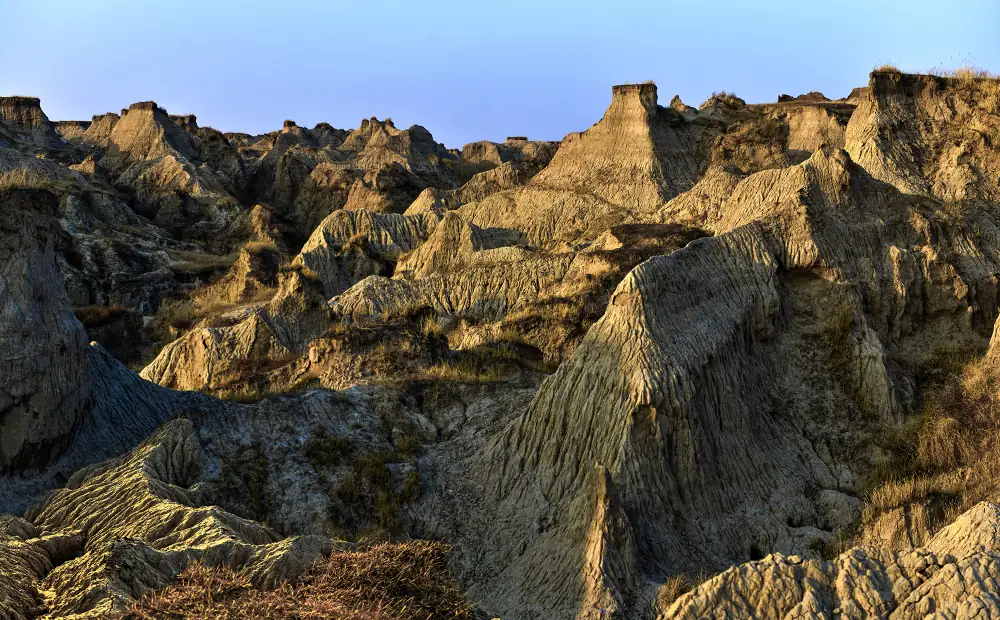
Changbai Mountain has three main visitor access points, each with distinct character:
North Slope (北坡) — Most Developed
The most popular access route for Chinese tourists. A shuttle bus from the base parking area (included in tickets) drives 30 km up a switchback road to approximately 2,000 m; from there, passengers transfer to specific vehicles for the final 600-metre ascent.
The North Slope Waterfall: Before the summit area, a short walking trail leads to the Changbai Waterfall (长白瀑布) — a single plunge of approximately 68 metres from the Tianchi lake’s only outlet. The sound in summer (when full melt flow is operating) is tremendous; the surrounding cliff faces are draped with miniature waterfall tributaries.
West Slope (西坡) — Best Views
A longer drive from the nearest major access road, the West Slope is less crowded and offers views of Tianchi from a higher rim position — you stand at 2,500+ m looking down into the caldera. On clear days, the summit of Paektu (the Korean name, visible on the North Korean side) and the rim’s volcanic rock formations are more visible from here.
Recommended for: Photography and visitors wanting a quieter experience; not recommended if time is limited.
South Slope (南坡) — For Experienced Trekkers
The South Slope entry is the longest and most demanding — and the only one that allows hiking to the caldera rim entirely on foot. The trail from the base camp at approximately 1,200 m to the rim at 2,700 m takes 5–7 hours one way.
This slope is on the Chinese side only — it does not cross into North Korea — but it offers the closest the average traveller will come to looking into North Korea from China.
Seasons at Changbai Mountain
Summer (June–August): The Green Season
Most visitors come in summer when the weather is warmest and Tianchi is most likely to be visible (though cloud cover at the summit is frequent even in summer — probability of a clear-sky view of the lake on any given day is approximately 50–60%).
The alpine flora above the treeline — wildflowers, sedges, low-growing blueberry shrubs — is excellent for wildflower enthusiasts.
Key challenge: Book tickets and accommodation at least 1 month in advance; this is the most crowded period, with daily visitor limits enforced at the scenic area entrance.
Autumn (September–October): The Colour Season
The birch, larch, and maple forests below the treeline turn spectacular gold, amber, and red in late September. The visitor numbers drop after the national holiday period (early October); the weather becomes clearer; mornings are cold but afternoons are pleasant.
Tianchi visibility is good in autumn; the combination of caldera lake and coloured forests is the most photogenic overall combination.
Winter (November–March): The Snow Kingdom
Changbai Mountain is one of China’s premier ski resorts — the northern slope has ski runs of 500–1,500 m length serviced by modern lifts. But beyond skiing, the winter landscape is extraordinary: temperatures drop to -30°C; the forests are buried under metres of snow; the geothermal hot-spring pools near the waterfall steam dramatically against the cold air.
Ice swimming in the hot spring pools (temperature around 37–42°C) surrounded by snow is a local tradition and genuinely remarkable experience.
Tianchi in winter (frozen solid) has a different kind of beauty — the caldera becomes a blank white circle in an already white world; the sense of altitude and exposure is more acute in cold.
Spring (April–May): Shoulder Season
The snow melts unevenly; the hiking trails above 2,000 m are still snow-covered; access to the summit rim is restricted or dangerous. Fewer visitors; discounted accommodation; the birch forest below the treeline is startlingly white and leafless.
Hot Springs
The North Slope’s geothermal field produces hot springs ranging from 60°C to 82°C near the waterfall area. Visiting tourists boil eggs in the springs (sold at the nearby market for ¥10–¥20; the eggs come out perfectly cooked in 7–8 minutes) and soak feet in the lower-temperature overflow pools.
Several hot spring resorts operate at the mountain base, particularly in the town of Erdaobaihe (二道白河), offering private outdoor soaking pools and comprehensive spa facilities.
Practical Information
Getting There
By Train: Beijing to Baihe (白河) overnight train, approximately 16 hours; or fly to Yanbian Korean Autonomous Prefecture Airport (延吉朝阳川机场) and then bus/taxi 2 hours to Erdaobaihe. By Plane + Bus: Fly to Changchun (长春) → high-speed train to Antu/Erdaobaihe.
Admission
¥225 (summer peak season); ¥165 (off-peak). Includes shuttle buses within the scenic area. Separate ski resort fees in winter.
Accommodation
Erdaobaihe Town (40 km from the mountain entrance) has the widest range of accommodation and all essential facilities. Mid-range hotels: ¥200–¥500/night. Mountain Base Hotels (near the scenic area entrance): Premium pricing (¥500–¥1,200); convenient for early morning access.
Tianchi is worth a mist. If you arrive and the lake is completely hidden in cloud, descend to the waterfall and the hot springs; come back to the rim in the afternoon when cloud often clears briefly. The moment the lake appears between cloud layers — the blue deepening from pale to vivid as the cloud moves — is the more powerful for having been waited for.