
Jinan (济南), the capital of Shandong Province, has been called “the city of springs” for two thousand years. The ancient city sits above a natural limestone aquifer that once pushed water up through over 700 springs within the city boundaries — a geological wonder that shaped everything from its urban layout to its local culture and cuisine. While modern urbanization has reduced spring activity, the historic spring parks at the city center remain extraordinary, and Jinan has the advantage of being overlooked by most international tourists while being excellent for the independent traveler.
The Famous Springs
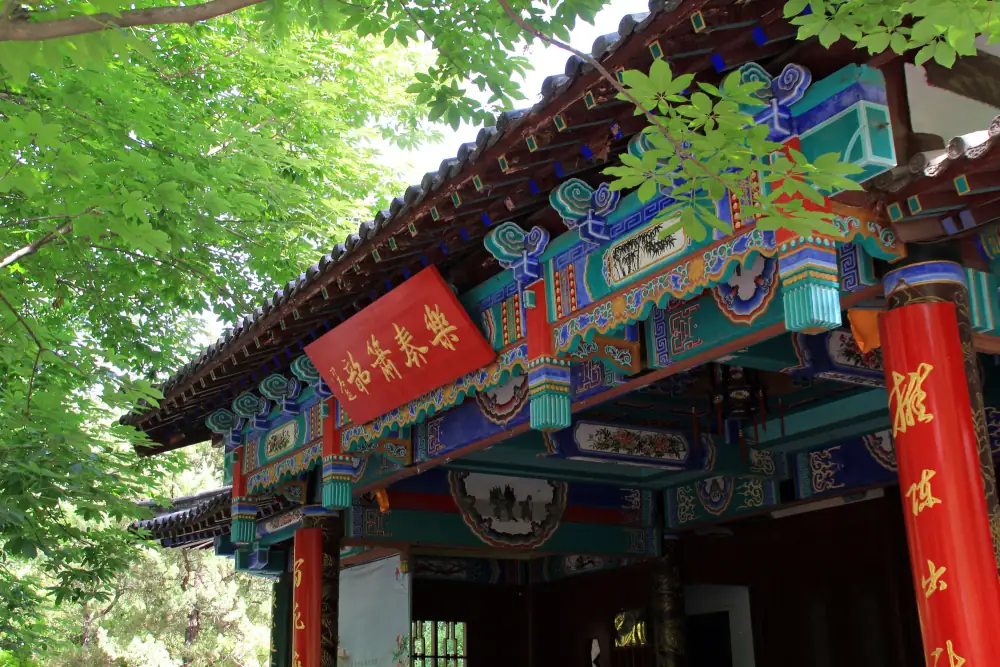
Baotu Spring (趵突泉)
The most famous spring in China, documented in classical texts since the Zhou Dynasty (3,000 years ago). “Baotu” means “spurting” — water once sprang upward 1–2 meters from three vents in the pool floor. The flow has diminished in recent decades due to groundwater extraction, but spring activity still occurs, especially after rain.
The spring is set within Baotu Spring Park — a Qing dynasty classical garden with pavilions, stone inscriptions (the most famous reads “天下第一泉” — “China’s First Spring”), tea houses, willow trees and a clear pool where you can watch the water upwelling from below.
Entry: ¥40 per person; open 07:00–22:00 (evening with illumination)
Tea with spring water: Tea houses in the park serve tea brewed with Baotu spring water. A classical aesthetic tradition — the poet Li Qingzhao (李清照, one of China’s greatest female poets, born in Jinan) wrote about the water’s quality for tea.
Black Tiger Spring (黑虎泉)
Free to enter, in a historic riverside stone setting. Less manicured than Baotu but wilder and more dramatic. Water bubbles up through tiger-head stone carvings and flows into a channel. Local residents bring containers to collect the spring water for drinking — a charming urban tradition.
Wulong Tan (五龙潭)
“Five Dragon Pool” — a cluster of springs in a park west of the old city. Less crowded than Baotu Spring. The five pools have different temperatures and flow rates. Free entry.
Pearl Spring (珍珠泉)
Inside the former provincial governor’s compound; now accessible as a park. The spring creates strings of pearls that appear to rise from the pool floor — an optical effect from the millions of small bubbles. ¥20.
Daming Lake (大明湖)
The large central lake in Jinan’s historic district was formed by the combined outflow from the city’s spring system. A scenic park (大明湖) surrounds it — temples, pavilions, gardens and walkways — with free public access.
Scenic spots: The north gate area (北极阁) has the best elevation views of the lake and city. The island in the lake center (历下亭, Lì Xià Tíng) is where the Tang dynasty poet Du Fu (杜甫) had a famous meeting — one of Chinese history’s great literary encounters.
Boat rides: Electric boats ¥30 per person, 30-minute circuit of the lake.
Evening: The lake park stays open until 22:00 and is illuminated attractively at night. Local families stroll here; it’s a very pleasant, genuinely local scene.
Admission: The park is free; some internal attractions charge separately.
Old City Streets
Furong Street (芙蓉街): The most famous street food alley in Jinan — narrow, stone-paved, flanked by old buildings. Food stalls selling local specialties crowd both sides. Busy at any time; avoid 18:00–20:00 if you dislike crowds.
Zhilou Street (芝罘路): Less touristy version of Furong Street, with more genuinely local character.
Kuanhousuocheng (宽厚所城): A recently developed heritage-themed street with better restaurant quality than Furong Street; good for a sit-down meal.
Shandong Food in Jinan
Shandong cuisine (鲁菜 Lǔ cài) is one of China’s “Four Great Cuisines” and heavily influenced northern Chinese cooking. Jinan is the best city to eat it at its source.
Deep-fried dough sticks and congee (油条加稀饭): A universal Jinan breakfast. The oil stick here is airy and not greasy; the congee is served with various pickled side dishes.
Nine-turn fat intestine (九转大肠): Pork intestines braised through nine processes until caramelized and tender. A very Shandong approach — take an ingredient that requires elaborate cooking and transform it through skill.
Sweet and sour Yellow River carp (糖醋黄河鲤鱼): The Yellow River carp is to Shandong what the Peking duck is to Beijing. Fried until crispy in a lacquer of sweet-sour sauce. Expensive but worth ordering once.
Jinan hot-and-sour soup (济南热干面): Different from Wuhan’s version — more sour, with vinegar prominent.
Spring water tofu (泉水豆腐): Silken tofu made from the iron-rich spring water, said to give a distinctive mineral quality. Served simply with soy sauce and scallion.
Nearby Day Trips
Mount Tai (泰山): One of China’s five sacred mountains, 90 minutes from Jinan by high-speed rail. Sunrise from the summit is one of the great natural spectacles in China. See separate guide.
Qufu (孔庙): Confucius’s birthplace; the Kong Temple, Kong Family Mansion and Kong Forest are UNESCO World Heritage Sites. 60 minutes from Jinan by HSR.
Getting to Jinan
By high-speed rail:
- From Beijing South: 1.5 hours, ¥150–250
- From Shanghai: 3 hours, ¥200–350
- From Qingdao: 1.5 hours, ¥85–120
Jinan has two high-speed rail stations: Jinan Station (济南站) (central, more convenient for attractions) and Jinan West Station (济南西站) (on the Beijing–Shanghai line, further west).
Within Jinan: Metro Lines 1–5 cover major tourist areas. Jinan Metro is new, clean and easy to navigate; Baotu Spring and Daming Lake are within walking distance of each other in the city center, easily metro-accessible.
Jinan is the kind of city that rewards travelers who take a chance on overlooked provincial capitals. It lacks the international profile of Xi’an or Suzhou but has equal depth of history, much better food than its reputation, and almost no foreign tourist crowds — meaning you share the spring parks and lake with locals rather than tour groups.