
Beneath China’s surface lies a hidden world of breathtaking beauty: colossal sinkholes called tiankeng, labyrinthine caves with ancient stalactites, and underground rivers teeming with blind fish. These karst landscapes—sculpted over millions of years by water dissolving limestone—are among the planet’s most dramatic natural wonders. For the intrepid traveler, exploring them offers a glimpse into Earth’s hidden architecture. This guide covers the best caves and tiankeng to visit, how to get there, practical tips for foreign visitors, and what makes each site unique.
Table of contents
Open Table of contents
What is Karst and Why China?
Karst topography forms when slightly acidic rainwater dissolves soluble rock like limestone, creating sinkholes, caves, and underground rivers. China is a global karst superpower, with over 900,000 square kilometers of karst terrain, concentrated in the southwest provinces of Guangxi (广西, Guǎngxī), Guizhou (贵州, Guìzhōu), Yunnan (云南, Yúnnán), and Chongqing (重庆, Chóngqìng). The region’s warm, wet climate accelerates dissolution, producing some of the world’s most spectacular surface and subterranean features.
Top Caves and Tiankeng to Visit
1. Zhijin Cave (织金洞, Zhījīn Dòng) — Guizhou
Located in Bijie, Guizhou, Zhijin Cave is one of China’s largest and most ornate caves. It boasts the highest density of cave halls and the richest variety of stalactite formations anywhere in the world. Visitors walk through a 6.5-kilometer-long route past towering columns, delicate soda straws, and curtain-like flowstones. The cave’s scale is staggering—some halls are over 100 meters high.
- Best time to visit: April to October (mild temperatures year-round inside the cave, around 16°C).
- Getting there: Take a high-speed train from Guiyang to Zhijin Station (about 1 hour), then a local bus or taxi to the cave (30 minutes).
- Tickets: Purchase at the gate or via Chinese travel apps (e.g., Ctrip). Foreigners can pay with Alipay or WeChat Pay; bring cash as backup.
- Tips: Wear non-slip shoes; the cave floor can be damp. Photography is allowed, but tripods may require a permit.
2. Dashiwei Tiankeng Group (大石围天坑群, Dàshíwéi Tiānkēng Qún) — Guangxi
In Leye County, Guangxi, the Dashiwei Tiankeng Group contains over 20 giant sinkholes, including the world-famous Dashiwei Tiankeng itself—a 613-meter-deep, 600-meter-wide abyss. The site also features Maoxue Dong (冒气洞, Màoqì Dòng), the world’s tallest cave hall at 450 meters high, where a beam of sunlight pierces through a natural skylight, creating a surreal “Hall of Sunlight.”
- Best time to visit: October to April (dry season; avoid heavy rain which can make trails slippery).
- Getting there: Fly to Baise Bama Airport (百色巴马机场), then take a bus to Leye (2 hours). Alternatively, take a high-speed train to Baise West Station, then bus to Leye.
- Tickets: Available at the visitor center. Guided tours are recommended for safety.
- Adventure activities: Ziplining across the tiankeng and cliffside plank walks offer adrenaline-pumping views.
3. Wulong Karst (武隆喀斯特, Wǔlóng Kāst) — Chongqing
A UNESCO World Heritage site, Wulong boasts three spectacular natural bridges (天生三桥, Tiānshēng Sān Qiáo), a giant tiankeng (Qingkou Tiankeng), and the Furong Cave (芙蓉洞, Fúróng Dòng). The Three Natural Bridges are massive stone arches spanning a deep gorge, while Furong Cave features stunning calcite crystals and underground waterfalls.
- Best time to visit: March to November; summer offers lush greenery, autumn adds color.
- Getting there: Take a high-speed train from Chongqing North Station to Wulong (about 1 hour), then a local bus to the scenic area.
- Tickets: Combined tickets for the Three Bridges and Furong Cave are available. Book online in advance during peak seasons.
- Note: The site is popular with domestic tourists; arrive early to avoid crowds.
4. Pingshan Canyon (屏山峡谷, Píngshān Xiágǔ) — Hubei
Known as “China’s Semporna” for its crystal-clear emerald waters, Pingshan Canyon in Hefeng County, Enshi, offers a surreal boating experience. The 18-kilometer-long gorge features towering cliffs and water so clear that boats appear to float in mid-air. It’s a karst canyon formed during the Triassic period.
- Best time to visit: May to October (warm weather, best water clarity).
- Getting there: Fly to Enshi Xujiaping Airport (恩施许家坪机场), then take a bus to Hefeng (2 hours). From Hefeng, local buses go to the canyon.
- Tickets: Purchase at the entrance. Boat rides are included in the ticket.
- Tip: For the iconic “floating” photo, visit on a sunny day between 10 am and 2 pm.
5. Tengger Desert Lakes (腾格里沙漠湖泊, Ténggélǐ Shāmò Húpō) — Inner Mongolia
While not a cave, the Tengger Desert’s 422 lake basins (many seasonal) create a surreal contrast of sand and water. The largest, Moon Lake (月亮湖, Yuèliàng Hú), is a permanent oasis surrounded by dunes. This landscape is a product of ancient karst processes and wind erosion.
- Best time to visit: May to September (warm days, cool nights).
- Getting there: Fly to Yinchuan Hedong International Airport (银川河东国际机场), then drive 2.5 hours to the desert. Join a tour for easier logistics.
- Activities: Camel rides, sandboarding, and overnight camping.
- Note: Mobile payment is widely accepted, but bring cash for remote vendors.
How to Get Around
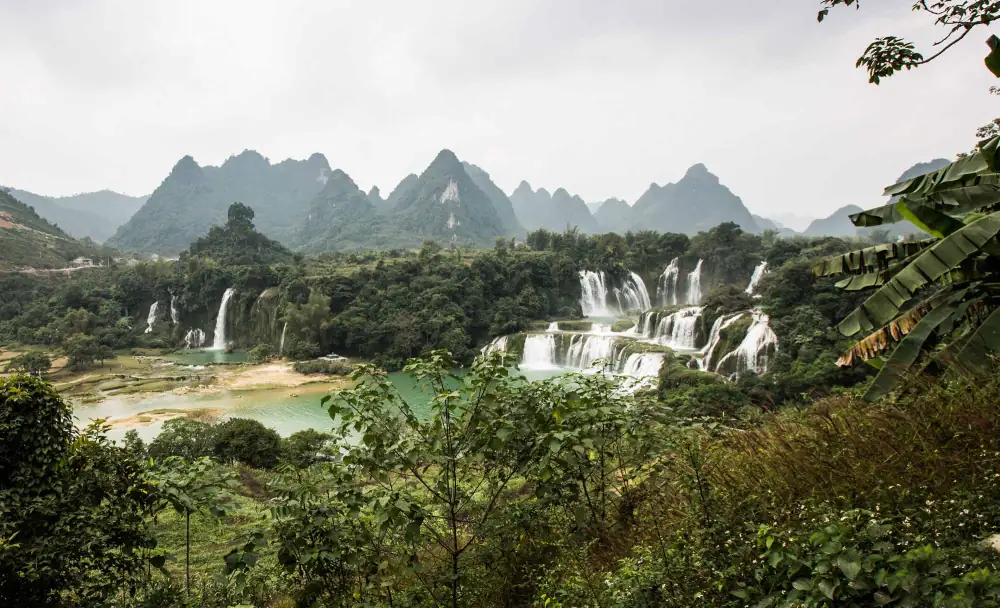
- High-Speed Rail: China’s extensive HSR network connects major cities like Guiyang, Chongqing, and Guilin to karst regions. For example, Guiyang to Zhijin takes about 1 hour; Chongqing to Wulong takes 1 hour.
- Domestic Flights: For remote areas like Leye (Guangxi), flying to a nearby airport (e.g., Baise) then taking a bus is efficient.
- Local Buses & Taxis: Once at a county town, local buses or taxis reach scenic spots. Use ride-hailing apps like DiDi (works with Alipay).
- Renting a Car: Possible with an international driving permit, but road conditions in mountainous areas can be challenging. Hiring a driver is a good alternative.
Practical Tips for Foreign Travelers
- Visa: Most travelers need a tourist visa (L-visa). The 144-hour transit visa-free policy applies in select cities (e.g., Shanghai, Beijing, Guangzhou) but not for overland travel to karst areas. Check with your nearest Chinese embassy.
- Mobile Payment: Alipay and WeChat Pay are essential. Link your international credit card before departure. Many scenic spots accept these; cash is rarely needed but keep a small amount for emergencies.
- Language: English is not widely spoken in rural areas. Download a translation app (e.g., Google Translate or Pleco) and have key phrases ready.
- What to Pack: Comfortable hiking shoes, a headlamp (for caves), waterproof jacket, insect repellent, and a reusable water bottle. Caves are cool (12-18°C), so bring a light jacket.
- Etiquette: Do not touch stalactites or stalagmites—they grow only 1 cm per 100 years. Follow marked paths; straying can damage fragile formations.
Suggested Itinerary
7-Day Southwest Karst Explorer
- Day 1: Arrive in Guiyang (贵阳). Visit Jiaxiu Tower and try local sour fish soup.
- Day 2: Day trip to Zhijin Cave. Overnight in Guiyang.
- Day 3: High-speed train to Chongqing. Explore Ciqikou Old Town.
- Day 4: Day trip to Wulong Karst (Three Natural Bridges, Furong Cave).
- Day 5: Fly to Baise, bus to Leye. Visit Dashiwei Tiankeng.
- Day 6: Explore more tiankeng or hike in the surrounding forest.
- Day 7: Return to Baise and fly out.
For more route ideas, see our China itineraries.
Where to Stay
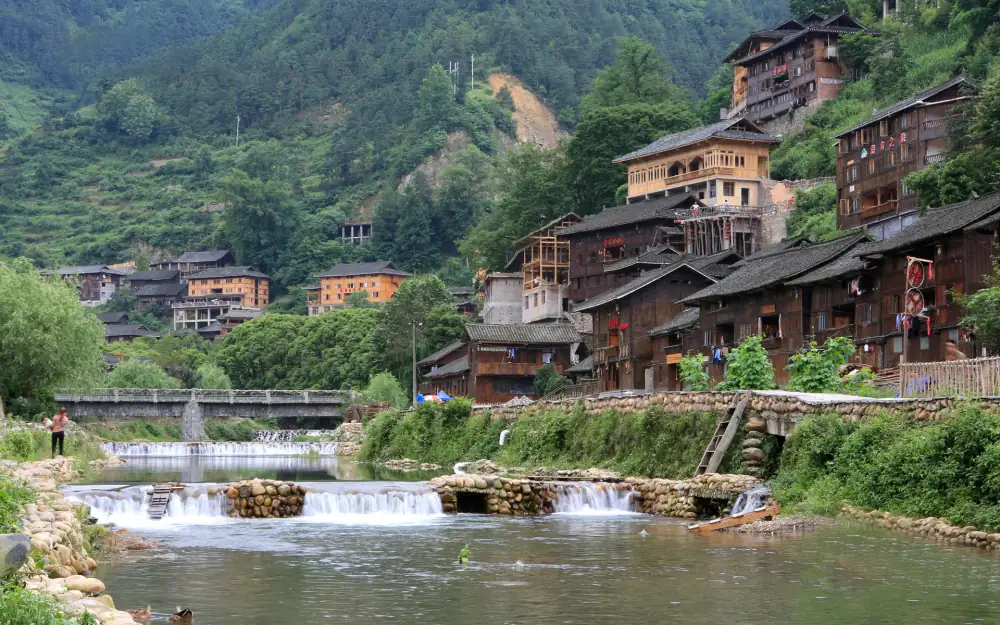
- Near Caves: Many scenic areas have on-site hotels or guesthouses (e.g., Zhijin Cave Hotel, Wulong Fairy Mountain Resort). These offer convenience but may be basic.
- Near Cities: Guiyang, Chongqing, and Guilin have international hotel chains (Hilton, Marriott) and budget options. Use booking apps like Ctrip or Trip.com.
- Homestays: In rural areas, family-run guesthouses provide authentic experiences. Book through platforms like Airbnb (limited) or local travel agencies.
Best Time to Visit
- Spring (March-May): Mild temperatures, blooming flowers. Good for hiking and cave visits.
- Summer (June-August): Hot and humid in lowlands; caves offer cool respite. Peak tourist season—book ahead.
- Autumn (September-November): Pleasant weather, clear skies. Ideal for photography.
- Winter (December-February): Cold in northern areas; southern karst regions remain mild. Fewer crowds.
Costs
- Entrance fees: ¥80-150 per site (higher for combined tickets).
- Transport: High-speed train Guiyang to Chongqing ~¥140 (second class). Local buses ¥20-50.
- Accommodation: Budget hotels ¥150-300/night; mid-range ¥300-600; luxury ¥600+.
- Food: Street meals ¥15-30; restaurant dinners ¥50-100 per person.
- Guides: English-speaking guides cost ¥300-500/day. Consider hiring through a travel agency.
Food Highlights
- Guizhou: Sour fish soup (酸汤鱼, suān tāng yú), rice noodles (米粉, mǐfěn), and spicy grilled tofu.
- Chongqing: Hotpot (火锅, huǒguō) and noodles (小面, xiǎomiàn).
- Guangxi: Beer fish (啤酒鱼, píjiǔ yú) and Guilin rice noodles (桂林米粉).
- Hubei: Enshi-style tujia dishes like smoked pork and wild mushrooms.
For more culinary adventures, check our food guide.
Photography Tips
- Caves: Use a tripod and wide-angle lens. Avoid flash—it creates harsh shadows. Instead, use long exposures (2-10 seconds) to capture ambient light.
- Tiankeng: Best shot from the rim looking down, or from the bottom looking up at the skylight. Midday sun creates dramatic light beams.
- Underwater views (Pingshan): Polarizing filter reduces glare. Shoot from a low angle to emphasize clarity.
Safety and Responsible Travel
- Stay on trails: Cave ecosystems are fragile; stepping off path can damage formations or disturb wildlife.
- Don’t touch formations: Oils from skin can halt stalactite growth.
- Wear a helmet: If exploring unlit caves, always wear a helmet and carry multiple light sources.
- Hire a guide: For remote caves, a local guide is essential for safety and navigation.
FAQ
-
Q: Do I need special equipment to visit caves? A: For tourist caves like Zhijin or Furong, no special gear is needed—just comfortable shoes and a jacket. For adventure caving, you’ll need a helmet, headlamp, harness, and ropes, plus a guide.
-
Q: Are these sites accessible for people with mobility issues? A: Major tourist caves have paved paths and handrails, but they involve many stairs. Tiankeng viewpoints may be accessible by car, but rim trails are uneven. Contact the site in advance for specific accessibility info.
-
Q: Can I visit these places without speaking Chinese? A: Yes, but it helps to have a translation app and pre-book tours. Major sites have some English signage, but rural areas have little. Consider joining a group tour for ease.
-
Q: Is it safe to drink tap water? A: No, drink bottled or boiled water. Bring a reusable bottle and fill up at hotels.
-
Q: What’s the best way to book tickets? A: Use Chinese platforms like Ctrip (Trip.com) or Meituan. Some sites accept walk-ins, but booking ahead saves time, especially during holidays.
-
Q: Are there any cultural taboos I should know? A: In ethnic minority areas (e.g., Guangxi, Guizhou), respect local customs—ask before photographing people, and avoid touching religious objects. Generally, Chinese people are welcoming to foreign visitors.
China’s subterranean wonders are a testament to nature’s artistry over eons. Whether you’re peering into a 600-meter-deep tiankeng or drifting on a glass-like underground river, these landscapes will leave you in awe. Plan your adventure, pack your sense of wonder, and discover the hidden side of China.
For more nature destinations, browse our nature and adventure guides.