
Shanghai’s position in the Yangtze River Delta puts it within striking distance of some of the most historically significant cities and ancient towns in China. The high-speed rail network means that Suzhou and Hangzhou — cities that would require a full travel day in most countries — are closer to central Shanghai than Heathrow is to central London.
This guide covers five day trip options from Shanghai, organized by journey time, with honest assessments of what’s worth doing and how much time each destination actually needs.
Table of contents
Open Table of contents
Suzhou — 25 Minutes, Classical Gardens
Journey: Shanghai Hongqiao → Suzhou Station, G-train (high-speed), ¥28-39, ~25 minutes. Trains run every 15-20 minutes.
Suzhou (苏州) has been celebrated for 2,500 years for its classical gardens, silk production, and canals. It was the cultural capital of the Wu region — the people, cuisine, and Suzhou Opera (昆曲, Kunqu) represent a distinct Jiangnan tradition that influenced Chinese high culture for centuries.
What to do
Classical Gardens: Nine of Suzhou’s classical gardens are UNESCO-listed. The four main ones:
- Humble Administrator’s Garden (拙政园, ¥90) — the largest and most celebrated, though also the most crowded. Go early or late. Allow 2 hours.
- Lingering Garden (留园, ¥45) — smaller scale, better preserved in places, excellent scholars’ rocks. Allow 1.5 hours.
- Lion Grove Garden (狮子林, ¥30) — famous for its bizarre rockery maze. 45 minutes.
- Master of the Nets (网师园, ¥40) — the smallest and most intimate of the major gardens. Evening performances of traditional music (¥100) run April-October.
Seeing two gardens in a day is ideal. Three is possible but starts to feel repetitive.
Pingjiang Road (平江路) is a canal-side street in the old town with preserved Suzhou architecture, tea houses, and silk shops. More authentic than the touristier Shantang Street (山塘街), though both are pleasant. Free to walk.
Suzhou Museum (苏州博物馆, free) — designed by I.M. Pei and opened in 2006. Architecturally it’s as interesting as the collection: modern geometry in dialogue with the adjacent classical Humble Administrator’s Garden. The Song and Ming Dynasty paintings and ceramics are exceptional.
Silk Museum (苏州丝绸博物馆, free) — how Suzhou silk is made, from silkworm to finished fabric. The working demonstration sections are genuinely interesting.
What to eat
Su-style cuisine (苏帮菜) is sweeter and more delicate than Shanghai food. Key dishes: Loose fish (松鼠桂鱼, sweet and sour Mandarin fish, ¥60-100), braised pork with white sauce (白切五花肉), Suzhou soup noodles with river shrimp (虾仁汤面, ¥25-45).
Full day or half day? Full day. Two gardens, Pingjiang Road, the museum, and proper lunch and dinner fill a day completely.
Hangzhou — 1 Hour, West Lake & Tea
Journey: Shanghai Hongqiao → Hangzhou East, G-train, ¥73-104, ~1 hour. Trains every 15-30 minutes.
Hangzhou (杭州) is famous for West Lake — the most painted landscape in Chinese art history — and for Longjing tea, the finest green tea in China. It was the capital of the Southern Song Dynasty (1127-1279) and was described by Marco Polo as one of the world’s greatest cities. It’s now a tech hub (Alibaba is headquartered here) but the historical core and lake remain extraordinary.
What to do
West Lake (西湖, free) — the lake and its surrounding hills are the main destination. The famous scenic spots:
- Leifeng Pagoda (雷峰塔, ¥55) — the restored Song pagoda on the south shore, overlooking the lake
- Broken Bridge (断桥, free) — the white marble bridge famous from the Legend of the White Snake. Best in early morning
- Three Pools Mirroring the Moon (三潭印月) — small islets in the lake center, accessible by boat (¥45 round trip)
- Su Causeway (苏堤, free) — a 2.8km path along the lake, excellent for cycling (bike rental ¥20-30/day)
Longjing Tea Plantations (龙井茶园) in Meijiawu village, 15km west of the city (taxi ¥40-50, bus 103 or 121). Walk among the tea terraces and buy directly from farmers. The pre-Qingming harvest (before April 5th) produces the most valuable first-flush tea (明前龙井) at ¥200-800/50g. Post-Qingming tea is excellent and far more affordable at ¥80-200/50g. Insist on tasting before buying.
Lingyin Temple (灵隐寺, ¥75 including entry to the Buddhist grottoes) is one of China’s ten most famous Buddhist temples, embedded in a forested hillside. Very crowded on weekends and holidays; weekday mornings are better.
Qinghefang Old Street (清河坊, free) — a pedestrianized shopping street with traditional medicine shops, tea houses, and snack vendors. Good for browsing and eating.
What to eat
West Lake vinegar fish (西湖醋鱼, ¥50-80) — a local specialty of freshwater fish cooked in vinegar sauce. Dongpo pork (东坡肉, ¥30-50 portion) — braised pork belly named after the Song Dynasty poet Su Dongpo who was the governor of Hangzhou. Longjing prawns (龙井虾仁, ¥80-120) — fresh river prawns stir-fried with tea leaves.
Full day or half day? Full day — West Lake alone can absorb a full day. The tea plantations require 3-4 additional hours and slightly push this toward a 2-day trip for serious visitors.
Zhujiajiao — 45 Minutes, Easiest Water Town
Journey: Bus from Renmin Square (人民广场) Bus Stop at Pu’an Road — direct bus runs every 20-30 minutes, ¥15, ~50 minutes. Or taxi ¥150-180 each way.
Zhujiajiao (朱家角) is a Ming and Qing Dynasty water town with canals, stone bridges, and traditional shops. It’s the closest of the “ancient water towns” to Shanghai and can comfortably be done in 3-4 hours — making it a genuine half-day option. For the back canals, where to eat, and how to time the crowds, see our full Zhujiajiao water town guide.
What to do
The town is free to enter; individual attractions charge ¥10-20 each. The combined ticket (¥80) covers the main ones: Kezhi Garden (课植园), the City God Temple (城隍庙), and the Post Office Museum. Skip the combined ticket if you just want to walk the lanes and eat.
What to do: Walk the canal-side lanes. Cross the 36 stone bridges. Take a gondola boat ride (¥80/boat for groups of 4-5, 30 minutes). Eat — zongzi (sticky rice, ¥5-8), freshwater shrimp (¥60-80), and crayfish in season are the local specialties.
Best streets: Beida Street (北大街) along the Cao Port canal is the most atmospheric. The back lanes away from the main Fangsheng Bridge area are quieter and more like the town actually is.
Full day or half day? Half day (3-4 hours). Staying longer is pleasant but not necessary unless you’re specifically interested in the architecture or cooking a meal.
Tongli — 1.5 Hours, Quieter Water Town
Journey: Train from Shanghai Hongqiao to Suzhou, then Suzhou Line 6 metro to Tongli Bus Station, then bus. Or direct bus from Shanghai South Bus Station. Total: ~1.5 hours. Cost: ¥40-60.
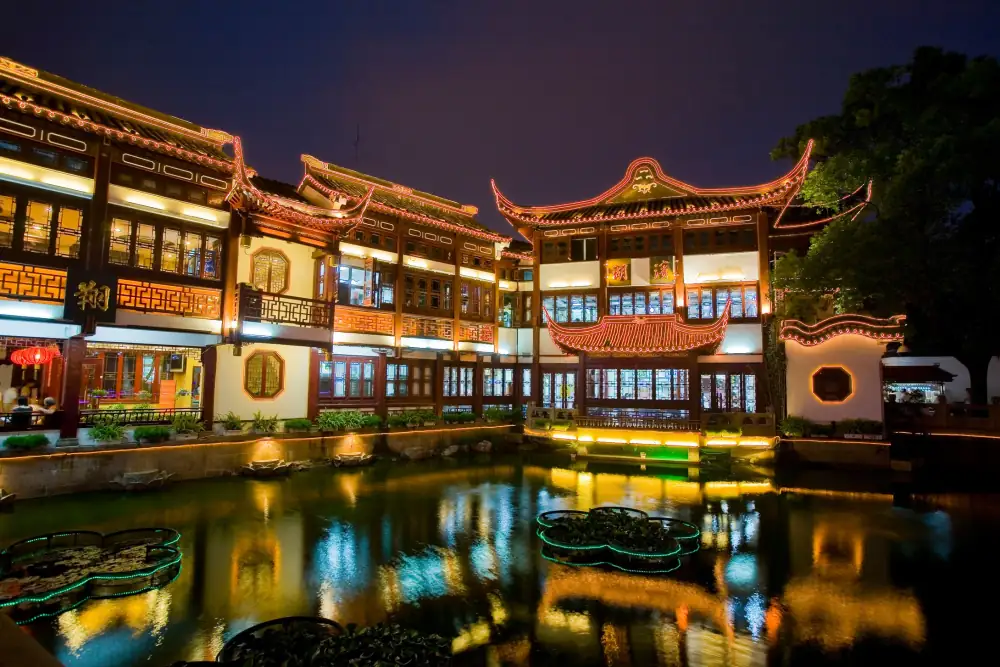
Tongli (同里) is a larger and more spread-out water town than Zhujiajiao, with better-preserved architecture and more interesting side alleys. It’s notably quieter than Zhujiajiao during the week. The Tuisi Garden (退思园, ¥60) is the main attraction — a UNESCO-listed Ming Dynasty garden that’s smaller than Suzhou’s great gardens but far less crowded.
Combined scenic area ticket: ¥100 covers the main sites including Tuisi Garden, the ancient bridges, and several historic residences.
Full day or half day? Full day (5-6 hours). The combination of the garden, historic buildings, and canal-side walking fills the day.
Wuzhen — 2 Hours, Overnight Required
Journey: Bus from Shanghai Hongqiao Bus Terminal to Wuzhen, ~2 hours, ¥50-70. Or bus from Shanghai South Bus Station. Day trips are technically possible but rushed — the atmosphere is much better in the evening and early morning.
Wuzhen (乌镇) is the most dramatic of the Yangtze Delta water towns — a UNESCO-nominated ancient canal town with beautifully preserved wooden buildings reflected in the water. It’s also the most commercial, with admission and accommodation controlled by one operator, but the nighttime lighting is genuinely spectacular.
Tickets: West Scenic Area (西栅, the overnight zone) ¥150 per person + accommodation. East Scenic Area (东栅) day ticket ¥100.
Strongly recommend overnight: The east zone is the day-tour version; the west zone is only accessible to guests staying overnight and shows the town at its most beautiful — at night with lanterns reflecting in the canal. The ¥150 day ticket is not worth the 4-hour round trip from Shanghai; the overnight experience is.
Full day or overnight? Overnight is far better. Consider making Wuzhen a separate 2-day trip rather than a long day trip.
Practical Comparison
| Destination | Journey | Cost | Best For | Time Needed |
|---|---|---|---|---|
| Suzhou | 25 min HSR | ¥28 | Classical gardens, silk | Full day |
| Hangzhou | 1 hour HSR | ¥73 | West Lake, tea | Full day |
| Zhujiajiao | 45 min bus | ¥15 | Easy canal town | Half day |
| Tongli | 1.5 hours | ¥40-60 | Quiet canal town | Full day |
| Wuzhen | 2 hours bus | ¥50-70 | Atmospheric water town | Overnight |
Booking trains: Use the 12306 app (requires account with passport) or Trip.com for English-language booking. Buy in advance for weekend and holiday travel — all these routes are popular with Shanghai weekend travelers and trains do sell out.
What about Nanjing? Nanjing is 1 hour from Shanghai by HSR (¥95-140) and has the Ming Dynasty city walls, Sun Yat-sen Mausoleum, Confucius Temple area, and Presidential Palace from the Republic of China era. It warrants its own article and is better as a 2-day trip, but technically doable as an extremely full day.