
Suzhou is the most logical day trip from Shanghai. The journey by high-speed rail takes 24–30 minutes and costs ¥24.5. The city that arrives at the other end has been called the “Venice of China” (unfairly reductive, but there’s something to it) — a city of classical gardens, silk production, canals, whitewashed walls and black tile roofs that has been one of China’s wealthiest and most cultured cities for over a thousand years.
A single day is enough to see the highlights and come back with a real sense of why Suzhou mattered and still does. Here’s how to structure it.
Table of contents
Open Table of contents
Getting There
High-speed train from Shanghai Hongqiao: The most convenient departure point. Trains depart every 15–20 minutes from early morning, reaching Suzhou North station or Suzhou station in 24–35 minutes. Cost: ¥24.5 second class.
From Shanghai Hongqiao station: This is better than Shanghai station for timing — it’s faster to access and the trains are frequent.
Which Suzhou station to use: Both work. Suzhou Station (closer to the old city and Humble Administrator’s Garden) and Suzhou North (slightly closer to Tiger Hill). For a day trip focused on central sites, either is fine — taxis from either station reach the garden area in 10–15 minutes.
Tickets: Book via the 12306 app or website, Ctrip, or Trip.com. Seats fill up on weekends so book same-day morning for weekdays, day-before for weekends.
Return timing: Trains run until late evening. A 7pm or 8pm departure back to Shanghai is comfortable.
The Gardens: Which Ones to Visit
Suzhou has nine classical gardens on the UNESCO World Heritage list. You cannot see them all in a day and shouldn’t try. The question is which three (maximum) to combine.
Humble Administrator’s Garden (拙政园) — The Essential One
The largest and most famous of Suzhou’s gardens, and the one that appears in every photograph. Built in the 16th century by a Ming Dynasty official, it covers 5.2 hectares and is laid out around interconnected ponds, covered walkways, pavilions, and carefully composed rock and bamboo arrangements.
Cost: ¥90 (summer), ¥70 (winter) Time needed: 2–3 hours at minimum
The garden is busiest from 10am–3pm. Arrive when it opens (7:30am in summer) for a dramatically different experience — morning light through the moon gates, almost no crowds in the deeper sections.
What to look for: the “Borrowed View” (借景) technique where the garden frames the distant pagoda of North Temple outside its walls. The lotus ponds in July–August. The covered walkway that runs the length of the central pond.
Master of Nets Garden (网师园) — The Small Masterpiece
A fraction of the size of the Humble Administrator’s but considered by many scholars to be the more refined design. Every element in Master of Nets is placed with such deliberate care that even a small space creates a sense of depth and complexity.
Cost: ¥40 Time needed: 1–1.5 hours Evening program: Most famous for its evening cultural performances (¥100 extra, 7:30–10pm) with Kunqu opera, pipa music, and dance spread across the garden’s different pavilions simultaneously. Excellent if your timing works out.
Tiger Hill (虎丘) — The Leaning Pagoda and History
Technically not a garden but the most historically loaded site in Suzhou. A 36-meter hill (actually an artificial mound over the burial site of Helü, the ancient King of Wu) topped by the Cloud Rock Pagoda, which has a 2.3-degree lean that’s been there for centuries.
Cost: ¥60 Time needed: 2 hours
The stone coffin pool, the ancient dueling arena where the king tested 3,000 swords before burying them, and the pagoda itself are all worth seeing. Tiger Hill feels less packaged than the UNESCO gardens and has more layers if you’re interested in Suzhou’s deep history.
Lingering Garden (留园) — If You Have Extra Time
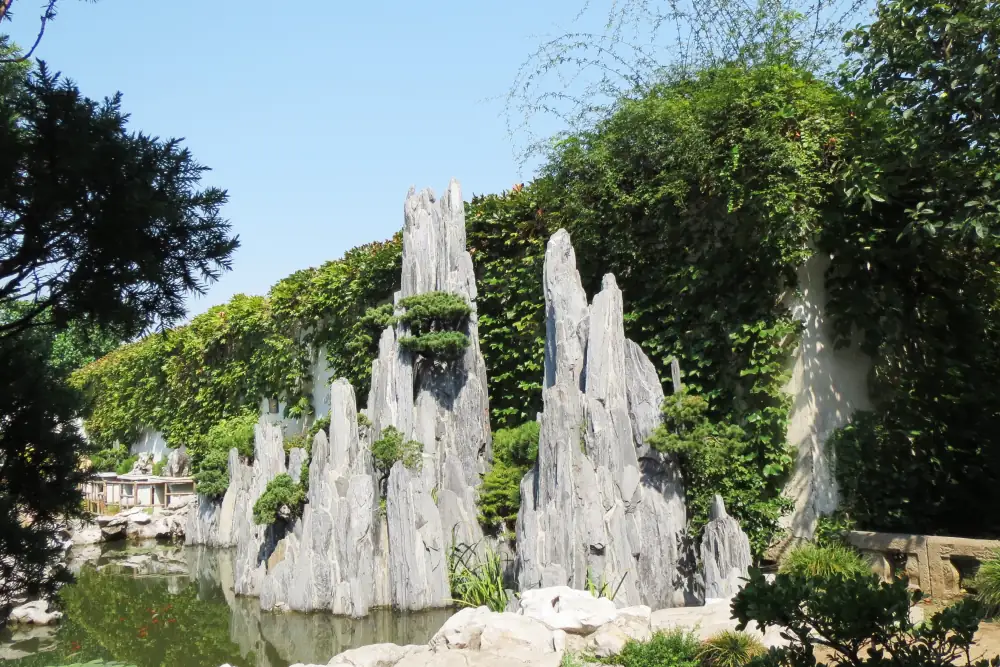
Another UNESCO garden, different in character from Humble Administrator’s — more vertical, more focused on Taihu Lake rocks, with some genuinely extraordinary stones displayed in a courtyard that seems impossibly large for the space it occupies.
Cost: ¥45 Time needed: 1.5 hours
Recommendation for a single day: Humble Administrator’s Garden (morning) + Master of Nets (afternoon) + Shantang Street canal walk (evening). This uses your time efficiently and covers the range from grandeur to intimacy.
Shantang Street (山塘街) — Canal Walk
Shantang Street is a 1.5km stretch of canal-front street from Changmen Gate toward Tiger Hill. The street is lined with traditional Suzhou buildings — whitewashed walls, black tile roofs, carved wooden storefronts — reflected in the narrow canal that runs alongside. This is the “Venice of China” image in practice.
The street is most atmospheric in the late afternoon and early evening when the tourist crowds thin slightly, shop owners pull their produce outside, and the light comes at a low angle across the water. A boat ride along the canal from a dock at the western end covers the same distance by water (¥50–80, about 30 minutes).
The street has evolved into a tourist commercial area with shops selling Suzhou silk fans, embroidery, local snacks, and tourist trinkets. The commercialization is real but the bones of the street are genuine.
Suzhou Silk
Suzhou has been China’s silk capital for over two thousand years. The city’s silk is still considered among the finest produced anywhere. If you’re planning to buy silk products, Suzhou is the place to do it — both for quality and price.
What to buy:
- Suzhou embroidery (苏绣): Silk thread embroidery on silk fabric, often double-sided with different images on each side. Genuine pieces are expensive (¥500–5,000+); tourist replicas exist at ¥50–200.
- Silk scarves: Quality varies enormously. Look for weight and feel — real silk has a specific cool, smooth weight.
- Silk clothing: Some shops sell silk qipao (cheongsam) and jackets custom-made.
Where to buy: Suzhou Silk Museum Shop (苏州丝绸博物馆): Attached to a genuine silk museum that explains the production process. Fair prices, verified quality. Shantang Street shops: Mix of quality and tourist grade. Know what you’re looking for.
Avoid: Very cheap silk products anywhere — machine-embroidered silk at ¥20 is not Suzhou silk.
Where to Eat
Suzhou-Style Cuisine
Suzhou food is softer and sweeter than most Chinese regional cuisines — a hallmark of Jiangnan (south-of-the-Yangtze) cooking.
Squirrel fish (松鼠鳜鱼): Mandarin fish deep-fried into a squirrel shape with sweet-sour sauce. A Suzhou restaurant classic, costs ¥80–150 per dish. Order it at any restaurant that lists it — the presentation alone is worth it.
Braised pork with taro: Rich, slow-cooked pork in a savory-sweet sauce. Much gentler in flavor profile than the Shanghainese version.
Beggar’s Chicken (叫花鸡): Slow-roasted chicken wrapped in lotus leaves and mud, cracked at the table. Needs advance ordering at most restaurants.
Where to eat: The Pingjiang Road area (平江路) has mid-range restaurants with canal views. Guanqian Street (观前街) is the main commercial street with more restaurants. Budget ¥80–150 per person for a proper sit-down Suzhou meal.
Practical Tips
Best visiting season: Spring (March–May) when the wisteria is in bloom inside the gardens, and October when the gardens are clear and cool.
Avoid: Chinese national holidays (Golden Week) when Suzhou is extremely crowded and garden queues extend 30–60 minutes.
Getting around Suzhou: Taxis and Didi are easy and cheap within the city. The garden cluster in the old town is walkable if you’re not rushed.
Combination with Hangzhou: Many travelers combine a Suzhou day with a Hangzhou day or overnight in a single trip from Shanghai. This works well logistically — HSR connects all three cities easily.
Returning to Shanghai: Book your return train flexibly — you don’t need a specific seat time, just confirm you’re going back on a day where trains run until 10pm (they all do).