
Lake Tai (太湖, Taihu) is one of China’s great lakes — the third largest in the country, covering 2,338 square kilometres between southern Jiangsu and northern Zhejiang. The Jiangnan region that surrounds it has been among the wealthiest and most cultured areas of China for over a thousand years, and the lake itself has shaped the entire aesthetic of Chinese garden design: the strange, eroded limestone rocks (Taihu rocks, 太湖石) that appear in virtually every classical garden in China came from this lake’s bottom, carved by water into the abstract forms that Chinese aesthetics prize above all others.
Table of contents
Open Table of contents
Turtle Head Isle & Cherry Blossoms
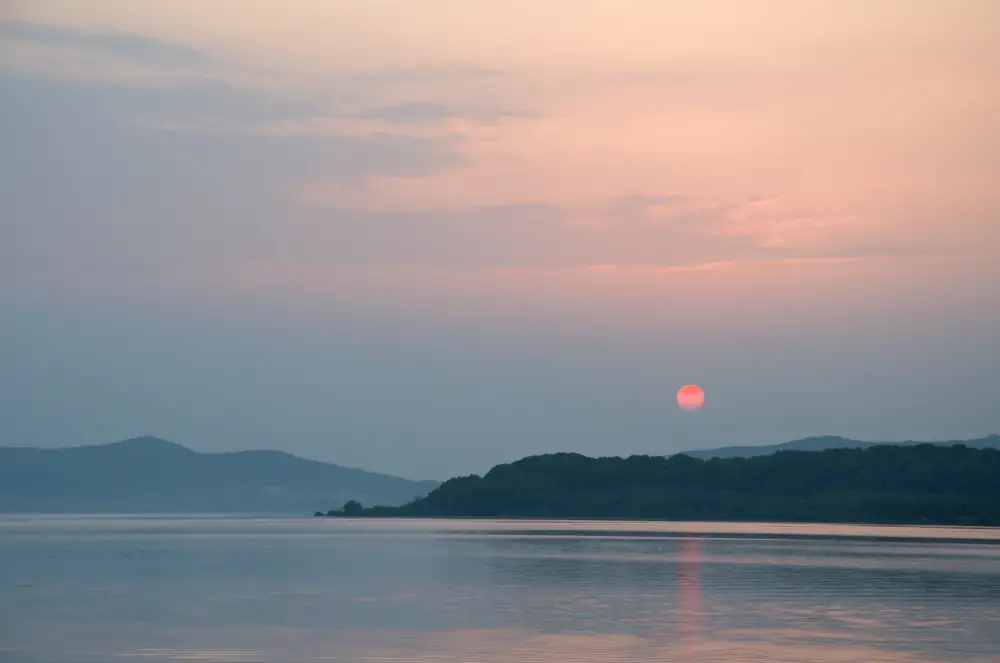
The single most visited attraction on Taihu is Turtle Head Isle (鼋头渚) in Wuxi, a peninsula that juts into the lake from its eastern shore. The park has been developed with walkways, pavilions, and viewpoints that make the most of the water views, but its seasonal claim to fame is extraordinary: in late March and early April, the entire peninsula becomes one of the largest cherry blossom viewing areas in China.
The cherry trees were planted in the 1920s and now number in the thousands. When they bloom — usually for about two weeks from late March — the pale pink flowers frame views across the silver-grey lake in compositions that look painted rather than real. The Japanese Cherry Blossom Cultural Festival (日本樱花文化节) draws crowds of up to 50,000 on peak weekend days, so an early morning arrival (gates open at 7am) is strongly recommended.
Outside blossom season, Turtle Head Isle is still worth visiting for the lake views and the boat trips to the Three Hills Scenic Isle in the middle of the lake. Admission is ¥105, including the ferry to the island viewpoints.
Getting there: Wuxi is 40 minutes from Shanghai by high-speed train. Turtle Head Isle is accessible by bus or taxi from Wuxi city centre (30 minutes, ¥30-50 taxi).
Xi Shan (West Mountain Island)
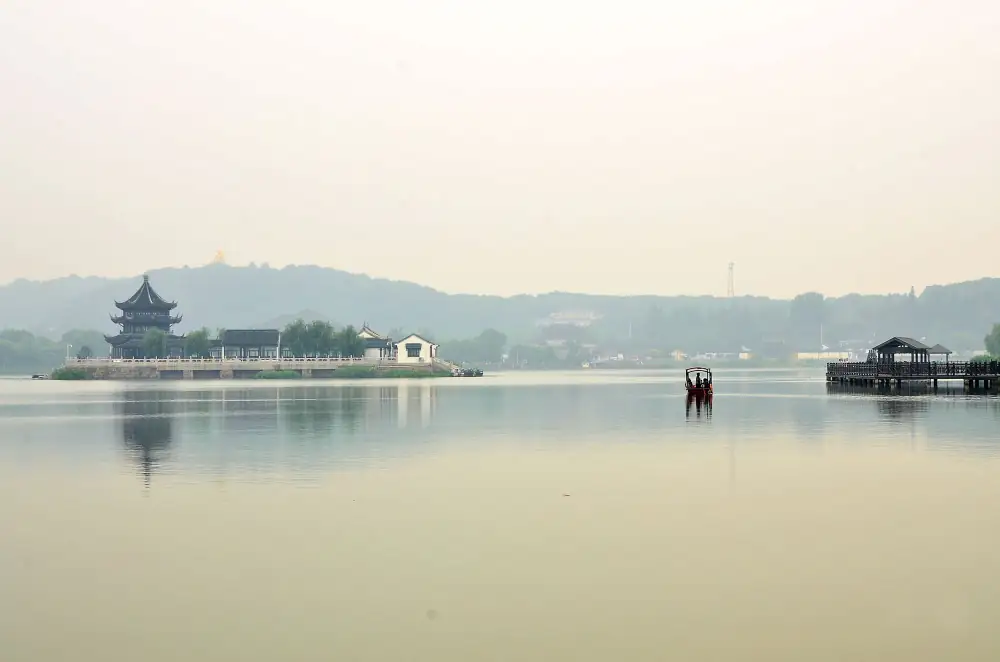
Dongshan and Xi Shan are two peninsulas — effectively islands — that extend into Taihu from the south. Xi Shan (西山, Xishan) in particular retains a slower pace than the more developed lake shores. The island is accessible via a long bridge from Suzhou and contains a dozen traditional Jiangnan villages where locals have grown the famous Biluochun (碧螺春) green tea for over a thousand years.
Biluochun is one of China’s ten famous teas and one of the few that carries a genuine geographical indication — tea bearing this name must be grown on Dongting Mountain (which Xi Shan is part of). In March and early April, during the tea harvest, villagers can be found hand-rolling the tiny snail-shaped leaves outside their doorways. You can visit tea farms, watch the processing, and buy fresh-harvest tea directly from farmers (¥200-600 per 100g for genuine first-flush Biluochun, compared to ¥50-100 for the commercial versions sold elsewhere).
The island also has several active Buddhist temples, including the thousand-year-old Baosheng Temple, and Lin Wuyi Former Residence — the ancestral home of a Tang Dynasty Confucian scholar. Walking between the villages through the tea gardens and orange orchards takes the better part of a day.
Cycling the Lake Shore
The eastern shore of Taihu between Wuxi and Suzhou has been developed with a bike path that offers one of the better urban-adjacent cycling experiences in eastern China. The path runs through Taihu National Tourism Resort, passing through parks, over small bridges, and along lakefront sections where fishermen still use traditional methods.
Bike hire is available at several points along the route (¥30-50 per day for a decent hybrid bike). A half-day circuit from Wuxi covers about 30km and includes lakefront stretches, tea garden sections, and views of the fishing villages on the southern shore.
The best cycling section for photographs is the stretch between Rendering Creek (渎溪) and the fishing harbour at Linhu, where wooden fishing boats are moored in front of whitewashed Jiangnan buildings. Early morning light on this stretch is excellent.
Connecting to Suzhou
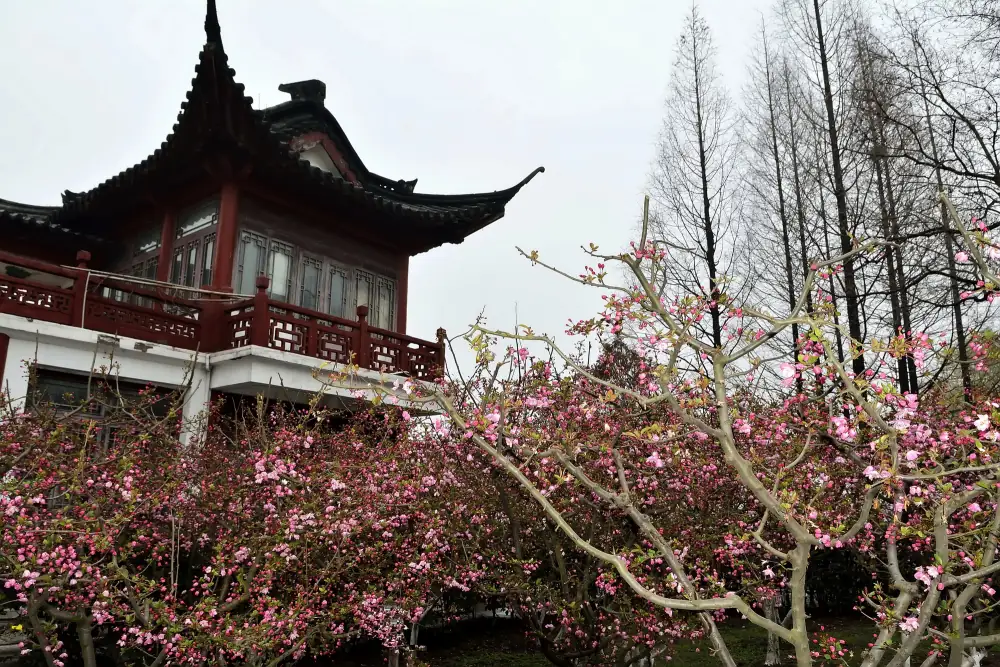
The obvious pairing for Taihu is a stay in Suzhou, 30km east of the lake. Suzhou is served by more high-speed train services than Wuxi and has better accommodation options in all price ranges.
The connection makes practical sense: start in Shanghai, take the train to Suzhou (30 minutes, ¥30-50), spend a day in the classical gardens, then take the 40-minute bus or 30-minute taxi to the Xi Shan bridge for a day on the lake island, then on to Wuxi (30 minutes by high-speed train from Suzhou) for Turtle Head Isle. The circuit returns to Shanghai from Wuxi in about 40 minutes by high-speed train.
This three-day circuit — Suzhou gardens, Xi Shan island, Turtle Head Isle — gives a satisfying cross-section of Jiangnan culture: the refined urban aesthetic of Suzhou’s garden design, the traditional rural economy of the tea island, and the natural grandeur of the lake itself.
Practical Tips
Best season: Spring (March-May) for cherry blossoms and tea harvest. Autumn is also excellent, with golden light on the lake and the orange harvest on Xi Shan. Summer is hot and humid; winter is mild but grey.
Accommodation: Both Wuxi and Suzhou have wide accommodation options. For the lake experience, a room at one of the resort hotels on Wuxi’s lakefront costs ¥500-1,200 per night and provides direct lake views. Budget options in Wuxi city centre from ¥200-350.
Lake food: Taihu’s specialties include freshwater crab (hairy crab, 大闸蟹, in season October-November), white bait (银鱼), and water chestnuts. A lakeside meal at a restaurant in Linhu village costs ¥80-150 per person.
What to buy: Fresh Biluochun tea from Xi Shan island (buy directly from farmers rather than tourist shops). Taihu rocks as garden ornaments are available but are heavy and expensive to ship — small decorative pieces make more practical souvenirs.
The Taihu area represents a version of eastern China that most international visitors miss entirely — not the famous water towns (Zhouzhuang, Wuzhen, Tongli), but the working lake shore where China’s most famous green tea still grows and where the stones that define Chinese garden aesthetics were born.