
Zhouzhuang is the water town that put Chinese water towns on the map. The painter Chen Yifei depicted its Double Bridge in a 1984 artwork that was later given to the United Nations Secretary-General, and almost overnight this quiet village in southern Jiangsu became an international symbol of traditional China. That was over 40 years ago — today Zhouzhuang receives several million visitors per year, and managing those crowds is the central challenge of any visit.
That said, the town itself is genuinely worth seeing. The canals, stone bridges, and Ming-Qing dynasty architecture are the real thing. The key is timing.
Table of contents
Open Table of contents
What Makes Zhouzhuang Special
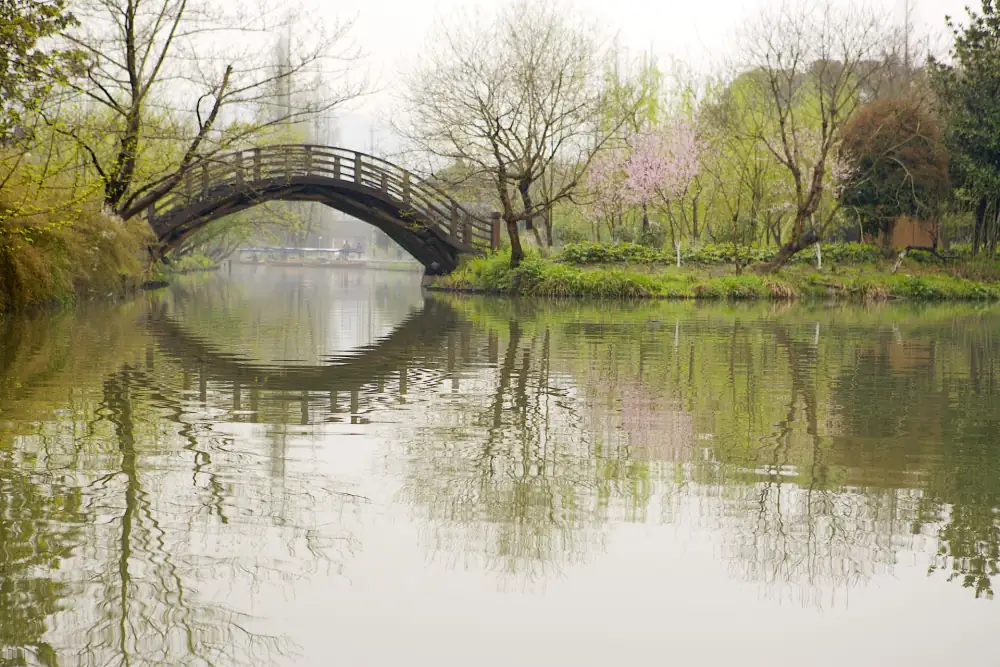
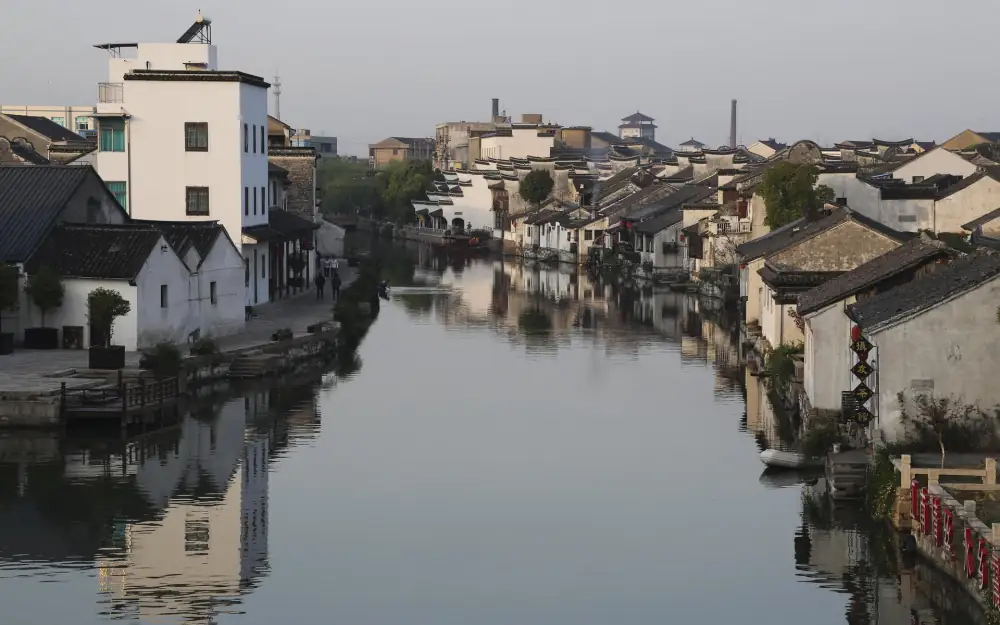
The town was founded over 900 years ago during the Song Dynasty. About 60% of the buildings date to the Ming and Qing dynasties (1368–1912), and the canal system is still functioning — residents use the waterways for daily life, not just boat tours.
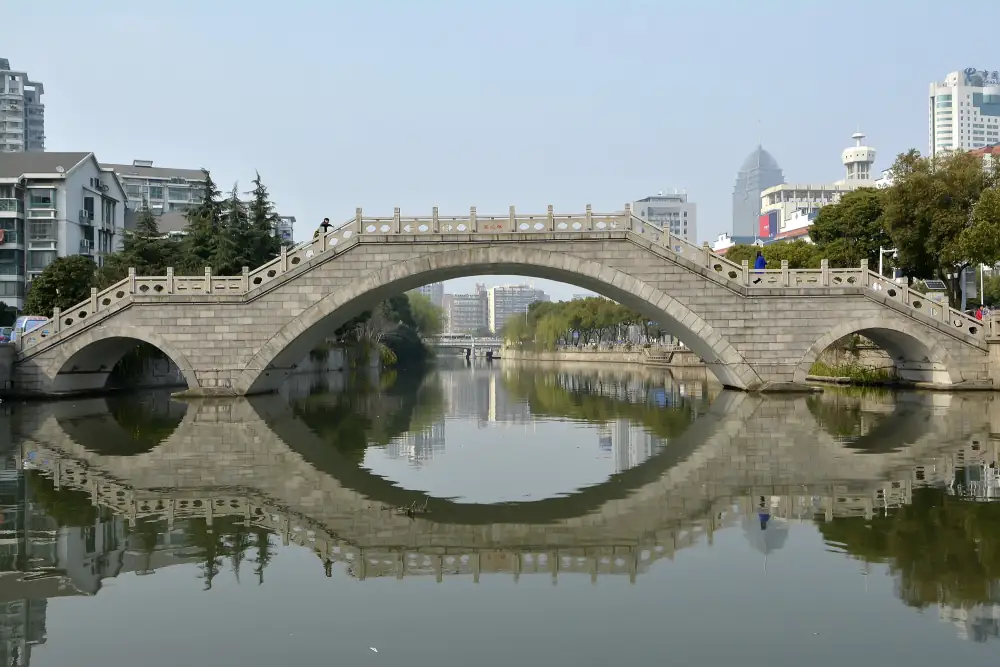
The Double Bridge (双桥) is the iconic image: two stone bridges side by side forming a shape that looks like an old-fashioned key, reflected in the still canal water. It’s at the junction of the Yinzi River and Nanshi River in the center of town. The best light for photography is early morning (before 8am) when mist sometimes hangs over the water.
The town covers about 0.47 square kilometers — small enough to walk end to end in 15 minutes — so everything is within easy reach.
When to Visit (The Crowd Problem)
Zhouzhuang is packed on weekends year-round and all week during Chinese national holidays. If you visit on a Saturday in October, you will be shuffling through crowds so dense it’s hard to see the canals.
Best times:
- Weekday mornings, arriving before 9am: You’ll have the town largely to yourself for the first hour or two
- January–February (except Chinese New Year): Lowest visitor numbers of the year, and there’s sometimes morning frost on the bridges
- Monday–Thursday outside school holidays: Manageable crowds
- Evening (after 5pm): Many day-trippers leave; the lanterns come on and the atmosphere changes entirely
Worst times: Saturday and Sunday, Chinese National Holidays (October Golden Week, Chinese New Year), and any weekend in April (spring blossom season).
Entry and Tickets
Entry fee: ¥100 per person (includes access to most historic sites inside)
Opening hours: 7:00am–6:00pm; evening ticket (5:00pm–10:00pm) ¥80
Booking: Tickets can be purchased at the gate or in advance via WeChat mini-program (recommended during peak season)
The ticket includes entry to Shen’s House (沈厅), Zhang’s House (张厅), the Chengxu Temple, and several smaller museums.
The Main Sights
Shen’s House (沈厅)
Built in 1742 during the Qing Dynasty, Shen’s House is a sprawling 7-courtyard mansion that once belonged to the Shen family — one of Zhouzhuang’s wealthiest merchant families. The complex has over 100 rooms connected by covered walkways. The furniture and household items on display give a good sense of how wealthy Jiangnan merchants lived.
Zhang’s House (张厅)
Older than Shen’s House (built in the early Ming Dynasty, around 1449), Zhang’s House is smaller but in some ways more interesting — a boat dock at the back of the house allows small boats to enter directly. The phrase “boat from the back door, sedan chair from the front” (桥从前门进,轿从后门入 was used to describe wealthy Zhouzhuang families) is illustrated perfectly here.
Canal Boat Rides
Boat rides through the canals are available throughout the day. The boats are traditional wooden punts, and the boatswomen who pole them often sing Wu opera songs during the journey — touristy, yes, but it does add something to the experience.
Price: ¥110 per boat (fits 6 people); shared boats sometimes available at ¥20–30 per person
The Double Bridge at Night
The evening illuminations transform the Double Bridge area. Red lanterns hang from the eaves of the buildings lining the canal, reflected in the water. It’s the best photographic opportunity in Zhouzhuang — and the lower visitor numbers in the evening make it far more enjoyable than the midday rush.
Food and Drink
Zhouzhuang’s signature dish is Wan San pork knuckle (万三蹄) — a slow-braised whole pork leg that has been made here for centuries. Legend has it that a Ming-Dynasty merchant named Shen Wan San invented the dish, and it became so famous that the Emperor eventually summoned him to Beijing. It’s rich, gelatinous, and best shared between three or four people. Expect to pay ¥80–120 for a whole knuckle from the restaurants along the main canal.
Other local foods:
- Zhouzhuang rice cake (周庄状元蹄): Sticky rice cake fried with pork
- Nine-turn large intestine (九转大肠): Not for the faint-hearted but a genuine local dish
- Fermented bean curd (豆腐乳): Available at street stalls for a few yuan
Getting to Zhouzhuang
Zhouzhuang is in Kunshan, Jiangsu Province, about 50km from Shanghai and 30km from Suzhou.
From Shanghai:
- Bus from Shanghai Changtu Bus Station (上海长途汽车站) near People’s Square: about 1.5 hours, ¥30–40
- Take the subway/train to Kunshan South station, then local bus or taxi (20 minutes, ¥30 by taxi)
From Suzhou:
- Direct bus from Suzhou North Bus Station: about 45 minutes, ¥25–30
- Or taxi from Suzhou central, about 40 minutes, ¥70–90
There is no train station in Zhouzhuang itself — you must transfer from Kunshan or come by bus.
Is It Worth It Compared to Other Water Towns?
Zhouzhuang is the most commercialised of China’s water towns, but it’s also the best-preserved and most photographed for good reason. If you’re only visiting one water town and want the classic “Venice of China” experience, Zhouzhuang delivers.
If you want something quieter, consider Tongli (30 minutes away) or Xitang in Zhejiang. And if you’re short on time in Shanghai itself, Zhujiajiao water town — 40km from the Bund, reachable by direct bus or Metro Line 17 — delivers a similar canal-town atmosphere without leaving the city. But if you’re willing to visit on a weekday morning or stay for the evening, Zhouzhuang at its best is hard to beat.
Practical Tips
- Wear comfortable shoes — the cobblestones are beautiful but uneven
- Bring cash; smaller food stalls don’t accept WeChat Pay
- The town is fully walkable; skip the tourist rickshaws
- Photography is best from the canal bridges themselves, not from boats
- Storage lockers are available at the main entrance for ¥10–20 if you’re carrying luggage