
Zhaoqing sits on the North River (北江) about 100km west of Guangzhou, at the point where the Pearl River delta starts to give way to the karst limestone mountains of Guangxi. The transition is visible in Zhaoqing itself: within the Star Lake scenic area, limestone pinnacles rise straight from the water like a miniature version of Guilin, surrounded by a flat delta city.
Most visitors come from Guangzhou or Shenzhen for a day or overnight trip. It’s a useful counterpoint to the Pearl River Delta’s urban intensity: greenery, walking paths, a proper mountain, and enough history (the first Jesuit mission to China’s interior was established here in the 1580s) to give it some depth.
Table of contents
Open Table of contents
Seven Star Crags (七星岩)
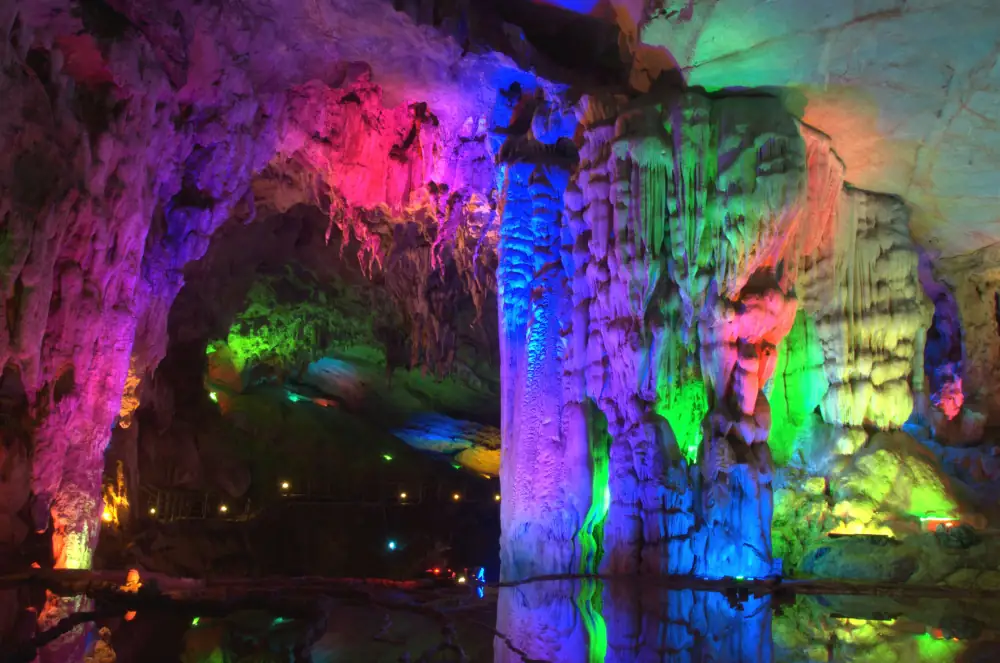
The Seven Star Crags are seven limestone karst pinnacles that rise abruptly from the middle of a lake system — the iconic image of Zhaoqing. The pinnacles are arranged in a pattern that allegedly mirrors the Big Dipper constellation (hence “Seven Stars”), though this requires some imagination from most viewing angles.
Opening hours: 7:30am–6:00pm
Entry fee: ¥120 per person (includes access to the main crags and lake area)
Location: Central Zhaoqing, about 3km north of the train station
The scenic area covers about 8.2 sq km and includes the lake (Star Lake, 星湖), the crags, several cave systems, and a series of walking and cycling paths.
Key Points in the Scenic Area
Dragon Rock Cave (龙岩洞): The most famous cave in the system, with stalactites and stalagmites illuminated by coloured lighting. About 280 metres long, the cave has been visited since the Tang Dynasty and contains inscriptions from visiting officials and scholars. Entry ¥45 (separate from main ticket in some seasons).
Diecai Tower (叠彩楼): A traditional Chinese tower on the eastern edge of the lake, with views over the water and crags. Best visited in the morning.
Stone Tablet Cliff (摩崖石刻): At the base of one of the crags, hundreds of carved inscriptions from the Tang Dynasty through the Republican period — calligraphy by noted governors, poets, and visitors.
Boat rides: Electric boats and rowboats are available for hire on Star Lake. A 30-minute electric boat circuit: ¥30 per person. Good for a different perspective on the crags.
Cycling: Bicycles can be rented within the scenic area (¥30–50 for 2 hours). The flat lakeside paths are excellent for cycling.
Photography
The classic Seven Star Crags photo — pinnacles reflected in the lake with morning mist — requires an early start (arrive by 7am) and reasonable cloud conditions. The reflections disappear once the morning wind picks up.
Best viewing time: 7:00am–9:00am
Best season: Winter morning fog (November–February) or after light rain in any season creates excellent mist conditions
Dinghu Mountain (鼎湖山)
About 20km northeast of the city, Dinghu Mountain is one of China’s first nature reserves (established 1956) and a UNESCO Biosphere Reserve. The mountain is covered in subtropical forest and has several hiking trails, waterfalls, and a Buddhist monastery.
Entry fee: ¥120 per person
Opening hours: 7:00am–6:00pm
Getting there: Bus from Zhaoqing city, about 40 minutes, ¥10–15
Qingyun Temple (庆云寺)
The main Buddhist monastery on Dinghu Mountain, founded in the Tang Dynasty and continuously occupied since. The temple complex is built into the mountain at about 600 metres elevation, with good mountain views and an active monastic community.
The temple’s Pearl Lotus Pool (宝莲池) is famous for its collection of antique Buddhist vessels. The head monk’s room is said to contain the largest bronze bell in Guangdong.
Hiking
The main trail from the entrance ascends to the summit area through dense forest with multiple waterfalls. The round trip to the summit takes about 4–5 hours. Shorter loops (2 hours) are available for those wanting less than the full ascent.
Butterfly Zone (蝴蝶谷): A natural section of the trail in spring (April–June) when hundreds of butterfly species gather at specific clearings. Photography is excellent.
The Jesuit Connection: Matteo Ricci in Zhaoqing
Zhaoqing has a historically significant place in the story of Catholicism in China. In 1582–1583, Matteo Ricci — the Italian Jesuit priest who became the most successful early missionary to China — was based in Zhaoqing as one of his first Chinese residences. He brought a world map, a clock, and Western mathematical texts, and worked to win the interest of Chinese officials and scholars.
Ricci’s residence site (利玛窦旧居): The building no longer exists, but a monument marks the location in the old city. The adjacent church area has interpretation.
Significance for history: Ricci’s work in Zhaoqing established the template for subsequent Jesuit engagement with China — presenting Western science and learning as a gateway to religious conversion. The approach had limited ultimate success but produced a remarkable cultural exchange.
Zhaoqing Old City
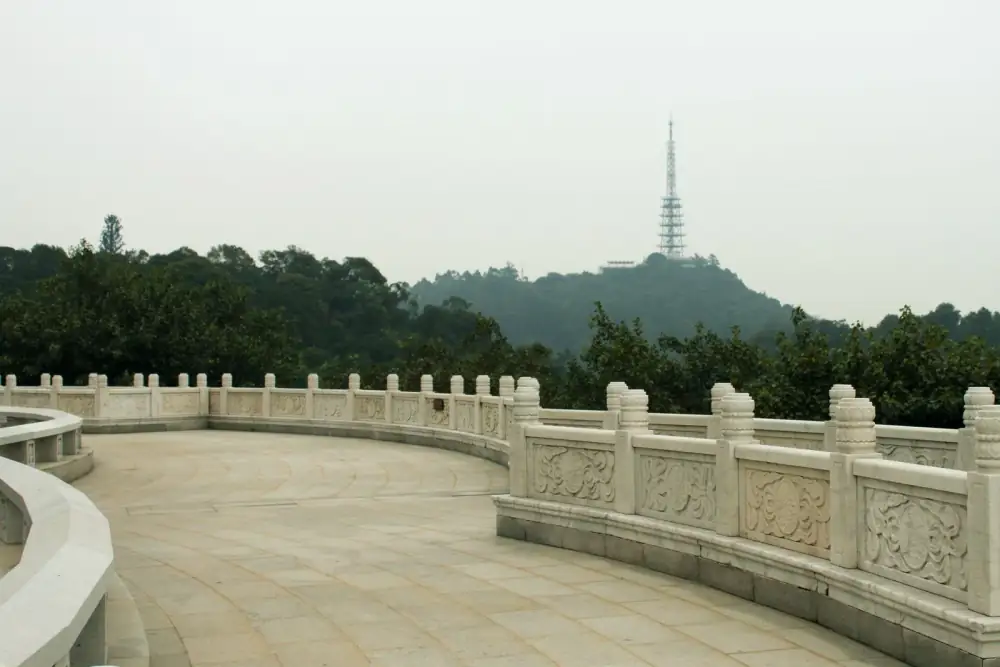
The old city of Zhaoqing has a surviving section of city wall (宋城墙) from the Song Dynasty — one of the oldest intact urban walls in Guangdong.
City wall walk: The section along Zhengdong Road is accessible for walking on top; about 1km of wall is in good condition. Views over the river and old city.
Dongmen Gate area (东门): The main surviving gate tower from the Song period, well-preserved. Entry ¥15.
Where to Eat
Zhaoqing has its own Cantonese food specialties:
Zhaoqing rice dumplings (裹蒸粽): Famous throughout Guangdong — large sticky rice dumplings wrapped in lotus leaves and grass, containing pork, mushrooms, and chestnuts. A Zhaoqing specialty particularly associated with the Dragon Boat Festival, but available year-round. ¥8–15 each from street vendors.
Fresh river fish: The North River produces good freshwater fish. Restaurants along the river serve steamed or braised river fish — clear-flavoured and very fresh.
Pig’s offal congee (猪杂粥): Cantonese congee with pig’s kidney, liver, and intestines; ¥15–25; a staple of morning markets.
Getting to Zhaoqing
From Guangzhou: High-speed train from Guangzhou South to Zhaoqing, about 30–40 minutes, ¥45–65. Very practical for a day trip.
From Guangzhou Foshan: About 1 hour by high-speed from Foshan West.
From Shenzhen: About 2 hours by high-speed train.
Within Zhaoqing: City buses and taxis. The Seven Star Crags area is in the city centre; Dinghu Mountain requires a separate bus journey.
Suggested Itinerary
Day Trip:
- 7:00am–11:00am: Seven Star Crags (early for the best light and mist)
- 11:00am–12:30pm: Lunch at a river-view restaurant (try the rice dumplings)
- 1:00pm–5:00pm: Dinghu Mountain (bus, entrance, short hike)
- Return to Guangzhou by HSR
Overnight:
- Day 1 afternoon: Arrive, check in, evening at the lake
- Day 2 morning: Full Seven Star Crags walk (early)
- Day 2 afternoon: Dinghu Mountain
- Day 3 morning: City wall and old town before return
Where to Stay
Central Zhaoqing: Multiple mid-range hotels ¥200–450/night within walking distance of the Seven Star Crags entrance. Zhaoqing International Hotel is a reliable option.
Near Dinghu Mountain: Several resort hotels with good outdoor setting, ¥300–600/night; good for those prioritizing the nature reserve.