
The sections of the Great Wall closest to Beijing — Badaling and Mutianyu — draw millions of visitors for good reason, but serious hikers and photographers have long known that the best Great Wall experience lies further east and north, in sections that combine dramatic restoration with wild unrestored stretches, empty ridgelines, and watchtowers that haven’t been touched since the Ming Dynasty built them 600 years ago.
Table of contents
Open Table of contents
Jinshanling: The Photographer’s Wall
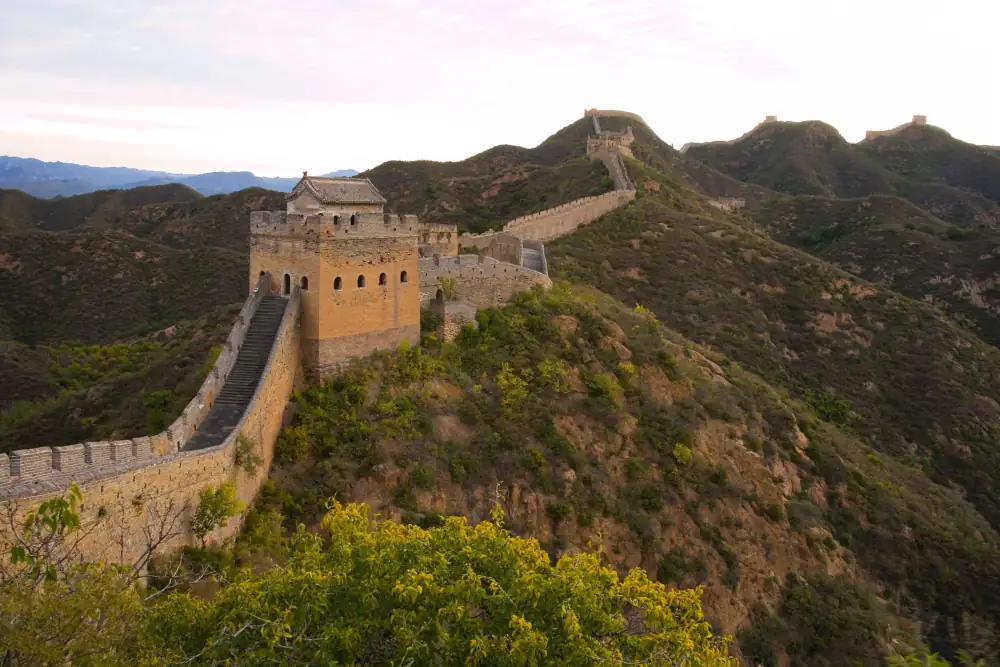
Jinshanling (金山岭) sits 130km northeast of Beijing in Hebei province and is consistently rated as the most photogenic section of the entire Great Wall. The 10.5km section combines restored towers with partially collapsed stretches, creating a visual rhythm of ruined and intact that captures the Wall’s long history far better than any fully restored section can.
The wall here follows a dramatically ridged mountain range. From any of the restored watchtowers, the wall curves away in both directions, rising and dipping with the terrain in a way that produces the S-shaped compositions that define Great Wall photography. The towers themselves are unusually varied — Jinshanling’s Ming Dynasty architects experimented with different designs here, so each of the 67 towers has a slightly different roofline, size, and internal structure.
Sunrise at Jinshanling is the reason photographers and serious visitors make the early drive from Beijing. Arrive at the base before dawn (the entrance opens at 6am, with a pre-dawn photography arrangement possible through the ticket office), hike up to the fifth or sixth tower from the eastern entrance, and wait. When the sun rises over the ridgeline to the east, the mist that fills the valleys below the wall turns golden and the towers emerge from it in silhouette. This is one of the most spectacular sunrise experiences in northern China.
Admission to Jinshanling is ¥65. The hike from east to west across the full section takes 3-4 hours at a moderate pace. The Simatai section (see below) begins at the eastern end of Jinshanling, and a combined hike linking both is the classic Great Wall day.
Simatai: The Wild Wall
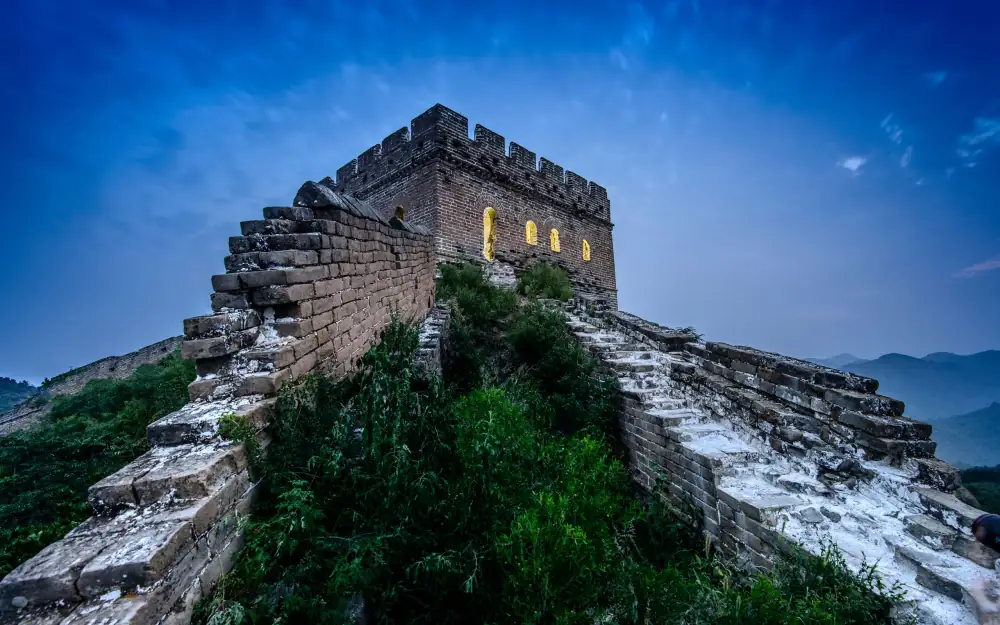
Simatai (司马台) is the most dramatic of all accessible Great Wall sections. Unlike Jinshanling’s balanced restoration, Simatai’s eastern portion — beyond the Wangqinglou (望京楼) tower at the top of the steepest section — has never been restored. The wall crumbles on the ridgeline above a near-vertical cliff face, the brickwork deteriorating into rough stone, the towers roofless and open to the sky.
The western Simatai section (accessible separately with its own ticketing) connects to Jinshanling and is moderately restored. The eastern section, requiring a separate admission and only accessible with a guide, climbs to the most vertiginous stretch of walkable wall in the Beijing region. The section known as the “Sky Bridge” — a narrow spine of wall with near-vertical drops on both sides — is only for those completely comfortable with heights. Steps in this section approach 70-degree angles.
Simatai Night Wall: The western section has been developed with lighting for evening visits. The walk along illuminated wall above the Miyun Reservoir is genuinely atmospheric, and the Gubei Water Town resort below (a recreation of a Northern China water town, somewhat artificial but comfortable) has made Simatai into a reasonable overnight option. The night walk costs ¥100 and runs on weekends and holidays.
Combined Jinshanling-Simatai hike: Allow 6-7 hours for the full traverse. Water and snacks are essential — vendors exist at the Jinshanling entrance and at Simatai, but nowhere in between.
Panlongshan: The Empty Wall
For those wanting the wild, tourist-free Great Wall experience, Panlongshan (盘龙山) in Miyun County is the answer. This unrestored section requires some determination to reach — no shuttle buses, limited signage — but rewards with complete solitude on a wall that is genuinely falling apart in all the right ways.
The section near Gubeikou village has been known among Wall aficionados for decades. The old road to Gubeikou passes under the Wall at a dramatic mountain pass where Ming Dynasty soldiers once guarded the northern approaches to Beijing. The Wall here splits into two parallel lines (outer and inner walls) in a design that appears nowhere else — a defensive depth that suggests the Ming engineers considered this pass particularly vulnerable.
Hiking Panlongshan is free but requires good footwear and a willingness to scramble. The wall crests are often broken and the towers are roofless but largely intact structurally. You may hike for an hour and see no other visitors.
Zhangjiakou & the 2022 Winter Olympics Legacy
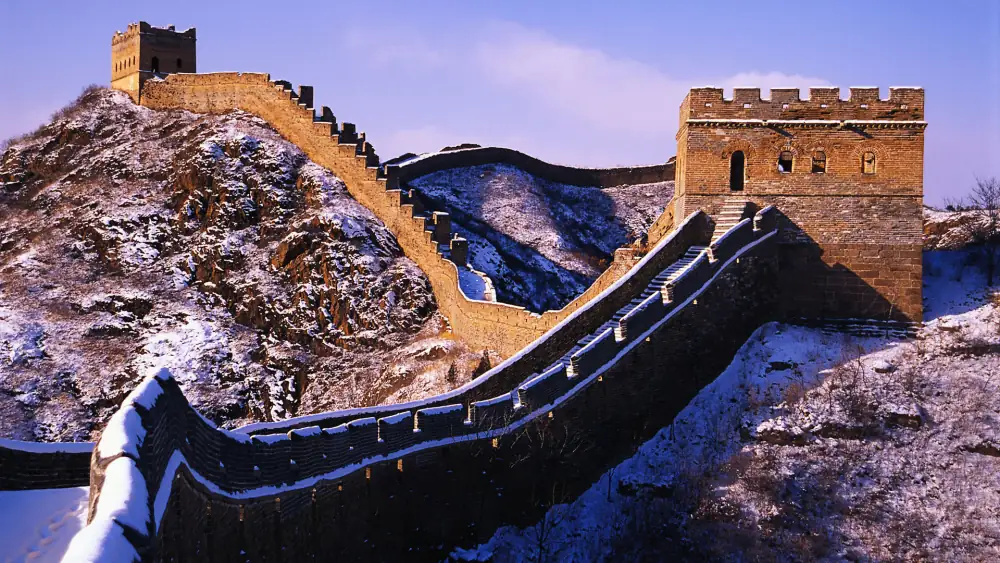
Zhangjiakou (张家口), 175km northwest of Beijing in Hebei, hosted the alpine skiing and biathlon events of the 2022 Winter Olympics. The Zhangjiakou Chongli ski area is now one of China’s best ski resorts, with runs designed for Olympic-level competition but open to recreational skiers from November through March (lift passes ¥300-500 per day, ski rental packages ¥200-400). The Olympic venues are also open for tours in the off-season.
The surrounding area has its own Great Wall sections, including the less-visited Dajingmen Pass where the wall meets one of the ancient trade routes to Mongolia. The wall here has different characteristics from the more famous eastern sections — built in earthen ramparts rather than brick in many places, reflecting the local construction materials and the speed with which these western sections were constructed.
Getting There from Beijing
Jinshanling & Simatai: No direct public transport. Options include:
- Hiring a car from Beijing (¥400-600 for a return day trip, easy to arrange through hotels)
- The Simatai direct bus from Beijing’s Dongzhimen bus station on weekends (¥100 return)
- Joining an organised tour (Beijing has numerous hiking clubs that run Wall day trips, typically ¥200-350 per person all-in)
Panlongshan/Gubeikou: Bus from Beijing’s Dongzhimen station to Miyun, then local bus or taxi to Gubeikou village (total journey about 2.5 hours).
Zhangjiakou: High-speed train from Beijing Qinghe station to Zhangjiakou South, 1 hour (¥100-150). The ski area is a further 30 minutes by shuttle.
The Great Wall is genuinely more rewarding the further from Beijing you go. The solitude of Panlongshan or the golden light of a Jinshanling sunrise connects you to the scale and ambition of Ming Dynasty construction in a way that the busy sections closer to Beijing cannot.