
Table of contents
Open Table of contents
- The Wild Wall Philosophy
- Jiankou (箭扣) — The Iconic Crumbling Wall
- Zhuangdaokou (庄道口) — Wooded Ridge Hiking
- Huanghuacheng (黄花城) — Water Great Wall
- Gubeikou (古北口) — Ming and Qi Dynasty Walls
- Simatai at Night (司马台)
- Camping on the Wild Wall
- Multi-Day Wild Wall Traverse Planning
- Photography Tips for the Wild Wall
- What to Pack
- Safety Realities
- Best Time to Visit
The Wild Wall Philosophy
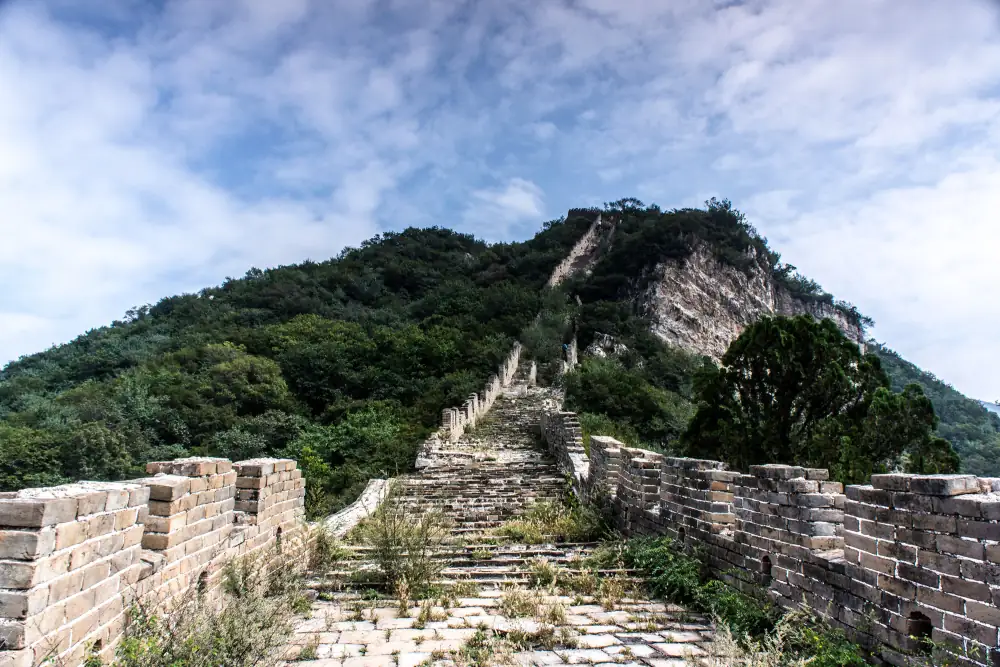
First, some context. The Great Wall stretches over 21,000km and was built across multiple dynasties. The sections most tourists visit are Ming Dynasty (1368–1644) sections that were heavily restored in the 20th century. But the majority of the Wall is unrestored — crumbling, overgrown, often structurally unstable.
Hiking the wild Wall requires a different mindset than a tourist attraction visit. There are no safety barriers, no rescue services on call, and no clear path markings. Sections that look solid from below can be dangerously eroded. The rewards — solitude, raw history, some of the most dramatic landscapes in northern China — are equally extreme.
Important note for 2026: Regulations around wild Wall hiking have tightened in recent years. Some sections officially prohibit hiking or require permits. I’ve noted the current situation for each section below, but always check local notices on arrival and follow guidance from village guides.
Jiankou (箭扣) — The Iconic Crumbling Wall
Jiankou is the wild Wall section that appears in all those dramatic photos — steep angles, missing sections of parapet, towers balanced on knife-edge ridges. It’s become famous precisely because it’s photogenic in its ruin. The name means “arrowhead notch” after the distinctive shape of one section.
Location and Access
Jiankou is in Huairou District, about 100km north of central Beijing.
Getting there by public transport:
- Take Metro Line 15 to Huairou North (怀柔北站)
- From Huairou Bus Station, take the H24 bus to Xizhazi Village (西栅子村) — roughly 1.5 hours, ¥7
- The village is the trailhead; hike up from here
By private car/taxi: DiDi from Huairou town to Xizhazi Village takes about 40 minutes and costs ¥60–80. Arrange return pickup or the driver may wait (negotiate).
By tour: Various operators in Beijing run Jiankou day trips, typically ¥200–350 per person including transport, guide, and sometimes lunch.
Jiankou Trail Options
Route 1: Xizhazi Village → Yingfei Daoyang (鹰飞倒仰) — 2–3 hours one way This is the most popular Jiankou route. You ascend through forest from the village, hit the Wall, then traverse to the famous “Eagle Flies Inverted” section where the Wall climbs at nearly 45 degrees. It’s challenging but manageable for fit hikers. Don’t attempt in icy conditions.
Route 2: Full Jiankou traverse to Mutianyu — 6–8 hours The longer through-hike connects wild Jiankou with the restored Mutianyu section. You descend through Niuyukou Village (牛犄角峪) at the far end. This route requires a local guide for navigation. The final descent into Mutianyu lets you take a toboggan ride down — a surprisingly fun end to a hard day.
Practical Info for Jiankou
- No official entrance fee (though the village may collect a small parking/access fee of ¥10–20)
- Hiking poles are strongly recommended — the steep sections are much safer with them
- Wear proper hiking boots with ankle support — not trail runners
- Carry at least 2 liters of water; there’s none on the Wall
- Groups of 2+ strongly advised; solo hiking here has resulted in rescues
Zhuangdaokou (庄道口) — Wooded Ridge Hiking
Zhuangdaokou offers a very different wild Wall experience from Jiankou. Where Jiankou is dramatic and exposed, Zhuangdaokou’s Wall runs through dense forest, creating a moody, atmospheric hike that’s especially beautiful in autumn (October–November) when the leaves turn.
Location and Access
Also in Huairou District, west of Jiankou. Take Metro to Huairou North, then bus H21 toward Bohai Town (渤海镇), get off at Zhuangdaokou Village (about 1.5 hours from Huairou, ¥10).
Alternatively, arrange a private driver through your accommodation in Beijing.
The Zhuangdaokou Trail
The Wall here runs along a forested ridge with good views between the trees. The section is roughly 8km long and can be done as an out-and-back or connected to Jiankou for a multi-day adventure. Difficulty is moderate — less exposed than Jiankou but still involves scrambling over rubble in places.
The highest point offers views north into the Yan Mountains. On clear autumn days you can see 50km or more.
Estimated time: 4–6 hours for the main ridge traverse
Huanghuacheng (黄花城) — Water Great Wall
This is the most unusual wild Wall section — part of it runs directly through a reservoir, creating the striking image of Wall towers rising from still water. Huanghuacheng is in the same general area as Jiankou and Zhuangdaokou, about 80km from Beijing.
Getting There
From Huairou, take bus H14 or H30 toward Huairou Lake (怀柔水库) area. Taxis/DiDi from Huairou town cost ¥50–70.
What to See
The “Water Wall” photo spot is accessible by boat (¥40/person for a short ride) or by walking along the reservoir shore. The adjacent unrestored Wall section can be hiked without crowds.
Entry area fee: ¥45 adults, includes boat rides to the Water Wall section. Open 8am–5pm.
Gubeikou (古北口) — Ming and Qi Dynasty Walls
Gubeikou is historically significant — this is where two dynasties’ worth of Wall construction overlaps, so you can see both the older, rougher “Qi Dynasty Wall” and the better-preserved Ming Dynasty Wall in close proximity. It’s also more accessible and less dangerous than Jiankou.
Location
About 130km northeast of Beijing, in the Miyun District.
Getting there:
- From Dongzhimen Transport Hub (东直门), take bus 980 branch lines toward Gubeikou Town. Journey: 2.5–3 hours, ¥30–40
- Or drive/DiDi from central Beijing: 1.5–2 hours depending on traffic
The Gubeikou Experience
The Wall here hasn’t been restored but also hasn’t dramatically crumbled, making it accessible for less-experienced hikers. A circular route of about 6km takes you along the Panlongshan (盘龙山) section with excellent views. Difficulty: moderate.
There’s also the attached Gubeikou Water Town (古北水镇), a privately-developed heritage tourism complex next to the Wall. It’s quite commercial but the accommodation is good quality — staying here and hiking early morning before crowds arrive works well. Entry to the town: ¥180/person; Wall hiking is included.
Simatai at Night (司马台)
Simatai, while partly restored, offers something unique: China’s only authorized nighttime Great Wall experience. From around April to October, a section of Simatai is illuminated and open for evening visits (8pm–10pm). The combination of ancient stone, golden light, and mountain darkness creates an unforgettable atmosphere.
Day tickets: ¥80; Evening tickets: ¥100. Book in advance at weekends.
The adjacent Gubeikou Water Town has good accommodation if you want to combine day and night Wall visits.
Camping on the Wild Wall
Overnight camping on the Wall itself is officially not permitted in most areas, but camping in the mountains near the Wall is a gray area. In practice, small groups of experienced hikers do camp, and the experience of watching sunrise over the Wall from a tent is extraordinary.
If you do camp near the Wall:
- Pack out everything — leave zero trace
- Use existing flat areas rather than clearing vegetation
- Don’t light fires (extreme fire risk in dry seasons)
- Be aware that rangers do patrol some areas and may ask you to move
- Best seasons: May–June and September–October
Multi-Day Wild Wall Traverse Planning
Connecting multiple sections into a multi-day trek is possible for experienced mountain hikers. A popular 3-day route:
Day 1: Jiankou traverse, sleep in Xizhazi Village guesthouse Day 2: Hike to Zhuangdaokou, connect along ridge Day 3: Descend to Huanghuacheng, return to Beijing
Village guesthouses (农家乐) along the route offer basic rooms for ¥60–100/night including simple meals.
Hiring a local guide for a multi-day traverse is strongly recommended — these mountain villages have residents who have walked every meter of the Wall above them and know which sections are safe and which are dangerous. Rates: ¥200–400/day.
Photography Tips for the Wild Wall
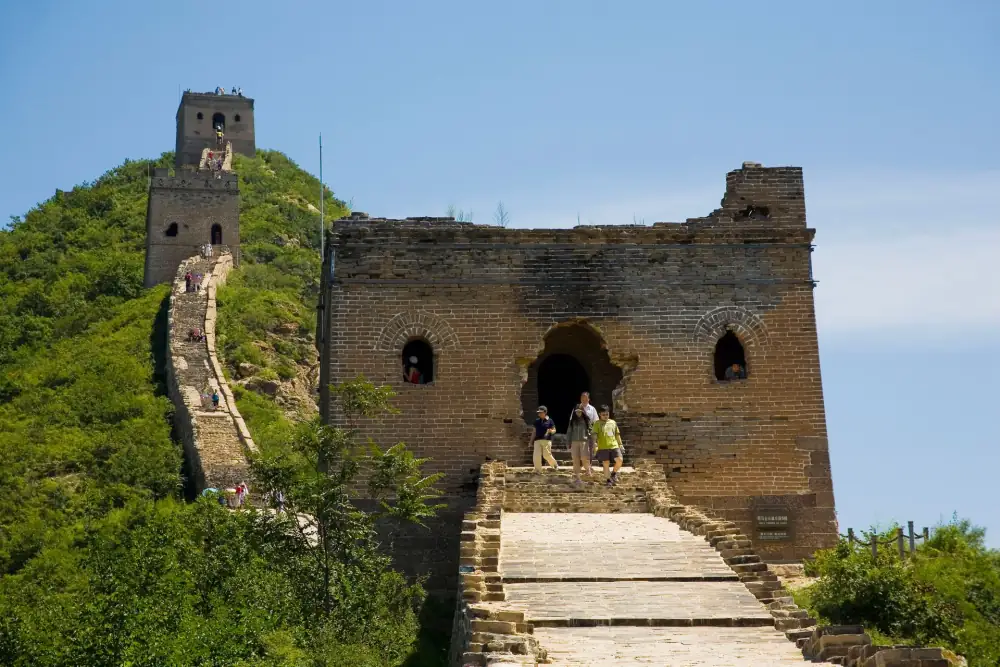
The unrestored Wall is a photographer’s paradise, but getting the best shots requires thinking about light.
Golden hour: The Wall’s silhouette shape benefits enormously from low-angle morning or evening light. Arrive at the trailhead before sunrise (carry a headlamp) to be on the Wall as the light hits.
Mist and fog: Spring mornings (April–May) often produce fog in the valleys that swirls around the towers — one of the most photographed Wall conditions. Monitor weather forecasts.
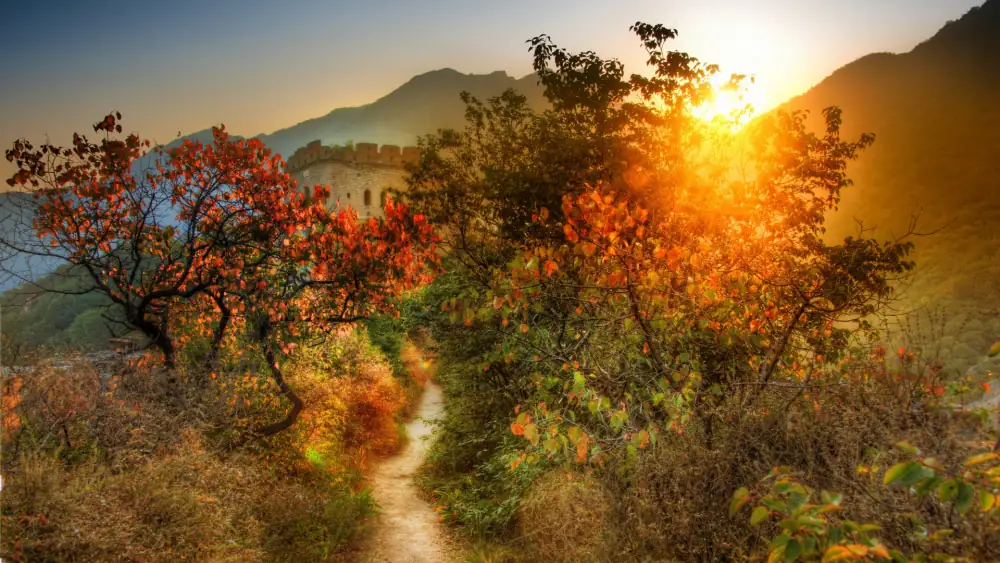
Autumn foliage: October and early November, when the forests on the mountain slopes turn red and gold, create the warmest-colored Wall photos.
Winter: Snow on the Wall and clear skies can produce stunning images, but conditions are dangerous — ice on the parapet can be fatal on steep sections.
What to Pack
Prepare for a real mountain hike:
- Hiking boots with ankle support (mandatory)
- Trekking poles (strongly recommended for Jiankou)
- 2–3 liters of water
- High-energy snacks — trail mix, energy bars
- Sun protection: sunscreen, hat, sunglasses (ridge hiking means full exposure)
- Rain layer (mountain weather changes fast)
- First aid kit including bandages for scrapes on rough stone
- Fully charged phone with offline maps downloaded (maps.me or Gaia GPS work well)
- Emergency whistle
Safety Realities
I want to be honest about this. Every year there are rescues and occasional fatalities on wild Wall sections, almost always because hikers underestimated conditions. The specific risks:
- Structural collapse: Old brick can give way without warning. Test surfaces before putting weight on them, especially parapets and steps.
- Weather changes: What starts as a clear hike can become a wet, slippery scramble if clouds roll in.
- Navigation: Getting off-route in the mountains above these Wall sections is disorienting. Download offline maps before you go.
- Solo hiking: If you fall and injure yourself on a remote section, nobody may find you for hours or days.
Go with at least one other person. Tell someone your route and expected return time. These basic precautions make wild Wall hiking a manageable adventure rather than a reckless one.
Best Time to Visit
Spring (April–May): Green hills, wildflowers, occasional photogenic mist. Fewer tourists than autumn. Some sections muddy after rain.
Autumn (October–November): Peak season for a reason — the foliage colors and clear skies are spectacular. Weekends get busy; midweek is much better.
Winter (December–February): Snow creates dramatic beauty but hiking is dangerous on icy sections. Only for very experienced hikers with the right equipment.
Summer (June–August): Hot and often hazy, with afternoon thunderstorm risk on ridges. Early morning starts are essential.
The wild Wall is more than a tourist attraction — it’s an encounter with something ancient and honest about the scale of human effort and the passage of time. Standing on a crumbling tower above clouds of morning mist, with no one else in sight, you understand something about this country that no museum can convey.