
The Great Wall has 21,196km of walls, trenches, and fortifications according to the most comprehensive survey conducted by the Chinese government. Of this, visitors can realistically access perhaps a dozen sections with existing infrastructure. Mutianyu (慕田峪) — 73km northeast of Beijing in Huairou District — is the one that best balances dramatic scenery, quality restoration, manageable crowds, and practical accessibility. It’s not the most authentic (that would be an unrestored section), nor the most famous (Badaling gets more visitors), but for most travellers it’s the best combination.
Table of contents
Open Table of contents
Why Mutianyu Over Badaling
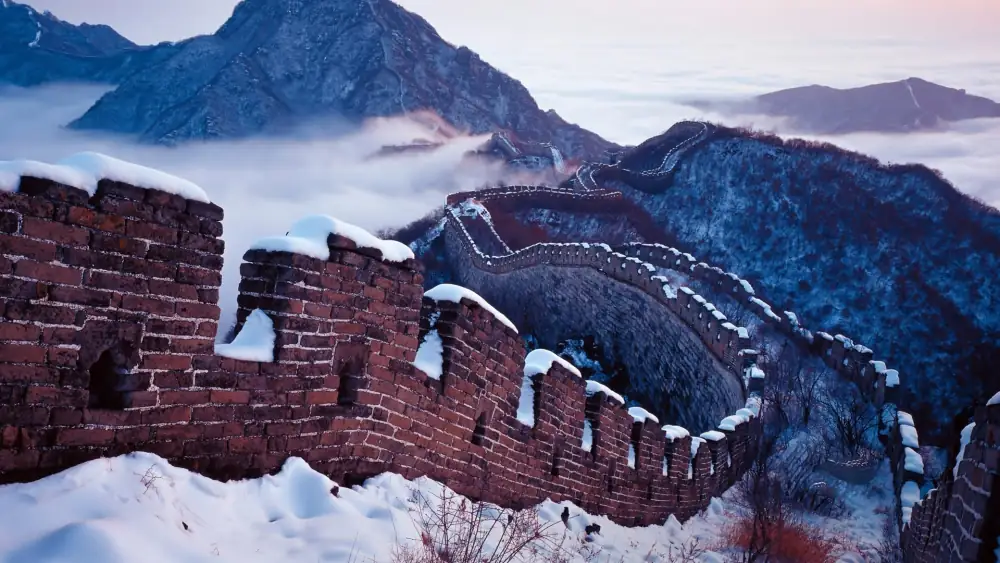
Badaling is the most visited section of the Great Wall on Earth — over 10 million visitors a year, making it one of the busiest tourist sites anywhere in the world. On weekends and national holidays, the wall at Badaling is essentially a very scenic pedestrian traffic jam. The restoration is thorough and the facilities are good, but the experience of standing on the Great Wall surrounded by thousands of other people is not the experience most visitors come to China to have.
Mutianyu has good facilities, solid restoration, and significantly fewer visitors — typically 10-20% of Badaling’s volume on the same day. The section of wall here is slightly longer (4.5km of walkable wall with 23 watchtowers) and the scenery arguably more dramatic, particularly in autumn when the forest that covers the hillsides below the wall turns red and yellow.
The toboggan slide descent (discussed below) is also a strong distinguishing feature that families with children find decisive.
The Section Layout
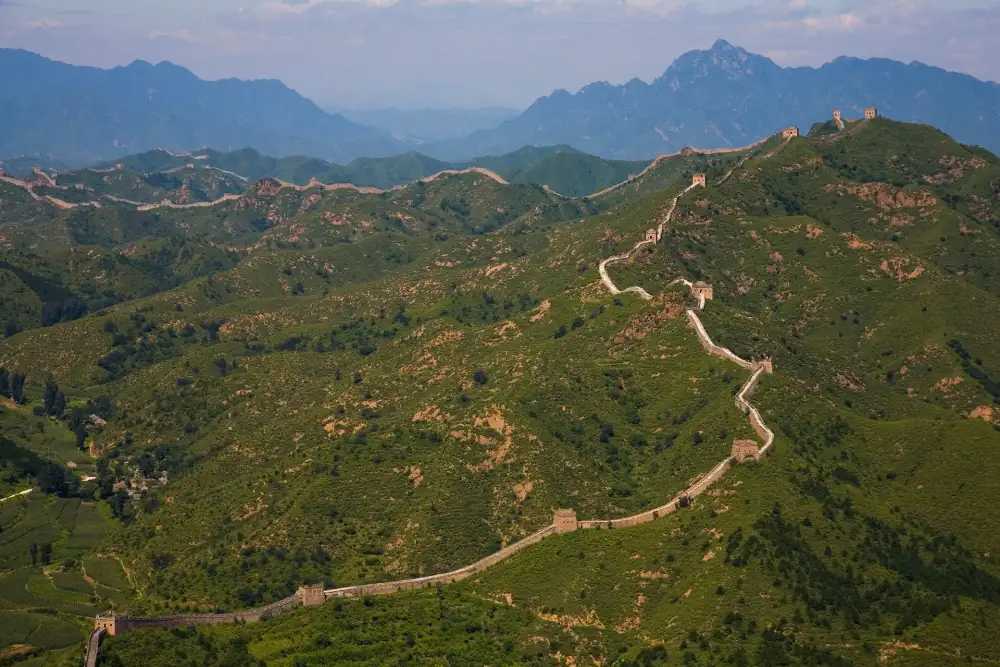
Mutianyu’s accessible section runs roughly east-west along a mountain ridge. The main entrance and cable car base are at the centre. The wall can be explored in both directions from where you arrive.
East (toward Tower 14 and Tower 20): The eastern section is steeper and has more dramatic cliff drops below the outer wall face. Tower 14 is the most photographed single structure at Mutianyu — it sits at a turn in the wall where the ridgeline curves and the wall extends in both directions creating the S-shaped composition familiar from postcards.
West (toward Tower 4 and Tower 6): The western section includes the Ox-Horn Wall (牛角边) — a section where the outer wall extends at a sharp angle from the main wall line, a defensive design that allowed archers to shoot at attackers approaching the main gate from the side. This section is less crowded than the eastern approach and the views west into the folded mountain ranges are extensive in clear weather.
Allow at least 2 hours on the wall to walk the main section properly. A thorough exploration of both east and west sections takes 4 hours. There is nowhere to buy substantial food on the wall itself — the restaurant area is at the base.
Tickets & Access Options
Full ticket (¥65): Admission to the Mutianyu scenic area. This is the base ticket that covers access to the hiking path up to the wall. The path up takes about 40 minutes and is steep but manageable for anyone in reasonable health.
Cable car (索道, ¥100 round trip, ¥60 one way up): The gondola cable car takes 8 minutes and delivers you to the wall near Tower 14. This is the best option if time is limited or for those who find the steep path challenging.
Chairlift (缆椅, ¥60 one way up, available spring-autumn): An open chairlift that provides an excellent aerial view of the wall from below on the way up. More atmospheric than the gondola but weather-dependent.
Toboggan slide (滑道, ¥100): The toboggan slide descends from near Tower 6 at the western end of the wall down to the base on a metal-tracked slide. Each rider controls their own small toboggan with a hand brake. This is genuinely fun and takes about 15 minutes — children are enthusiastic, adults are often surprised by how much they enjoy it. The slide requires starting from the western section of the wall; plan your walk to end at Tower 6.
Recommended combination for most visitors: Cable car up (¥60) to arrive at the wall quickly and fully energised, walk east to Tower 20 for the best views (1.5 hours), walk back west past the cable car arrival point to Tower 6 (another 45 minutes), toboggan down (¥100). Total on-mountain time about 3 hours.
Best Time to Visit
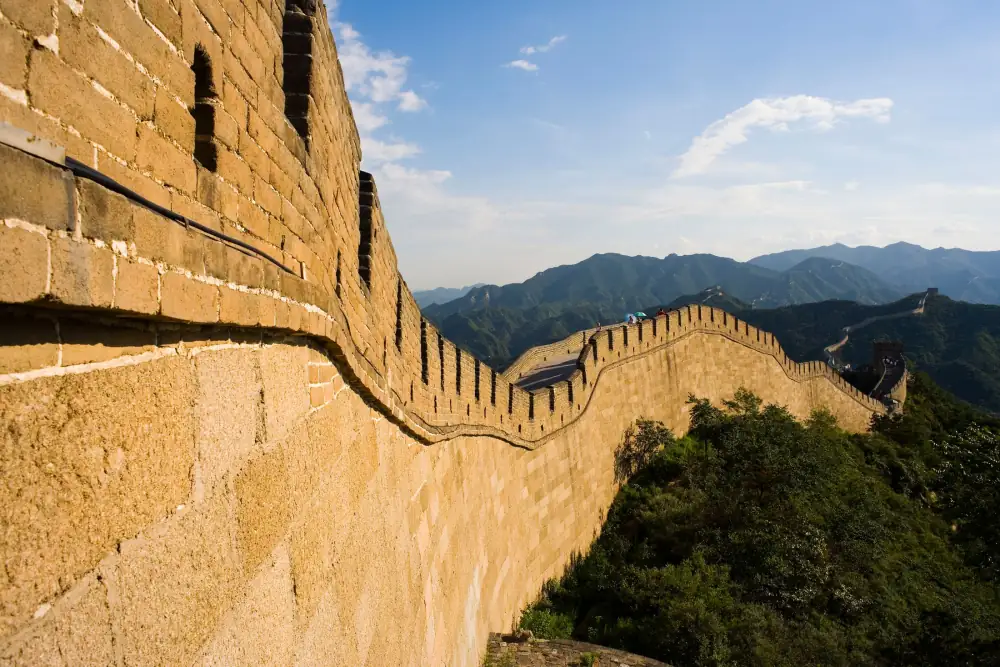
Season: Autumn (October-November) is the most beautiful — the wall with red and golden forest on both sides is extraordinary. Spring (April-May) has flowering trees below the wall. Winter (January-February) brings possible snow on the wall and near-empty conditions but also risk of icy paths (bring microspike traction devices if visiting after snowfall). Summer is the most crowded.
Time of day: Gates open at 7:30am. Arriving between 8-9am on weekdays gives the closest thing to a solitary experience available at a well-developed Great Wall section. Tour buses arrive from Beijing around 10am. By noon the main sections are comfortably crowded; by 2pm the early tour groups are leaving and the late arrivals haven’t peaked yet.
Days: Weekdays are significantly quieter than weekends. Golden Week (October 1-7) and Chinese New Year should be avoided unless you genuinely enjoy being in large crowds on steep terrain.
Getting There from Beijing
By organised transfer: Many Beijing hotels arrange transport to Mutianyu and back (typically ¥200-300 per person return including transport only, not tickets). Convenient but expensive for groups.
By official tourist bus: Buses from several Beijing subway stations (Dongzhimen, Shijingshan, and others) operate on weekends during the main tourist season (April-November). The route 916/936 from Dongzhimen to Huairou, then shuttle to Mutianyu, takes about 2 hours total and costs ¥30-40 total.
By DiDi: The most flexible option for 2+ people. A DiDi from central Beijing to Mutianyu costs ¥150-250 depending on traffic and exact departure point. The driver usually waits or can be re-booked for the return.
By private car hire: Hotel concierges can arrange this at ¥400-600 for a return day trip with waiting time. Worth it for groups of 3-4 who want to combine with another site (the Ming Tombs are on the way back to Beijing — add 2 hours and ¥45 admission for the main Changling tomb).
Mutianyu is the Great Wall visit that most reliably produces the reaction visitors come to China for: standing on those ancient stones, looking at the wall extending over the mountain ridges in both directions toward the horizon, and understanding physically — in your legs and lungs — why this structure took centuries and extraordinary human effort to build.