
Wuxi sits at the northern edge of Lake Tai (Taihu), China’s third-largest freshwater lake, roughly halfway between Shanghai and Nanjing. It’s a city of 6.5 million people that most international tourists skip entirely — which is exactly why it’s worth visiting. The scenery along the lake shore is classic Jiangnan: water, willow trees, pavilions, and boats. And unlike Suzhou or Hangzhou, the tourist crowds here are primarily Chinese, which makes for a more authentic experience.
Table of contents
Open Table of contents
Turtle Head Isle (鿌头渚)
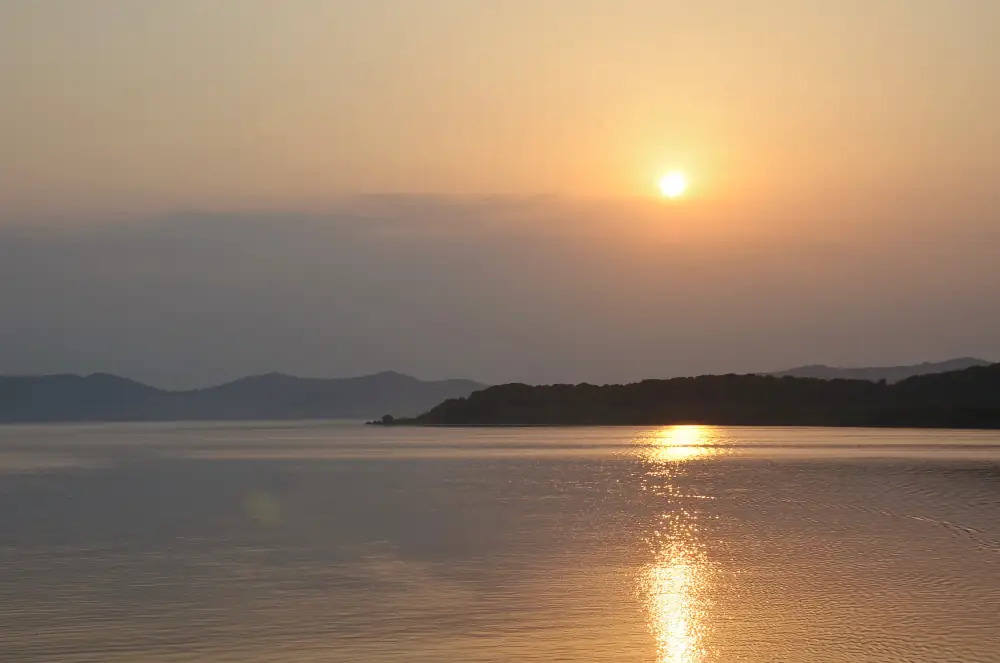
Turtle Head Isle is a peninsula jutting into Lake Tai that looks vaguely like a turtle’s head from above. The whole area is landscaped parkland, and it’s genuinely beautiful — especially in late March and early April when the cherry blossoms are in bloom.
Opening hours: 7:30am–5:30pm daily (extended to 6:30pm in peak season)
Entry fee: ¥105 per person; ¥70 for seniors; free for children under 1.2m
Getting there: Take Metro Line 4 to Taihu Square station, then Bus 93 to the gate, or take a taxi from the city centre (about ¥30–40, 30 minutes).
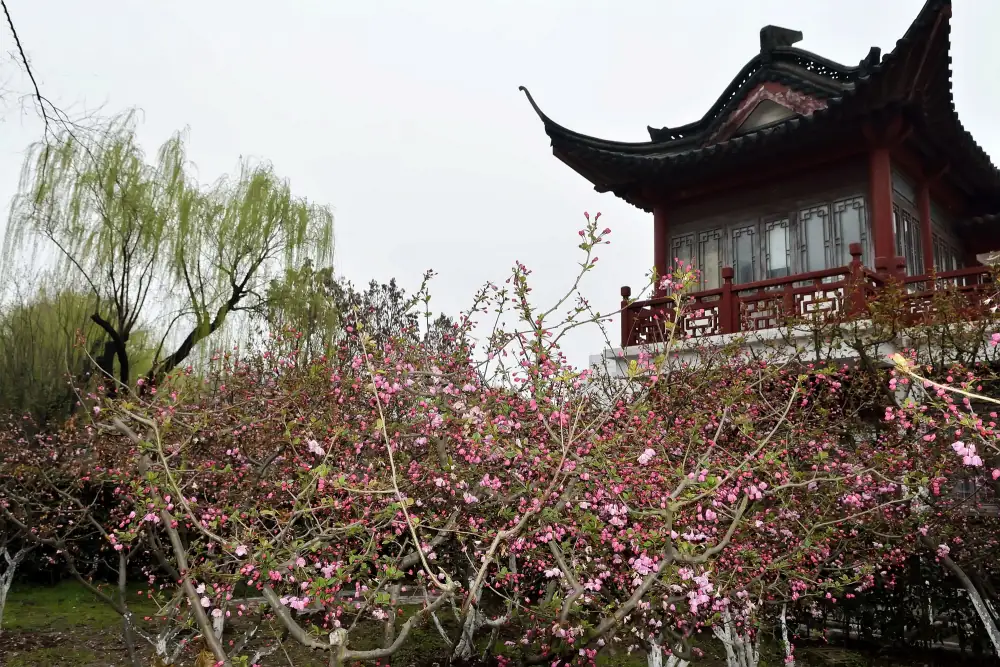
The best section is the Cherry Blossom Park near the Chongshan Pavilion. During peak bloom (usually the last week of March), it’s packed on weekends — come on a Tuesday or Wednesday morning if you want breathing room. Outside blossom season the park is quieter and the lake views are the main draw.
From the peninsula you can catch a ferry to the Three Hills Islands (三山岛), a small archipelago in the middle of the lake. The ferry takes about 15 minutes each way and costs ¥25. The islands have a few temples and some decent fish restaurants — fresh Lake Tai whitebait (太湖三白之银鱼) is the local delicacy.
Li Garden (蠡园)
Li Garden is a classical Jiangnan garden right on the lake shore, built in the 1930s and expanded in the 1950s. It’s smaller and less famous than Suzhou’s gardens, but the setting — directly on Lake Tai with covered walkways running along the water’s edge — is arguably more scenic.
Opening hours: 6:00am–6:00pm
Entry fee: ¥40 per person
Getting there: Metro Line 1 to Liuyuan Road station, then 15-minute walk or Bus 40
The garden is named after Fan Li, a strategist who, according to legend, retired here with his lover Xi Shi after helping the King of Yue defeat the Kingdom of Wu. The lake views from the garden’s Long Corridor are the best in Wuxi proper.
Jichang Garden (寄畅园)
Less visited than Li Garden but historically more significant, Jichang Garden in the Huishan area was built in the 16th century and was so admired by Emperor Qianlong that he had it copied in Beijing’s Summer Palace. It’s a UNESCO World Heritage Site (as part of the Classical Gardens of Suzhou group).
Entry fee: ¥10 (genuinely one of the best-value tickets in Jiangnan)
Opening hours: 7:30am–5:00pm
Location: At the foot of Huishan, in the western part of the city
The garden is compact — maybe 20 minutes to walk through — but the arrangement of rocks, pools, and borrowed scenery (using Huishan Mountain as a backdrop) is masterful. Combined with the nearby Huishan Ancient Town (free entry, Ming and Qing dynasty buildings), this makes a good half-day.
Lake Tai Cruise
The most relaxing way to see Taihu is from the water. Several operators run cruises from the docks near Turtle Head Isle.
- Short cruise (1 hour): ¥80–100, circles the area around the peninsula
- Half-day cruise to Three Hills Islands: ¥180–220, includes lunch on board
- Evening cruise: ¥120, good for sunset views
Book at the dock — there are multiple operators and prices are negotiable outside peak season. The lake is genuinely large (2,250 sq km), and on clear days you can’t see the far shore.
The Lingshan Grand Buddha (灵山大佛)
About 45 minutes from central Wuxi, the Lingshan Grand Buddha is an 88-metre bronze standing Buddha completed in 1997 — larger than the Statue of Liberty. It’s impressive purely for scale, and the surrounding Brahma Palace complex includes a fascinating (if slightly theme-park-ish) recreation of Buddhist cosmology.
Entry fee: ¥210 (includes Brahma Palace show)
Opening hours: 8:00am–5:30pm
Getting there: Metro Line 4 to Hubin Road, then Bus 83
The “Nine Dragon Bathing the Buddha” show outside the main statue happens several times daily — hundreds of water jets form a fountain display around a small baby Buddha figure. It sounds tacky but is genuinely well-executed.
Wuxi as China’s “Silicon Valley”
Wuxi is home to a significant cluster of semiconductor and technology manufacturing companies — it has the largest wafer fabrication capacity in China, and companies like TSMC have facilities here. For most tourists this is invisible, but it explains why Wuxi has excellent infrastructure and restaurants while remaining off the international tourist radar.
The Taihu International Science and Education City in the southern suburbs has attracted international companies and the city has a surprisingly cosmopolitan restaurant scene as a result — good Vietnamese, Japanese, and Korean restaurants around the Zhongshan Road area.
Where to Eat in Wuxi
Wuxi cuisine is a sub-style of Jiangnan cooking, known for being sweeter than average. The signature dish is Wuxi spare ribs (无锡排骨) — braised pork ribs in a sauce that’s sweet, sticky, and intensely flavoured. You’ll find them everywhere.
Recommended restaurants:
- Wang Xingji (王兴记): Famous for wonton soup (馄饨) and shao mai; queue expected at breakfast; near Chong’an Temple. Bowls from ¥18–30.
- Taihu Fish Restaurant area: Around Binhu District on the lake shore, multiple restaurants serving Lake Tai fish, whitebait, and hairy crabs in season (October–November). Expect to pay ¥150–250 per person.
- Hui Shan Shopping District: Good for local snacks — sugar-fried taro, clay figurines (a local souvenir), and Wuxi-style soup dumplings.
Getting to Wuxi
From Shanghai: High-speed train from Shanghai Hongqiao, 30–40 minutes, ¥60–90. Trains run approximately every 30 minutes throughout the day.
From Nanjing: High-speed train, about 40–55 minutes, ¥65–95.
From Suzhou: 10–15 minutes by high-speed train, ¥25–40. This makes a Wuxi-Suzhou combination very easy to do.
Wuxi has two main stations: Wuxi Station (central) and Wuxi East Station (high-speed, in the newer eastern district). Most trains stop at Wuxi Station for city-centre access.
When to Go
Late March–April: Cherry blossom season at Turtle Head Isle and peach blossoms around the lake. Best time visually but also the most crowded.
May–June: Green and pleasant, fewer crowds, moderate temperatures (18–28°C).
October–November: Hairy crab season, clear skies, autumn foliage. Good alternative to spring.
July–August: Hot and humid (35°C+). Not recommended unless you have a specific reason to visit.
Where to Stay
Central/Chong’an District: Good for restaurants and transport. Hotels like Marriott Wuxi (¥600–900/night) or mid-range options like Ibis Wuxi Centre (¥250–400/night).
Taihu Lakeshore: More scenic, further from the train station. Kempinski Hotel Wuxi (¥800–1400/night) has good lake views. Worth it for a special occasion.
Most visitors treat Wuxi as a day trip from Shanghai or Suzhou, which is entirely possible with an early start. But spending a night here gives you access to the evening lake views and a much more relaxed pace.