
Anhui Province sits at the junction of China’s great mountain chains and river systems — an inland province where extraordinary granite peaks rise from tea plantation valleys and whitewashed merchant mansions decay gracefully in riverside villages.
Table of contents
Open Table of contents
Huangshan (黄山) — Yellow Mountain
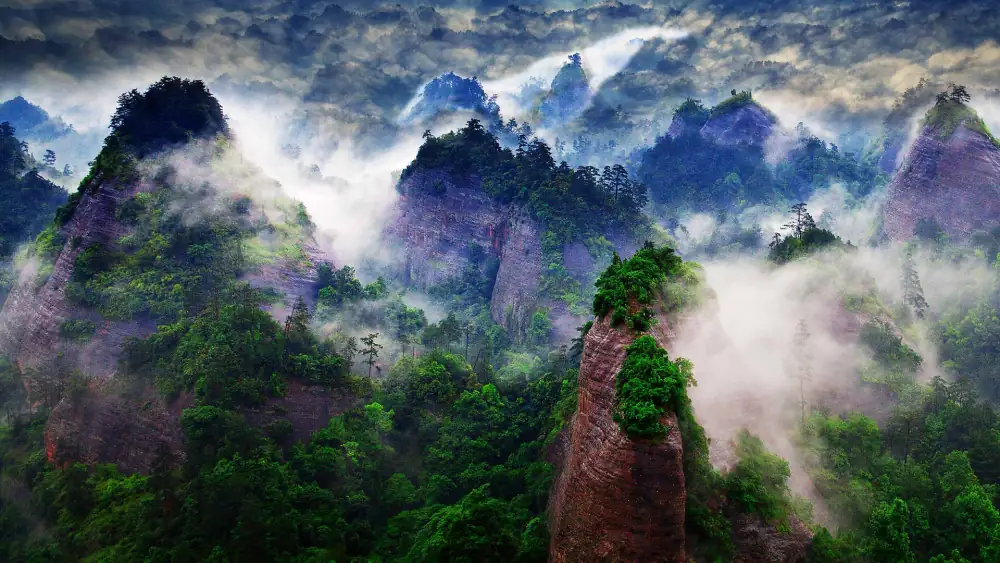
Overview
A UNESCO World Heritage Site (natural + cultural) — 72 granite peaks rising from a forest plateau, famous for four spectacles: strange pines (奇松), bizarre rocks (怪石), sea of clouds (云海), and hot springs (温泉). The most photographed mountain in China.
Key Areas
North Sea Area (北海景区):
- Welcome Pine (迎客松) — Huangshan’s most famous single tree; a 1,000+ year-old pine growing from a granite crevice at a perfect welcoming angle; the unofficial symbol of Huangshan (and of Anhui Province)
- Monkey Watching the Sea (猴子观海) — a rock formation that perfectly resembles a sitting monkey gazing at the cloud sea below
- Refreshing Terrace (清凉台) — the best viewing platform for sunrise sea of clouds
West Sea Grand Canyon (西海大峡谷):
- A deep canyon cut into the western side of the mountain; the West Sea Canyon Trail descends 1,000m and ascends again in a dramatic circuit — physically demanding but the scenery is extraordinary
- West Sea Skywalk (天海栈道) — a glass-floor walkway on the canyon rim; entry to the skywalk section requires an additional ¥80
East Scenic Area (东部景区):
- Beihai Hotel area (北海宾馆) — the mountain’s main accommodation zone; guesthouses range from ¥300–¥1,500/night
- Lion Peak (狮子峰) — for sunrise from the north side
Practical Info
Entry: ¥190 (peak season) + cable car fees (¥90–¥100 each way)
Staying overnight: Essential for sunrise photography; book 1–2 months ahead for October
Best time: March–April (spring blossom, frequent sea of clouds); October (clear skies, autumn colour); Winter (January–February for snow scenes — very cold but stunning)
Getting there: High-speed train from Shanghai to Huangshan (2.5 hours); bus to mountain base from Huangshan city (1 hour)
Wuyuan (婺源) — China’s Most Beautiful Rural Landscape
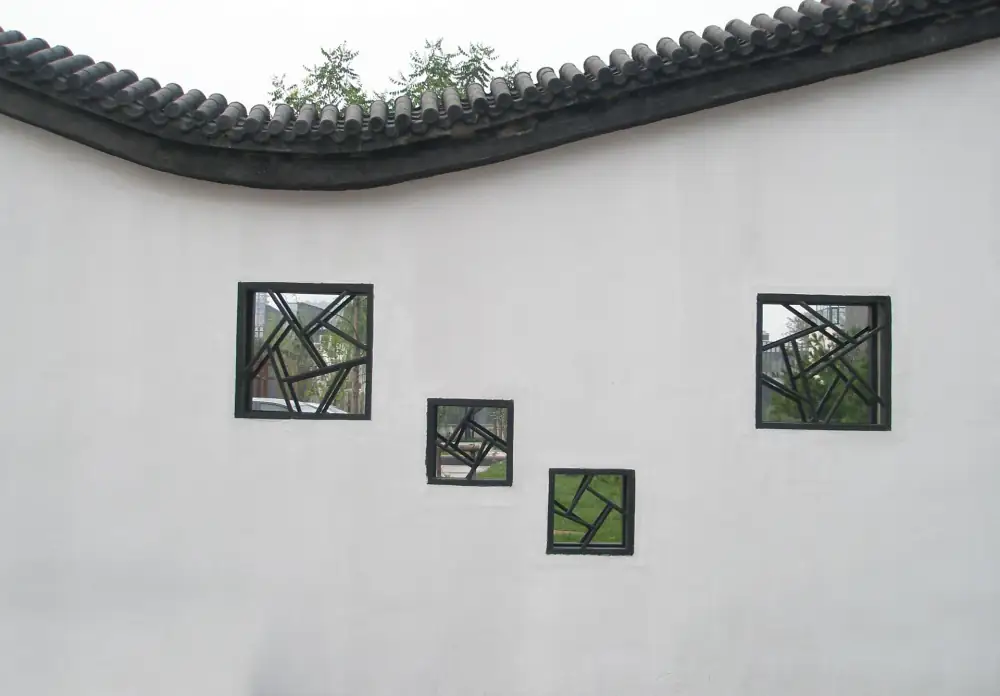
Wuyuan (technically in Jiangxi Province but culturally Huizhou and accessed from Anhui) — see Jiangxi guide for full detail. Brief summary:
Best visit: Late March–early April for rapeseed flower season. October for autumn persimmon and melon drying.
Huizhou Culture (徽州文化)
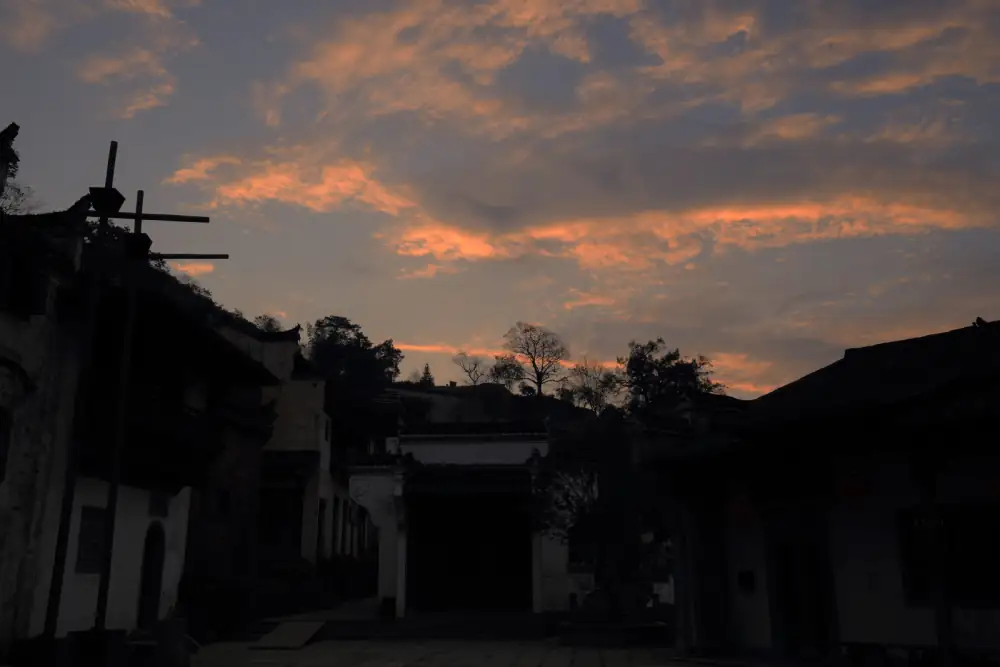
The Huizhou region of southern Anhui produced China’s most successful medieval merchant class — Huizhou merchants (徽商) dominated commerce in Ming and Qing Dynasty China for 500+ years. They brought their wealth home and invested it in extraordinary residential architecture.
Shexian (歙县) — Huizhou Prefecture Capital
The ancient seat of Huizhou government — the Huizhou Ancient City (徽州古城) retains a remarkable sequence of memorial arches (牌坊), temples, and government buildings.
Tangmo Village (棠樾牌坊群) — seven memorial arches (牌坊) in a single line — an extraordinary sequence representing virtue, filial piety, and official rank. The most concentrated example of memorial arch culture in China. Entry ¥90.
Xidi and Hongcun Villages (西递·宏村) — UNESCO World Heritage
The two most-visited Huizhou villages:
Hongcun (宏村) — designed around a “Water Buffalo” feng shui layout with artificial lakes (牛角塘 in the village centre; 南湖 on the village edge). The half-moon pond with its whitewashed reflections is one of China’s most famous images, made world-famous by Ang Lee’s film Crouching Tiger, Hidden Dragon. Entry ¥104.
Xidi (西递) — more residential, fewer tourists than Hongcun; nearly 100 well-preserved Qing Dynasty mansions with carved wooden screens and stone sculptures. Entry ¥104.
Lucun Village (卢村) — the most elaborate carved wood interiors in the entire Huizhou region; seven mansions with extraordinary scenes of woodcarving up to 2 metres deep. Entry ¥30.
Tea: Keemun and Huangshan Maofeng
Anhui produces two of China’s most prestigious teas:
Keemun (祁门红茶) — from Qimen County; a black tea with a distinctive “orchid and honey” fragrance considered the finest Chinese black tea. Churchill reportedly served it at Cabinet meetings. Buy from licensed vendors in Qimen (¥100–¥600 per 50g for premium grades).
Huangshan Maofeng (黄山毛峰) — a green tea picked from high-altitude gardens near Huangshan; one of China’s Top 10 teas. Best bought from Tangkou village at the mountain base during the spring harvest (mid-March to mid-April).