
Yellow Mountain (黄山) has inspired Chinese painters, poets, and photographers for over a thousand years. The Huangshan School of painting (黄山画派), which emerged in the 17th century, used the mountain’s distinctive elements — granite peaks, twisted pines, sea of clouds — as the defining vocabulary of a new Chinese landscape aesthetic. Every photograph of Huangshan is in dialogue with that tradition, whether the photographer knows it or not.
This guide is for visitors who want to see and photograph Huangshan at its best, which means understanding the specific conditions that create its most famous phenomena and planning accordingly.
Table of contents
Open Table of contents
The Sea of Clouds
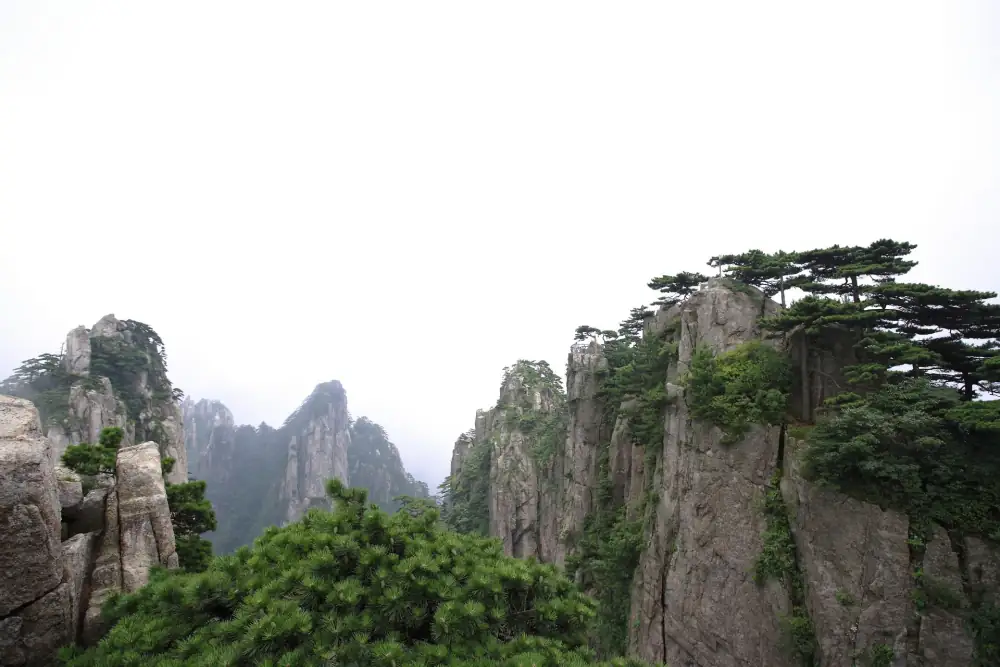
The sea of clouds (云海, yún hǎi) is the defining photographic subject at Huangshan and the primary reason serious photographers visit. When weather conditions align — warm humid air rising from the valleys meeting cooler mountain air — the clouds fill the valleys between the peaks to a level that leaves only the highest granite summits visible above the white surface. The effect is exactly what Chinese landscape paintings show: mountain peaks floating on white as if the solid world beneath has dissolved.
The sea of clouds is not a permanent feature. It requires specific meteorological conditions and is most common:
- After rain: The day following wet weather often produces the best cloud sea as moisture evaporates and rises
- Early morning: Before 9am, when temperatures are lower and the clouds haven’t burned off
- Seasonal sweet spots: Late autumn (October-November) and early spring (March-April) produce the most reliable cloud sea conditions
Summer (June-August) is when the sea of clouds is most frequent — sometimes present for multiple consecutive days — but summer also brings the highest tourist volumes. Autumn produces less frequent but often more spectacular cloud seas because the light angle is lower.
The strategy: Plan for a minimum of two nights on or near the mountain. Weather forecasts for Huangshan are available at the mountain’s ticket office and on the local tourism apps, but they are approximate. Building in flexibility — a spare day if the first day is socked in — is the only reliable approach.
Best Photography Locations
Refreshing Terrace (清凉台) — Sunrise Located in the North Sea Scenic Area (北海景区), this is the best-documented sunrise viewpoint on the mountain. Face east and slightly south; the sun rises between the Lion Peak and Begin to Believe Peak, and when cloud sea is present the peaks emerge through it in the golden early light. Peak photography season: October-November.
Begin to Believe Peak (始信峰) A 30-minute walk from White Goose Ridge (the cable car arrival point) leads to this promontory with 360-degree views of the main peak cluster. The path passes several of the mountain’s famous old pines and arrives at a viewpoint where the vertical granite columns drop away in every direction. Best in afternoon light from the west when the peaks are side-lit and the shadows define the rock textures.
Brightness Peak (光明顶, 1841m) The second highest peak and the most accessible high viewpoint. In clear weather the view extends across the entire mountain range. When cloud sea is present this is the viewpoint that most resembles a classic landscape painting — you’re above the clouds looking down at the tops of the granite peaks. Accessible without technical climbing, though the path is steep.
West Sea Grand Canyon (西海大峡谷) Less photographed than the North Sea area and for that reason more interesting compositionally. The canyon walking path descends into the valley between peaks and provides unusual perspectives looking up at the cliffs. The zigzag path and the cliff-face walkways offer compositions unavailable from the summit viewpoints.
The Pine Trees
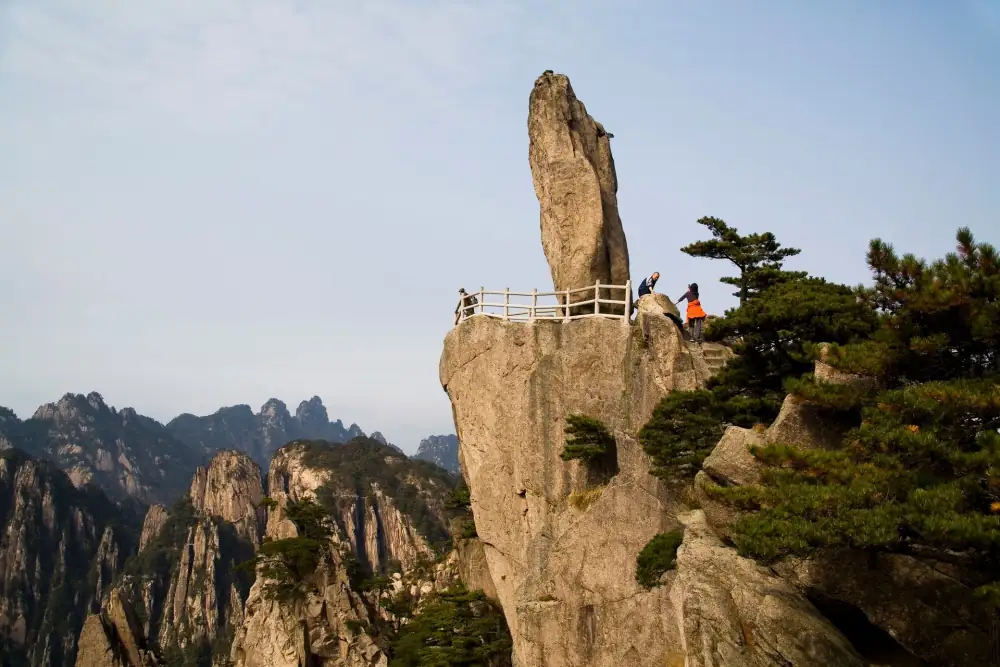
The twisted, horizontal pines of Huangshan are as iconic as the peaks and clouds. Several individual trees have been famous for centuries:
Guest Greeting Pine (迎客松): The pine on the Jade Screen scenic area has appeared in so many Chinese paintings, posters, and decorative items that it functions as a symbol of Anhui province. It grows from a crevice in the cliff and extends horizontally toward the viewer. Best photographed from the viewing platform in morning light.
Welcoming Guest Pine (送客松): On the western side of the Jade Screen area, this pine extends in the opposite direction as if gesturing toward the sunset. The afternoon light catches it from the west.
The pines grow in conditions that would kill most trees — crevices in granite, with very little soil, exposed to extreme weather at altitude. Their gnarled, horizontal forms are the direct result of growing toward light through these conditions. They grow very slowly; many visible on the mountain today were already mature when the 17th-century painters were here.
Summit Hotels & Sunrise Rooms
Staying on the mountain overnight is essential for serious sunrise photography, and the specific room you book matters.
Beihai Hotel (北海宾馆): The closest hotel to Refreshing Terrace sunrise viewpoint. Rooms in the east-facing wing (request specifically when booking) have direct views of the sunrise direction. Rates range from ¥800-2,500 per night depending on season. Book 2-4 weeks ahead for October visits.
Xihai Hotel (西海饭店): Located between the North Sea and West Sea areas, with good access to both the sunrise viewpoints and the West Sea Grand Canyon. East-facing rooms available. Similar pricing.
Paiyun Lou (排云楼宾馆): On the western side of the mountain near Jade Screen area. Closest to the Guest Greeting Pine. West-facing rooms catch spectacular sunset light on the peaks.
All summit hotels have basic restaurant facilities. Prices for food on the mountain are significantly higher than at the base (¥50-100 for a simple meal vs ¥20-40 below), which is explained by the fact that everything is carried up by porters on the mountain paths.
Equipment Considerations
Tripod: Essential for dawn and dusk photography. The summit viewpoints have designated tripod areas — using one during the day in crowded conditions requires patience and positioning awareness.
Weather protection: A waterproof bag cover and UV filter for the lens. Mountain weather can change rapidly and the humidity is very high.
Extra batteries: Cold temperatures at altitude drain batteries quickly. Keep a spare in an inner pocket near your body.
Wide angle and telephoto: The sea of clouds and peak landscape benefit from both perspectives — wide for the context-setting compositions, telephoto for isolating peaks emerging from the cloud surface.
The Light on Huangshan
Huangshan’s granite has a characteristic warm grey tone that photographs well in golden hour light. The best light is:
- Dawn (30 minutes before to 1 hour after sunrise): Warm, directional, creates long shadows across the cliff faces
- Dusk (1 hour before to 30 minutes after sunset): Warm side light on the western peaks
- Midday: Avoid for landscape work — the high sun flattens the granite texture and the light is harsh
Overcast days, while disappointing for standard landscape photography, create even light ideal for detail work — the pine bark textures, the lichen on rocks, the intricate erosion patterns in the granite. Don’t put the camera away because the sun isn’t out.
The combination of preparation, flexibility, and patience that Huangshan rewards is exactly the combination that makes a photographer better. The mountain has been teaching this lesson for a thousand years.