
Huangshan (黄山, Yellow Mountain) is China’s most painted, most photographed, and most visited mountain — not because it’s the highest (its peak, Lotus Flower Peak, is 1,864m) but because the combination of its weathered granite peaks, ancient pine trees clinging to impossible positions on cliff edges, and habitual cloud sea below the summits has made it the visual archetype of Chinese mountain landscape art.
The mountain appears in the background of Chinese paintings for a thousand years. The UNESCO designation as a World Heritage site formalised what Chinese culture had already recognised: this is one of the Earth’s exceptional landscapes.
In 2026, Huangshan handles significant visitor numbers but the trail system is comprehensive enough that the experience isn’t ruined by crowds if you plan intelligently.
Table of contents
Open Table of contents
The Mountain Layout
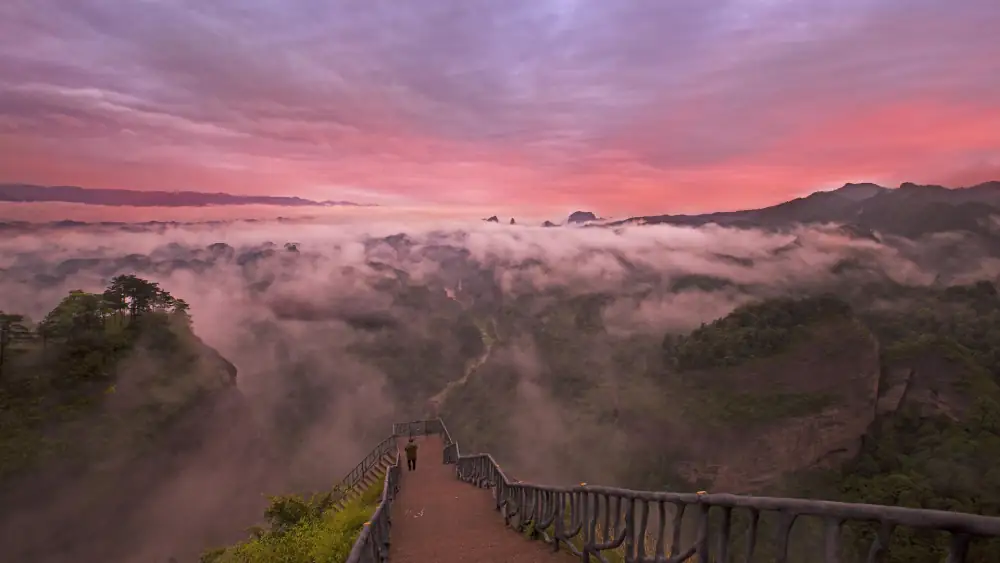
Huangshan has two visitor access sides:
South Gate area: The main entry point, with cable cars (Yungu Cable Car, Yuping Cable Car) and the main visitor facilities. Most tourists use this side.
North Gate area: A less-used entry with the Taiping Cable Car. Fewer visitors, slightly less infrastructure.
Upper areas: The summit plateau contains three main peaks (Lotus Flower Peak, Bright Summit, Celestial Capital Peak), several hotel options, and an extensive network of boardwalk trails.
Lower areas (below cable car): Accessible by foot from both gates. Less visited, more natural, with some excellent hiking through forest below the cloud line.
Cable Cars vs Hiking
Yungu Cable Car (云谷索道): From east gate to the summit plateau, 8 minutes, ¥90 up/¥80 down. Convenient and well-maintained.
Yuping Cable Car (玉屏索道): From south gate to the Yuping Welcome Pine area, ¥80 up/¥80 down. Closer to the most famous single views.
Hiking up: The main trails from the south gate take 2–3 hours to the summit. Well-paved stone steps throughout. Physically demanding but very manageable for anyone in reasonable shape. The views from the hiking trails are different and sometimes better than from the cable car — you see the forest and rock faces up close rather than from above.
Recommendation: Take a cable car up, hike down (or the reverse if you want to start with a hike). Doing both ways hiking in a single day is exhausting at altitude.
The Must-See Views
Welcoming Pine (迎客松): The single most famous image from Huangshan — a pine tree growing horizontally from a cliff face, its silhouette recognisable from a million paintings. Located near the Yuping cable car top station.
North Sea (北海景区): The summit plateau area with dramatic peak views and the best positions for cloud sea photography. The “Dream Brush Immortal Peak” (梦笔生花) — a small rock formation with a pine tree that looks like a calligraphy brush — is here.
West Sea Grand Canyon (西海大峡谷): The more adventurous route through a series of dramatic viewpoints and a narrow canyon walk. Takes 3–4 hours. The most photogenic section of the mountain that most casual visitors miss.
Bright Summit (光明顶): The second-highest peak. Expansive views and the meteorological station. Good sunset position.
Flying-over Stone (飞来石): A large rock balancing apparently improbably on a flat summit area — another image that appears in painting.
Staying Overnight for Sunrise & Cloud Sea
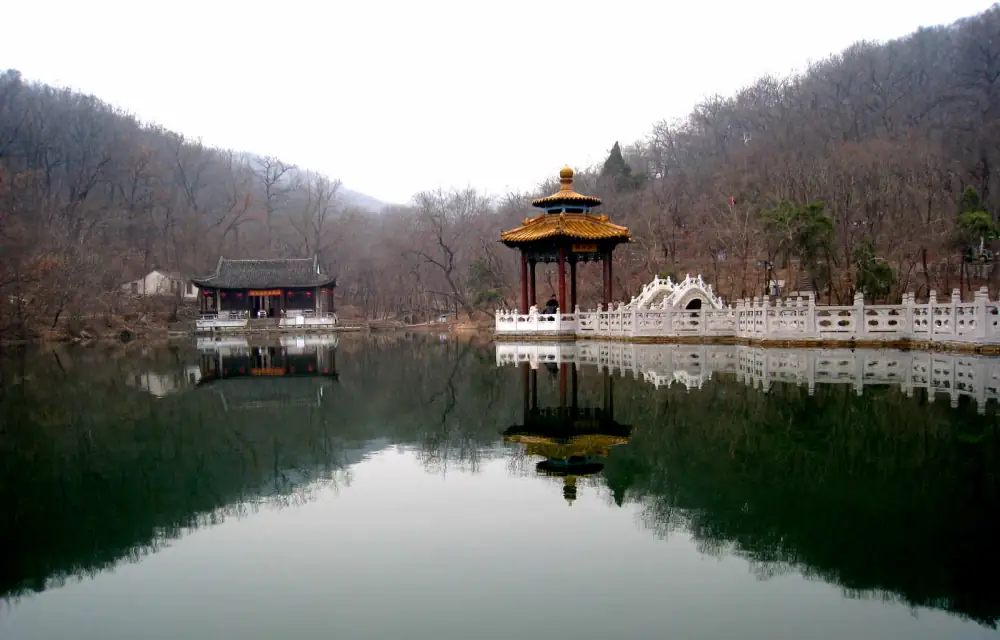
This is the thing that makes Huangshan genuinely spectacular rather than merely attractive. The cloud seas (云海) occur when clouds below the summit level create a white sea between the peaks. They’re most frequent in autumn after rain, in early spring with humidity, and at sunrise and sunset when temperatures shift. You cannot predict them reliably, but staying overnight dramatically improves your chances.
Summit hotels: Several mountain-top hotels exist within the scenic area. They’re not cheap (¥800–2,500/night for most options), they’re not luxury, and the rooms are small. But you’re waking up at 5am with the mountain in your window and that’s a different experience than day-tripping.
Booking: Book early for October (peak foliage/cloud season). The Beihai Hotel (北海宾馆) is the most popular option and frequently full.
What to bring for overnight: Warm layers — even in summer, the mountain can drop to 5°C at night and in cloud. Rain jacket is essential. Good headlamp/phone torch for pre-sunrise walks.
Photography
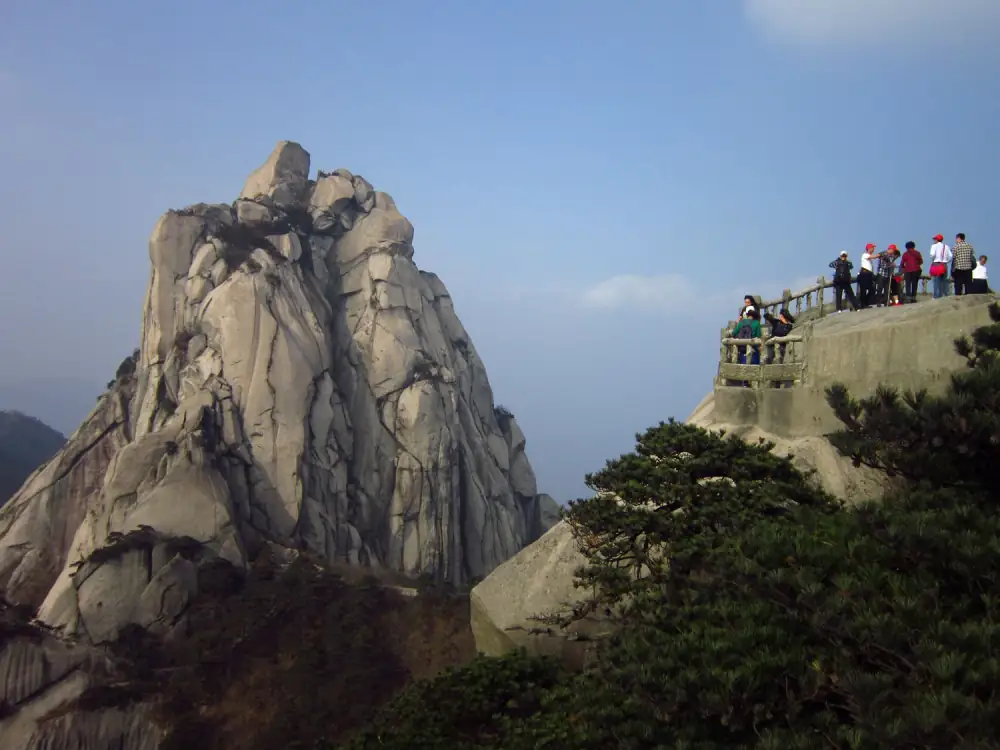
Best light: 1 hour before sunset and 30 minutes after sunrise are the gold standard. Cloud seas are most likely in these windows.
Position for sunrise: Facing east from the North Sea area (光明顶 or 排云楼 viewing terrace).
Position for sea of clouds: From the West Sea Grand Canyon viewing platforms, looking west, with peaks emerging from clouds.
Lens: A moderate telephoto (70–200mm) is useful for isolating single peaks and pine trees. Wide-angle covers the panoramas. Both are ideal.
Entry Fees & Practicalities
Scenic area entrance: ¥190 (peak April–November), ¥150 (December–March). Cable cars extra. Combined ticket with cable car available.
Getting there: The nearest city is Tunxi/Huangshan City (about 80km south). Huangshan North Railway Station (黄山北) serves HSR from Shanghai (2.5 hours), Hangzhou (2 hours), Nanjing (2.5 hours). Taxi from station to south gate about ¥25.
Base town: Many visitors spend a night in Tunxi (屯溪) before the mountain — the old street here has genuine Huizhou architecture, good restaurants, and serves as a base for visiting the Huizhou villages (Hongcun, Xidi) as well as the mountain.
Best Time to Visit
October: The combination of autumn colour, frequent cloud seas, and manageable temperatures makes this the peak season. Crowded and expensive but for good reason.
March–April: Cloud seas are frequent. New growth on the pine trees. Less crowded than autumn.
Avoid: Golden Week (October 1–7) when the mountain is overwhelmed with visitors. Spring Festival when cold and icy. Midsummer (July–August) when the mountain is hot, humid, and often very crowded.