
Table of contents
Open Table of contents
Before You Start: Wuhan’s Geography
Wuhan is actually three cities merged: Wuchang (east bank), Hankou (northwest bank) and Hanyang (southwest). The Yangtze and Han rivers divide them. Understanding which district you’re in explains the taxi time to your next destination.
- Wuchang: Yellow Crane Tower, East Lake, universities
- Hankou: Main commercial district, Jianghan Road pedestrian street, colonial architecture
- Hanyang: Guiyuan Temple, quieter
Most hotels are in Hankou or Wuchang. The metro connects all three districts efficiently.
Day 1: The Heart of Wuhan
Morning: Hot Dry Noodles Breakfast (热干面)
There’s a rule in Wuhan: you don’t eat anything before you’ve had hot dry noodles. This is one of China’s four great breakfast dishes and Wuhan is its home. Pre-cooked wheat noodles are tossed with sesame paste, sesame oil, Wuhan soy sauce and preserved radish, then eaten standing at the counter of a noodle shop by 8am. The flavour is rich, nutty, slightly bitter from the sesame, deeply satisfying.
Where to eat: Head to any neighbourhood noodle shop rather than a tourist restaurant. The best hot dry noodles are at small operations with long queues. Budget ¥7–¥12 per bowl ($1–$1.7). Ask for extra sesame paste (多芝麻酱).
Morning: Yellow Crane Tower (黄鹤楼)
One of China’s “Three Famous Towers,” the Yellow Crane Tower sits on Snake Hill (蛇山) in Wuchang, directly overlooking the Yangtze. The current tower was rebuilt in 1985 (the original was destroyed in 1884) to the general proportions of the Tang Dynasty structure, rising five storeys to 51.4 metres.
The mythology is deep: the Tang poet Cui Hao wrote what is often called the finest seven-character regulated verse in all of Chinese poetry about this spot: “A crane long gone, no man can know its fate / this tower is all that remains, empty to eternity.” Every subsequent poet who visited (including Li Bai) felt unable to compete and famously declined to add their own verse.
The views over the Yangtze from the upper floors are genuinely spectacular — particularly in morning when river mist is possible. The approach through the surrounding park adds to the experience.
Tickets: ¥80 ($11). Open daily 07:30–18:00 (19:00 in summer).
Afternoon: Guqin Terrace and Han River Confluence
Walk or taxi down from Yellow Crane Tower to the Yangtze waterfront, then take the Yangtze Bridge pedestrian crossing to Hanyang for the afternoon. Guqin Terrace (古琴台) is a classical garden associated with the ancient musician Yu Boya who, according to legend, played guqin (seven-string zither) here in the Spring and Autumn period, and whose music was so profound that only his friend Zhong Ziqi could truly understand it. The concept of zhiyin (知音 — “one who truly hears/understands”) originated from their friendship.
The terrace garden is pleasant, the literary associations deep, and the setting above the Han River confluence is good.
Tickets: ¥30 ($4).
Evening: Jianghan Road and Hankou Riverside
Cross back to Hankou for the evening. Jianghan Road (江汉路步行街) is Wuhan’s main pedestrian shopping street, lined with preserved Republican-era architecture — a reminder that Hankou was one of the main foreign treaty ports, home to British, French, German and Russian concessions.
The riverside Bund area (江汉关) preserves the old Custom House and concession architecture. A late evening walk here, with the Yellow Crane Tower lit on the opposite bank and the river traffic below, is one of Wuhan’s great atmospheric moments.
Dinner: The restaurants and food streets around Jianghan Road have everything. For a local experience, try doupi (豆皮) — glutinous rice, egg, dried mushroom and preserved meat wrapped in egg crepe, another Wuhan breakfast staple that works as a snack at any hour. ¥8–¥12 per portion.
Day 2: East Lake and Cultural Heritage
Morning: East Lake (东湖)
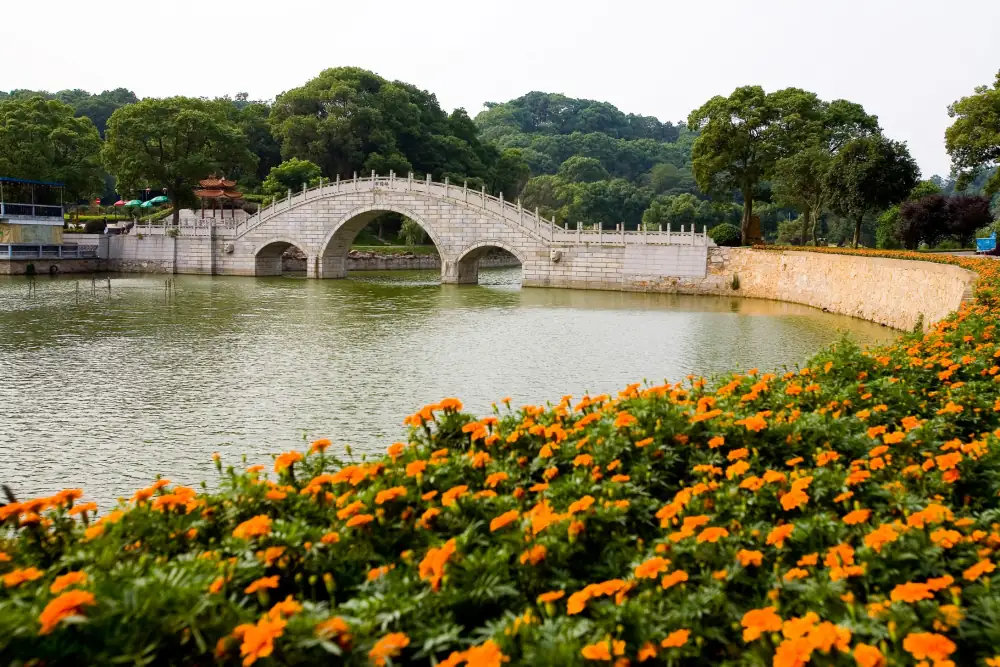
East Lake (东湖) is the largest urban lake in China — 33 square kilometres of water in the middle of the city. The surrounding park (East Lake Scenic Area) is enormous: 73 square kilometres total, with dozens of walking paths, cycling trails, botanical gardens and lakeside pavilions.
The lake is best experienced from a bicycle — e-bikes available throughout the scenic area for ¥20–¥40/hour. Aim for the Meihua Island (梅花岛) section in spring (February–March) when 300,000 plum trees bloom simultaneously; the East Lake Cherry Blossom Garden peaks in late March-early April.
For the best lakeside views without crowds, head to the lesser-visited Moshan scenic section on the east bank, where the hillside overlooks give panoramic lake and city views.
Tickets: Free for the park (individual sub-attractions charge ¥30–¥80 each).
Afternoon: Hubei Provincial Museum (湖北省博物馆)
One of China’s great provincial museums, the Hubei Museum houses the Marquis Yi of Zeng’s tomb artifacts — one of the most extraordinary single archaeological finds of the 20th century.
Marquis Yi (died 433 BCE) was a ruler of a small Warring States period kingdom. His tomb, discovered in 1978 near Suizhou, contained over 10,000 artifacts including the Chime Bells of Marquis Yi (曾侯乙编钟) — a set of 65 bronze bells spanning five octaves, in perfect working order after 2,400 years, and still played today in museum concerts. The bells alone are worth the trip to Wuhan.
The museum also holds remarkable jade burial suits, gold and silver vessels and musical instruments that rewrite assumptions about the sophistication of pre-Qin Chinese culture.
Tickets: Free. Open Tuesday–Sunday 09:00–17:00. Arrive early; the Marquis Yi section fills up.
Museum concert: A live performance on replica bells is scheduled twice daily (10:00 and 15:00); tickets ¥20 ($3) extra.
Evening: Wuhan Food Culture Street (户部巷)
Hùbùxiàng (户部巷) — “Hubu Lane” — is a Wuchang narrow alley famous for its concentration of Wuhan street food vendors. It’s tourist-oriented now but the food is genuine: hot dry noodles, doupi, tofu pudding, grilled skewers and dozens of regional snacks. Good for an informal dinner, evening walk and food exploration.
Day 3: Hankou History and the Wuhan Bund
Morning: Former Foreign Concessions Walk
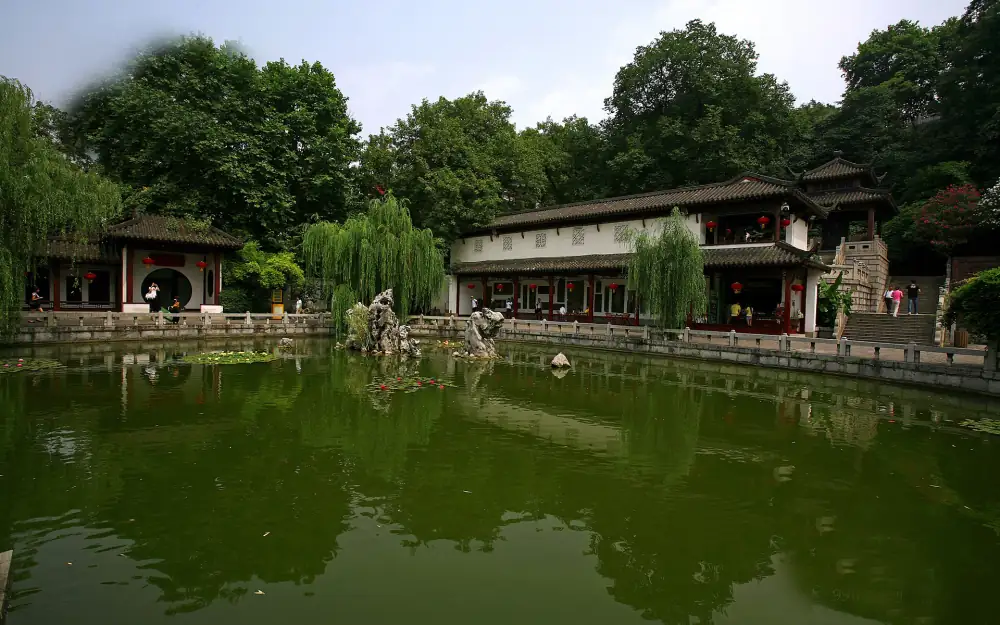
Hankou’s former concession district (British, French, German, Japanese, Russian — each occupying their own block) is one of the best-preserved treaty port architectural zones in China. A self-guided walk along Yanjiang Avenue (沿江大道) and the side streets reveals:
- The old British Consulate
- Former Yokohama Specie Bank
- German concession buildings
- Russian Tea House
The district has been partially restored and is now a high-end dining and boutique area; the architecture remains impressive regardless.
Afternoon: Wuhan Revolution Museum (武汉革命博物馆)
Wuhan played a significant role in Chinese revolutionary history — the 1911 Wuchang Uprising that overthrew the Qing Dynasty began here. The museum complex in the old Wuchang area covers this history well.
Red Chamber (红楼): The former seat of the Hubei Military Government after the Wuchang Uprising; a graceful early 20th-century building with good English labeling.
Tickets: ¥20 ($3).
Late Afternoon: Yangtze River Cruise
A 1–2 hour cruise on the Yangtze offers a perspective on Wuhan that is impossible to appreciate from the shore. The scale of the city seen from the river — the Yellow Crane Tower on Snake Hill, the twin Yangtze Bridges, the continuous skyline on both banks — is genuinely impressive.
Tickets: ¥50–¥80 ($7–$11) per person. Evening sunset cruises depart from Wuhan Yangtze ferry terminal; departures from approximately 18:30 in summer.
Getting Around Wuhan
Metro: 11 lines operating in 2026. Connects all three districts; tickets ¥2–¥4 per journey. The most practical option for most cross-city moves.
DiDi: Very reliable throughout the city. Wuhan traffic can be congested during rush hours; allow extra time.
Bicycle: City-wide shared bike scheme. ¥1.5/30 minutes. Good for East Lake and riverside riding.
Yangtze ferry: Cross-river ferry services connect Wuchang, Hankou and Hanyang; ¥1.5–¥3 per crossing. The cheapest and most atmospheric way to cross the river.
Getting to Wuhan
From Shanghai: Shanghai Hongqiao to Wuhan Hankou (or Wuchang), approximately 4.5–5 hours by high-speed; tickets ¥280–¥400 ($39–$56). Or fly Shanghai to Wuhan, approximately 1.5 hours.
From Beijing: Beijing West to Wuhan, approximately 4.5–5 hours high-speed; tickets ¥300–¥480 ($42–$67).
From Chengdu: 4–5 hours high-speed; ¥250–¥380 ($35–$53).
From Guangzhou: 3–4 hours high-speed; ¥200–¥320 ($28–$45).
Where to Stay
Budget: Hostels near Wuchang and Hankou stations from ¥60–¥100/night dorm, ¥150–¥220 private room.
Mid-range: Wuhan Marriott and Hyatt Regency Wuhan are reliable choices in the ¥450–¥700 ($63–$98) range.
Upscale: Four Seasons Wuhan is the city’s flagship luxury hotel; rooms from ¥1,200+ ($168+).
Practical Tips
- Breakfast seriousness: Wuhan breakfast culture (早餐文化) deserves genuine engagement. Try to have breakfast at the same neighbourhood shop twice — you’ll feel the rhythm of the city through it.
- Heat: Wuhan is one of China’s “Three Furnaces” (三大火炉) in summer — temperatures routinely hit 38–40°C with high humidity in July–August. Plan outdoor activities for early morning and late afternoon.
- Language: Limited English outside major hotels and tourist sites. WeChat Translate works well.
Final Word
Three days in Wuhan leaves you full — of food, of river, of history, of a city that refuses to be reduced to a single image. If you’ve been spending all your time in Beijing and Shanghai, Wuhan is the most useful antidote: bigger, louder, less manicured, and somehow more honestly itself.