
Anhui province delivers a concentrated dose of what makes China so compelling to travel through. Within a 200km radius you’ll find a mountain famous enough to inspire an entire school of classical painting, two villages so perfectly preserved they’ve barely changed in 400 years, a Buddhist mountain that draws millions of pilgrims a year, and rolling countryside that turns brilliant yellow every spring. This five-day circuit is genuinely one of the best regional itineraries in China.
Table of contents
Open Table of contents
Day 1: Arrival & Tunxi Old Street
Most visitors fly into Huangshan Tunxi Airport or arrive by high-speed train at Huangshan North station. Both are close to Tunxi, the modern district that serves as the base for the region. Spend your first afternoon on Tunxi Old Street (屯溪老街), a kilometre of Ming and Qing dynasty merchant buildings that now house shops selling Anhui’s famous four treasures of the study — Huizhou ink stones, ink sticks, paper, and brushes. The architecture here is a preview of the Huizhou style you’ll see throughout the region: whitewashed walls, dark grey roof tiles curving up at the corners, and carved wooden doorframes.
Dinner should be Anhui cuisine. Look for Stinky Mandarin Fish (臭鳜鱼) — the name is accurate but the flavour is extraordinary, a fermented freshwater fish that locals consider the regional dish. A good restaurant on Old Street charges ¥80-120 per person for a multi-dish meal.
Accommodation: Mid-range hotels cluster around Tunxi Old Street. Expect to pay ¥300-500 per night for a solid three-star option.
Day 2: Hongcun Village
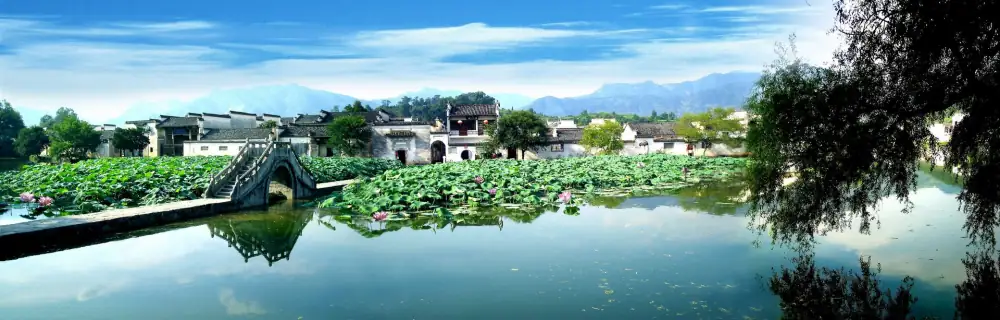
Take a morning bus or taxi (about 45 minutes, ¥15-20 by bus) to Hongcun village. Enter before 9am and you’ll beat most tour groups. The UNESCO listing describes Hongcun as representing “an outstanding example of vernacular architecture” and this is not overselling it. The village was designed with a complete water system that channels water from a mountain stream through the entire settlement — Moon Pond at the entrance, South Lake at the southern edge, and a network of channels running through every street and alongside every house.
Walk the path around South Lake first. The reflection of the whitewashed Huizhou buildings in the still water is one of the most photographed scenes in China, and for good reason — it’s genuinely beautiful. Then explore the interior lanes, where merchants’ mansions have been preserved with original wooden screens, stone floors, and central courtyards open to the sky (the “skywell” design that brings light and rainwater into the house). The Cheng Zhiliang House is the finest interior to visit.
The village charges ¥104 admission. Budget roughly half a day here.
Day 3: Xidi Village & Yellow Mountain Base
Xidi (西递) is 10km from Hongcun by taxi (¥30-40) and complements it well. Where Hongcun is known for its water system, Xidi is famous for its carved stone archways and exceptionally intact merchant mansions. The Hu Guansan Mansion is the most elaborate, with 36 rooms arranged around multiple courtyards, all decorated with carved wood, stone, and brick panels that depicted scenes of moral instruction for the family’s children.
Admission is ¥104. Two hours is enough for a thorough visit.
In the afternoon, transfer to the Huangshan Scenic Area (about 75 minutes). Check into one of the hotels at the mountain base rather than the summit — base hotels are significantly cheaper (¥300-600) and you can catch an early cable car in the morning.
Day 4: Yellow Mountain (Huangshan)
The mountain is the centrepiece of the whole trip. Take the Yungu Cable Car from the eastern side — it runs from 6:30am and the queue builds fast. The cable car takes 8 minutes and delivers you to the White Goose Ridge area at 1,685m.
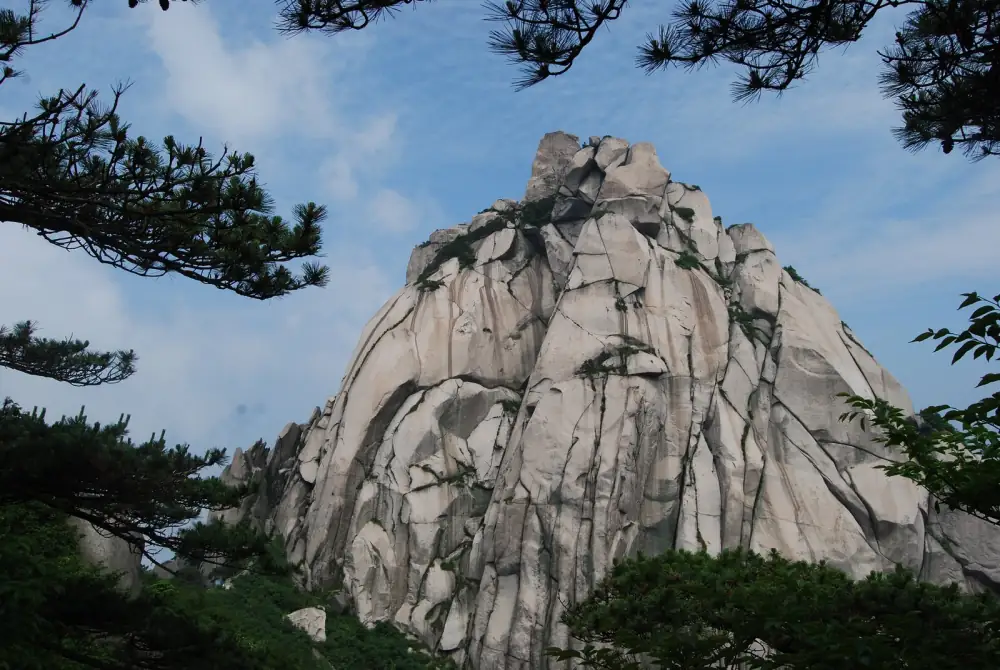
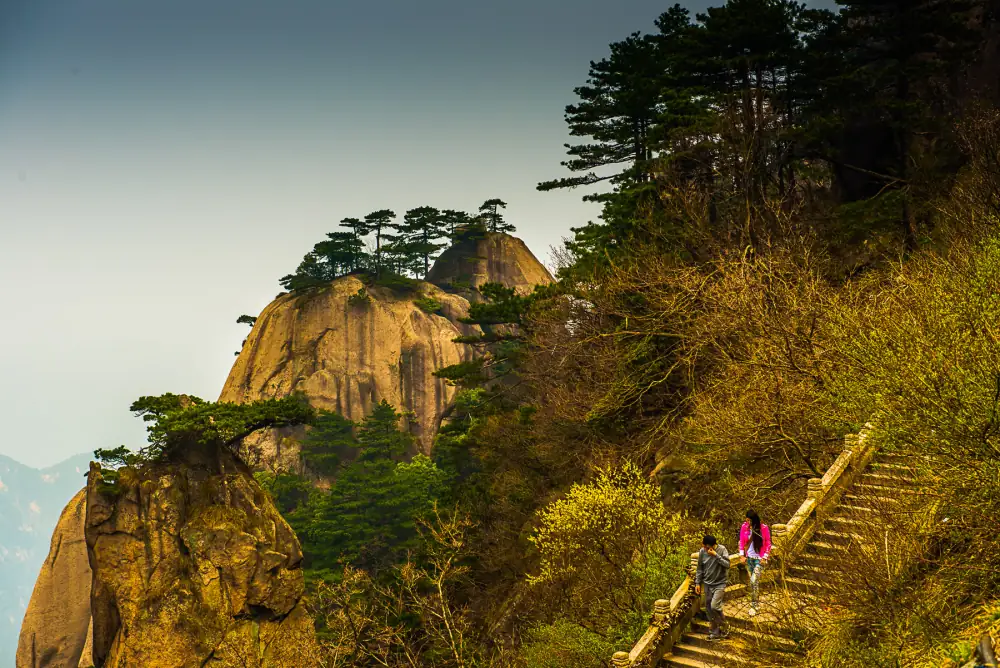
The classic Yellow Mountain circuit connects the major viewpoints: the sea of clouds viewpoint at North Sea (北海), the Begin to Believe Peak (始信峰) with its vertical granite pillars draped in ancient pines, and the Guest Greeting Pine (迎客松) — a 1,500-year-old pine tree growing horizontally from a cliff face that has become the unofficial symbol of Anhui province and appears on a remarkable amount of Chinese art and decor.
If you stayed on the mountain the night before (summit hotels start at ¥1,500 per night in high season but the experience of watching the sea of clouds at sunrise is unforgettable), sunrise at Refreshing Terrace (清凉台) is the highlight of the entire mountain. The clouds fill the valleys below while the granite peaks emerge above them like islands.
The full circuit takes 6-8 hours of moderate hiking. Descend on the Western Steps (西海大峡谷) for more dramatic scenery, or take the Yuping Cable Car down if your legs are finished.
Entrance fee: ¥190. Cable cars cost ¥80-100 each way.
Day 5: Jiuhuashan or Wuyuan
Your fifth day depends on the season and your interests.
If it’s March-April: Head to Wuyuan (婺源) county, about 2 hours from Tunxi by bus. The rapeseed fields in bloom turn entire valley floors yellow, framed by white Huizhou villages and green hillsides. Jiangling Village and Likeng Village are the most popular photography spots. This is peak tourist season and accommodation books out fast.
If it’s any other season: Jiuhuashan (九华山) is worth the half-day trip. One of China’s four sacred Buddhist mountains, it has 99 peaks and 99 monasteries strung along mountain trails. The pilgrim atmosphere is entirely different from Yellow Mountain’s scenic tourism — monks, incense, chanting, and genuine devotion. The Huacheng Temple complex and the mummified monk housed at Roushen Pagoda are the key sites. Admission ¥190.
Practical Information
Getting there: High-speed trains connect Shanghai to Huangshan North in 2.5 hours (¥130-200). From Beijing, flights are usually more practical. Tunxi is the transportation hub for the entire region.
Best seasons: Spring (March-May) and autumn (September-November). Summer is hot and crowded. Winter can be magical on Yellow Mountain with snow on the pine branches, but cable cars sometimes close in bad weather.
Accommodation strategy: Stay in Tunxi or at the mountain base for nights 1-3, then consider one night on Yellow Mountain’s summit for the sunrise, then back to Tunxi base for night 5. This avoids the high cost of consecutive summit nights.
Guided tours: Local guides for Yellow Mountain charge around ¥400-600 for a full day and genuinely add context. For the villages, a good audio guide from the ticket counter is sufficient.
The Anhui circuit is one of those itineraries where everything connects naturally and nothing feels forced. Five days is the minimum to do it properly — a week lets you slow down in the villages and absorb the extraordinary built environment that Huizhou merchants created here over four centuries.