
Langya Mountain (琅琊山) in Chuzhou (滁州), northern Anhui, is one of those places that has literary significance embedded so deeply in its character that it’s hard to separate the landscape from the writing about it. Ouyang Xiu (欧阳修, 1007–1072), the Song Dynasty statesman, poet, historian, and essayist, was posted to Chuzhou as regional governor from 1045 to 1048 after being demoted. During his time here, he wrote “The Record of the Old Drunkard’s Pavilion” (醉翁亭记), one of the most celebrated prose essays in Chinese literature.
The essay’s opening line — “Among all the mountains surrounding Chu Prefecture, Langya Mountain is the most beautiful” — has been memorized by Chinese schoolchildren for nearly a thousand years. The pavilion Ouyang Xiu named still stands, reconstructed on the original site. The mountain itself is a forested ridge rising to about 317 meters, accessible, genuinely beautiful, and not particularly crowded except during national holidays.
Table of contents
Open Table of contents
Getting to Chuzhou and Langya Mountain
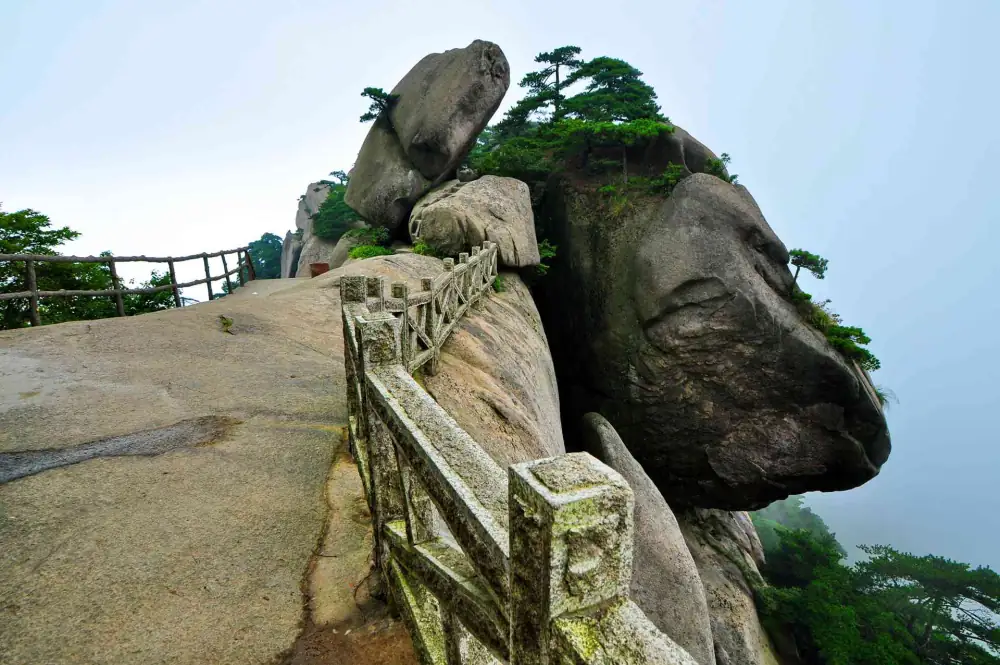
Chuzhou’s position near the Yangtze Delta rail network makes it very accessible:
From Nanjing:
- By high-speed train: 20–30 minutes; ¥30–60; extremely frequent departures (every 15–20 minutes during peak hours)
- Chuzhou is effectively a day trip from Nanjing — only 50km away
- From Chuzhou Station: Bus Line 8 or Taxi (¥25–35) to Langya Mountain entrance; about 15 minutes
From Hefei:
- About 1 hour by high-speed train (¥40–80); multiple daily services
From Shanghai:
- About 1.5 hours by high-speed train (¥100–150)
Getting around: The scenic area entrance is straightforward to find. Most visitors walk between sites within the mountain park — the distances are manageable, and the paths are well-maintained.
The Zuiweng Pavilion Complex (醉翁亭)
The Zuiweng Pavilion (“Old Drunkard’s Pavilion”) is the emotional heart of Langya Mountain, and one of the best-preserved historical pavilion complexes in China.
The literary context: Ouyang Xiu named the pavilion “The Old Drunkard’s Pavilion” and himself “The Old Drunkard” — not because he drank heavily (the essay explicitly says he got drunk on small amounts of wine) but because he was intoxicated by the mountain scenery and the joy of simple living during his political exile. The essay is a meditation on finding contentment in modest pleasures, widely considered a masterpiece of classical Chinese prose.
The pavilion complex: The current structure is primarily Ming and Qing Dynasty rebuilding on original Song foundations, set within a walled garden containing:
- Zuiweng Pavilion (醉翁亭): The main structure — a square timber pavilion with Song-style roof curves; calligraphy tablets with Ouyang Xiu’s essay text line the interior walls
- Xie Yu Pavilion (醒心亭): A second pavilion built by Ouyang Xiu’s friend Zeng Gong, named in another famous essay; 200 meters uphill from the main pavilion
- Guanmiao Pavilion (观妙亭): A viewing pavilion above the complex with forest views
- Fengle Pavilion (丰乐亭): Another pavilion built by Ouyang Xiu during his Chuzhou years; separate location within the scenic area
Entry fee for the pavilion area: ¥25 per person (included in the general scenic area ticket)
The calligraphy tablets: Inside the pavilion complex, stone-carved tablets display the Zuiweng Ting Ji essay text in multiple calligraphic styles, including versions attributed to Su Shi (苏轼) and other Song calligraphers. These are among the finest examples of Song-style carved stone calligraphy in China.
Langya Temple (琅琊寺)
Nestled in a valley about halfway up the mountain, Langya Temple (also called Kaiyuan Temple) was established in the Tang Dynasty and is one of the key religious sites in the region.
The temple:
- Active Buddhist monastery with resident monks
- The main hall contains a large bronze Buddha; smaller side halls house various bodhisattva and deity statues
- The surrounding forest is old-growth pine and bamboo — unusually quiet and shaded
Vegetarian restaurant: The temple operates a vegetarian restaurant (open to the public) serving simple vegetarian food at low cost (¥15–25 per person). The food is genuinely good — fresh tofu, local vegetables, and mushroom dishes.
Opening hours: 7:00am–5:30pm
Temple entry: ¥10 (included in scenic area ticket)
Langya Cave (琅琊洞)
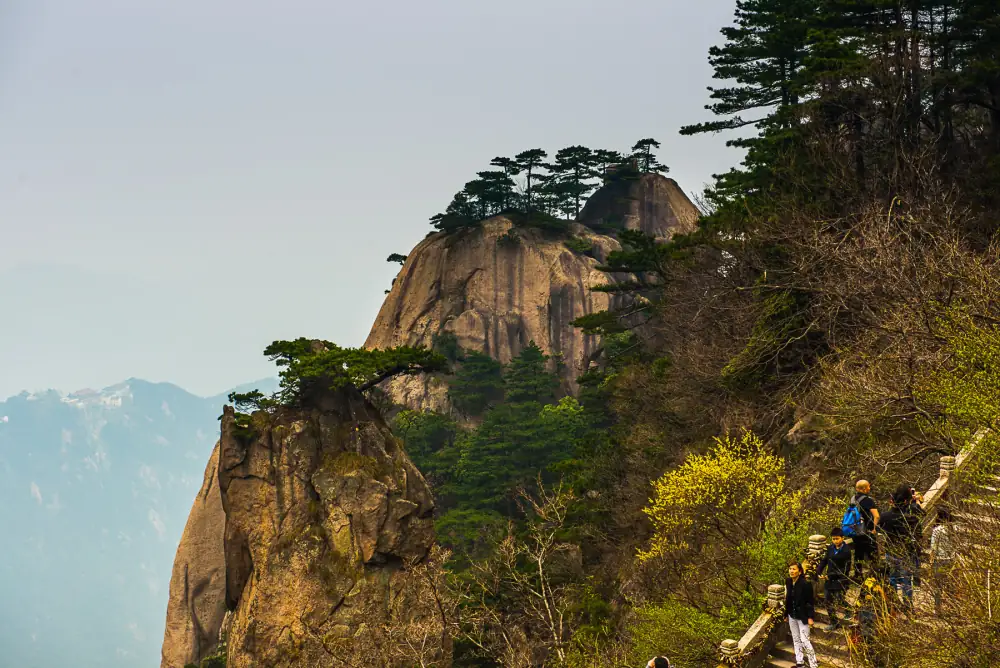
A karst cave system on the mountain’s lower slopes, with limestone formations including stalactites, stalagmites, and a small underground stream.
The cave:
- About 200 meters of accessible passages
- The interior temperature stays around 12–15°C year-round — noticeably cooler than outside in summer
- Guided tours available; illuminated with colored lighting (your taste may vary)
Entry: ¥30 per person (separate from main scenic area ticket)
Tip: Visit mid-afternoon when the temperature contrast with the summer heat outside is most welcome.
Hiking Trails
Langya Mountain’s trail network is the most underused part of the scenic area, particularly for visitors who stick to the main pavilion circuit.
Main trail to the summit (琅琊山顶):
- Distance: About 3.5km one-way from the main entrance
- Elevation gain: 280m
- Time: 1.5–2 hours ascent; 1 hour descent
- Difficulty: Easy to moderate; well-maintained stone steps for most of the route
From the summit: Views across the Chuzhou plain and the surrounding forested hills; on clear days, the outline of the Yangtze floodplain is visible to the south. The summit area has a small pavilion and observation point.
Forest trail circuit: A 5km loop trail through the mountain’s secondary forest areas, passing several unnamed pavilions, a bamboo grove, and a section of original medieval wall fortifications. Less visited than the main trail; better for experiencing the forest itself.
Spring wildflowers (March-April): Azaleas bloom across the mountain’s mid-elevation slopes, creating the densest concentration of flowering color in the scenic area. The rhododendron sections near the cave entrance are particularly good.
Seasonal Highlights
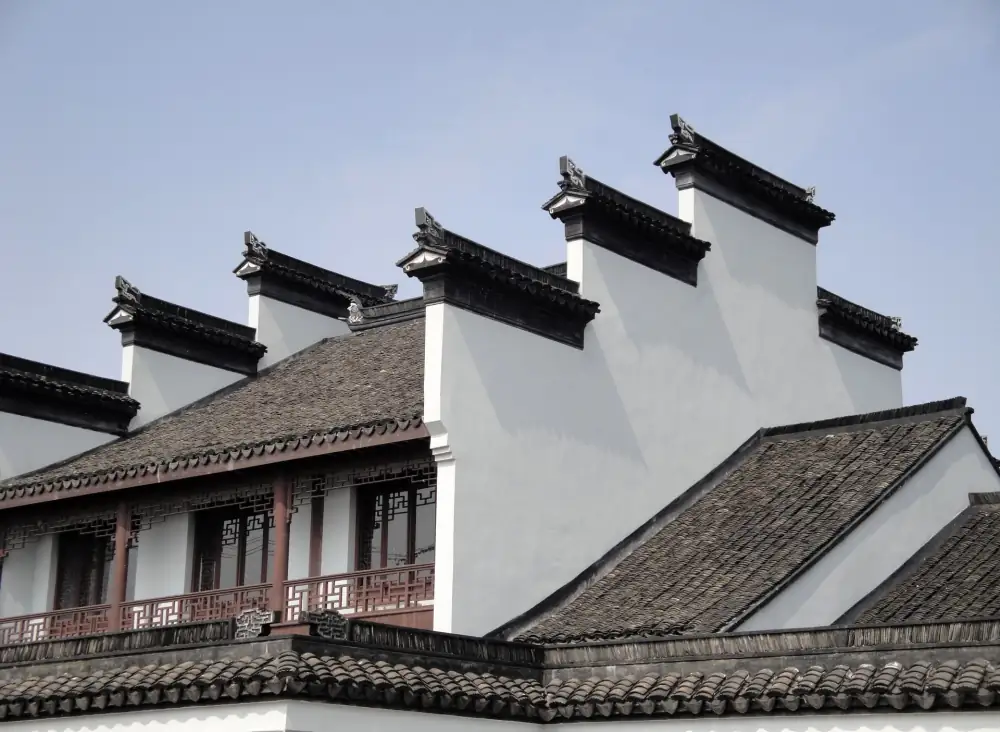
Spring (March-May): The most popular season; azaleas in bloom, fresh green bamboo, comfortable temperatures. The famous spring mist described in Ouyang Xiu’s essay — visible in the morning before the sun burns it off — is particularly evocative.
Summer (June-August): Hot and humid in the valley, but the forest shade on the mountain trails makes hiking manageable. The forest is at its densest green; small waterfalls flow after heavy rain.
Autumn (September-November): Good hiking weather; the mixed deciduous-conifer forest turns yellow and orange in late October. Less atmospheric than spring but equally pleasant for walking.
Winter (December-February): Occasional snow on the upper trails; the pavilion complex photographed with snow is exceptionally beautiful. Very few visitors.
Chuzhou City
While Langya Mountain is the primary draw, Chuzhou’s old town has a few additional points of interest:
Chuzhou Old Street (滁州老街): A partly preserved section of the old commercial district with traditional shopfront architecture. Several restaurants serve local specialties here.
Quanjiao Ancient Town (全椒古镇): About 30km south of Chuzhou city, Quanjiao is the birthplace of Wu Jingzi (吴敬梓), author of “The Scholars” (儒林外史) — an 18th-century satirical novel that remains one of the masterpieces of classical Chinese fiction. The Wu family residence and a small memorial museum are preserved here.
Practical Information
Entry fees:
- Main scenic area: ¥60 per person
- Includes access to the pavilion complex, Langya Temple, and main trails
- Langya Cave: ¥30 additional
Opening hours: 7:30am–5:30pm (extended to 6:00pm in summer)
Accommodation in Chuzhou:
- Several mid-range hotels in the city center (¥150–350/night)
- The scenic area has a guesthouse near the entrance (¥200–350/night); staying here allows early morning access before day-trippers arrive from Nanjing
- Most visitors do Langya Mountain as a day trip from Nanjing; staying overnight in Chuzhou is genuinely worth it for the early morning atmosphere
Food:
- Chuzhou lamb hotpot (滁州羊肉): The city is known for its lamb; several specialized restaurants serve the local version
- Local chrysanthemum tea (菊花茶): Chuzhou chrysanthemum is among China’s most prized varieties; buy it from the tea shops near the scenic entrance
- Quanjiao smoked fish: A specialty of the county to the south; sold throughout Chuzhou markets
Best combined itinerary: Arrive from Nanjing, check into a Chuzhou hotel, visit Langya Mountain the next morning (starting early to beat the day-trippers), spend the afternoon in the old town, and return to Nanjing the same day or the following morning. A one-night stay gives a much better experience than a rushed day trip.