
Three days isn’t enough to see everything Beijing has to offer — that’s just a fact. But it’s absolutely enough to hit the major sights, eat well, and get a real feel for this city’s remarkable depth. Beijing has been a capital for over 700 years, and that history shows up everywhere: in the grand imperial architecture, the labyrinth of hutong alleyways, and the sheer scale of things.
This itinerary focuses on the essentials without overloading your schedule. Beijing traffic and queues are real — planning with that in mind will save you a lot of frustration.
Table of contents
Open Table of contents
Before You Arrive
Getting there: Most international visitors arrive at Beijing Capital International Airport (PEK) or the newer Beijing Daxing Airport (PKX). From Capital Airport, take the Airport Express to Dongzhimen station (¥25, ~25 min), then transfer to the metro. From Daxing, take Line Daxing Express to the city (¥35, ~35 min to Caoqiao).
Accommodation tip: Stay in Dongcheng or Xicheng districts — you’ll be within walking or short metro distance of most major sights. Areas around Qianmen or Nanluoguxiang put you right in the historical core.
Ticket booking: The Forbidden City requires advance online booking — tickets often sell out days ahead, especially on weekends. Book at guگن.dpm.org.cn. Mutianyu Great Wall tickets can be booked at mutiaYuywall.com or through your hotel.
Beijing metro: Clean, cheap, and covers everything you need. Single journeys start at ¥3. Get a Transportation Card (交通一卡通) from any station — it’s rechargeable and works on buses too.
Day 1: Tiananmen Square, Forbidden City & Wangfujing
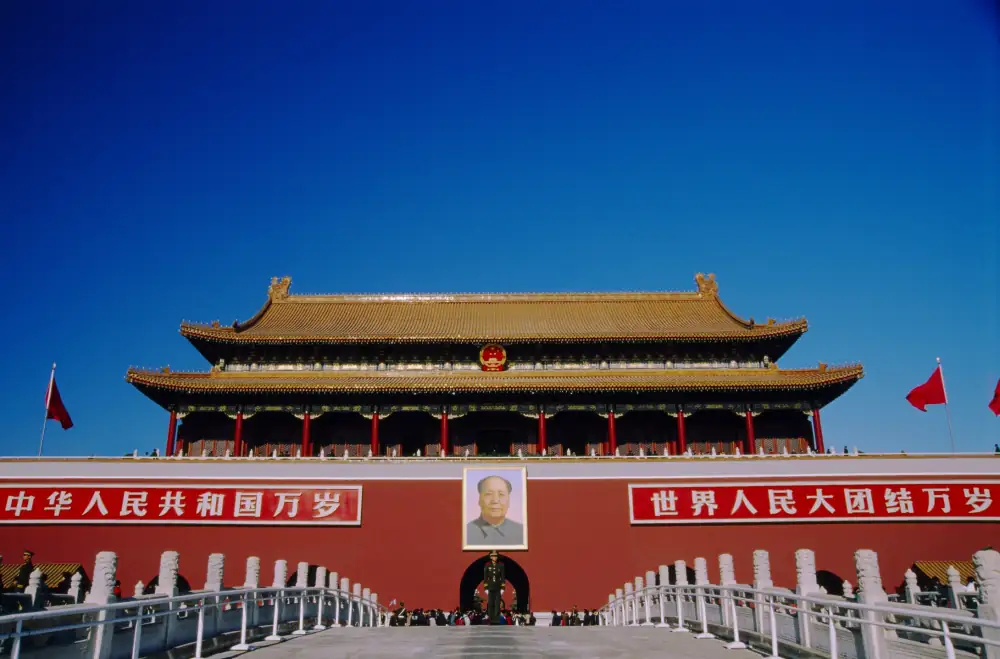
Morning: Tiananmen & Forbidden City
Start early — 8:00am is ideal to beat the tour groups. Tiananmen Square (天安门广场) is free to enter and takes about 20-30 minutes to walk through at a reasonable pace. The portrait of Mao looms above the main gate, and on clear days the scale of the square is genuinely impressive (it holds one million people).
From the south entrance of the square, walk north to the Forbidden City (故宫, Gùgōng). Your ticket (¥60) gets you into the main axis, but the Clock Exhibition Hall and the Treasure Gallery each require separate tickets (¥10 each) — both are worth it if you’re interested in Qing Dynasty craftsmanship.
Plan 3-4 hours minimum. The main south-north axis is the most impressive route, but branch off to the western and eastern side halls to avoid the crowds and see more intimate courtyards. The audio guide app (available in English) is genuinely helpful and better than the rented physical guide.
Exit through the north gate (Shenwu Gate) into Jingshan Park (¥2). Climb the central hill for the best aerial view of the Forbidden City — this is your postcard photo.
Afternoon: Wangfujing & Donghuamen Night Market
Wangfujing Street is a 10-minute walk east of the Forbidden City or one stop on Line 1 to Wangfujing station. It’s commercial and slightly touristy, but the Donghuamen Night Market nearby offers a dense concentration of snacks. Try jianbing (¥8-12), tanghulu (candied hawthorn, ¥5), and if you’re adventurous, the fried scorpions (¥20-30).
For a proper lunch, the Quanjude Wangfujing branch (全聚德) serves Beijing’s most famous Peking Duck. Expect ¥200-300 per person but the theatrical duck-carving service is part of the experience.
Evening: Nanluoguxiang
Head to Nanluoguxiang (南锣鼓巷) in the evening — this 800-meter hutong alley is touristy but genuinely lively at night. Browse snack stalls, pop into small bars, and explore the quieter side hutongs that branch off from the main lane. The Drum Tower is a 5-minute walk away and worth seeing lit up at night (towers close at 5pm, so just admire from outside).
Metro: Nanluoguxiang Station (Line 8), or walk from Beixinqiao (Line 5).
Day 2: Mutianyu Great Wall & 798 Art District
Morning: Great Wall at Mutianyu
This is your early start day. Leave by 7:30am to reach Mutianyu ahead of peak crowds.
Getting there: Take Metro Line 2 to Dongzhimen, then Bus 916 Express (¥12) to Huairou North Street — about 1.5 hours total. From Huairou, local minibus shuttles go to Mutianyu (¥10-15). Alternatively, book a round-trip day tour or private car for ¥200-400 — often worth it for a group.
Tickets: ¥65 for wall entry + ¥100 for the cable car up (or ¥55 for the chairlift). The toboggan down (¥55) is genuinely fun and saves your knees on the descent. Budget ¥180-220 for the full experience.
Mutianyu is well-preserved, scenic, and significantly less crowded than Badaling. It has 22 watchtowers you can walk between — allow 2-3 hours on the wall itself. Bring water and snacks; food on the wall is overpriced.
Afternoon: 798 Art District
Get back to the city by 3:00pm and head to 798 Art District (798艺术区) in Dashanzi, northeast Beijing. It’s free to enter and houses galleries, design studios, and cafes in converted factory buildings.
Metro: Jiangtai Station (Line 14), then a 20-minute walk or short taxi (¥15-20).
Spend 2-3 hours exploring. The UCCA Center for Contemporary Art has consistently strong shows (¥65 entry). Even if you skip the paid galleries, the street art and architecture alone are worth the trip.
Evening: Sanlitun
Finish the day at Sanlitun for dinner and drinks — this is Beijing’s most international neighborhood. The Sanlitun Village outdoor mall area has dozens of restaurant options from upscale Chinese to international cuisine. For something more local, walk 10 minutes to Nali Patio for a more laid-back evening.
Day 3: Temple of Heaven, Hutong Tour & Peking Duck Send-Off
Morning: Temple of Heaven
Temple of Heaven (天坛, Tiāntán) opens at 6:00am and it’s genuinely special in the early morning — locals do tai chi, play instruments, and walk backwards (a health practice) in the surrounding park.
Metro: Tiantan Dongmen Station (Line 5) for the east gate entrance.
Tickets: ¥15 for the park, ¥35 for the full through-ticket including all inner buildings. The Hall of Prayer for Good Harvests (the circular three-tiered structure you’ve seen in photos) is the main attraction. Allow 2 hours.
Afternoon: Hutong Bike Ride
Rent a bicycle (¥10-20/hour) near Houhai Lake and spend the afternoon riding through the hutong network around Shichahai (什刹海). This lake area has one of the densest and most intact concentrations of hutong in Beijing. Get deliberately lost.
The Drum Tower (鼓楼) and Bell Tower (钟楼) are here — tickets ¥20 each, worth climbing for the neighborhood views.
For an organized experience, several companies offer 2-3 hour guided hutong bike tours for ¥150-200 per person, often including a stop at a traditional courtyard house (siheyuan).
Evening: Peking Duck Dinner
End your trip properly with Peking Duck at Da Dong (大董). It’s upscale (¥200-350 per person) but widely considered to produce Beijing’s best duck. Book ahead. If budget is a concern, Siji Minfu (四季民福) near the Forbidden City does excellent duck at around ¥120-150 per person.
Practical Information
| Item | Cost |
|---|---|
| Forbidden City ticket | ¥60 |
| Great Wall (Mutianyu) full package | ¥180-220 |
| Temple of Heaven | ¥35 |
| Metro single journey | ¥3-6 |
| Budget lunch | ¥30-60 |
| Mid-range dinner | ¥100-200 |
| Budget accommodation | ¥150-300/night |
| Mid-range hotel | ¥400-800/night |
Weather: Spring (April-May) and autumn (September-October) are ideal. Summers are hot and humid with occasional smog; winters are cold but clear and much less crowded.
Data and apps: Get a local SIM or international eSIM before arrival. Most Western apps are blocked — download WeChat, Alipay, Baidu Maps, and the Didi ride-hailing app before you land. Offline maps in Maps.me cover Beijing well.
What to skip: The Summer Palace is beautiful but requires a separate half-day minimum — save it for a 4-5 day itinerary. The Great Wall at Badaling is better-connected by transit but overcrowded year-round; Mutianyu is the better choice.