
Hangzhou’s Song Dynasty Heritage: The Capital of China’s Most Civilised Era
When the Jin dynasty conquered northern China in 1127 and forced the Song court south, the Emperor Gaozong established his capital at Lin’an — modern Hangzhou. For the next 150 years, until the Mongol conquest in 1279, Hangzhou served as the political, cultural, and economic centre of China — and, arguably, of the world.
At its height, Lin’an had a population of approximately 1.5 million people — making it the largest city in the world, at a time when London had perhaps 30,000 residents. Its markets were the most sophisticated on earth; its restaurants (Marco Polo described “countless inns and restaurants” of remarkable variety) established dining traditions that persist in Hangzhou kitchens today; its silk workshops produced fabric of such refinement that it became the standard against which all Chinese silk was measured.
Understanding Hangzhou today requires engaging with this Song dynasty inheritance — not as museum archaeology, but as a living cultural residue that still flavours the city’s character.
The Southern Song Imperial Street (南宋御街)
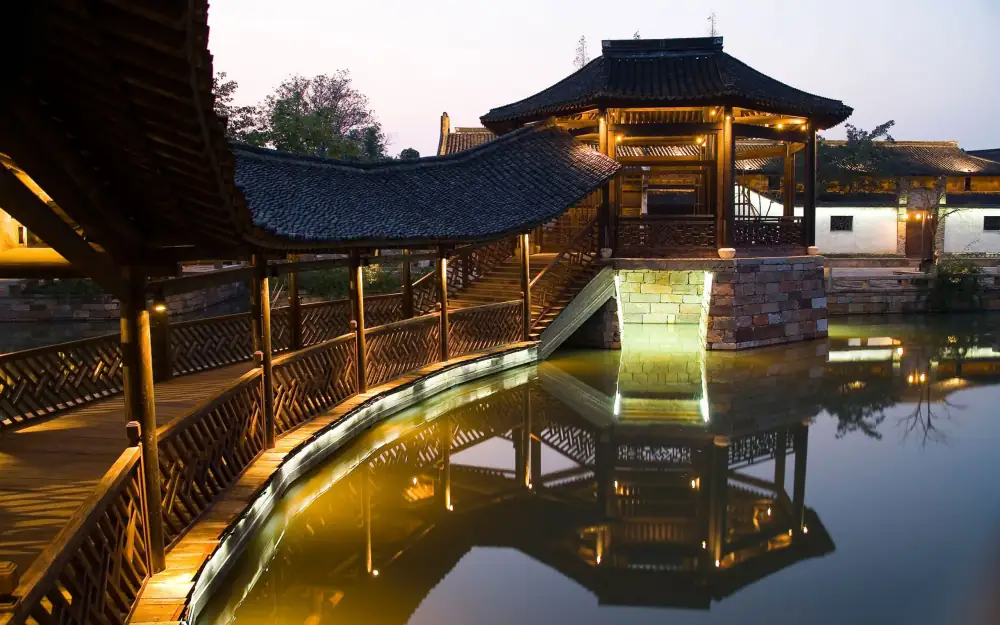
Running 4.2 km from Drum Tower (鼓楼) south to the site of the Imperial Palace (now Wansong Academy), the reconstructed Imperial Street follows the exact route of the Song dynasty royal processional road. The street is pedestrianised and lined with heritage buildings reconstructed to Song-era appearance.
What Remains of the Song
The original Song dynasty palace complex covered approximately 70 hectares at the southern end of the old city. Almost nothing remains above ground — successive dynasties built on the foundations. However:
- Wansong Academy (万松岭) stands roughly on the site of the former palace gardens; its grounds contain Song dynasty stone carvings.
- Archaeological excavations beneath the southern end of the Imperial Street have uncovered Song pavement stones, drainage channels, and portions of palace wall footings. Some are visible through glass floors in sections of the street.
South Song Imperial Street Night
The Imperial Street district comes alive after dark. Lanterns in the Song style (octagonal, red silk, painted with seasonal motifs) illuminate the street; musicians perform near the Drum Tower playing nanyin (southern music, a Song-era tradition preserved in Fujian and Zhejiang); restaurants recreate Song dishes including dongpo pork (东坡肉) and West Lake Vinegar Fish (西湖醋鱼).
Hefang Street (河坊街) and the Old Medicine Alley
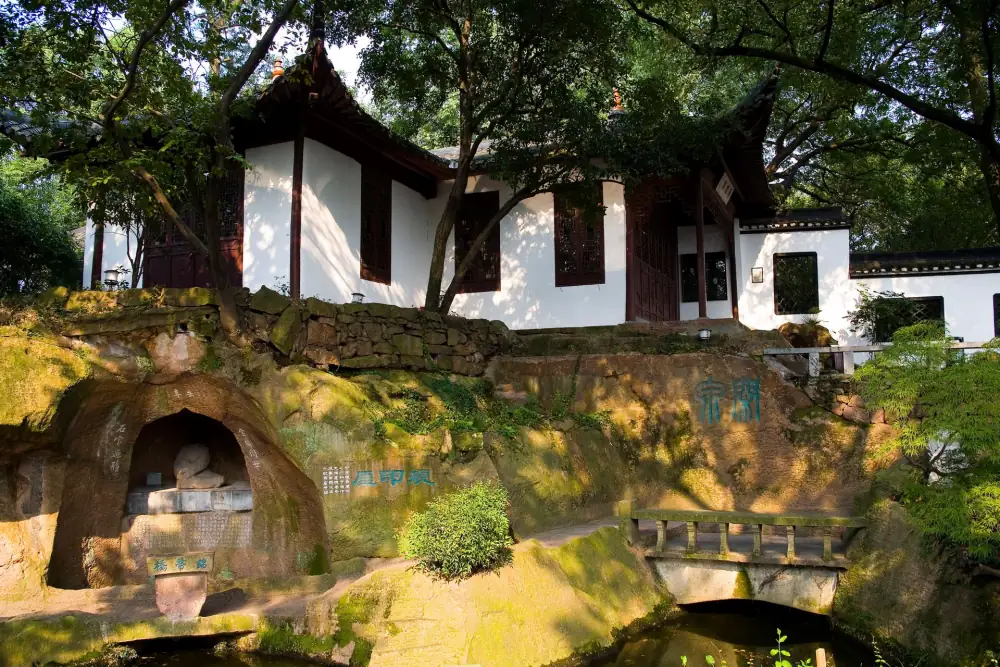
Immediately off the Imperial Street, Hefang Street was the primary commercial district of the Song capital — the equivalent of a modern city’s main shopping boulevard but built in Song architectural style and specialising in the luxury goods that made Lin’an famous.
Today Hefang Street operates as a pedestrian tourist market — touristy, yes, but with genuine historical context and a surprising number of quality vendors among the souvenir stalls.
What to Look For on Hefang Street
Zhang Xiaoquan Scissors (张小泉剪刀): The most famous scissor brand in China, founded in 1663 but continuing a tradition of Hangzhou metalwork that stretches to the Song dynasty. The flagship shop on Hefang Street sells everything from small embroidery scissors (¥30) to professional kitchen knives (¥800+). The blades are genuinely excellent.
Wanlong Ham Shop (万隆火腿): Jinhua ham — dry-cured, similar to Spanish serrano — is one of Hangzhou’s great food products. The shop has been at this location since 1864; the curing methods have changed little. Whole hams (¥200–¥500) and sliced vacuum packs (¥80–¥150) are available.
Chinese Traditional Medicine Street (大井巷): A side alley with several century-old medicine shops still selling traditional herb combinations in the old way — herbs weighed on bronze scales, wrapped in paper, and dispensed with hand-written instructions. The smell — pungent, complex, ancient — is unlike anything in a modern pharmacy.
Hu Qingyu Tang (胡庆余堂): The most famous traditional medicine shop in Hangzhou, founded 1874 by a Qing dynasty merchant. Its headquarters on Dajing Lane (大井巷) is a museum of Qing commercial architecture and Chinese pharmacology; the dispensary behind the front museum is still operational.
Song Dynasty Food Heritage
Hangzhou’s restaurant culture is the most direct continuation of Song dynasty culinary traditions available anywhere. The Song court’s move south brought northern Chinese refined cooking traditions into contact with Jiangnan ingredients and Yue (Cantonese-related) techniques, producing a distinctive Hangzhou cuisine that emphasises delicacy, freshness, and seasonal produce.
Essential Hangzhou Dishes
Dongpo Pork (东坡肉): Braised pork belly, named for Song poet Su Dongpo (Su Shi) who developed the recipe while governing Hangzhou. The dish — meltingly soft fat and lean in equal layers, braised in shaoxing wine and soy — represents everything the Song valued: patience, refinement, and the transformation of simple ingredients into luxury.
West Lake Vinegar Fish (西湖醋鱼): Fresh grass carp from West Lake braised briefly and dressed with a sweet-sour sauce. The simplicity requires excellent fish; the best version tastes like the lake itself.
Longjing Prawns (龙井虾仁): Freshwater shrimp stir-fried with first-flush Longjing tea leaves — a Hangzhou original that pairs the city’s two great products.
Beggar’s Chicken (叫化鸡): Chicken stuffed with herbs, wrapped in lotus leaves and clay, baked in a firepit. A rustic dish elevated to art.
Where to Eat
Zhi Wei Guan (知味观): A century-old restaurant near Wushan Square, famous for Hangzhou snacks and xiaolong bao (soup dumplings). Perpetually crowded; arrive at lunch before 11:30 or after 13:30.
Lou Wai Lou (楼外楼): Since 1848, the most famous restaurant in Hangzhou — perched on the causeway with West Lake on three sides. Expensive (¥300+/person) but the classic dishes are done with care.
Tianxiang Lou (天香楼): A quieter, more local-oriented option on the western shore of the lake. Outstanding beggar’s chicken and dongpo pork.
Song Dynasty Silk Heritage
Song dynasty Hangzhou was the silk capital of the world. The phrase “上有天堂,下有苏杭” (“Above is heaven; below are Suzhou and Hangzhou”) refers specifically to the silk wealth of both cities during this period.
China National Silk Museum (中国丝绸博物馆)
The world’s largest silk museum, located on the southwestern shore of West Lake. Free entry. Its collections span 5,000 years of silk production — from Bronze Age fragments through Han dynasty funeral silks to Qing-era imperial robes. A hands-on weaving workshop (¥80, 2 hours) teaches traditional silk weaving techniques.
Wenshuang Silk Market
A wholesale and retail silk market in the Wulin Road area, popular with both local textile buyers and tourists seeking custom clothing. Custom-made silk garments can be completed in 1–3 days.
Practical Information
Getting There
Hangzhou East Station (杭州东站, high-speed train terminus) and Hangzhou Station serve the city. From Shanghai Hongqiao: 45 minutes on G-class train (¥75).
The Hefang Street area is accessible by Metro Line 1 to Ding’an Road (定安路) station; 10-minute walk south.
Accommodation
The area around West Lake has the highest concentration of quality hotels (¥500–¥1,500/night for mid-range; Four Seasons and Banyan Tree for luxury). The Hefang Street area has budget-friendly options (¥200–¥400/night) with more authentic neighbourhood character.
Hangzhou’s greatest cultural inheritance is not the West Lake — beautiful as it is — but the long shadow of the Song court: an era that proved that refinement, rather than martial power, could be the most durable form of civilisation.