
Walk the main street of central Harbin (哈尔滨) and you might briefly forget you’re in China. Russian Orthodox church domes, Art Nouveau facades, elaborate European ornamental stonework and faded Cyrillic lettering on old shop signs create a streetscape unlike anything else in Asia. Harbin’s architectural heritage is a direct product of its unusual history as a city founded by Russian railway workers in 1897, developed into a major Russian-Jewish-Chinese-Japanese cosmopolitan center, and then preserved (partly through neglect, partly through deliberate conservation) across a century of political change.
The Historical Foundation
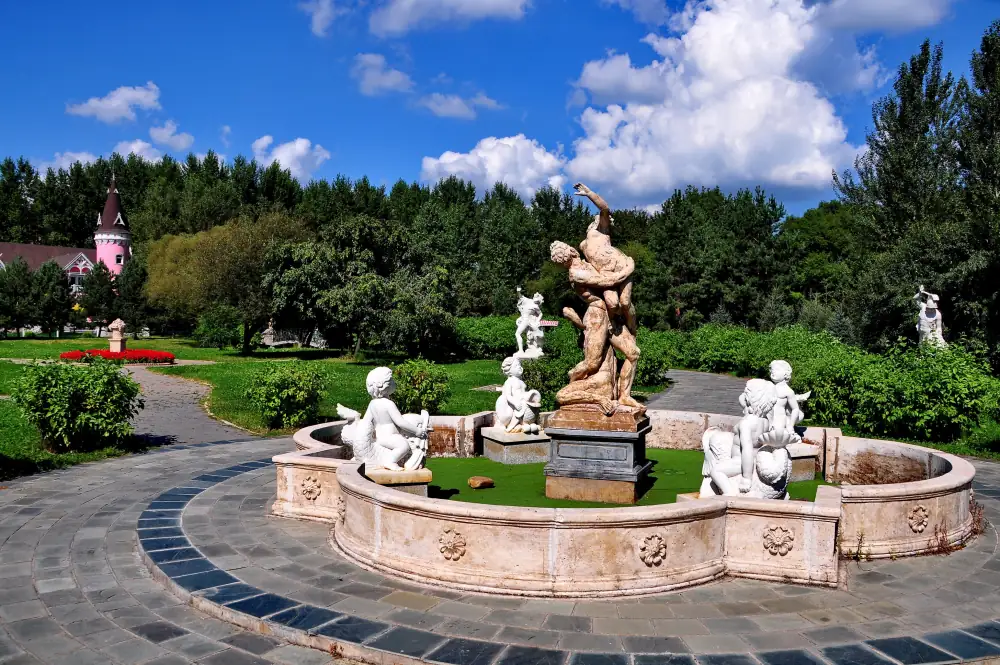
Harbin didn’t exist before 1897 — it was founded as a construction base for the Chinese Eastern Railway (中东铁路, Zhōngdōng Tiělù), the Russian-built line connecting Vladivostok to the Trans-Siberian Railway through Manchuria. The Qing dynasty had granted concession rights to Russia, and thousands of Russian engineers, workers and their families settled here.
By the 1920s, Harbin had a population of over 100,000, was headquarters of the Chinese Eastern Railway, and contained a remarkable mix of Russians (White Russian émigrés who fled the Bolshevik Revolution), Jews (Harbin had one of the largest Jewish communities in Asia — over 25,000 at peak), Chinese, Poles, Czechs, Koreans and Japanese. This cosmopolitan layer is what produced the extraordinary architectural heritage.
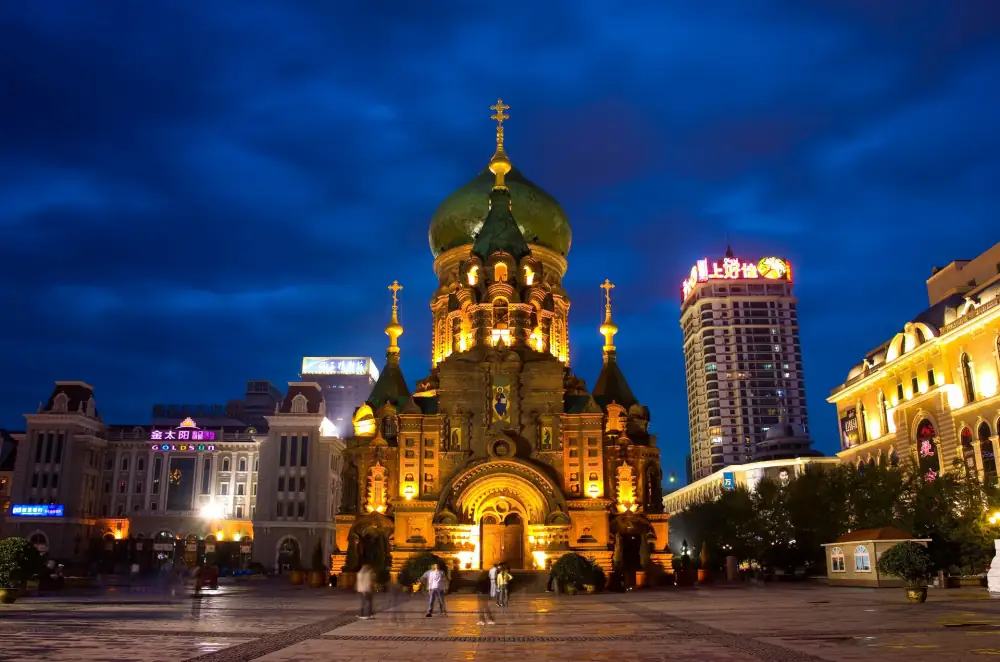
Saint Sophia Cathedral (圣·索菲亚教堂)
The Byzantine Revival cathedral in Zhaoling Square is the most iconic building in Harbin. Built in 1932 (expanding a 1907 wooden church), the cathedral has a 53-meter green onion dome flanked by four smaller domes, elaborately decorative brick facade and surviving interior murals. The exterior is in excellent condition following a 1997 restoration; the interior houses a photography museum about Harbin’s architectural history.
Visiting hours: 08:30–17:00 daily
Entry: ¥20
Best photos: The square in front of the cathedral is a civic plaza; the cathedral looks best in winter light or against dramatic cloud. Snow-covered onion domes are the ultimate Harbin image.
Interior: The frescoes are fragmentary but the scale of the space is impressive. The photography exhibition inside provides excellent historical context for the buildings you see outside.
Zhongyang Pedestrian Street (中央大街)
The main street of Harbin’s old city, 1.4 km long and paved with granite blocks in the old Russian style. The buildings along Zhongyang Street represent a complete catalogue of early 20th-century European architectural fashions: Baroque, Art Nouveau, Renaissance Revival, Gothic Revival.
Notable buildings:
- Modern Hotel (马迪尔宾馆): Stunning Art Nouveau facade from 1906; one of the best-preserved hotels of this style in Asia
- First Building of the Russian Far East (俄商成功与兴华商店旧址): Russian Baroque, 1914
- Ma Di Er Hotel (马迪尔饭店): Art Deco/Art Nouveau hybrid
Food: Zhongyang Street is also a street food destination for local specialties including Harbin red sausage (哈尔滨红肠, smoked pork sausage influenced by Russian recipes), cream-filled pastries (from the Russian bakery tradition), and of course ice cream bars — eaten outdoors in -20°C, a Harbin winter custom.
Ice and Snow Festival Architecture
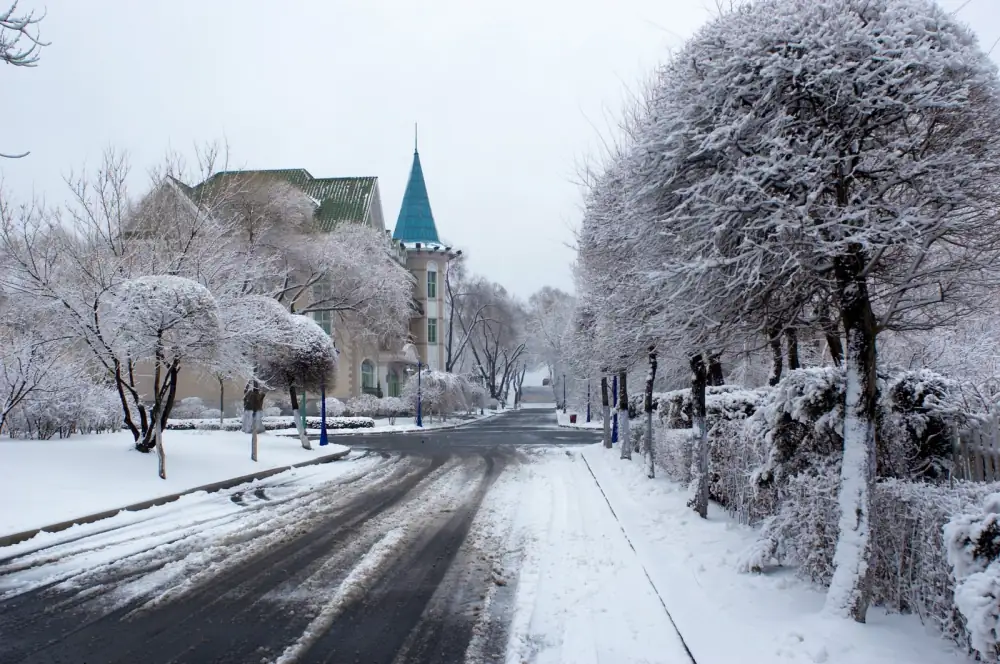
The Ice and Snow Festival (January–February) transforms the city with structures that complement its European-influenced aesthetic: ice replicas of European cathedrals, Gothic castles and Russian onion domes, illuminated from within by colored lights at night. The festival’s choice of architectural forms is not accidental — it reflects the local self-consciousness about Harbin’s unique built heritage.
Other Russian Heritage Buildings
Russian-style architecture on Hongbo Square (红博广场): Several former Russian commercial buildings.
Former Russian Orthodox Church in Daoli District: Converted to other uses but the exterior preserved.
Former Japanese-era buildings in Nangang District: Harbin was under Japanese occupation 1932–1945, adding another architectural layer — Japanese colonial public buildings.
Stalin Park (斯大林公园): The riverside promenade retains its Soviet-era name. A 1.7 km parkland along the Songhua River with flood control architecture from the Stalinist era.
Harbin Jewish Heritage
Harbin’s former Jewish community left architectural traces that are being carefully preserved:
Former Synagogue (哈尔滨犹太历史文化陈列馆): Now a museum of Jewish history in Harbin. The building retains its Star of David and Hebrew inscriptions. Excellent exhibits on Harbin’s Jewish community, which included notable figures like the businessman Avraham Kaufman and musician Isaac Stern (family roots here).
Jewish Hospital site: Now repurposed but the building remains.
Old Jewish Cemetery: Moved in the 1950s; commemorative markers exist.
Practical Information
When to visit for architecture: Any season is fine; the buildings don’t change. But winter (December–February) with snow creates the most dramatic photographic conditions — European-style architecture under heavy snow has an almost surreal perfection.
Ice festival timing: If combining architecture with the ice festival, January is optimal (festival opens early January and runs through February).
Getting around: Harbin’s metro serves central areas. Line 1 has a stop at Zhongyang Pedestrian Street (中央大街站). Saint Sophia Cathedral is a 10-minute walk from the metro.
Accommodation recommendation: Stay in the old Daoli District (道里区) to be surrounded by the historic architecture. Hotels range from budget to luxury within this area.
Getting to Harbin: High-speed rail from Beijing (5–7 hours, ¥300–500); from Shenyang (1.5 hours, ¥100); from Shanghai (7–8 hours, ¥350+). The Harbin Ice Festival period (January–February) is peak season — book accommodation and transport far in advance.
Harbin’s European architecture survives as an unlikely legacy of Russian imperial ambition and cosmopolitan refugee culture. Walking it on a winter morning, under skies so cold the air crystallizes, gives you access to a history that belongs to no single nationality — and a cityscape found nowhere else in Asia.