
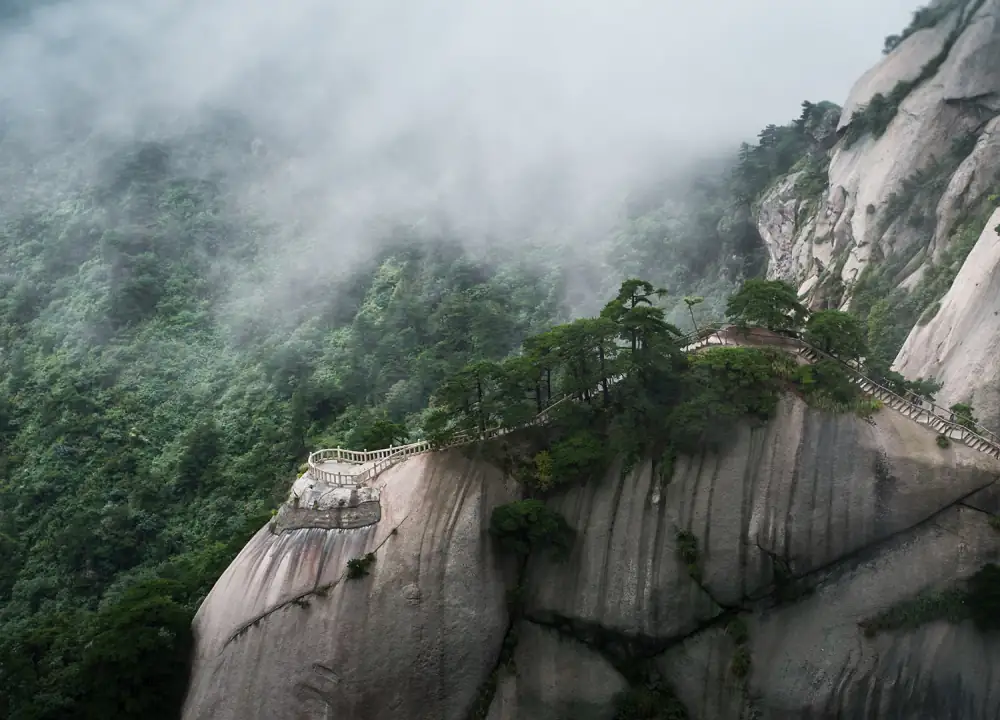
The Huangshan photographs you’ve seen — granite peaks rising from a sea of white cloud, impossibly gnarled pine trees clinging to bare rock ledges, ink-wash reality made physical — are primarily taken from the North Sea Scenic Area (北海景区) of Huangshan (Yellow Mountain).
Understanding this distinction helps plan a better visit. Huangshan is large (154 km²) with three main plateau areas; the North Sea is the most dramatic and the most famous section, and deserves focused attention.
Table of contents
Open Table of contents
Essential Information
| Detail | Info |
|---|---|
| Province | Anhui (adjacent to Huizhou villages) |
| Getting there | High-speed rail to Huangshan (Tunxi) → bus to scenic area base → cable car |
| Main cable cars | Eastern Steps (东坡缆车): Yungu to White Goose Ridge (¥90/person up); Western Steps (西坡缆车): Mercy Light Temple to Jade Screen (¥90/person up) |
| Ticket | ¥190 (peak season March-November); ¥150 off-peak |
| Opening hours | 6:30 AM – 5:00 PM (last cable car); mountain accommodation allows overnight stays |
| Altitude | Summit plateau: 1,700–1,800m; highest peak (Lotus Peak): 1,864m |
The North Sea: What Makes It Special
The North Sea area occupies the northern plateau of Huangshan, at approximately 1,600–1,750m altitude, with a cluster of viewpoints, hotels, and trails centred on the Northern Beihai Hotel area.
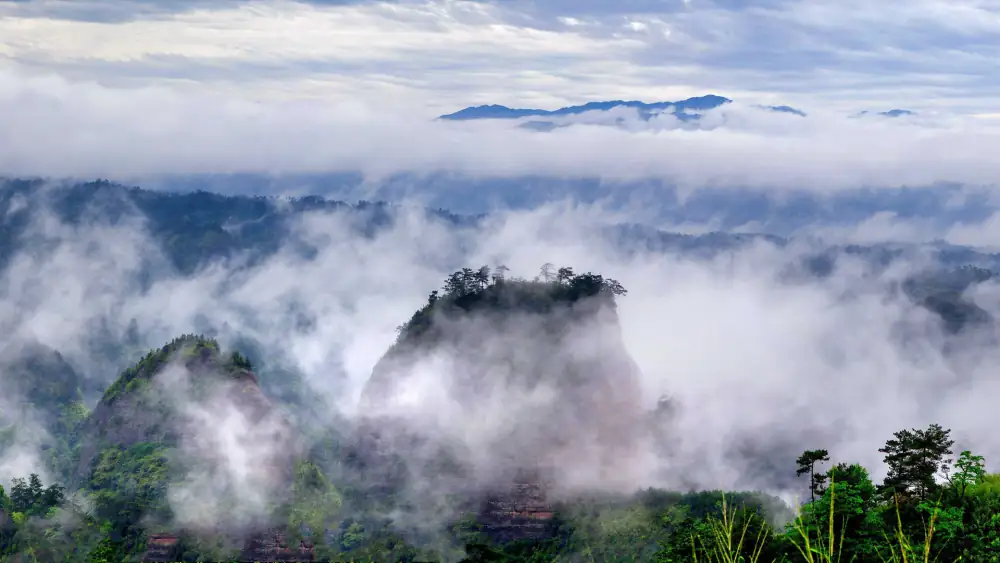
The cloud sea (云海): When temperature inversions occur — warm humid air rises from the valley floor and cools at the mountain top — the valleys fill with cloud while the peaks remain clear. From the North Sea viewpoints, this creates the impression of standing above a white ocean, with isolated granite peaks rising through the surface like islands.
Cloud sea conditions occur most frequently from November to March (autumn and winter inversions are most stable), but are possible year-round after weather changes. They are never guaranteed — which is why serious photographers stay 2–3 nights.
Key Viewpoints in the North Sea Area
Shizlin (Stone Forest Scenic Area / 石林景区)
The most dramatic rock formations in the North Sea — granite pillars, arches, and balanced rocks assembled in a concentrated area accessible from the main hotel plateau. The Immortal Pointing the Way (仙人指路) rock formation — a naturally balanced boulder on a pinnacle that resembles a pointing figure — is one of Huangshan’s most photographed natural sculptures.
Qingliang Terrace (清凉台)
The primary North Sea cloud-sea viewing platform — a broad terrace with clear sightlines to the north where the cloud sea formation is most dramatic. The Lions Climbing to a Tier of Rocks (狮子抢球) composition — two rounded rock formations in the middle distance — is the classic North Sea image.
Best time: Arrive 30 minutes before sunrise. The platform is populated with photographers with tripods in position from 4:30 AM on clear nights. The sunrise hitting the cloud sea from the east, with the granite pinnacles emerging from gold-tinged white cloud, is the experience that defines Huangshan.
Dreaming Brush Peak (梦笔生花)
A narrow rock pinnacle with a gnarled pine growing from its summit — the image that has appeared in Chinese painting for centuries. The pine represents the Chinese literati ideal: endurance in extreme conditions, aesthetic beauty emerging from hardship. The peak is visible from the North Sea plateau and accessible from the main trail network.
The Flying Rock (飞来石)
A massive balanced boulder on the edge of a cliff — estimated to weigh over 600 tonnes, resting on a small base. Visible from the cable car and from the plateau trail. The stone’s precarious balance has been a subject of wonder and artistic depiction since the Tang Dynasty.
The Famous Pines
Huangshan pines (黄山松) are a distinct ecological phenomenon — Pinus hwangshanensis, adapted specifically to the extreme conditions of Huangshan: rocky substrates, high winds, sparse soil, bright sunlight, and heavy snow load. The result: trees of extraordinary form, growing horizontally or even downward from cliff faces, gnarled and windswept into shapes that look like deliberate sculpture.
The Welcoming Guest Pine (迎客松): The most famous tree in China — a single pine on a ledge at the Jade Screen area (accessible from the western cable car), depicted on stamps, in paintings, and as the symbol of Anhui Province. It has been officially “guarded” by a designated caretaker for decades.
The Companion Pine (送客松): Nearby, arching toward the Welcoming Guest Pine in a permanent bow.
The North Sea pines: The plateau around the Beihai Hotel has dense concentrations of Huangshan pines growing from every available rock surface — photographing individual trees in mist, with granite peaks behind, produces the classic ink-wash aesthetic naturally.
Overnight on the Mountain
Staying overnight on the Huangshan plateau is strongly recommended. The reasons:
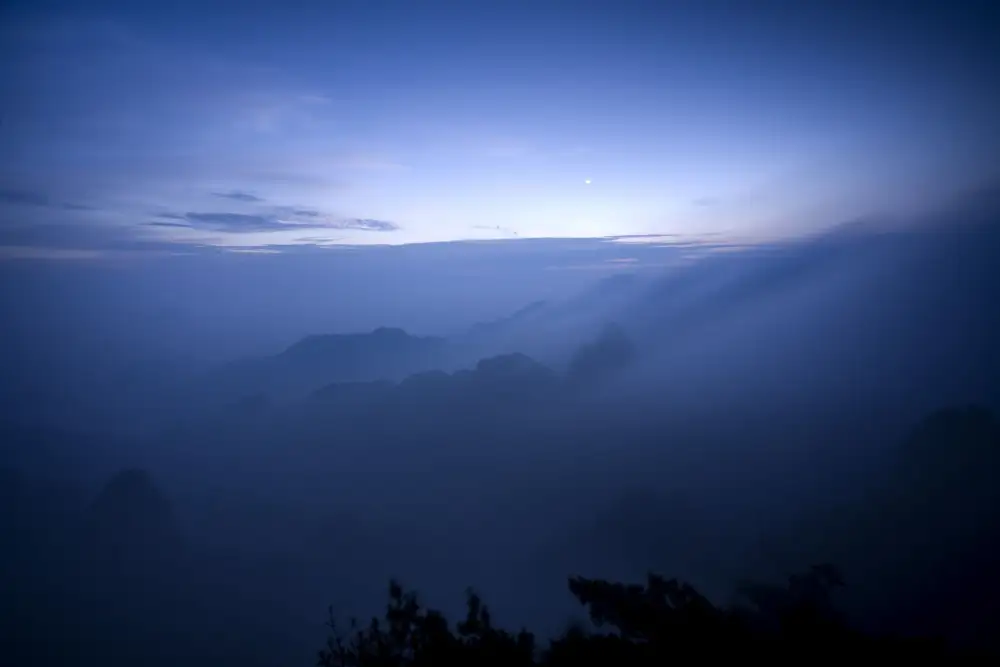
- Sunrise cloud sea: Only possible if you’re already on the mountain at dawn (4:30–5:30 AM, earlier in summer)
- Sunset clouds: Evening cloud effects are often as dramatic as morning ones
- Empty trails: The day-tripper crowds leave via cable car by 5 PM; the mountain becomes quiet and manageable
- Star photography: The plateau at high altitude, away from valley light pollution, has excellent star visibility on clear nights
Hotels on the mountain: Three main options, all government-operated, all similarly basic for the price (¥600–2,000/night depending on season and room):
- Beihai Hotel (北海宾馆): Central location in the North Sea area; most convenient for viewpoints
- Xihai Hotel (西海饭店): On the western ridge; quieter, slightly better views
- Paiyun Hotel (排云楼宾馆): At Jade Screen area; further from North Sea but closer to the western cable car
Book well in advance — mountain hotels sell out weeks ahead for peak season (October for foliage, spring, and national holidays).
Combining North Sea with Other Huangshan Areas
Huangshan has three main areas: North Sea (北海), South Sea (南海), and West Sea Grand Canyon (西海大峡谷). A 2-night stay allows reasonable coverage of all three.
West Sea Grand Canyon: Accessible from the North Sea plateau via a trail that descends into the canyon and ascends to the opposite ridge. The canyon has a different character from the plateau — enclosed, forested, with dramatic vertical walls. The West Sea Circular Track (西海大峡谷环线) is approximately 4 km and takes 3–4 hours.
Lotus Peak (莲花峰, 1,864m): The highest point on Huangshan — a 45-minute climb from the West Sea trail junction. Only open alternate days (to manage environmental impact); check the opening schedule.
Practical Tips
Cable cars vs stairs: The Eastern Steps cable car to White Goose Ridge (Yungu) deposits you directly in the North Sea area — fastest route to the North Sea viewpoints. Most visitors ascend by cable car and descend on foot (or vice versa).
Hiking down: The stone staircase descent from White Goose Ridge to Yungu station takes about 2.5 hours — well-maintained, interesting views through the forest, not technical. The western descent (from Jade Screen to Mercy Light Temple) takes 3–4 hours.
What to pack: The mountain plateau is cold and often wet regardless of valley temperature. Waterproof jacket, warm mid-layer, and good walking shoes are essential.
Best months: October is considered ideal — clear skies, autumn colour in the mixed forest below the treeline, and lower tourist numbers than the summer peak. January–February for snow scenes (extraordinary but very cold and icy on paths).
Huangshan’s North Sea is the place where classical Chinese painting and photographic reality are indistinguishable. Arriving at the viewpoints at dawn to find a cloud sea below you, the peaks emerging, the first light arriving — this is one of those landscape experiences that resets your sense of what’s possible in the natural world.
Last updated: May 2026