
Chongqing defies easy categorization. It’s the world’s largest city by administrative area, a municipality of 30 million people spread across valleys and mountains at the confluence of the Yangtze and Jialing rivers. The city center is built on ridgelines between rivers — there are no flat streets. The metro has stations that require elevators to access cliff-face entrances. Buildings cling to vertical rock faces. And the food — Chongqing hotpot is different from Sichuan hotpot, more aggressive, oilier, and according to locals, superior.
This 5-day itinerary covers the city highlights plus the extraordinary Wulong karst landscape 2.5 hours south.
Table of contents
Open Table of contents
Before You Arrive
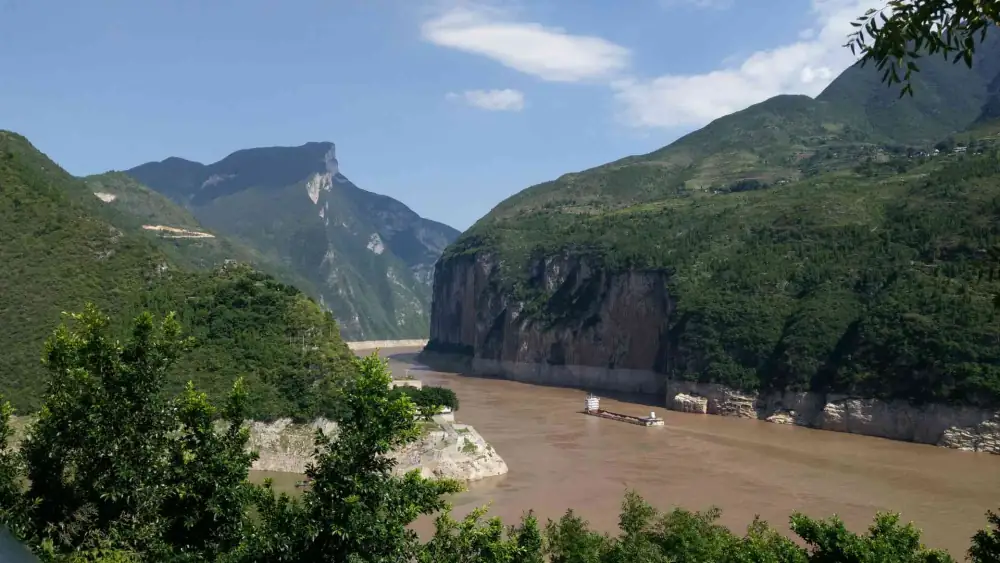
Getting there: Chongqing Jiangbei International Airport (CKG) connects to most domestic cities and has international routes to Southeast Asia, Japan, and South Korea. Within China, Chongqing is also accessible by high-speed rail from Chengdu (70 minutes, ¥131), Xi’an (2.5 hours, ¥249), and Guiyang (2 hours, ¥180).
Accommodation: Stay in Jiefangbei (解放碑) for Day 1-3 — central, on a peninsula between the two rivers, walking distance from Hongya Cave and the best hotpot restaurants. For Days 4-5 at Wulong, the scenic area has hotels; alternatively, base in Wulong County town.
Chongqing metro: The metro covers the city but Chongqing’s vertical topography means some journeys require combining metro with cable car or escalator. The Liziba Station (Line 2) is famous for having a train track run through the middle of an apartment building — worth a visit on its own.
Day 1: Jiefangbei CBD, Hongya Cave & Chongqing Hotpot
Morning: Jiefangbei Area
Jiefangbei (解放碑, Liberation Monument) is Chongqing’s central plaza — a circular area surrounded by luxury malls, department stores, and restaurants. It’s modern China at full commercial intensity. Walk the surrounding streets to get your bearings.
Chaotianmen Dock (朝天门) is a 20-minute walk downhill east — the dramatic confluence point where the darker Jialing River meets the murky yellow Yangtze. The viewing platform above the dock gives one of the best views in the city. A river cruise from here (1-2 hours, ¥50-80) gives the perspective from the water.
Afternoon: Hongya Cave
Hongya Cave (洪崖洞) is an 11-story riverside building complex built into the cliff face, housing restaurants and shops in a traditional Chongqing overhanging house style (吊脚楼, diàojiǎolóu). At night, when the lanterns and neon reflect on the Jialing River, it creates the visual that made Chongqing famous internationally — people compared it to the bathhouse town in Spirited Away (Miyazaki has acknowledged the resemblance).
Best visited in the evening — the atmosphere at night is incomparably better than during the day. Allow 1-2 hours to walk through all levels.
Evening: Chongqing Hotpot
Chongqing hotpot is the city’s greatest contribution to Chinese cuisine. It’s significantly different from Sichuan hotpot: the broth is more intensely spiced, uses tallow (牛油) as the fat base rather than vegetable oil, and comes in a divided pot (鸳鸯锅) with a spicy side and a clear side.
Key differences from what you’ve had elsewhere: the Chongqing broth is darker, richer, and more numbing. The traditional items include hairy tripe (毛肚), duck intestines (鸭肠), brain tofu (脑花豆腐), and blood tofu (血豆腐) alongside standard vegetables.
Restaurant recommendations:
- Dezhuang Hotpot (德庄火锅) — local institution with multiple branches, excellent quality, ¥80-130/person
- Qin Ma Hotpot (秦妈火锅) — traditional style with strong broth, ¥70-100/person
- For an authentic local experience, avoid tourist-facing restaurants on Hongya Cave levels and find one in the surrounding streets
Day 2: Yangtze Cable Car & Ciqikou Ancient Town
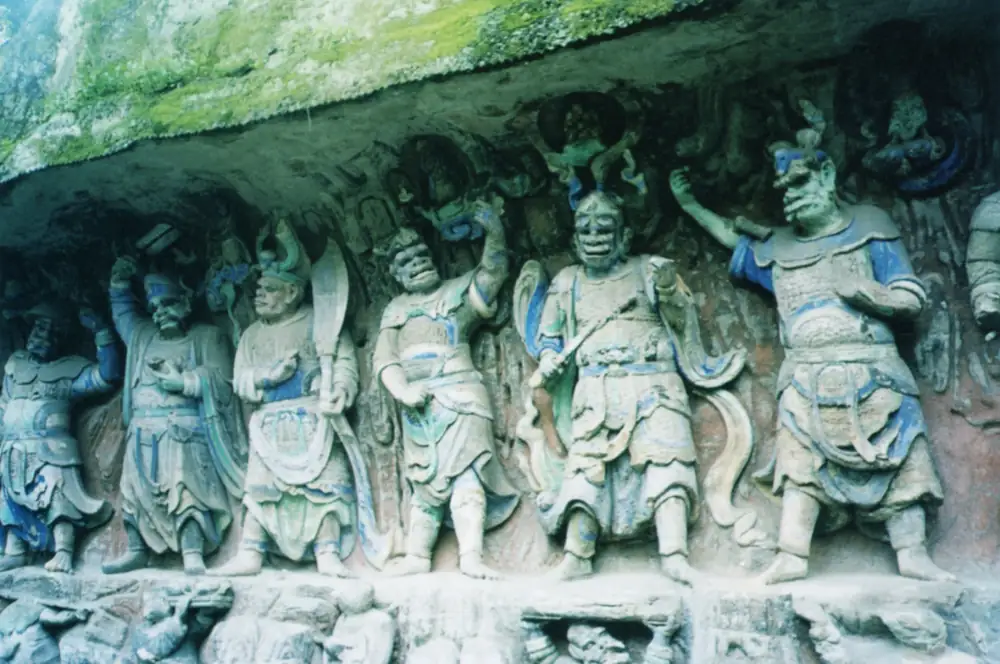
Morning: Yangtze River Cable Car
Yangtze River Cable Car (长江索道) crosses the Yangtze River and is both a functional transport connection and one of Chongqing’s iconic experiences. The view from the cable car cabin — suspended above the Yangtze with the city’s vertical skyline on both banks — is spectacular. Cost: ¥10 each way. Very popular; expect queues at peak hours.
The north bank landing is near Nanbin Road — a riverfront promenade with cafes and bars that’s pleasant for a morning walk.
Afternoon: Ciqikou Ancient Town
Ciqikou Ancient Town (磁器口古镇) is a Ming and Qing Dynasty river port town on the Jialing River, 14km northwest of the city center. The main commercial street is touristy (every water town in China has a version of these souvenir shops), but the old streets leading uphill to Bao Lun Temple are quieter and more authentic.
Metro: Line 1 to Ciqikou Station.
Local specialties to eat here: Ma Hua (麻花, fried twisted dough sticks, ¥5-10), Mao Xue Wang (毛血旺, a Sichuan/Chongqing staple of spicy boiled pork blood and offal) at any hole-in-the-wall restaurant along the back streets.
Evening: Nanshan Lookout
Nanshan (南山) on the south bank has the best aerial view of Chongqing’s dramatic night skyline. The Yidui Ermenshi viewing platform (一棵树观景台) is famous for this. Taxi from Hongya Cave ¥40-60, or take the Nanshan cable car (南山索道, ¥30 return) from the south bank.
Day 3: Three Gorges Starting Point or Yangtze River Cruise
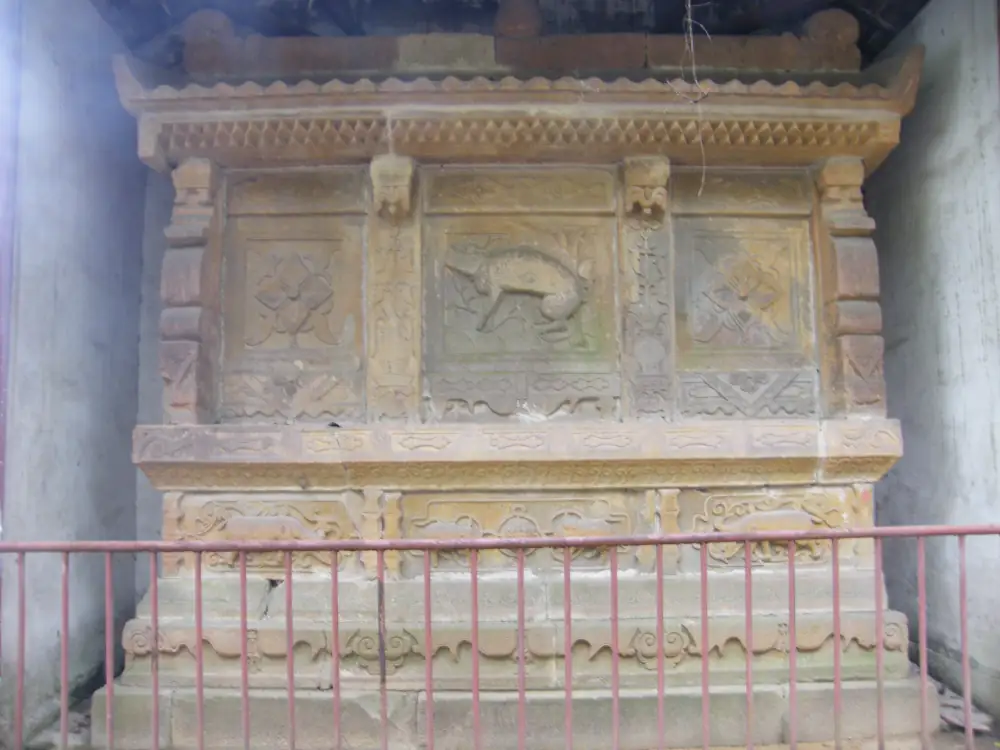
Option A: Fengdu Ghost City Day Trip
Fengdu Ghost City (丰都鬼城, ¥60) is 170km east of Chongqing on the Yangtze — a cliff-top complex of temples dedicated to the afterlife, with countless vivid statues depicting the realm of the dead. It’s kitsch and religious and fascinating. High-speed buses from Chongqing East Bus Station (¥50, 2 hours), or HSR to Fengdu Station (¥65, 1.5 hours).
Option B: Start a Yangtze River Cruise
The Three Gorges cruise (长江三峡游轮) from Chongqing to Yichang passes through the three iconic gorges — Qutang, Wu, and Xiling — over 3-5 days. If a river cruise is on your list, this is one of the world’s great journeys.
Standard tourist cruises cost ¥1,500-3,500 per person for a 3-day journey (depending on cabin class). Luxury cruises cost significantly more.
However: For a 5-day Chongqing itinerary, starting a 3-day Yangtze cruise on Day 3 means skipping Wulong. You need to choose: the river or the karst. Both are worth their own dedicated trip.
If not doing the full cruise, the Wanzhou or Fengjie area (lesser gorges, accessible by day bus) gives a taste of the Three Gorges without the multi-day commitment.
Days 4-5: Wulong Karst National Park
Day 4: Travel & Explore Wulong
Getting there: HSR from Chongqing North Station to Wulong (武隆) takes about 1.5 hours (¥85-100). Buses from Chongqing to Wulong County also run (¥50, ~2.5 hours). From Wulong town, scenic area shuttles go to the main parks.
Wulong Karst (武隆喀斯特) is a UNESCO World Heritage Site with three main attractions:
-
Three Natural Bridges (天生三桥, ¥135) — three massive natural limestone bridges with vertical drops of 200-300m. The walk through the canyon beneath the bridges is dramatic and accessible. Allow 3-4 hours.
-
Furong Cave (芙蓉洞, ¥110) — a limestone cave with extraordinary stalactite formations in a natural cathedral space. One of China’s finest show caves.
-
Longshuixia Gorge (龙水峡地缝, ¥80) — a narrow slot canyon where you walk along the canyon floor with walls rising 50-100m overhead. Some sections require knee-deep wading (waterproof boots or hire boots ¥20). Allow 2-3 hours.
Day 4 plan: Arrive in Wulong by lunch. Afternoon at the Three Natural Bridges.
Day 5: Furong Cave, Gorge & Return
Morning: Furong Cave (1.5 hours) and Longshuixia Gorge (2-3 hours). Both involve significant walking but no serious climbing.
Return to Chongqing by HSR for evening departure, or spend a final night in Wulong and return the next morning.
Eating in Wulong: The local specialty is Wulong tofu (武隆豆腐) and mountain vegetables. Restaurant options are limited in the county town — eat at your hotel or at the larger restaurant complexes near the scenic area entrances.
Practical Information
| Item | Cost |
|---|---|
| Hongya Cave | Free to enter (restaurants inside are priced) |
| Yangtze River Cable Car | ¥10 |
| Three Natural Bridges | ¥135 |
| Furong Cave | ¥110 |
| Longshuixia Gorge | ¥80 |
| Chongqing → Wulong HSR | ¥85-100 |
| Hotpot dinner | ¥70-130/person |
| Budget hotel (Jiefangbei) | ¥200-400/night |
| Mid-range hotel | ¥400-700/night |
Best time to visit: March-November. Chongqing is known as one of China’s “Three Furnaces” — summer (July-August) hits 40°C and is genuinely miserable. Spring and autumn are ideal. Winter (November-February) is grey and humid but manageable.
Chongqing food warning: The hotpot broth contains significant amounts of chili and Sichuan peppercorn. The tallow base means vegetarians have limited options at traditional hotpot restaurants. Look for clear broth (清汤) or ask for a vegetarian-friendly option.
Night views: Chongqing’s most impressive sight is the city at night seen from across the river — whether from Nanshan, from a cable car, or from the Chaotianmen riverside. Plan at least one evening specifically for river views.