
Table of contents
Open Table of contents
Bingzhongluo — Where the Road Ends and the Wild Begins
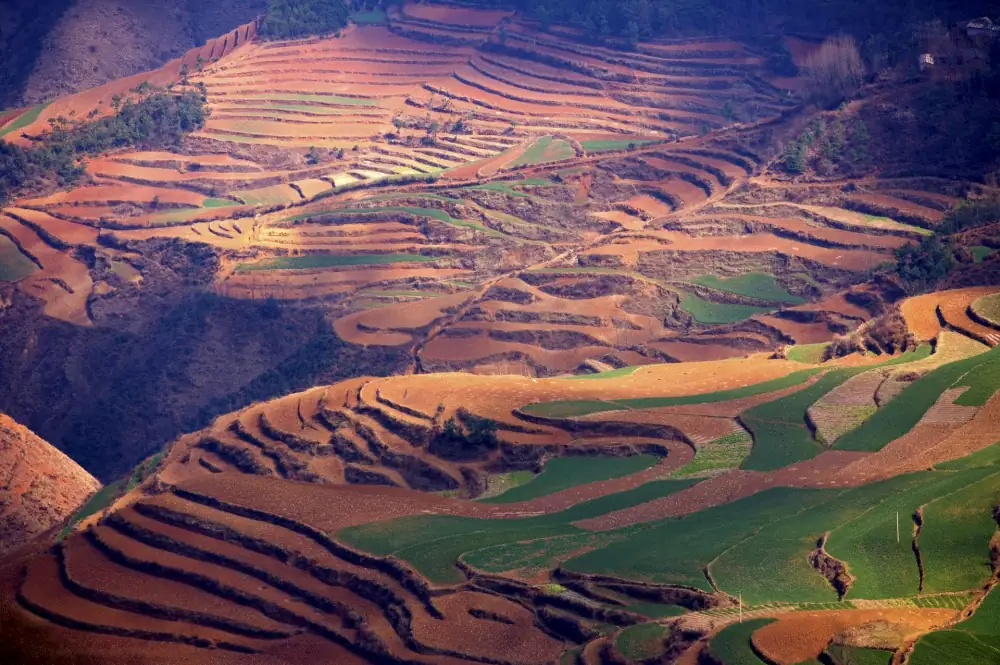
Bingzhongluo (丙中洛) sits at the very end of the road — literally. This small settlement in Gongshan County, at the northern tip of Yunnan’s Nujiang Prefecture, is where the paved road along the Nu River gives way to footpaths and horse tracks leading over the mountains into Tibet and Myanmar. It’s one of the most remote communities in China that you can still reach by public transport, and the scenery surrounding it is of a scale and drama that makes you forget, temporarily, that modern China exists at all.
The Nujiang (怒江, “Angry River”) — known as the Salween downstream — thunders through a Grand Canyon that in places exceeds 3,000 metres in depth. The canyon walls rise vertically from the river, cloaked in subtropical forest that transitions to alpine meadow and finally snow. Bingzhongluo occupies a rare widening in the canyon, a bowl of flat land where the river makes its first major bend and several minority communities have made their home for centuries.
I should be honest about the journey: getting to Bingzhongluo is a commitment. From Kunming, it’s a minimum of 18 hours by road, and the road is not for the faint-hearted. But I’ve made the trip twice, and both times I’ve arrived feeling like I’d entered a different country. The sheer walls of the canyon, the roar of the river, the prayer flags fluttering above Tibetan houses — it’s a place that makes you feel profoundly, thrillingly small.
The Nujiang Grand Canyon
The Drive North
The road from Liuku (the Nujiang prefectural capital) to Bingzhongluo follows the Nu River for about 280 km, and the drive is one of the most spectacular in China. The canyon gets progressively deeper and narrower as you head north, with the river churning below and the mountains soaring above.
Key stops along the way:
Bingzhongluo First Bend of the Nu River (怒江第一湾): About 2 km before Bingzhongluo, the river makes a dramatic U-turn around a peninsula of farmland. The viewpoint from the road above offers the classic postcard shot. Best photographed in the morning when the light fills the canyon.
Stone Moon (石月亮): About 80 km south of Bingzhongluo, a natural arch in the cliff face high above the river, through which the sky is visible. It’s a sacred site for the Lisu people. Visible from the road but requires a steep hike to reach.
Feilai Temple (飞来寺): A small temple perched on a cliff face across the river, accessible by a footbridge. The temple seems to have been placed there by divine intervention — hence the name, “Flying Temple.”
Bingzhongluo Village and Surroundings
The Village Itself
Bingzhongluo village is small — a few hundred households spread across the bowl of land between the river and the mountains. The population is mixed: Nu (怒族), Tibetan, Lisu (傈僳族), and Dulong (独龙族) people live alongside a small number of Han Chinese. There are also both Catholic and Christian churches, legacies of French and Swiss missionaries who reached this remote valley in the late 19th century. The coexistence of Tibetan Buddhism, Christianity, and indigenous animism in such a small community is fascinating.
Catholic Church: A modest but charming stone church near the centre of the village, still active and serving a congregation of Nu and Lisu Catholics. Sunday mass is open to visitors. The hymns, sung in the Nu language, are unexpectedly beautiful.
Hiking to Tibetan Villages
The real magic of Bingzhongluo lies in the villages accessible only on foot, reached by trails that have been used for centuries by tea horse caravans:
Wuli Village (雾里村): About 5 km from Bingzhongluo, reached by a trail that hugs the cliff face above the river. The village is stunning — traditional Tibetan and Nu wooden houses scattered across a green terrace, backed by sheer mountain walls, with the river far below. Allow 2-3 hours round trip from Bingzhongluo.
Qiunatong Village (秋那桶): About 15 km further north along the old tea horse trail, this is the last village before the trail crosses into Tibet. The village is even more remote and more beautiful than Wuli, with a small Catholic church and traditional stone houses. Allow a full day for the round-trip hike from Bingzhongluo, or stay overnight in a village homestay (¥50-100/$7-14 USD per person including meals).
The Tea Horse Trail: The old trail to Tibet is still walkable for a section beyond Qiunatong. The path climbs steeply from the river, traverses cliff faces via hand-carved rock shelves, and crosses alpine meadows before reaching the Tibet border at a pass above 4,000 metres. This is serious trekking — 3-4 days each way — and should only be attempted with a local guide.
Dimaluo Village (迪麻洛)
About 15 km west of Bingzhongluo, up a side valley, Dimaluo is a primarily Tibetan village known for its annual mountain pilgrimage and its position as a trailhead for treks across the Biluo Snow Mountain (碧罗雪山) to the Mekong Valley. The village has a small Catholic church and several guesthouses.
Crossing Biluo Snow Mountain: A 2-3 day trek from Dimaluo over a 4,200-metre pass to Deqin on the Mekong side. This is one of the classic trekking routes in Yunnan, offering stunning mountain scenery and genuine wilderness. Guide required — arrange in Dimaluo or Deqin. Guide fee ¥300-500 ($42-69 USD) per day.
The Churches of the Canyon
The presence of Christianity in the Nujiang Canyon is one of its most unexpected features. French Catholic missionaries arrived in the late 1800s and established churches among the Nu and Lisu people. Later, Protestant missionaries followed. Today, a significant portion of the Nu and Lisu population are Christian — one of the largest Christian communities in China.
The churches are simple but moving — wooden structures with hand-painted scripture on the walls, congregations singing hymns in minority languages, and a genuine piety that has survived decades of political upheaval. Visiting a Sunday service is a profound cultural experience, regardless of your own faith.
Etiquette: Dress modestly. Remove hats. Don’t take photos during prayers. A small donation (¥10-20/$1.40-2.80 USD) is appreciated but not required.
Food — Canyon Cooking
The cuisine in Bingzhongluo is a blend of Tibetan, Nu, Lisu, and Chinese elements:
Pipa Meat (琵琶肉): A Tibetan-Nu speciality — pork preserved by rubbing with salt and spices, then compressed and dried. It resembles a pipa (Chinese lute) in shape, hence the name. Sliced and fried, it’s rich and savoury. ¥30-50 ($4.20-7 USD) per plate.
Canyon Fish (峡谷鱼): Fish from the Nu River, grilled over charcoal with chilli and Sichuan pepper. ¥40-60 ($5.50-8.30 USD) per fish.
Buckwheat Pancakes (荞麦饼): A staple of the Nu people — buckwheat flour pancakes, dense and nutty, served with honey or chilli sauce. ¥5-10 ($0.70-1.40 USD) each.
Butter Tea and Tsampa: Standard Tibetan fare. ¥5-10 ($0.70-1.40 USD) for a thermos of butter tea.
Corn Wine (包谷酒): Home-distilled corn liquor, potent and cheap. Often offered by village hosts as a gesture of hospitality. ¥5-10 ($0.70-1.40 USD) per cup.
Where to Eat
There are no standalone restaurants in Bingzhongluo — all meals are taken at guesthouses or village homes. The food is simple but plentiful. Budget ¥30-50 ($4.20-7 USD) per person per meal.
Practical Information
Getting to Bingzhongluo
This is the hard part. There are no airports or train stations anywhere near Bingzhongluo.
From Kunming: Overnight bus to Liuku (10-12 hours, ¥220-280/$30-39 USD). From Liuku, daily bus to Bingzhongluo (6-8 hours, ¥80-100/$11-14 USD). The total journey takes about 20 hours.
From Dali: Bus to Liuku (6-7 hours, ¥120-160/$17-22 USD), then onward to Bingzhongluo.
By hired car from Liuku: ¥600-800 ($83-111 USD) for the day trip to Bingzhongluo and back. More practical: hire a car from Liuku and spend the night in Bingzhongluo.
By hired car from Kunming: ¥1,500-2,000 ($208-277 USD) for a 3-4 day round trip including driver.
Important: The road to Bingzhongluo is subject to landslides, particularly during the rainy season (June-September). Check road conditions before setting out. Allow extra time for delays.
Accommodation
Bingzhongluo Guesthouses: Several family-run guesthouses in the village. All are basic but adequate. ¥60-120 ($8.30-17 USD) per person including meals. The Gan’en Guesthouse (感恩客栈) and Ali’s Guesthouse are popular choices.
Qiunatong Homestay: ¥50-80 ($7-11 USD) per person including meals. Very basic — bucket showers and pit toilets — but the village experience is worth it.
Camping: Possible at several spots along the hiking trails. Bring your own gear. No facilities.
Best Time to Visit
- October — November: The best season — clear skies, comfortable temperatures (10-20°C), and the autumn colours are stunning. The river is lower and the road is more reliable.
- March — May: Spring flowers on the terraces, pleasant weather. The road is generally in good condition.
- June — September: Rainy season. The canyon is at its greenest, but landslides can close the road for days. Not recommended unless you have flexible plans.
- December — February: Cold and some road closures from snow at higher elevations. The canyon is stark and dramatic.
Permits and Restrictions
Bingzhongluo is in a border area (near Myanmar and Tibet), and regulations can change. As of 2026, foreign nationals can visit Bingzhongluo without special permits, but you must carry your passport at all times. Some trekking routes toward the Tibet border may require additional permits — check locally.
Health and Safety
- Altitude: Bingzhongluo is at about 1,700 metres — moderate altitude. The surrounding mountains are much higher.
- Medical care: There’s a small clinic in Bingzhongluo but no hospital. The nearest hospital is in Gongshan (3 hours south). Bring a basic medical kit.
- Road safety: The canyon road has sheer drops and is narrow in places. If you’re prone to motion sickness or vertigo, take precautions.
- River safety: The Nu River is extremely powerful. Do not swim or wade in it. People die every year underestimating the current.
Budget Estimate (4 Days, including transport from Kunming)
| Item | Budget (¥) | Mid-Range (¥) |
|---|---|---|
| Transport from Kunming (round trip) | 600 | 3,000 (private car) |
| Accommodation (3 nights with meals) | 300 | 600 |
| Additional meals | 100 | 200 |
| Local guide for hiking | 0 | 400 |
| Miscellaneous | 100 | 200 |
| Total | ¥1,100 ($152 USD) | ¥4,400 ($609 USD) |
The End of the Road, the Beginning of Everything
Bingzhongluo is not an easy destination. It takes time to reach, the facilities are basic, and the weather can be unforgiving. But difficulty is precisely what protects it. In a China where even the most remote corners are being paved, developed, and Instagrammed, Bingzhongluo remains a place where you can walk for hours without seeing another tourist, where the mountains dictate the terms of your visit, and where the people you meet have chosen to live at the edge of the world because that’s where they feel most at home. Come to Bingzhongluo to remember what travel used to feel like before it became an industry. It’s worth every hour of that winding canyon road.