
Table of contents
Open Table of contents
Urumqi: The Gateway (1 Day)
Getting to Urumqi
Urumqi (乌鲁木齐) is served by Urumqi Diwopu International Airport (URC), one of the busiest airports in western China. Direct flights from:
- Beijing: 3.5 hours, from ¥500
- Shanghai: 4.5 hours, from ¥600
- Chengdu: 3 hours, from ¥450
- Xi’an: 2.5 hours, from ¥350
High-speed rail also connects Urumqi to Lanzhou (via Lanxin HSR) and the national network. Beijing to Urumqi by train is a legendary cross-country journey of 32+ hours.
What to See in Urumqi
Xinjiang Regional Museum (新疆维吾尔自治区博物馆): The essential stop in Urumqi. The museum’s standout exhibit is the “Beauty of Loulan” and other remarkably preserved Bronze Age and Iron Age mummies — Caucasian-featured individuals whose presence in Xinjiang 3,800+ years ago tells a complex story about the early peopling of Inner Asia. The collection also includes exceptional Tang Dynasty Silk Road artifacts. Free entry; book online.
International Grand Bazaar (国际大巴扎): The large shopping/entertainment complex is touristy but useful for buying Xinjiang specialty foods to take home — dried fruit, nuts, naan bread, and the famous Xinjiang wine.
Erdaoqiao Market (二道桥市场): The authentic neighborhood market adjacent to the touristy Grand Bazaar. Better food, more genuine community atmosphere.
Tianshan Tianchi (天山天池, Heaven Lake): 110km from Urumqi at 1,910m elevation, this glacial lake in a forest bowl is the signature day trip from the city. Entry: ¥125. Gorgeous in summer and autumn.
Getting to Turpan
By high-speed train: From Urumqi South Station (乌鲁木齐南站), HSR to Turpan North Station (吐鲁番北站) takes about 20 minutes. ¥25–35. Very convenient.
Note: Turpan North Station is 50km from Turpan city. Take the complimentary shuttle bus or a taxi (¥50–80) to reach the city or individual sights.
By bus: Direct buses from Urumqi Bus Station (the south bus terminal) to Turpan city take 2–3 hours, ¥40–50. Slower but drops you in the city center.
Turpan: The Ancient Oasis (2–3 Days)
The Geography and Climate
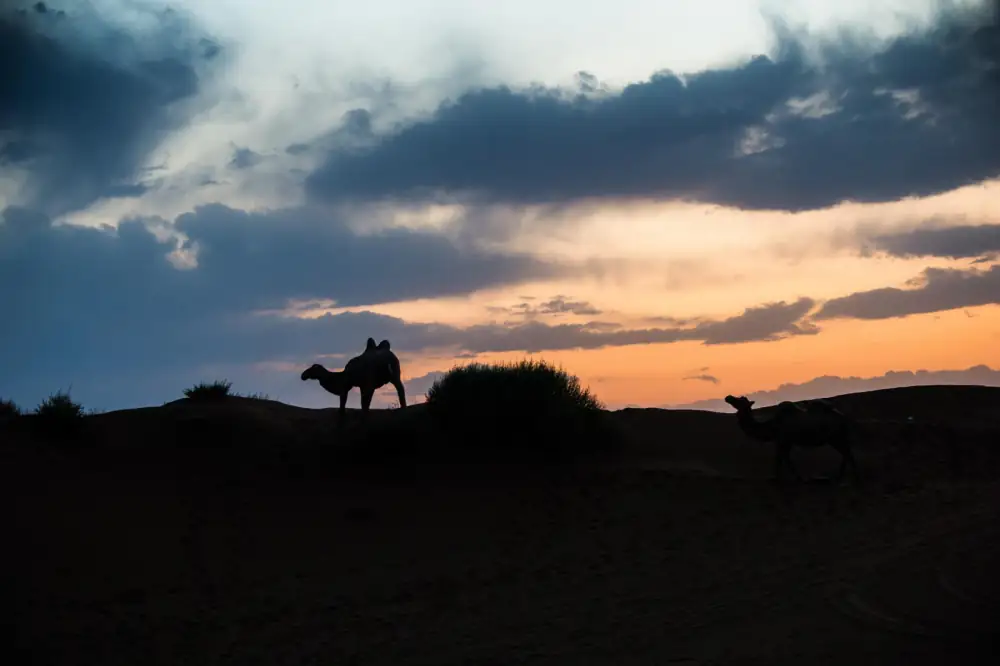
Turpan sits 154 meters below sea level — the second-lowest depression on earth after the Dead Sea — at the bottom of the Turpan Basin. The combination of low elevation, surrounding desert, and trapped solar heat creates extremes: summer temperatures regularly exceed 45°C (with a recorded high of 49.6°C). Winter brings cold (below -10°C). Spring (March–May) and autumn (September–October) are the civilized times to visit.
The karez system (坎儿井, underground channels) that sustains the oasis works on the principle of gravity-fed water from Tianshan snowmelt running underground to prevent evaporation in the desert heat. More than 1,000 active karez channels still supply Turpan’s water today — an ancient engineering tradition that UNESCO has recognized for preservation.
Flaming Mountains (火焰山)
The Flaming Mountains (Huoyan Shan) get their name from the way the eroded red sandstone cliffs glow at certain times of day — the bare rock faces look like fire in direct afternoon sunlight. Made famous in the Ming Dynasty novel “Journey to the West” (西游记) as the fiery range that blocks the monk Xuanzang’s path to India, this landscape is one of Xinjiang’s most visually distinctive.
Entry: ¥49/person, open 8am–8pm. The main scenic area has a viewing gallery, small exhibits, and the famous giant thermometer installation (marking the highest recorded temperatures).
Best time to see the Flaming effect: Late afternoon (4–6pm) when the low-angle sun hits the red cliffs. The heat reflection from the rock in summer creates the visual shimmering that inspired the legend.
Photography: Golden hour before sunset, with polarizing filter to intensify the red against the sky.
Gaochang Ancient City (高昌故城)
The ruined capital of the ancient Gaochang Kingdom (440–640 CE), later the seat of the Uyghur Kingdom (9th–14th centuries). The mud-brick ruins cover an area of 2 km² and include the palace complex, Buddhist temples, and the main market areas.
Gaochang was a major stop on the Tang Dynasty Silk Road — the monk Xuanzang himself stopped here in 629 CE on his journey to India for Buddhist scriptures. The king of Gaochang tried to convince him to stay and teach Buddhism here; Xuanzang politely declined but spent a month before continuing west.
The scale of the ruins is remarkable — walls reaching 12m high in places, the palace compound larger than a football stadium. The erosion of millennia has simplified the forms to basic geometric shapes that have a kind of abstract beauty.
Entry: ¥40/person. Access by camel or donkey cart from the entrance (included in ticket, about 3km round trip). Open 8am–8pm.
Jiaohe Ancient City (交河故城)
Built on a narrow river-island plateau 30m above the surrounding valleys, Jiaohe is more dramatic in setting than Gaochang and arguably better preserved — the buildings were carved down into the loess plateau rather than built up, which has helped resist erosion.
The Tang Dynasty capital of this site was abandoned in the 14th century. Walking through the ghostly streets of a 2,000-year-old city, with house walls still standing 8m high, is one of the great archaeological experiences in China.
Entry: ¥70/person. Eco-vehicle from entrance to main ruins: ¥30. Open 8am–8pm.
Photography at Jiaohe: The long shadows in early morning or late afternoon transform the ruins photographically. The view from the north end, looking back along the plateau spine over the ruins toward the mountains, is extraordinary.
Bezeklik Cave Murals (柏孜克里克千佛洞)
These Buddhist cave temples carved into the cliff faces of the Flaming Mountains date from the 5th–14th centuries. At their peak they contained extraordinary painted murals depicting Buddhist narratives, portraits of royal donors, and the multicultural Silk Road world.
Unfortunately, most of the finest murals were removed (and destroyed) by the German archaeologist Le Coq in the early 20th century — the fragments he took are now in Berlin’s Museum für Asiatische Kunst, but were damaged in WWII. Some murals remain in situ, and the cliff-face setting itself is spectacular.
Entry: ¥40/person. Open 9am–7pm. The combination of cliff setting, ruined caves, and the Flaming Mountains above makes the site worth visiting despite the mural losses.
Grape Valley (葡萄沟)
A canyon valley 8km from Turpan city where vineyards line both walls — the grapes trained over wooden trellises create a continuous green tunnel. This is Xinjiang’s most productive wine and raisin area, growing over 100 varieties of grape.
Best season: Late July–August when the harvest begins. The famous seedless Turpan white grapes (无核白葡萄) are harvested and spread on specially built ventilated drying rooms (晾房) to become the raisins that ship across China.
Entry: ¥60/person (includes grape tasting and cultural performance). The valley can also be walked from the public road — the agricultural landscape is visible and impressive without paying entry.
Wine tasting: Several Xinjiang wineries operate in and near Turpan. The volcanic soil and extreme temperature differential (cold nights, hot days) creates wines with good acid-sugar balance. A tasting flight: ¥80–150.
Karez Water Exhibition (坎儿井民俗园)
An educational attraction where you can walk through an original karez channel underground and see how the ancient irrigation system works. Genuinely interesting engineering history. Entry: ¥40.
Food in Turpan
Uyghur Cuisine Turpan Style:
- Grilled lamb skewers (烤羊肉串): Essential; cumin-heavy and excellent
- Nan bread from the tandoor: Turpan nan is thicker and richer than Kashgar style
- Fresh grapes and melon: Turpan’s Hami melons (哈密瓜) are some of China’s best — sweet, fragrant, and cheap at ¥5–10 per kg from market stalls
- Polo (hand pilaf): The classic Uyghur rice dish, with Turpan’s lamb adding specific regional character
Cheap and excellent: The evening food stalls near the central bazaar area serve complete Uyghur meals for ¥25–40/person.
Where to Stay in Turpan
Budget (¥80–150/night): Several guesthouses in the city center, including some in traditional courtyard buildings.
Mid-range (¥180–350/night): The Turpan Hotel (吐鲁番宾馆) is the city’s main mid-range option, with a pleasant courtyard garden. From ¥200/night.
Heat note: Air conditioning is essential in summer accommodation. This is non-negotiable at 45°C daytime temperatures.
Practical Planning
Weather and best time:
- Spring (April–May): Comfortable (20–30°C), flowers, green vine leaves on the karez and Grape Valley trellises
- Late July–August: Grape harvest, but ferociously hot (40–45°C). Only visit with heat precautions.
- Autumn (September–October): The grapes are hung to dry, golden light, comfortable temperatures — the best overall season
Staying hydrated: In summer, drink 3–4 liters per day minimum. The dry heat dehydrates faster than humid heat.
Combining with Kashgar: The Urumqi–Turpan–Kashgar route is the classic Xinjiang Silk Road circuit. Add Kashgar (overnight train or flight from Urumqi, see separate guide) for the full western Xinjiang experience.
The Turpan Basin is one of those places where the layers of history accumulate visibly — ancient irrigation engineering, 2,000-year-old city ruins, Tang Dynasty Buddhist caves, and the living Uyghur cultural tradition that has sustained the oasis through every political change. To stand in Jiaohe’s silent streets at golden hour is to feel the full weight of human persistence in an impossible landscape.