
Kanas Lake in October — the birch and Siberian larch forests surrounding China’s second deepest lake turn brilliant gold and orange, one of the most spectacular autumn scenes in China
Xinjiang (新疆) is China’s largest province — 1.6 million square kilometres encompassing the Taklamakan Desert, the Tian Shan mountain range, the Karakoram Highway, and a cultural landscape where Uyghur, Kazakh, Kyrgyz, Han, Hui, and a dozen other ethnic groups have coexisted along the Silk Road for 2,000 years.
The landscapes here are extreme: the Turpan Depression is the lowest point in China (154 m below sea level) and one of the hottest places on earth; the Pamir Plateau in the southwest is over 7,000 metres. The Taklamakan Desert (“you go in and you don’t come out”) is 337,000 km² of shifting sand dunes — the second-largest sand desert in the world.
Table of contents
Open Table of contents
Kanas Lake (喀纳斯湖)
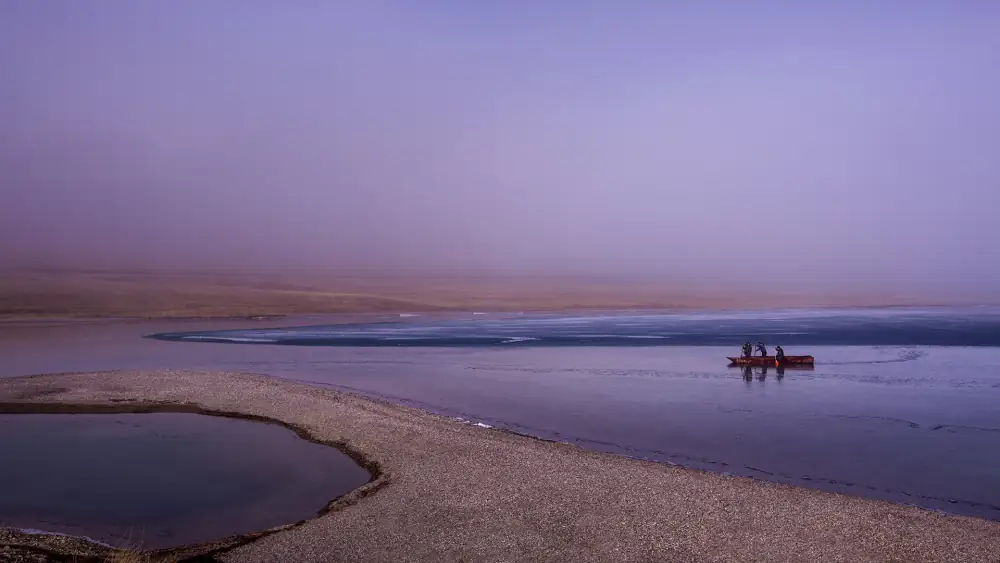
In the far north of Xinjiang, on the border of Russia, Kazakhstan, and Mongolia — the most beautiful lake in China, and among the most beautiful in the world.
The landscape: An alpine valley of old-growth Siberian cedar and pine forest, with the Kanas River running clear and teal-coloured between the trees. The autumn (September–October) colour change — aspen gold, birch yellow, pine green against the blue lake — creates a landscape that photographs appear digitally enhanced but are not.
The lake: Deep blue-green, 45 km long, flanked by mountains up to 4,374 metres (Youyi Peak, 友谊峰). The reflection of the mountains in the still morning water is extraordinary.
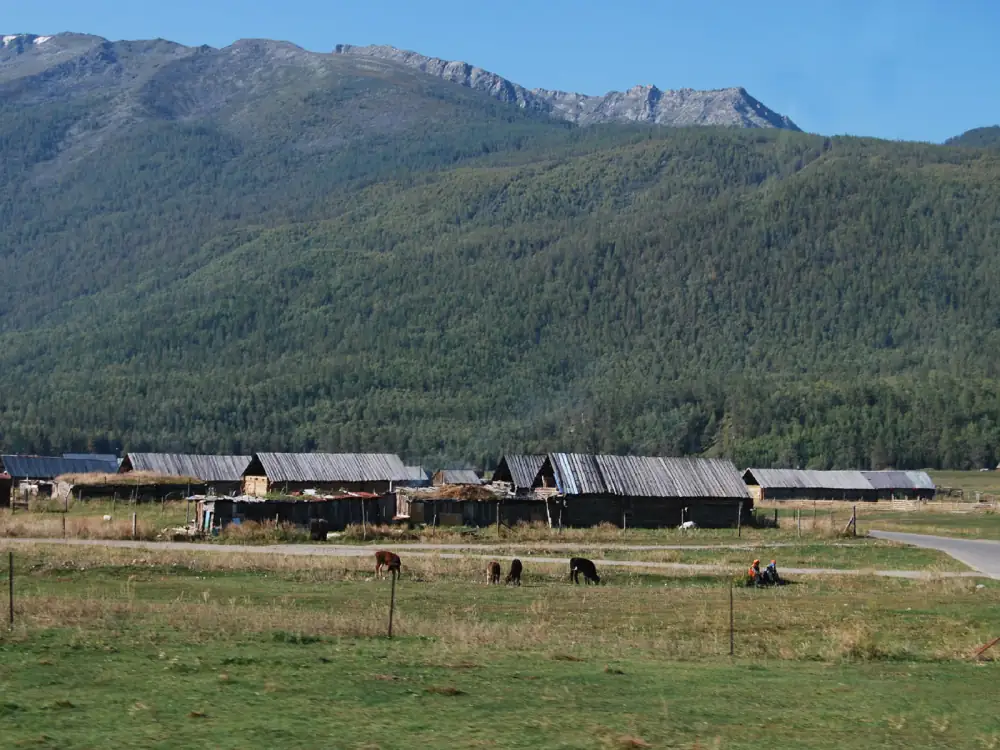
Tuwa people (图瓦人): The Kanas area is home to the Tuwa — a Turkic people numbering around 2,000, linguistically related to Tuvans across the Russian border. They live in traditional wooden houses in three villages along the lake shore (Hemu, 禾木 village is the most visited and beautiful — accessible by a separate mountain valley drive).
Ticket: ¥175 (scenic area). Open May–October (winter access very limited).
Getting there: Daily flights to Kanas Airport (KJI) from Urumqi (1 hr) and Chengdu in summer; or 3-hour car transfer from Burqin (布尔津). Hemu village is 2 hours by 4WD from Kanas.
Hemu Village — the most photogenic village in Xinjiang, a Tuwa community of wooden log houses in an autumn-golden valley at the foot of the Altai Mountains
Tianchi Lake (天池, Heavenly Lake)
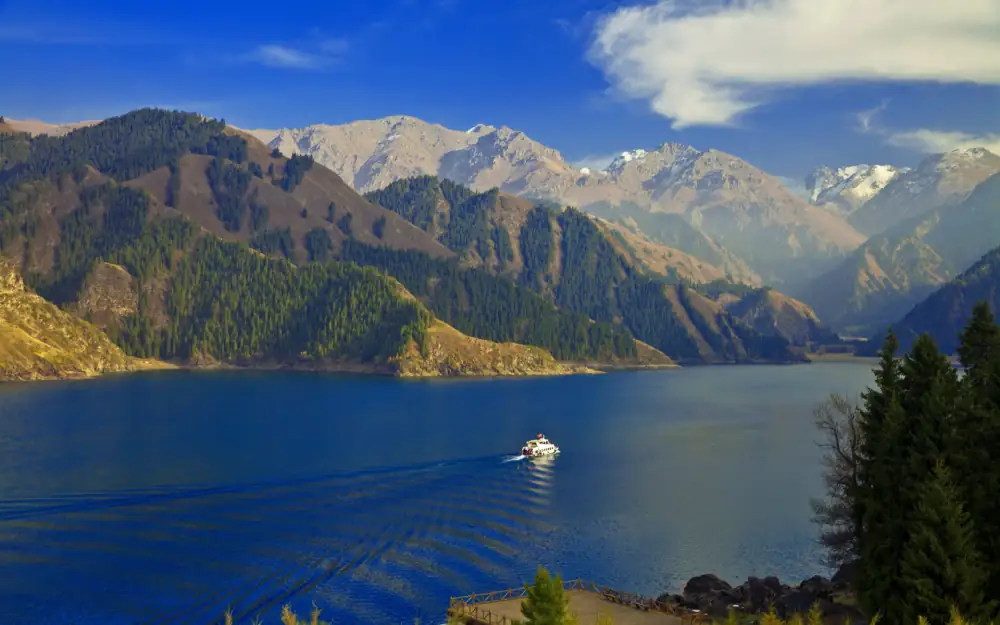
110 km east of Urumqi — at 1,910 metres in the Tian Shan range, a glacial lake surrounded by snow-capped peaks and alpine meadow, with a Kazakh pastoral community living in yurts on the meadow shores.
The views: Snow Peak (Bogda Peak, 博格达峰, 5,445 m) reflected in the blue lake is the primary image. The lake is accessible in 90 minutes from Urumqi by bus.
Staying in a yurt: Kazakh families rent traditional felt yurts on the meadow shore — staying overnight, eating mutton and flatbread, listening to Kazakh folk music (the dombra), and watching the sunrise light hit Bogda Peak before the day-trip crowds arrive.
Ticket: ¥115. Day trip or overnight both work; overnight is strongly recommended.
Tianchi Lake — the “Heavenly Lake” at 1,910 metres in the Tian Shan, a blue alpine pool circled by forest and accessible as a day trip from Urumqi
Turpan (吐鲁番)
A Uyghur oasis city in the Turpan Depression — the hottest inhabited place in China (summer temperatures to 48°C), below sea level, and an ancient Silk Road trading centre.
Jiaohe Ancient City (交河故城): A UNESCO-listed ancient city built entirely on a river island above a canyon — 2,200 years old, abandoned 600 years ago, and preserved by the extreme desert dryness. Walk through the streets, see the Buddhist monastery district, understand an entire ancient city plan. ¥60.
Karez Water System (坎儿井): The extraordinary traditional irrigation system that makes oasis life possible in the Turpan Depression — 3,000 km of underground channels connecting mountain snowmelt to the desert floor without evaporation. The engineering (done entirely by hand digging) is comparable to the Roman aqueduct system. Museum and demonstration section. ¥30.
Grape Valley (葡萄沟): The vineyards that have grown the famous Turpan seedless grapes for 2,000 years — the trellis-shaded valley is cool even in extreme heat. The grape harvest festival (August–September) is a cultural event.
Practical Tips
Getting around Xinjiang: The province is enormous; internal flights between Urumqi, Kashgar, Kanas, and Yining are essential for time-efficient travel.
Kashgar (喀什): Covered separately — the ancient bazaar city on the Pakistan border is culturally distinct and worth its own article.
Xinjiang food: Roast lamb on skewers (烤羊肉串), pulled noodles (拉条子), nan flatbread, grilled whole fish — the Uyghur culinary tradition is distinct from Han Chinese cooking and excellent.
Practical advice: Register with local police at accommodation throughout Xinjiang (international visitors are subject to additional check-in requirements). Allow extra time for security screenings at airports and checkpoints.
Last updated: May 2026