
Slender West Lake — Yangzhou’s defining garden, with the iconic Five Pavilion Bridge built in 1757 reflected in the still water
Yangzhou (扬州) was once the wealthiest city in China — the commercial hub where the Grand Canal met the Yangtze River, controlling the salt trade that funded the Tang and Song empires. The poets and painters who documented Chinese civilisation at its Tang Dynasty height wrote about Yangzhou the way a contemporary writer might write about Paris.
The wealth is gone, but the garden culture it created remains. Yangzhou has some of the finest gardens outside Suzhou, food of extraordinary refinement, and a pace of life that prioritises leisure in a way unusual for Chinese cities.
Table of contents
Open Table of contents
Slender West Lake (瘦西湖)
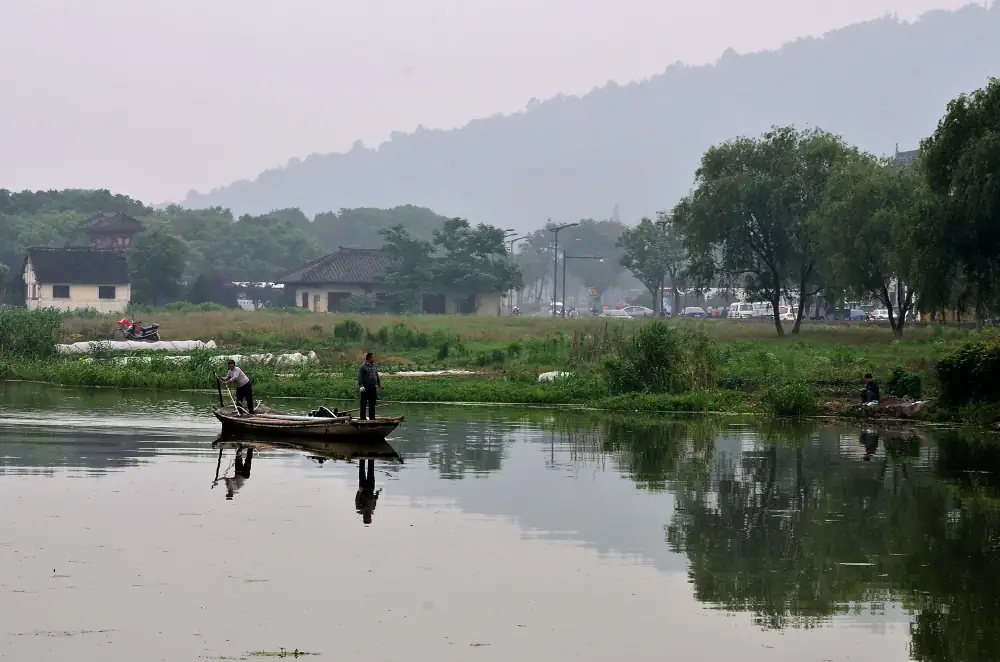
Yangzhou’s defining attraction — a series of thin, winding waterways threaded between classical garden pavilions, bridges, and planted islands. The name contrasts it deliberately with Hangzhou’s round West Lake: this is the slim, elegant version.
The Five Pavilion Bridge (五亭桥): Built in 1757, a distinctive bridge of 15 interlocking arches supporting five lotus-shaped pavilions — one of the most recognisable bridge structures in China. At full moon in autumn, the multiple arches create 15 reflected moons in the still water beneath.
Fishing Terrace (钓鱼台): A viewing pavilion framing two round moon gates, each perfectly aligned to frame the Five Pavilion Bridge on one side and the White Pagoda on the other. The garden’s most photographed composition.
White Pagoda (白塔): Modelled on the White Pagoda in Beijing’s Beihai Park — legend holds that Emperor Qianlong admired the Beijing version on an imperial tour and a Yangzhou salt merchant had a replica constructed overnight out of salt blocks to please him. The current structure is stone.
Ticket: ¥150. Open 7:30 AM – 6:00 PM.
The Fishing Terrace at Slender West Lake — two round moon gates aligning the Five Pavilion Bridge and White Pagoda in perfect classical composition
Grand Canal Heritage (大运河)
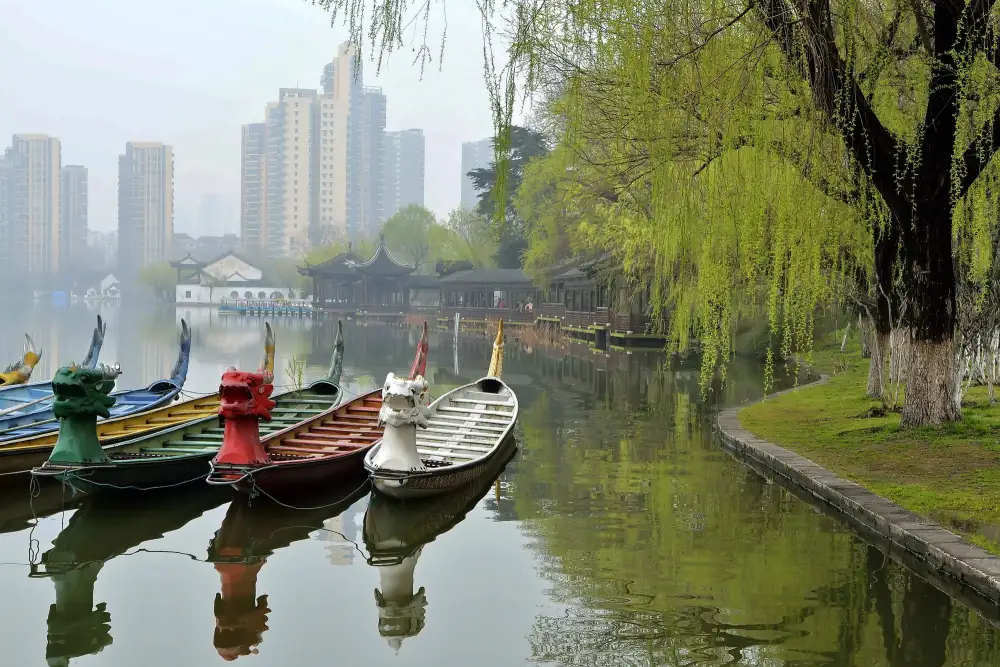
Yangzhou was the administrative headquarters for the Grand Canal system — the 1,800 km artificial waterway that connected Beijing to Hangzhou and was the circulatory system of the Chinese empire for 2,000 years.
Sanwan Wetland Park (三湾湿地公园): The UNESCO-inscribed Grand Canal segment running through Yangzhou — a 7 km stretch of the original Ming-Qing canal with operating lock systems, ancient stone embankments, and a developed waterfront park. Free. The best place in China to understand the Grand Canal as a living infrastructure.
China Grand Canal Museum (扬州中国大运河博物馆): Opened 2021 — an impressive new institution dedicated entirely to the 2,500-year history of the canal. Free entry; allow 2–3 hours.
The Grand Canal at Yangzhou — the 2,500-year-old waterway that was the circulatory system of the Chinese empire, UNESCO-listed in 2014
Huaiyang Cuisine (淮扬菜)
Yangzhou is the heartland of Huaiyang cuisine — one of China’s eight major regional cooking traditions, and historically the most prestigious. Imperial banquet cuisine and the Manhan Quanxi (满汉全席, the famous full imperial banquet) drew on Huaiyang cooking principles.
Characteristics: Extremely refined knife work; minimal spicing to preserve natural flavours; high-quality seasonal ingredients; elaborate visual presentation.
Yangzhou Fried Rice (扬州炒饭): The most famous version of fried rice in Chinese cuisine — not a simple dish but a specific preparation using day-old rice with shrimp, pork, egg, and specific vegetable combination. Available everywhere in Yangzhou; quality varies; the best versions are in traditional restaurants.
Lion’s Head Meatball (狮子头): Enormous soft-braised pork meatballs (steamed or braised) — the technique requires specific fat-to-lean proportions (3:7) and hand-mixing that develops the right texture. Emblematic of the Huaiyang patience with process.
Congee (扬州早茶): The Yangzhou morning tea culture (different from Guangzhou’s dim sum) centres on rice congee with accompanying dishes — preserved egg, pickled vegetables, tofu sheets, sesame cakes.
Huaiyang Lion’s Head Meatball — the 3:7 fat-to-lean ratio pork meatball slow-braised in clear broth, an emblem of Huaiyang culinary patience
Practical Tips
Getting there: 1 hour by high-speed rail from Nanjing (南京), 2.5 hours from Shanghai, 5 hours from Beijing. Yangzhou has no airport; Nanjing Lukou Airport is the nearest.
Combine with: Nanjing (1 hr) + Yangzhou (2 nights) + Suzhou (2 hrs from Yangzhou via Zhenjiang) makes an excellent 6-day Jiangnan cultural circuit.
Pacing: Yangzhou is a slow city by design — the teahouse culture encourages 2-hour breakfasts. Let yourself be absorbed by the pace.
Last updated: May 2026