
The Slender West Lake (瘦西湖, Shòu Xī Hú) in Yangzhou, Jiangsu Province, is named for its gracefully elongated shape — a 4.3 km stretch of narrow waterway connecting a series of lakes, enclosed within gardens designed during the Ming and Qing dynasties. It’s one of the most aesthetically refined landscapes in China: narrower and more intimate than Hangzhou’s West Lake, with pavilions, arched bridges and willow trees composed with the deliberate care of an ink painting.
Why Yangzhou Deserves a Visit
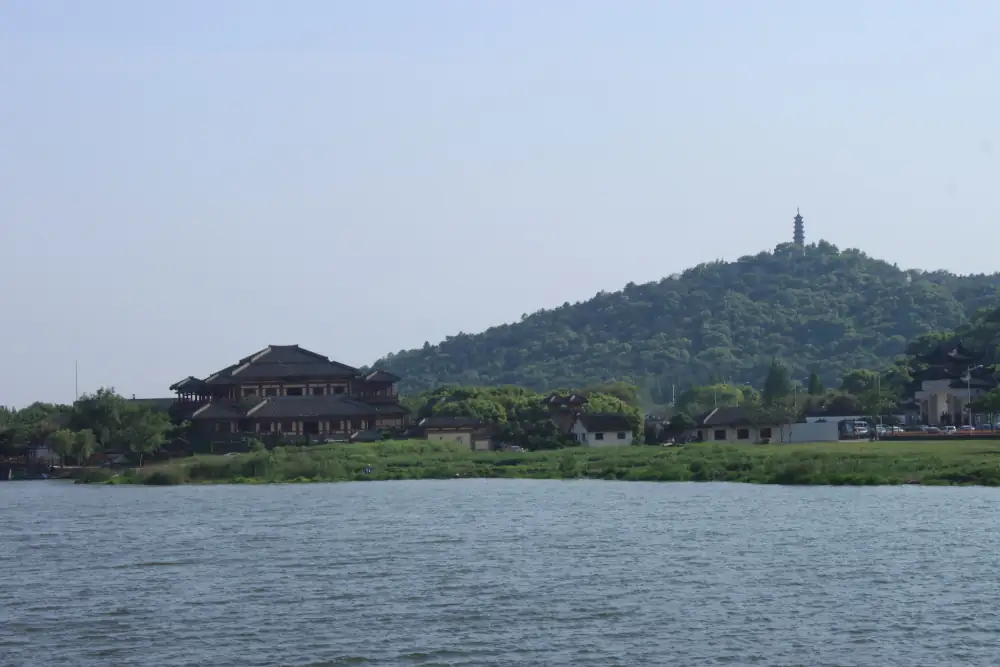
Yangzhou occupies an unusual position in Chinese history — it was once one of the wealthiest and most cultured cities in China, serving as the junction of the Grand Canal and the Yangtze River trade routes. Salt merchants based here in the Qing dynasty (18th–early 19th century) amassed extraordinary wealth and spent it on garden-building, poetry, painting, cuisine and the performing arts. The gardens they created, including the ensemble around Slender West Lake, represent the peak of private garden culture in Chinese history.
Today Yangzhou is a medium-sized city (population 4.5 million) that receives far fewer foreign tourists than its more famous neighbors Nanjing and Suzhou, which makes it a genuinely non-touristy destination with excellent food, beautiful streets and no crowd pressure.
The Slender West Lake Landscape
The lake is divided into two sections by the historic Five Pavilion Bridge (五亭桥, Wǔtíng Qiáo):
Southern Section
Shu Gang (蜀冈): The hills bordering the southern edge of the lake are the oldest part of the garden, with naturalistic walking paths among ancient trees.
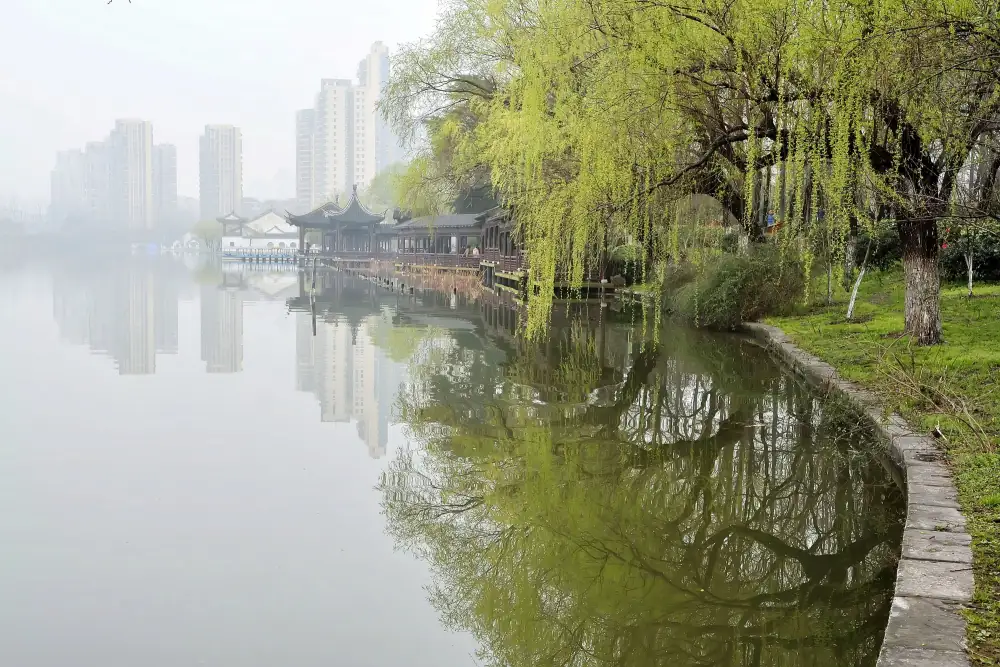
Changti Causeway (长堤): An iconic weeping willow-lined causeway that runs for nearly a kilometer alongside the lake. In spring, the willows trail their branches into the water and the air is full of catkins. This is the most photographed view at Slender West Lake.
Xiaojin Shan (小金山): A small artificial island in the lake’s southern portion. The Fishing Platform Pavilion (钓鱼台) here has two arched windows that frame the Five Pavilion Bridge and the White Dagoba beyond — a composition so perfect that it’s been reproduced endlessly in Chinese paintings.
The Five Pavilion Bridge (五亭桥)
The symbol of Yangzhou. Built in 1757, the bridge spans the narrowest point of the lake with five lotus-shaped pavilions arranged symmetrically on its five spans. At the mid-autumn festival, when the moon rises, you can see 15 different moon reflections through the bridge’s many arches — a famous optical phenomenon that has been celebrated in poetry for centuries.
White Dagoba (白塔)
Adjacent to the Five Pavilion Bridge stands a white Tibetan-style stupa (dagoba) — a miniature version of the one in Beijing’s Beihai Park. The legend says the Qing Emperor Qianlong, visiting Yangzhou on an imperial tour, remarked that the city had everything except a white dagoba. The Yangzhou salt merchants supposedly constructed one overnight before his return inspection. This story (probably apocryphal) says everything about both Qianlong’s imperial whim and the extraordinary wealth of Yangzhou’s merchant class.
24 Bridge (二十四桥)
The most poetry-laden location in Yangzhou. A famous Tang dynasty poem by Du Mu (杜牧, 803–852 AD) mentions “twenty-four bridges on a moonlit night, where jade beauties teach flute playing.” The current 24 Bridge is a reconstruction, but the location remains evocative, particularly by moonlight.
Boating on the Lake
Punt-style boats operated by guides traverse the full length of the lake. The journey takes 40–60 minutes. Cost: ¥60–80 per person, or ¥200–300 for a private boat. The perspective from the water — looking up at the willow curtains and pavilions — is fundamentally different from the bankside view and absolutely worth doing once.
Yangzhou Cuisine
Yangzhou gave its name to one of China’s most famous dishes — Yangzhou Fried Rice (扬州炒饭), though locals will tell you the versions you eat elsewhere bear little resemblance to the authentic form. More distinctive are:
Lion’s Head Meatballs (狮子头): Giant pork meatballs, braised for hours until they collapse into silk. One of the great dishes of Jiangsu cuisine.
Yangzhou stewed noodles (扬州刀面): A regional specialty.
Dried bean curd with scallions (大煮干丝): Thin strands of dried tofu simmered in chicken broth with seasonings — deceptively simple and extraordinarily good.
Double skin milk (双皮奶): A sweet dessert of milk set to a trembling pudding.
Crab roe tofu (蟹黄豆腐): Seasonal autumn dish; silken tofu with river crab roe.
Breakfast: Yangzhou is famous for its tea house breakfast culture. The morning ritual of dim sum at a teahouse is a deep cultural tradition here. Try Fuchun Tea House (富春茶社), operating since 1885, for steamed buns, crispy wonton and scallion bread.
Practical Visit Information
Location: Yangzhou, Jiangsu Province
Opening hours: 06:30–17:30 (peak season); 07:00–17:00 (off-peak)
Entrance fee: ¥120 (includes boat access to some pavilion islands); buy in advance to avoid queues
Best time to visit:
- April: Cherry blossoms and peach blossoms around the lake — the peak aesthetic season
- Autumn (October–November): Golden willows and comfortable temperatures
- Morning (07:00–09:00): Soft light, fewer crowds before tour groups arrive
Getting to Yangzhou
From Nanjing: High-speed train to Yangzhou East (35 minutes, ¥60–80). Nanjing South to Yangzhou East via intercity HSR.
From Shanghai: High-speed train to Yangzhou East (75 minutes, ¥125–200). Direct trains available from Shanghai Hongqiao.
From Suzhou: 1.5–2 hours by HSR.
Within Yangzhou: Taxi/Didi from the train station to Slender West Lake: 15 minutes, ¥20–30. The lake’s south gate is the main tourist entrance.
Combining with East Yangzhou
Dongguan Street (东关街): The best-preserved section of the old city — a 1 km Ming and Qing dynasty commercial street with carved wood facades, traditional food stalls and craft shops. 15 minutes by Didi from Slender West Lake.
Ge Garden (个园): One of China’s four most famous classical gardens; particularly extraordinary rockery gardens representing the four seasons. ¥45 entry; half-day visit.
He Garden (何园): Less famous than Ge Garden but arguably more beautiful — an 1883 residence with a unique two-story gallery corridor connecting all buildings. ¥40.
Yangzhou deserves more attention from international tourists than it receives. Its combination of extraordinary gardens, refined cuisine, Canal-era history and relaxed pace makes it the ideal counterpoint to the busier tourist cities — a chance to experience the Jiangnan cultural world without the crowds of Suzhou or Hangzhou.