
Yunnan Nujiang Grand Canyon: China’s Last Wild Valley
West of the Hengduan Mountain ranges, where three of Asia’s great rivers — the Nujiang (Salween), Lancang (Mekong), and Jinsha (upper Yangtze) — carve parallel gorges through limestone and granite less than 50 kilometres apart, lies a landscape so remote that many parts of it were effectively unknown to outsiders until the early 20th century.
The Nujiang Grand Canyon — stretching roughly 320 km from Liuku in the south to Bingzhongluo in the north — is the deepest river gorge in China, flanked by peaks rising 4,000 metres above the river bed. It is also one of the last parts of Yunnan that mass tourism has not yet substantially altered.
Geography: Understanding the Three Parallel Rivers
The entire region is a UNESCO World Heritage Site — the Three Parallel Rivers of Yunnan Protected Areas — and the scale of the geology is difficult to comprehend. Where the Rocky Mountains are perhaps 200 km across at their widest, these ranges are 100 km across but contain six distinct climate zones and the most concentrated plant biodiversity in the northern hemisphere.
The Nujiang River (怒江, Angry River) runs fast, cold, and a deep jade-green in winter, turning brown with glacier melt in July. It is non-navigable for most of its length.
The canyon walls rise nearly 3,000–4,000 metres from river to adjacent peaks — deeper than the Grand Canyon of Colorado.
The Communities of the Nujiang Valley
What makes the Nujiang Valley extraordinary beyond its geology is the extraordinary density of ethnic minority cultures compressed into its narrow confines.
Lisu People (傈僳族)
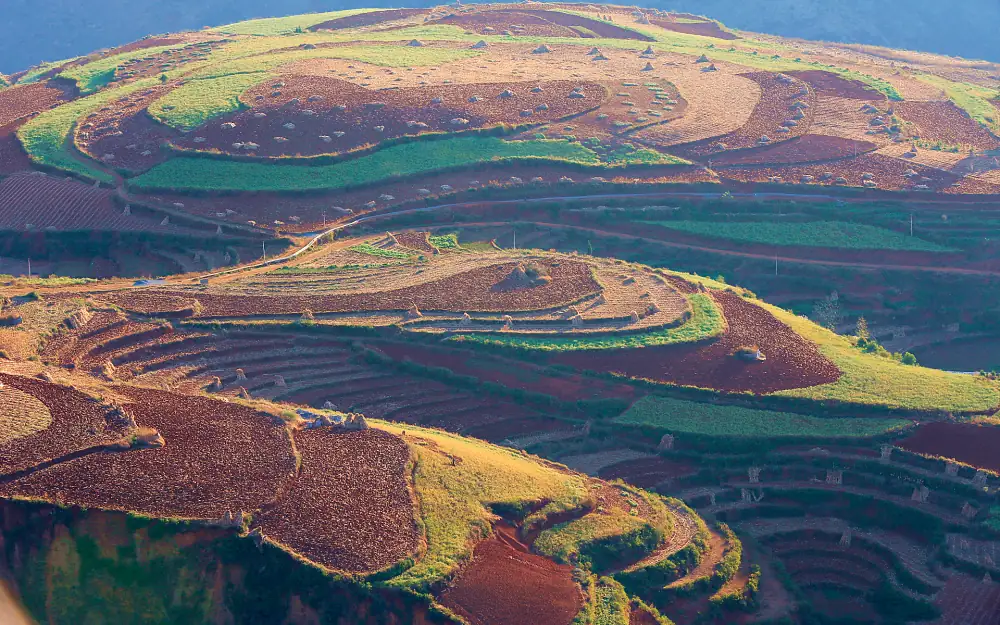
The dominant group of the mid and lower valley, the Lisu are known for intricate embroidered costume, a distinctive form of polyphonic vocal music, and extraordinary agricultural terracing carved into slopes that appear near-vertical. The Lisu New Year (Kuoshi), held around the winter solstice, is one of Yunnan’s most joyful festivals — three days of drinking, music, and crossbow competition.
Lisu villages can be visited at Laomudeng (老姆登) — perhaps the most photographed village in the valley, perched above the river with a remarkable Catholic church built by French missionaries in 1921.
Nu People (怒族)
One of China’s smallest ethnic groups (fewer than 30,000 people), the Nu have inhabited the upper canyon since at least the Tang dynasty. Their traditional houses are built from stacked stone; their terraced fields grow buckwheat and bitter-melon at altitudes that challenge even experienced mountain farmers. The Nu language is related to Tibeto-Burman groups; most Nu speakers today also speak Lisu and Mandarin.
Dulong People (独龙族)
In the Dulong River Valley — an even more remote side valley accessible only by a road through an 8-month-winter tunnel — live China’s most geographically isolated ethnic minority. Dulong women traditionally received facial tattoos marking clan affiliation; the practice ended in the 1980s, but elderly women bearing these marks can still sometimes be seen in Dulong villages. The valley is accessible only May through October when the tunnel road is clear of snow.
Tibetan Communities
The upper valley around Bingzhongluo (丙中洛) and further north has a Tibetan character — Buddhist monasteries cling to cliff faces, mani stone walls line paths, and the prayer flags turn this into a landscape that might have been photographed in Kham or Amdo.
Key Sites and Destinations
Bingzhongluo (丙中洛)
The small market town at the northern end of the paved road is the base for most travellers exploring the upper canyon. Surrounded on three sides by a dramatic meander bend in the Nujiang River and enclosed by snow peaks, it is one of the most strikingly situated towns in China.
From Bingzhongluo, day hikes and multi-day treks fan out in all directions:
- Qiu’na Tong (秋那桶): A remote Tibetan village 30 km north, reachable only by foot, with traditional stone architecture and a small monastery.
- Laomudeng Village: 45 minutes south by road; the iconic Catholic church overlooks the river with the Gaoligong Mountains behind.
- Qianlishan Cliffs (千里山): A dramatic vertical face above Bingzhongluo that turns golden at sunrise.
Laomudeng Village and Its Catholic Church
The Catholic Church of Our Lady (圣母教堂) at Laomudeng is a remarkable cultural artifact — a mud-brick structure built entirely by local Lisu converts under the direction of French missionary Père Goré in the 1920s. The interior is decorated with Lisu-language biblical texts and a wooden crucifix that blends Lisu craft motifs with Catholic iconography. Sunday services (in Lisu and Mandarin) are still held weekly; visitors are welcome to observe quietly.
The village itself has perhaps 30 households, a school, and several guesthouses operated by Lisu families.
Maji Tong Cliff Road (马吉通)
A spectacular mountain path hacked into a vertical cliff above the river, the Maji Tong road offers views that feel like flying. It is accessible by foot or by vehicle (terrifying in a minibus) and connects several upper-valley villages.
Trekking in the Nujiang Valley
The Laomudeng to Bingzhongluo Trail
A moderate 2-day hike along mountain paths above the river, passing through Lisu and Nu villages. The trail is largely unflagged; a local guide (hired through guesthouses in Laomudeng, ¥200–¥300/day) is strongly recommended.
Gaoligong Mountain Cross-Valley Trek
The Gaoligong Range (高黎贡山) — the western wall of the valley — can be crossed to the Irrawaddy watershed in Myanmar in 3–5 days, though the Myanmar side requires separate permits and careful logistics. The Chinese side alone (the upper sections) offers spectacular rhododendron forests blooming in April–May.
Dulong Valley Exploration
Entering the Dulong Valley requires passing through Gongshan County’s Dulong Township. The road tunnel opens around May 1 (check locally for current-year status). Basic guesthouses exist in the valley; trekking to higher pastures requires a local guide and several days.
Practical Information
Getting to Nujiang
From Kunming: Overnight sleeper bus (12–14 hours, ¥180–¥250) or daytime bus connections through Dali or Lijiang. From Lijiang: Bus via Dali and Jianchuan to Liuku (southern entry point), 10–12 hours. From Shangri-La: A spectacular mountain road connects Shangri-La to Bingzhongluo via Deqin and Cizhong — roughly 6–8 hours with good weather, longer if roads are wet.
Within the Valley
Minibuses run along the paved road from Liuku to Bingzhongluo (roughly 8 hours). Accommodation guesthouses can arrange motorcycle taxis for accessing villages off the main road (¥50–¥150 per journey).
Best Season
- October to February: Clear, dry, cold; river runs green; visibility excellent for photography; accommodation uncrowded.
- March to May: Warm, rhododendrons blooming above 2,500 m; good trekking conditions.
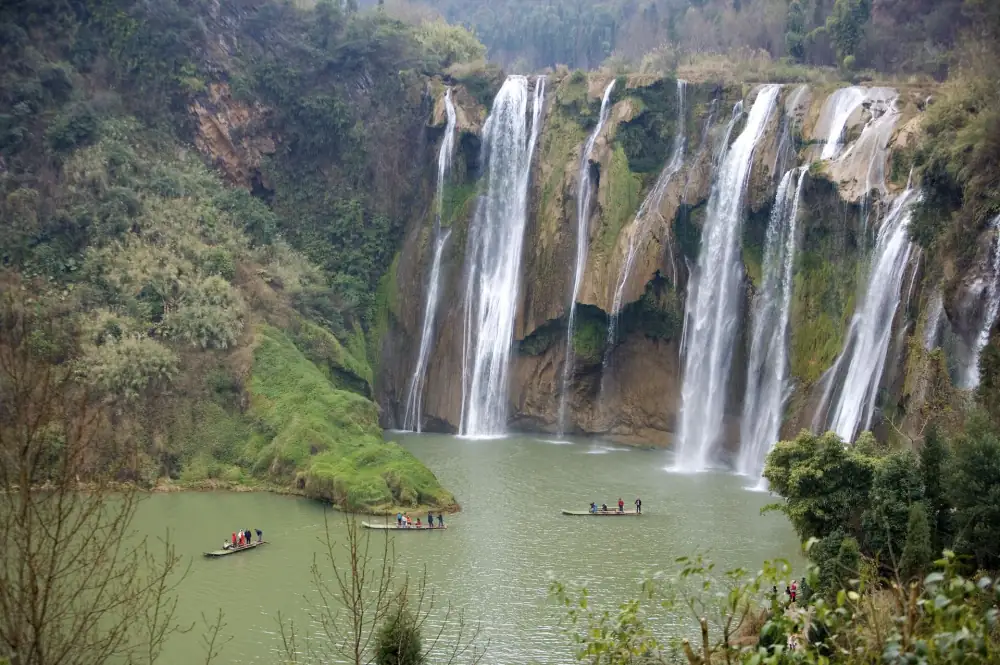
- June to September: Monsoon season; landslides possible on mountain roads; the river turns brown but waterfalls are spectacular.
Permits
No special permits are currently required for the main valley. The Dulong Valley may require registering with local authorities in Gongshan; guesthouses can arrange this.
Accommodation
Guesthouses (农家乐, nóngjiālè) operate throughout the valley, typically costing ¥60–¥150 per room with shared facilities. The quality is basic but the hospitality of Lisu, Nu, and Tibetan hosts is extraordinary.
In Bingzhongluo, several guesthouses now offer private en-suite rooms for ¥200–¥350, suitable for travellers who find the village homestay experience too rustic.
What to Bring
- Warm layers: Even in summer the nights at altitude are cold.
- Rain gear: Essential from May through October.
- Cash: ATM coverage is extremely limited above Liuku; bring sufficient renminbi.
- Offline maps: Download the valley on Maps.me or Gaode offline before losing phone signal.
- Phrasebook: Very few English speakers exist north of Fugong; a Mandarin phrasebook and translation app are essential.
The Nujiang Valley is one of those rare places that reminds you what it means to be truly far from anywhere. That quality — the silence, the scale, the sense of entering lives lived entirely on their own terms — is, precisely, why it rewards the journey.