
Table of contents
Open Table of contents
Getting to Shangri-La
By Air
Shangri-La Diqing Airport (香格里拉迪庆机场, IATA: DIG) is served by direct flights from:
- Kunming: 45 minutes, from ¥300. Several daily flights.
- Chengdu: 1 hour 10 minutes, from ¥450. Daily.
- Beijing Capital: 3.5 hours, from ¥900. Daily.
- Shanghai Pudong: 3.5 hours, from ¥950. Several weekly.
The airport sits at 3,459m — one of the highest in Yunnan. Altitude effects can begin immediately on arrival, particularly if you’ve come from a low-altitude city.
By Bus from Lijiang
The most common overland approach. Buses from Lijiang Old Town Bus Station (丽江古城汽车站) run 8–10 times daily. Journey: approximately 3.5 hours, ¥60–80. This gradual ascent from Lijiang (2,400m) to Shangri-La (3,280m) is gentler on the body than flying directly.
The road passes through spectacular gorge country and rises over several mountain passes. Worth taking a window seat.
By Bus from Deqin (Dechen)
If coming from the north (approaching from the Meili Snow Mountains area), buses from Deqin take about 3 hours, ¥50.
Getting Around Shangri-La
The main attractions cluster in two zones: the Old Town area (3,260m) and Songzanlin Monastery (3,380m), about 4km from the Old Town. Napa Lake is about 8km from the Old Town.
Taxis: Abundant in town, base fare ¥8. Old Town to Songzanlin: ¥15–20. Old Town to Napa Lake: ¥20–30.
Electric scooter rental: Available from several rental shops near the old town. ¥80–120/day. The most flexible option for exploring the outskirts.
Bicycle: The terrain around Shangri-La includes some hills, but the road to Napa Lake is relatively flat and a popular cycling route.
Songzanlin Monastery (松赞林寺)
Overview
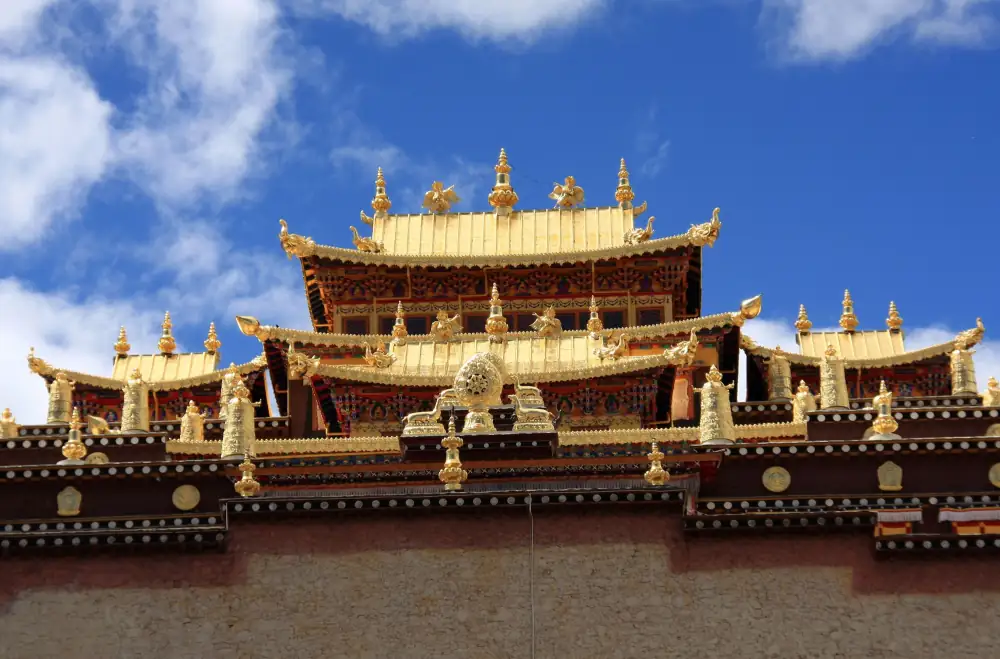
Founded in 1679 under the direction of the 5th Dalai Lama, Songzanlin is the largest Tibetan Buddhist monastery in Yunnan Province and one of the most important in Kham (eastern Tibet) cultural area. It houses around 700 monks and is an active religious center, not just a historical site.
The monastery complex sits on a hill above a small lake, creating the postcard image of white and golden buildings climbing the hillside with mountains behind. From a distance it resembles a miniature Potala Palace — an impression intensified by the similar design vocabulary.
Entry and Visiting
- Entry fee: ¥115/person
- Electric bus from entrance to monastery: Included in ticket
- Guided tour (Mandarin): Available at the entrance, ¥50 extra, typically 1.5 hours
- Opening hours: 8am–6pm daily
Allow 2–3 hours for a thorough visit.
What to See
Zhambalin Hall (扎仓): Main Assembly Hall The largest hall, capable of seating several hundred monks. The interior is a riot of thangka paintings, butter lamps, fabric hangings, and the smell of centuries of accumulated incense. The central altar features a large statue of Tsongkhapa (founder of the Gelug school) flanked by the Buddha of the past and future.
If timing aligns with a morning prayer session (typically 9–10am), you can respectfully observe monks chanting in the hall — extraordinary to witness.
Gakpeiling Hall (噶丹松赞林) The second main hall, older and smaller, with some of the monastery’s most historically significant religious art. The roof terrace gives excellent views over the monastery complex toward Napa Lake.
Circumambulation Path (转经路) Walk the circumambulation path (clockwise) around the monastery. About 45 minutes, it passes smaller temple buildings, monk residences, and offers changing perspectives on the complex. Early morning, monks and local Tibetans walk this circuit in significant numbers.
Photography
The monastery rewards early arrival. Come at opening (8am) before tour groups. The light from the east hits the golden rooftops from about 9am. The reflection in the lake below is best in late afternoon.
Napa Lake (纳帕海)
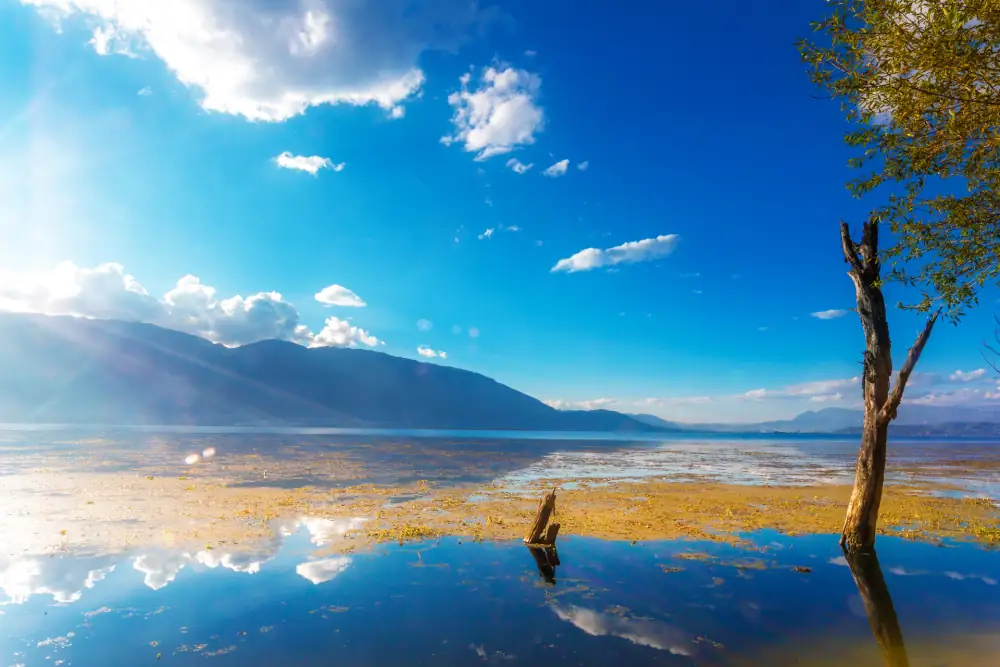
Napa Lake is a seasonal lake at 3,260m that transforms with the seasons. In summer it’s a large shallow lake; in winter and early spring the water level drops and the surrounding flatlands turn into wetland meadows.
Best season: Late September to early November, when migratory birds arrive (including black-necked cranes), the highland grasses turn amber and gold, and the sky is at its clearest.
Getting there: Taxi from the Old Town (¥20–30) or bicycle (30–40 minutes on flat road).
Entry: No fee to view the lake from the main road. A small parking fee may apply.
What to do: Walk the lakeside trail (3–5km circuit), watch for birds at dawn (migratory crane season is particularly special), photograph the mountain reflections.
Horses: Local families offer horse riding around the lake area for ¥60–100/hour. This is a genuine experience rather than a tourist gimmick — the horses are used by local herders.
Shangri-La Old Town (独克宗古城)
The old town burned in January 2014 in a fire that destroyed much of the historic core. It was rebuilt over subsequent years and reopened. The rebuilt old town is visually appealing but essentially new, which bothers some visitors more than others.
The old town is best in early morning (before 8am) or evening (after 7pm) when the day-trip crowds have thinned. The central square has a giant prayer wheel (reportedly the world’s largest) that’s genuinely impressive to see spinning.
The main commercial streets are lined with cafes, Tibetan arts shops, and restaurants. Quality varies — the best restaurants are slightly off the main drag. Yak butter tea, yak meat dishes, and tsampa are the local specialties.
Where to Eat
Tibetan options:
- Yak butter tea (酥油茶): ¥15–20 per cup
- Tsampa porridge: ¥20–30
- Yak meat hotpot: ¥150–250 for two
- Tibetan rice wine (青稞酒): ¥20–40
Practical restaurant options:
- Multiple restaurants along Changzheng Road and around the main square serve everything from Yunnan-style Tibetan fusion to standard Chinese food
- Breakfast near the daily market (morning market): ¥15–25 for local noodles and bread
Surrounding Mountains and Day Hikes
Shangri-La sits surrounded by mountains that offer excellent hiking with almost no crowds.
Shika Snow Mountain (石卡雪山)
A half-day trip (15km from the Old Town). Cable car available (¥160 round trip) to 4,449m. From the top, views of the Meili Snow Mountain range (including Kawakarpo/Meili, one of the holiest mountains in Tibetan Buddhism) are stunning on clear days. The alpine meadow below the cable car has excellent wildflowers in June–July.
Tiger Leaping Gorge Entry Point
Hike or bus to Qiaotou (桥头) about 60km away — this is where most Tiger Leaping Gorge hikes begin. The combination of Shangri-La and Tiger Leaping Gorge in one trip is very popular. Budget an extra day.
Day Trip: Deqin and Meili Snow Mountains
The most dramatic day trip from Shangri-La goes north to Deqin (3.5 hours each way by bus or car) for views of the Meili Snow Mountain range. The sacred peak of Kawakarpo at 6,740m is one of Tibetan Buddhism’s most holy mountains — it has never been successfully summited, and Tibetan groups successfully lobbied the Chinese government to permanently ban summit attempts.
The Feilai Temple viewpoint (飞来寺) above the river valley gives the most famous view of Meili’s morning alpenglow (sunrise colors on the glaciated peaks). To catch this, you need to overnight near Deqin.
A full Shangri-La + Meili trip: 4–5 days minimum.
Where to Stay

Budget (¥100–200/night)
The old town has numerous guesthouses in Tibetan-style buildings. Rooms range from atmospheric to basic. Songzanlin Guesthouse and similar options from ¥120/night.
Mid-Range (¥250–500/night)
- Mayi Guesthouse: Tibetan-style boutique, excellent location near old town, from ¥280/night
- Shangri-La Zangma Hotel: Good amenities, Tibetan design, from ¥350/night
Luxury (¥800+/night)
- Songtsam Retreat at Shangri-La: Boutique luxury, stunning design by architect and cultural preservationist Baima Duoji. From ¥1,500/night. Their Songtsam network has multiple lodges in the area.
- Banyan Tree Ringha: 30 minutes from town, spectacular mountain setting, one of China’s finest luxury lodges. From ¥2,500/night.
Altitude and Health
Shangri-La town sits at 3,260m — high enough for noticeable effects. Most visitors experience:
- Mild headache on the first day (normal)
- Shortness of breath on stairs or uphill walking (normal)
- Disrupted sleep the first night (normal)
If symptoms are severe or don’t improve after 24 hours, consider resting more before further activities.
Tips for acclimatization:
- Don’t fly directly from a low-altitude city and immediately hike — spend at least 6 hours resting first
- Drink plenty of water
- Avoid alcohol the first night
- Altitude sickness medication (Diamox) available if discussed with a doctor beforehand
Best Time to Visit
Spring (April–June): Flowers in bloom, pleasant temperatures 10–20°C, green grasslands. June can be wet.
Autumn (September–November): The clearest skies, golden grasslands, crane migration. The best overall window. October 1 week is very crowded — aim for mid-September or mid-October.
Summer (July–August): Monsoon rains frequent but lush vegetation. Crowds peak.
Winter (December–March): Quiet, cold (-15°C nights), occasional snowfall transforms the landscape. Great for photography. The New Year period (Tibetan lunar calendar) has festivals.
Shangri-La, for all its commercial development, still delivers on the promise of the name. Arrive with realistic expectations, explore beyond the obvious main sites, and give yourself the morning hours before the tour coaches arrive — that’s when the place reveals its better self.