
Table of contents
Open Table of contents
- Why Pu’er Tea Country Should Be on Your Travel List
- Understanding Pu’er Tea
- The Tea Horse Road — Walking Ancient Trade Routes
- Ancient Tea Plantations
- Tea Tasting — How to Do It Properly
- Buying Pu’er Tea — A Practical Guide
- Getting to Pu’er Tea Country
- Accommodation in Tea Country
- Best Time to Visit
- Budget Estimate (5 Days)
- A Final Thought on Slowing Down
Why Pu’er Tea Country Should Be on Your Travel List
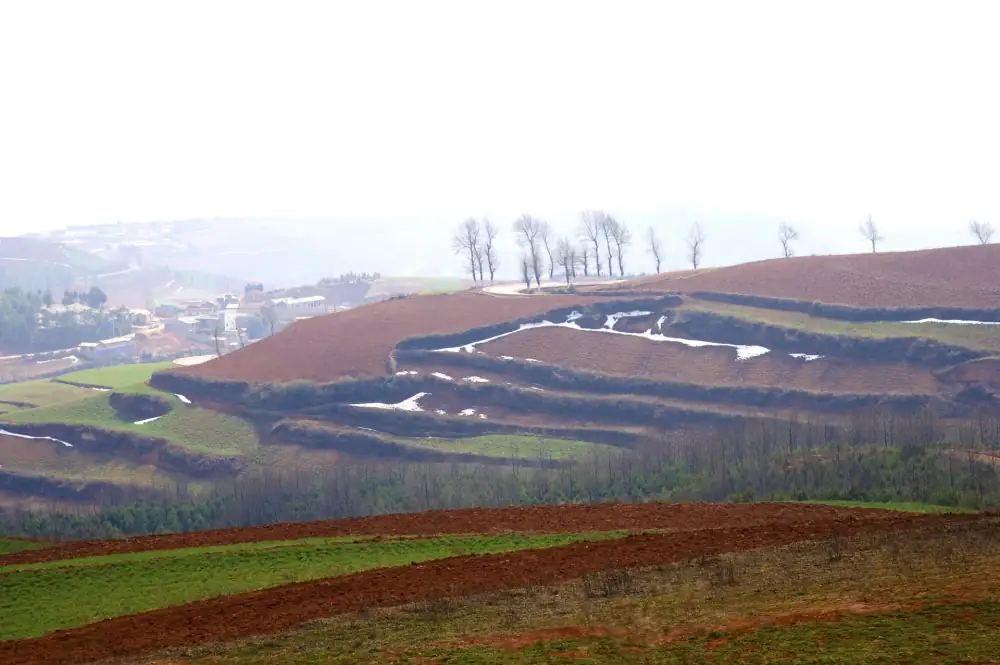
There’s something mildly addictive about watching tea leaves unfurl in a gaiwan. But watching those leaves come from a tree that’s been growing since the Tang Dynasty — a tree whose roots have been drinking Yunnan’s red soil for over a thousand years — adds an entirely different dimension to the experience. Pu’er tea (普洱茶) isn’t just a beverage; it’s a living connection to one of the world’s oldest trading networks, a complex art form, and a multi-billion dollar industry that still relies on farmers hiking into mountains to hand-pick leaves from ancient trees.
The Pu’er region of southern Yunnan produces what many tea connoisseurs consider the finest tea on earth. Unlike green or black tea, Pu’er is a fermented tea that improves with age — a well-stored cake from the 1980s can sell for tens of thousands of dollars. But you don’t need to be a millionaire to appreciate Pu’er culture. You just need to get yourself to Yunnan and be willing to slow down long enough to taste what the mountains have to offer.
Understanding Pu’er Tea
Raw vs Ripe
Before visiting Pu’er country, it helps to understand the two main categories:
Raw Pu’er (生普, shēng pǔ): Tea leaves are pan-fired, sun-dried, and compressed into cakes. It ages naturally over years and decades, developing increasingly complex flavours. Young raw Pu’er can be astringent and grassy; aged raw Pu’er develops honey, plum, and camphor notes. This is the traditional form and the one most valued by collectors.
Ripe Puér (熟普, shóu pǔ): Invented in 1973, ripe Pu’er undergoes an accelerated fermentation process (wòdūi) that mimics decades of aging in just 60-90 days. The result is a dark, earthy, smooth tea with notes of wood, mushroom, and dark chocolate. It’s more approachable for beginners and significantly cheaper than aged raw Pu’er.
What Makes Pu’er Special
Pu’er tea is made from large-leaf varietal tea trees (Camellia sinensis var. assamica) that grow primarily in southern Yunnan. The region’s unique combination of elevation (1,200-1,800 metres), tropical monsoon climate, and ancient forest ecosystems creates conditions found nowhere else on earth. The oldest known tea tree, the 3,200-year-old “Jingmai Tea Tree Ancestor,” grows in the mountains of Pu’er Prefecture.
The Tea Horse Road — Walking Ancient Trade Routes
History of the Route
For over a thousand years, caravans of horses and mules carried compressed tea cakes from Yunnan northward to Tibet, Bhutan, Nepal, and India, returning with horses, salt, and medicinal herbs. The Tea Horse Road (茶马古道) was one of the world’s great trading networks — less famous than the Silk Road but arguably more challenging, crossing some of the most rugged terrain on the planet.
Tracing the Route Today
Ninger Old Town (宁洱古镇): About 40 km from Pu’er City, Ninger was a major staging post on the Tea Horse Road. The old town retains sections of the original stone-paved road — you can literally walk in the hoofprints of tea caravans. Several old merchant houses have been converted into small museums displaying tea-processing equipment, horse gear, and trading documents.
The Tea Horse Road Museum (茶马古道博物馆): Located in Pu’er City, this excellent museum provides comprehensive context for the trading network. Exhibits include original caravan equipment, tea compressing tools, and historical photographs. Entrance ¥30 ($4.20 USD). English labels are limited, so consider hiring a guide for ¥100 ($14 USD).
Hiking the Ancient Trail: A 12 km section of the original Tea Horse Road has been preserved near Fengqing (凤庆) in Lincang Prefecture. It’s a moderately challenging hike through forest and mountain terrain, with rest stops at former way stations. The hike takes about 5-6 hours. Local guides in Fengqing charge ¥200-300 ($28-41 USD) for a day hike including lunch.
Ancient Tea Plantations
Jingmai Mountain (景迈山) — UNESCO World Heritage Site
In September 2023, the Cultural Landscape of Old Tea Forests of the Jingmai Mountain in Pu’er was inscribed as a UNESCO World Heritage Site — the first tea-related World Heritage property. This is a big deal, and for good reason.
The Bulang and Dai people have been cultivating tea on Jingmai Mountain for over 1,000 years, using an understory planting technique where tea trees grow beneath the canopy of taller forest trees. The result is a unique ecological system where ancient tea trees (many 300-500 years old, some over 1,000) coexist with the natural forest in a symbiotic relationship that produces tea of extraordinary depth and complexity.
What you’ll see: Terraced hillsides covered in ancient tea trees, traditional Bulang and Dai villages with wooden houses on stilts, and tea-processing workshops where you can watch leaves being pan-fired by hand. The village of Wengji (翁基) is particularly picturesque, with tea drying on bamboo mats in every courtyard.
Getting there: Jingmai Mountain is about 150 km from Pu’er City (3-4 hours by car). The road is paved but winding. There’s no direct public transport — you’ll need to hire a car (¥500-600/$69-83 USD per day) or join a tour from Pu’er City.
Accommodation: Several village guesthouses have opened in recent years. The Wengji Bulang Guesthouse offers simple but comfortable rooms from ¥150-250 ($21-35 USD) per night, including tea-tasting sessions with the host family.
Lao Ban Zhang (老班章) — The King of Pu’er
If Jingmai Mountain is the cultural heritage star, Lao Ban Zhang is the commercial heavyweight. This village in Menghai County produces what’s widely considered the most prestigious raw Pu’er in China. A single cake (357 grams) of Lao Ban Zhang from ancient trees can cost ¥5,000-20,000 ($692-2,769 USD) or more, depending on the year and producer.
The village itself is unremarkable — a cluster of newish concrete houses, many still under construction as tea money flows in. But the surrounding ancient tea gardens, set on a ridge at 1,700 metres, are stunning. The trees here are genuinely ancient, with gnarled trunks and canopies that create a cathedral-like atmosphere.
Visiting Lao Ban Zhang: The village is about 60 km from Menghai town, reached via a road that’s been recently paved but remains narrow and winding. A day trip from Menghai or Xishuangbanna is feasible with a hired car (¥400-500/$55-69 USD). You can arrange tea tastings directly with village families — most are happy to share their tea, though the really premium stuff will be offered in small quantities.
Bingdao (冰岛) — The Rising Star
No relation to the Nordic country — Bingdao (also written as “Bingdao” meaning “Ice Island”) is a village in Lincang Prefecture whose tea has skyrocketed in value over the past decade. The tea here is known for its exceptional sweetness (huí gān, 回甘) and lingering aftertaste. Ancient tree cakes from Bingdao can fetch ¥10,000-30,000 ($1,385-4,154 USD) per cake.
The village is tiny — just a few dozen households — but surrounded by magnificent old-growth tea forests. It’s less commercialised than Lao Ban Zhang, and the villagers are generally welcoming to respectful visitors.
Tea Tasting — How to Do It Properly
The Gongfu Tea Ceremony
Pu’er is traditionally brewed using gongfu cha (工夫茶) — a method that uses a high leaf-to-water ratio, short steeping times, and multiple infusions from the same leaves. Here’s a basic approach:
- Warm the teaware: Pour boiling water into your gaiwan and cups to warm them
- Rinse the tea: Place 7-8 grams of leaf in the gaiwan, pour boiling water over, and immediately discard (this “awakens” the leaves and removes dust)
- First infusion: Pour boiling water and steep for 10-15 seconds. Pour through a strainer into a fairness pitcher (gōngdàobēi), then into cups
- Subsequent infusions: Add 5-10 seconds per infusion. Good Pu’er will yield 10-20 infusions
Where to Taste Tea
Pu’er City Tea Markets: The Pu’er International Tea City (普洱国际茶城) has hundreds of vendors, most of whom will happily brew tea for you with no obligation to buy. This is the best place to train your palate — taste widely, ask questions, and don’t be pressured into purchases.
Kunming Tea City (雄达茶城): In the provincial capital, this massive tea market is where much of Yunnan’s wholesale tea trade happens. You can find everything from ¥30 ($4.20 USD) factory cakes to ¥50,000 ($6,923 USD) vintage specimens.
Village tastings: Tasting tea in the village where it was grown, brewed by the farmer who made it, is a transcendent experience. Most villages welcome visitors for tastings — tip ¥20-50 ($2.80-7 USD) for the experience.
Buying Pu’er Tea — A Practical Guide

Price Ranges (2026)
| Category | Price per 357g Cake |
|---|---|
| Factory blended ripe Pu’er (Dayi, Xiaguan) | ¥50-200 ($7-28 USD) |
| Single-origin ripe Pu’er | ¥100-500 ($14-69 USD) |
| Young raw Pu’er (garden trees) | ¥100-500 ($14-69 USD) |
| Young raw Pu’er (ancient trees) | ¥500-5,000 ($69-692 USD) |
| Aged raw Pu’er (10+ years) | ¥500-20,000+ ($69-2,769+ USD) |
Avoiding Fakes
The Pu’er market is rife with counterfeits. Basic precautions:
- Buy from reputable vendors with established reputations
- Look for neipiao (内票) — the identity ticket pressed into the cake
- Be suspicious of “ancient tree” tea priced below ¥300 per cake
- Factory teas (Dayi, Xiaguan, Haiwan) have anti-counterfeit features — check the QR codes
- When in doubt, buy less and taste more before committing to expensive purchases
Getting to Pu’er Tea Country
By Air
Pu’er Simao Airport (SYM): Flights from Kunming (50 minutes, ¥300-600/$42-83 USD), Chengdu, and Chongqing. The airport is small but functional.
Xishuangbanna Gasa Airport (JHG): More flight options than Pu’er, and close to the Menghai tea areas. About 1.5 hours from Pu’er City by road.
Lincang Airport (LNJ): For accessing the Bingdao and Fengqing tea areas. Flights from Kunming (55 minutes).
By Road
From Kunming to Pu’er City: About 5-6 hours by highway bus (¥180-220/$25-30 USD) or 4 hours by high-speed train (the new Yunnan rail extension opened in 2021, ¥140-220/$19-30 USD).
From Xishuangbanna to Pu’er: About 2 hours by road. Buses depart frequently, ¥60-80 ($8.30-11 USD).
Accommodation in Tea Country
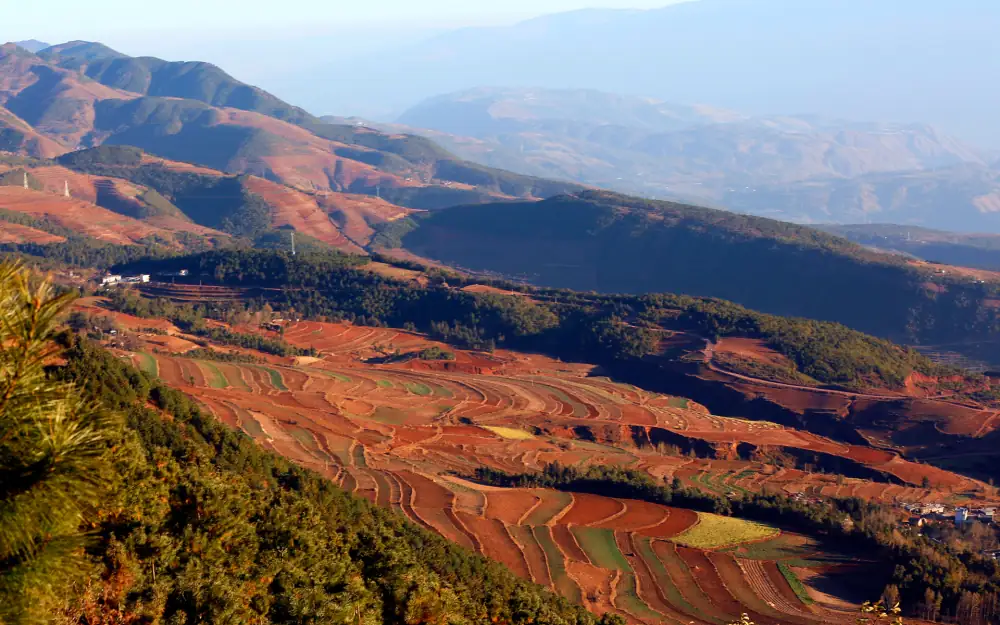
Pu’er City: The Mandarin Hotel (曼德林酒店) offers comfortable rooms from ¥250-400 ($35-55 USD). The more charming option is the Pu’er Tea Garden Hotel, set among actual tea plantations on the city’s outskirts — doubles from ¥280-500 ($39-69 USD).
Jingmai Mountain: Village guesthouses ¥100-250 ($14-35 USD) per night. Basic but authentic — you’ll likely be woken by roosters and the sound of tea being processed.
Menghai: The Menghai Tea Valley Resort offers a proper hotel experience in the middle of tea country. Doubles from ¥300-500 ($42-69 USD).
Best Time to Visit
Spring (March — April): The tea harvest season. This is when you’ll see tea being picked, processed, and sold fresh. The mountains are at their greenest, and the weather is pleasant (15-25°C). This is peak season — book ahead.
Autumn (September — October): The second harvest. Fewer tourists than spring, comfortable weather, and the post-rain forest is lush and fragrant.
Summer (June — August): Rainy season. Transport to remote villages can be challenging, but the tea gardens are at their most photogenic with mist and dramatic skies.
Winter (December — February): Quiet and cool. Some higher villages can be chilly (5-15°C), but this is a good time for indoor tea tasting and avoiding crowds.
Budget Estimate (5 Days)
| Item | Budget (¥) | Mid-Range (¥) |
|---|---|---|
| Flights Kunming-Pu’er round trip | 600 | 1,200 |
| Local transport | 300 | 2,500 (private car) |
| Accommodation (4 nights) | 400 | 1,600 |
| Meals | 400 | 800 |
| Tea purchases | 300 | 2,000 |
| Museum/tasting fees | 150 | 300 |
| Total | ¥2,150 ($298 USD) | ¥8,400 ($1,162 USD) |
A Final Thought on Slowing Down
Pu’er tea culture demands something that modern travel often doesn’t afford — patience. The tea takes time to brew. The conversations take time to develop. The mountains take time to traverse. But if you can surrender to that pace, you’ll find that southern Yunnan offers one of China’s most rewarding cultural experiences. I’ve sat in tea houses from Jingmai to Bingdao, and every single session has taught me something new — not just about tea, but about the relationship between land, people, and time. Come ready to learn, and come ready to sit still. The tea will do the rest.