
Table of contents
Open Table of contents
Day 1: Kunming City — Green Lake, Old Muslim District, Yunnan University
Morning: Green Lake Park (翠湖公园) (7:30–10:00am)
The 7.5-hectare Green Lake is the emotional heart of Kunming’s old city. The park has been a gathering place for centuries and continues this function daily — early morning Tai Chi practitioners, retirees playing chess, flower vendors, and since 2006, a remarkable annual event: Seagull Season.
Every November–March, thousands of red-billed seagulls migrate to Kunming from Siberia. The sight of seagulls wheeling over an inland city of 6 million is surreal and wonderful. If visiting in this season, the park becomes a seagull-feeding spectacle that’s genuinely charming. Bags of small bread are sold at the park entrance for ¥5.
Even without seagulls, Green Lake Park in the morning is excellent. The pavilions, the lotus-covered sections, and the quality of life visible in the park make it one of the best city parks in China.
Breakfast: Multiple stalls and small restaurants around the lake entrance. Try 小锅米线 (small wok rice noodles) — Kunming’s local breakfast staple, ¥8–12.
Late Morning: Yunnan University (云南大学) (10:00am–12:00pm)
Immediately east of Green Lake, the Yunnan University campus has beautiful republican-era architecture and a famous tradition of intellectual independence. Walk the main avenue under the old camphor trees and visit the natural history museum if open.
Lunch: Muslim Quarter (穆斯林一条街) (12:00–1:30pm)
Kunming has a significant Hui Muslim population and the area around Zhengyi Road (正义路) has excellent halal restaurants alongside regular Yunnan food. This is where Crossing the Bridge Rice Noodles (过桥米线) originated as a Yunnan institution:
Crossing the Bridge Noodles: A large bowl of very hot broth arrives separately from a platter of raw ingredients — paper-thin sliced meat, vegetables, egg, and rice noodles. You add everything to the broth in the right order and cook it table-side. ¥25–50 depending on ingredient quality. Several specialist restaurants on Jinbi Road (金碧路) do excellent versions.
Muslim street food alternative: Lamb flatbreads (馕夹肉, ¥15–20) and milk cakes (乳扇, ¥15–25, a fresh cheese unique to Yunnan) are worth seeking out here.
Afternoon: Kunming Old Streets and Yunnan Provincial Museum (2:30–6:00pm)
Kunnan Historic District (昆明历史街区): The area around Wenhua Lane (文化巷) and Wuyi Road (五一路) has some of Kunming’s remaining old architecture and the densest concentration of independent cafes and bookshops.
Yunnan Provincial Museum (云南省博物馆): Free entry; covers Yunnan’s extraordinary ethnic and natural history with excellent exhibits on bronze-age Dian Kingdom archaeology, ethnic minority costumes, and the ancient Tea Horse Road. Allow 2–3 hours. Open Tuesday–Sunday 9am–5pm.
Evening: Night Market at Nanping Street (南屏街)
Kunming’s commercial center has excellent evening food markets. The covered night market near Xinyi City (新意城) shopping area runs from 5pm–midnight.
Dinner essentials:
- Wild mushroom soup (野生菌汤): Yunnan’s wild mushrooms are world-class. ¥35–60 for a simple mushroom soup.
- Fried Yunnan goat cheese (煎乳饼): ¥15–25
- Yi people roasted corn (彝族烤玉米): ¥5–8 — street snack, outstanding
Day 2: Stone Forest (石林) — Full Day Excursion
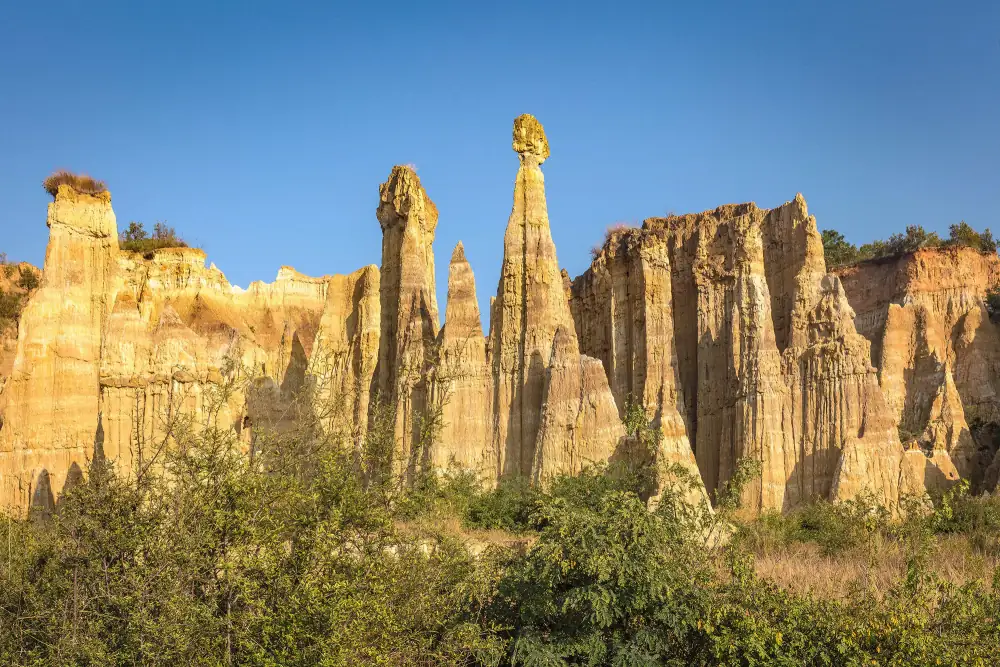
The Stone Forest (Shilin, 石林) is Kunming’s most famous attraction and one of China’s geological wonders — 400 km² of exposed karst limestone formations that erosion has sculpted into massive stone pillars, some reaching 30m. The largest concentration looks from the right angle like a densely-packed urban forest of stone.
Getting There
By tour: Most convenient. Multiple organized day trips depart from Kunming hotels and the main bus stations. Cost: ¥120–180/person including transport and entry.
By bus: From Kunming East Bus Terminal (东部客运站, Metro Line 3 to Xiyuanlu Station 西苑路站), direct buses to Shilin town run from 7am. Journey: 1.5 hours, ¥26. From Shilin town, local bus or taxi to the scenic area (¥5–15).
Distance: 90km southeast of Kunming.
Scenic Area Entry
Entry ticket: ¥175/person Electric shuttle bus within area: ¥30 for unlimited rides
Allow the full day (6–8 hours) for a thorough visit.
Key Areas of the Stone Forest
Major Stone Forest (大石林): The most dramatic and heavily photographed section. The stone pillars here reach 20–30m and are densely packed — navigating the paths between them gives the immersive “inside a stone forest” feeling.
Minor Stone Forest (小石林): Calmer, with lower formations and more space. The open areas allow better photography of individual stone silhouettes.
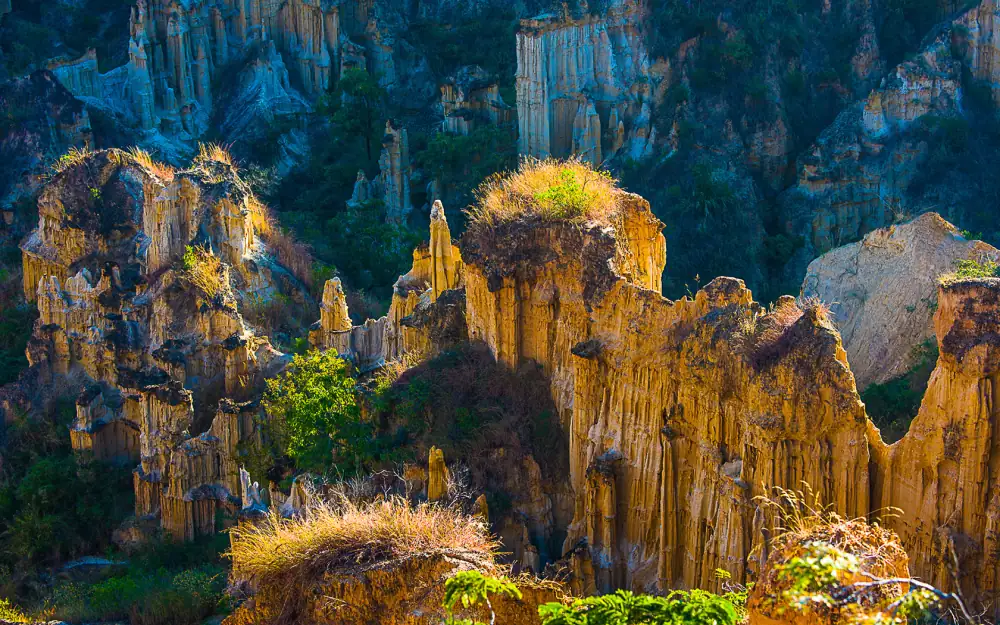
Naigu Stone Forest (乃古石林): Darker, older limestone with a more rugged character. Less visited and more dramatic for photography enthusiasts.
Yi People Cultural Performance: The Sani Yi people are the indigenous community of the Shilin area. Cultural performances (traditional dance, the famous “Torch Festival” demonstration, Yi wedding ceremony reenactment) happen at the main performance area at various times during the day. Check schedule at the entrance.
Lunch at Shilin Town
Return to Shilin Town for lunch before the afternoon stone forest visit:
- Sani Yi cuisine restaurants: Stone-pot soup (石锅鱼, ¥60–100 for a pot serving 2–3), roasted wild mushrooms (¥35–60), Yi-style grilled meat
- Standard Chinese restaurants: ¥30–50/person
Afternoon: Return and Evening
Return bus from Shilin to Kunming, arriving around 5:30–6pm. Use the evening for exploring the Fuxing Road (复兴路) night snack area or simply rest after the day trip.
Day 3: Cultural Depth — Bamboo Temple, Dianchi Lake, Ethnic Market
Morning: Bamboo Temple (筇竹寺) (8:30–11:00am)
One of China’s most remarkable temples, located 8km northwest of Kunming. The Bamboo Temple’s fame rests entirely on a set of 500 clay sculptures created in the late Qing Dynasty by a Sichuanese sculptor named Li Guangxiu. The sculptures depict the 500 Luohan (Buddhist saints) in a style that abandons all formality — the figures are caught mid-conversation, doubled over in laughter, angry, astonished, contemplative. No two are alike. Several are portraits of actual contemporary people (scholars, monks, and commoners of the Qing Dynasty). The effect is startling and humane.
This is not a famous tourist destination and the bus journey takes effort, but the sculptures are among the best Buddhist art in China. Entry: ¥5.
Getting there: Bus 68 from Kunming city takes about 30 minutes.
Late Morning: Dianchi Lake Viewpoint (11:30am–1:00pm)
Lake Dian (滇池), the largest lake in Yunnan at 330 km², is visible from much of Kunming and is the water body that defines the city’s geography. The western shore has a scenic road (especially around Haigeng Park, 海埂公园) with good views.
The lake has suffered from pollution in the past; restoration efforts since 2015 have significantly improved water quality. Seagulls gather here during winter season.
Lunch: Ethnic Food Market (1:00–2:30pm)
The Guandu Ancient Town (官渡古镇) on the southern city outskirts has a good concentration of ethnic food stalls from different Yunnan communities. Yi, Bai, Hui, and Han food traditions are all represented. Worth a visit if the morning timing works.
Alternatively: The “Old Street” food area near Jinma Biji Square (金马碧鸡广场) in the city center has excellent authentic Kunming lunch options.
Afternoon: Final Shopping and Cafes
The 1910 Steam Railway Station (南站, now converted to restaurants and shops) has a nostalgic atmosphere. The French-era train station building dates from 1910 when the French-built Yunnan-Vietnam Railway first reached Kunming.
The surrounding Jingxing Bird and Flower Market (景星鸟花市场) is Kunming’s famous flower wholesale market — you can buy extraordinary flowers cheaply here. Open daily.
Best cafes: The Wenhua Lane (文化巷) area has Kunming’s best independent cafe culture — a legacy of the city’s history of absorbing artists and intellectuals fleeing the south during the 1940s, a tradition continued by younger generations today.
Departure or Extension
From Kunming, classic Yunnan extensions:
- Dali: 2 hours by HSR (¥65)
- Lijiang: 3 hours by HSR (¥120)
- Jinghong (Xishuangbanna): 3.5 hours by HSR or 45-minute flight — tropical Yunnan and the Dai minority
Practical Information
Getting to Kunming:
- From Chengdu: 2.5 hours HSR or 1 hour flight
- From Shanghai: 8 hours HSR or 3 hours flight
- From Guangzhou: 4 hours HSR or 2 hours flight
- Kunming Changshui International Airport (KMG): One of China’s busiest airports
Getting around: Kunming has 5 metro lines. Taxi base fare ¥10.
Best seasons: March–May (flowers, mild, least crowded) and September–November (clear skies, comfortable). December–February is fine (typically 10–18°C days) but some years brings fog.
Altitude: Kunming at 1,900m may cause very mild altitude effects for some visitors from sea level. Nothing serious — just drink water and don’t sprint up stairs on Day 1.
Kunming is the right speed for a city — large enough to be genuinely cosmopolitan, small enough to feel navigable. Three days here provides both a satisfying visit and an excellent jumping-off point for deeper Yunnan exploration.