
Table of contents
Open Table of contents
Jianshui — Yunnan’s Living Time Capsule
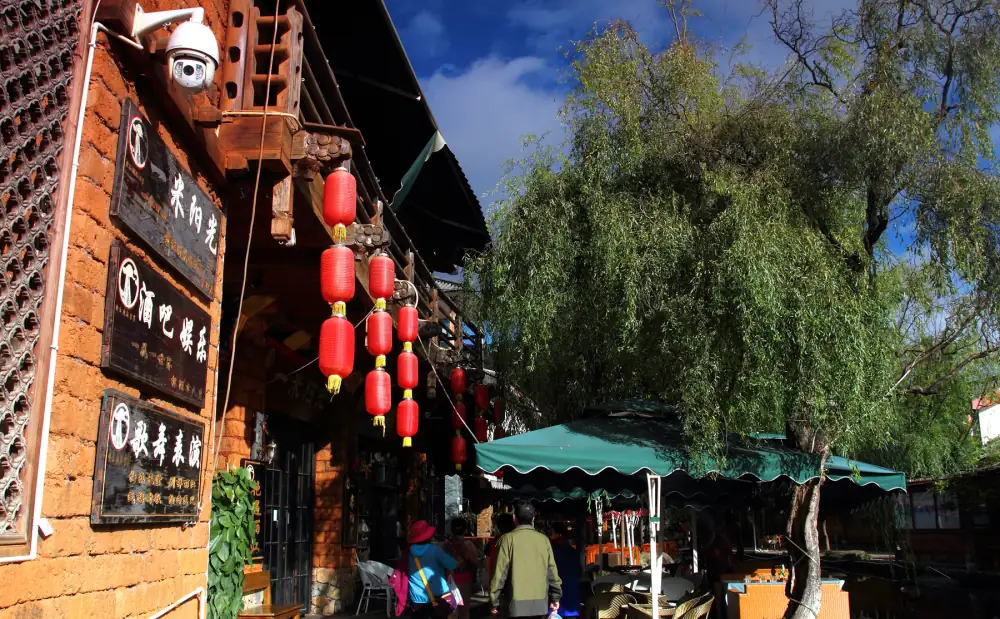
While most travellers to Yunnan make a beeline for Dali and Lijiang, those in the know head to Jianshui (建水). This small city, about 200 km south of Kunming, has been an important cultural centre since the Ming Dynasty, and its old town is one of the best-preserved in all of China. Not recreated, not renovated beyond recognition — genuinely preserved, with families still living in Ming-era courtyard houses, drawing water from 600-year-old wells, and making tofu using methods that haven’t changed in centuries.
What makes Jianshui special isn’t any single attraction — it’s the density of history and the quality of preservation. The Confucian temple is the second largest in China. The twin wells have been producing drinkable water since 1387. The city gate could double for a Ming Dynasty film set without modification. And the steam train that departs each morning from the old station might be the most charming railway experience in Asia.
I’ve been to Jianshui three times now, and each visit reveals something new — a hidden courtyard, a temple I’d missed, a better version of the famous roasted duck. It’s the kind of place that rewards slow exploration, and in a province full of tourist hotspots, its relative obscurity is its greatest asset.
The Confucian Temple (文庙)
Scale and Significance
Jianshui’s Confucian Temple (Jianshui Wenmiao) was founded in 1285 and is the second-largest Confucian temple in China, after the one in Qufu (Confucius’s birthplace). It covers over 76,000 square metres and follows the same architectural layout as the Qufu temple, with a series of courtyards leading from the main gate to the sacred hall.
The scale is genuinely surprising for a small Yunnan city. The main hall (Dacheng Dian) is supported by 32 massive wooden columns, each carved from a single tree. The stone balustrades are covered in intricate carvings of dragons, phoenixes, and clouds. The ancient cypress trees in the courtyards are centuries old, their gnarled trunks testifying to the passage of time.
The temple remains an active place of study — you’ll often see elderly men practising calligraphy on the paving stones with water, their brushstrokes evaporating in the morning sun. There’s something poignant about this temporary art form in a place dedicated to enduring wisdom.
Entrance fee: ¥60 ($8.30 USD). Open 8:00 AM — 6:00 PM. Allow 1.5-2 hours.
The Chaoxue Examination Hall
Adjacent to the temple, the Chaoxue was the imperial examination hall where scholars from across southern Yunnan came to take the civil service exams. The small, cell-like study rooms where candidates sat for days writing essays are preserved, giving a visceral sense of the pressure these examinations imposed.
The Ancient Wells
Shuanglong Bridge and the Twin Wells
Jianshui’s wells deserve special mention because they’re not museum pieces — they’re working infrastructure. The most famous are the Twin Wells (双龙井), two adjacent wells dating from 1387 that still produce clean, sweet water. Locals come daily to collect water for cooking and tea-making, and many claim it produces the best tofu in Yunnan.
There are over 100 ancient wells scattered throughout the old town, ranging from simple round wells to elaborate covered structures with carved stone frames. Each neighbourhood has its own well, and the social life that has developed around them over centuries — women gathering to wash vegetables, neighbours exchanging news — continues today.
The Ancient Town
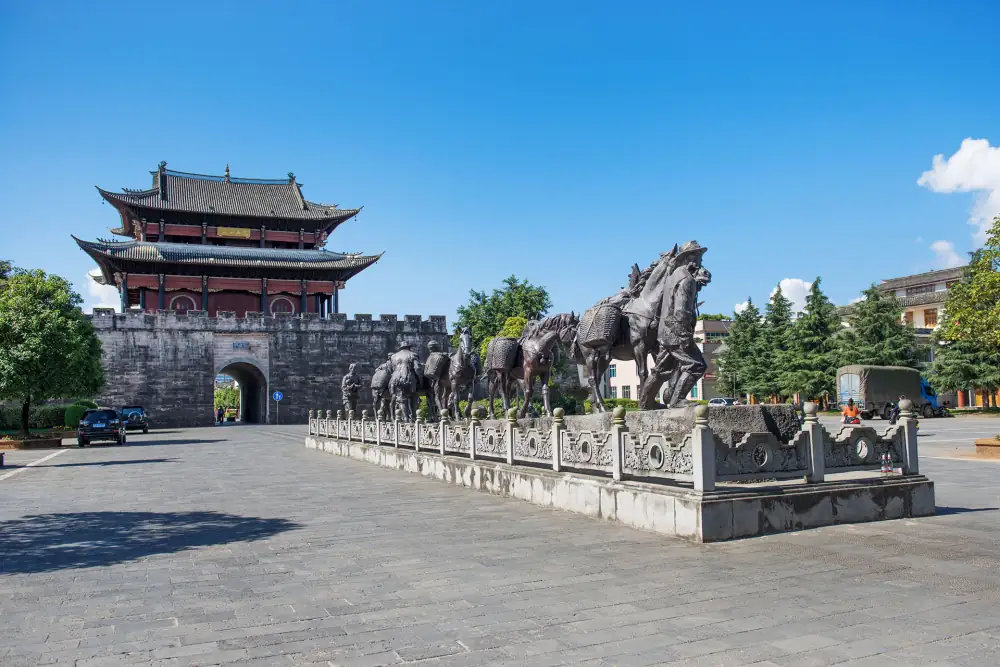
Chaoyang Tower (朝阳楼)
The iconic city gate, built in 1389, stands at the east end of the old town and is often compared to Tiananmen in Beijing (it was built first). The three-storey wooden structure sits atop a massive stone base and offers views over the old town from the upper gallery. ¥20 ($2.80 USD) to climb.
Lin’an Road (临安路)
The main street of the old town, lined with Qing Dynasty shopfronts, traditional courtyard houses, and small temples. It’s been commercialised, yes — souvenir shops and tourist restaurants abound — but the architecture is genuinely old, and the side streets running off it remain largely untouched.
Zhu Family Garden (朱家花园)
A vast courtyard mansion built in the late Qing Dynasty by the wealthy Zhu family, featuring 214 rooms arranged around 42 courtyards. The scale and craftsmanship are extraordinary — carved wooden screens, painted beams, and stone-paved courtyards with gardens and water features. It’s essentially a palace, and it gives a vivid sense of how the merchant elite lived in late imperial China.
Entrance fee: ¥50 ($7 USD). Allow 1-1.5 hours.
The Steam Train (米轨小火车)
A Ride Through History
Jianshui’s narrow-gauge railway is a surviving section of the Yunnan-Vietnam Railway, built by the French between 1904 and 1910 to connect Kunming to Haiphong in Vietnam. The 1-metre gauge track (米轨, “metre gauge”) is narrower than standard Chinese railways, and the vintage rolling stock — including a genuine steam locomotive on some services — makes this one of the most atmospheric train rides in Asia.
The tourist service runs from Jianshui Station to Tuandao Village, about 13 km, with stops at key attractions:
Shuanglong Bridge (双龙桥): A stunning 17-arch stone bridge spanning a river, built in the Qing Dynasty. The train stops for 20 minutes, allowing photos.
Xianghui Bridge: A covered bridge with a small temple attached — a typical Yunnan structure.
Tuandao Village (团山村): The terminus — a well-preserved Qing Dynasty village with elaborate courtyard houses. Allow 1-2 hours to explore.
Train schedule: Departs Jianshui at 9:00 AM, arrives Tuandao at 10:15 AM. Returns at 2:30 PM, arriving Jianshui at 3:45 PM. You have about 4 hours at Tuandao.
Tickets: ¥100-150 ($14-21 USD) round trip. Book ahead in peak season through the Jianshui Station ticket office or your hotel.
Note: The steam locomotive doesn’t operate every day — sometimes a diesel engine substitutes. The ride is charming regardless, but check ahead if the steam engine is important to you.
Jianshui Cuisine
The Famous Tofu
Jianshui’s tofu (建水豆腐) is legendary in Yunnan. Made from local soybeans and the mineral-rich well water, it’s fermented slightly before being grilled over charcoal and served with a chilli dipping sauce. The texture is firm on the outside, soft and creamy inside, with a complex, slightly tangy flavour that’s unlike any other tofu I’ve encountered.
You’ll see tofu vendors everywhere in the old town — small stalls with charcoal grills, the tofu sizzling on flat iron plates. It costs about ¥1 ($0.14 USD) per piece, and locals eat it by the dozen, washed down with local corn wine.
Tofu Night Market: Every evening on Hanlin Street, dozens of vendors set up tables and grills for a communal tofu feast. Sit at a low table, order plates of grilled tofu and bottles of beer, and experience one of Yunnan’s most authentic food cultures. Budget ¥20-30 ($2.80-4.20 USD) per person.
Jianshui Roast Duck (建水烤鸭)
The other culinary star. Ducks are roasted in wood-fired ovens, producing skin that’s crispy and deeply golden, with meat that’s juicy and fragrant from the hay and herbs used in the roasting. It’s different from Beijing roast duck — less fatty, more herbal, and arguably more flavourful. Half duck ¥40-60 ($5.50-8.30 USD).
Other Specialities
Grass Sprouts (草芽): A local vegetable that grows in Jianshui’s waterways — tender, crunchy shoots with a delicate, slightly sweet flavour. Stir-fried with pork or served in soup. ¥18-28 ($2.50-3.90 USD).
Sour Pomegranate (酸石榴): Jianshui is famous for its pomegranates, particularly the sour variety used in cooking. The pomegranate juice is refreshing. ¥5-10 ($0.70-1.40 USD).
Purple Pottery (紫陶): Not food, but worth mentioning — Jianshui is one of China’s four famous pottery centres, and the local purple clay pottery makes excellent souvenirs. Teapots from ¥30-500 ($4.20-69 USD).
Practical Information
Getting to Jianshui
By High-Speed Train: The Kunming-Jianshui-Mengzi railway opened in 2022, connecting Jianshui to Kunming in about 2 hours. Tickets ¥60-100 ($8.30-14 USD). This has made Jianshui dramatically more accessible.
By Bus: From Kunming South Bus Station, about 3.5 hours, ¥80-100 ($11-14 USD). Frequent departures.
From Dali: Bus via Kunming (6-7 hours total), or train to Kunming then onward.
Accommodation
Huadeng Shangguan Guesthouse (花灯上馆): A beautifully restored courtyard house in the old town. Rooms feature carved wooden beds and traditional furnishings. Doubles from ¥280-500 ($39-69 USD).
Jianshui Jinlin Hotel: A reliable mid-range option near the Confucian temple. Doubles from ¥180-350 ($25-48 USD).
Budget Guesthouses: Numerous small guesthouses in the old town from ¥80-150 ($11-21 USD) per night.
Best Time to Visit
- Spring (March — May): Pleasant temperatures (15-25°C), pomegranate blossoms, and clear skies. Excellent for walking the old town.
- Autumn (September — November): Similar weather to spring, with harvest activities and fewer tourists.
- Summer (June — August): Rainy season. The old town is atmospheric in the rain but outdoor activities are limited.
- Winter (December — February): Cool and dry (5-18°C). Quietest season.
Budget Estimate (2 Days)
| Item | Budget (¥) | Mid-Range (¥) |
|---|---|---|
| Train from Kunming (round trip) | 120 | 200 |
| Accommodation (1 night) | 100 | 350 |
| Meals | 120 | 300 |
| Attractions | 130 | 130 |
| Steam train | 100 | 150 |
| Miscellaneous | 50 | 100 |
| Total | ¥620 ($86 USD) | ¥1,230 ($170 USD) |
The Yunnan That Time Remembered
Jianshui doesn’t have the dramatic mountain scenery of Lijiang or the bohemian energy of Dali. What it has instead is something rarer — authenticity. This is not a town that has been rebuilt for tourists; it’s a town that has simply continued being itself for 700 years. The wells still draw water, the temple still teaches wisdom, and the tofu still tastes like it did when your great-grandmother was young. In a Yunnan that is changing faster than anyone can document, Jianshui is the steady heartbeat that reminds you what all the fuss was about in the first place.