
Cycling around Erhai Lake (洱海) in Dali, Yunnan, is one of the most popular and beloved cycling routes in China. The full 130 km circuit takes 2–3 days at a relaxed pace (or one very long day for fit cyclists), passing through ancient Bai minority villages, past fishing harbors with traditional cormorant-fishing boats, through fields of rape-seed flowers in spring, along lakeside cafes with views to the Cangshan Mountains, and occasionally across causeway sections where you’re cycling with open water on both sides.
The Route Overview
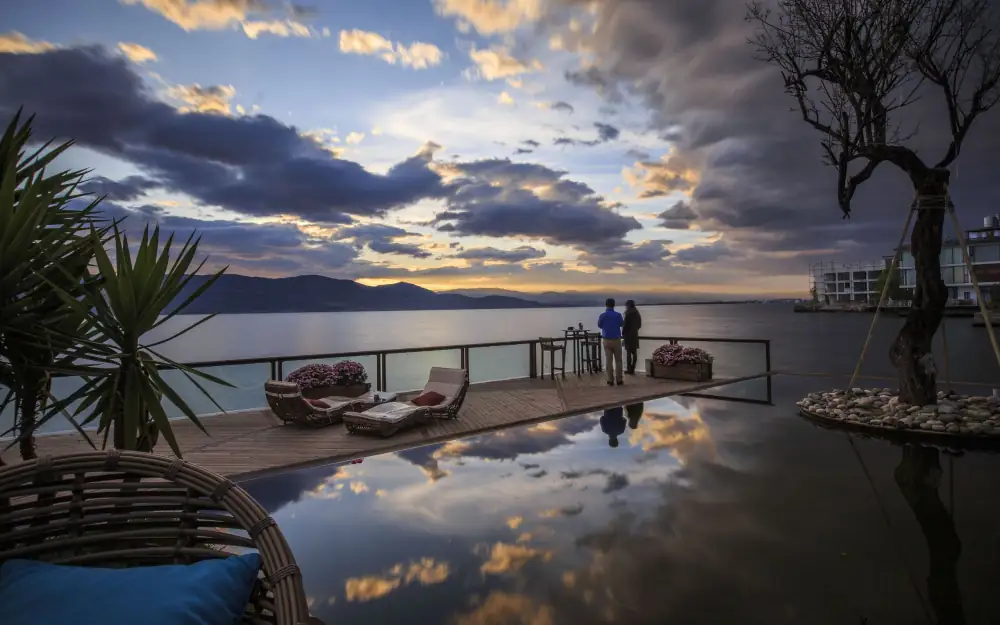
Erhai Lake (“Ear-Shaped Sea” — the lake’s outline resembles a human ear) covers 250 km² at 1,972m altitude. The cycling circuit follows the lake road that circumnavigates the shore, with occasional detours into lakeside villages.
Total distance: 130 km full circuit; 65 km for the eastern half; 65 km for the western half
Starting point: Old Dali city (大理古城) or the lakeside village of Xizhou (喜洲). Most cyclists start at Old Dali and complete the circuit in either direction.
Terrain: Mostly flat to gently rolling; no significant climbs except for the southern causeway approach. Suitable for non-cyclists willing to go slowly.
Surface: Mostly sealed road; some lakeside sections on gravel path.
The Best Day: Old Dali to Shuanglang
The stretch from Old Dali north along the eastern shore to Shuanglang (双廊) is the visual highlight of the full route — 45 km of lakeside road passing through:
Xizhou Village (喜洲): An extraordinarily well-preserved Bai minority village with 30+ Ming and Qing dynasty courtyard houses (the famous Bai “three-courtyard” building style with elaborately carved gates and white-washed walls). Walk the village before cycling on. Bai pancakes (喜洲粑粑 — crispy wheat pancake with egg, green onion and a choice of sweet or savory filling) here are famous throughout Yunnan.
Butterfly Spring (蝴蝶泉): Small spring park; famous in spring (April–May) when a local butterfly migration creates clouds of butterflies around the spring water and an overhanging tree.
Shaxi Valley junction: Small road access to Shaxi (沙溪), an extremely well-preserved ancient Tea Horse Road trading town 40 km west — worth a detour if you have an extra day.
Shuanglang village (双廊): The most photogenic village on the lake. Stone streets, wooden fishing boats, small temples on rocky outcrops extending into the lake, views of the Jade Belt Bridge and beyond to the Cangshan mountains. This has become something of a creative community (artists, designers, boutique guesthouses) but retains its fishing village character.
The Southern Half
From Old Dali south along the western shore:
Caicun (才村): The main fishing harbor of Dali. Traditional wooden boats moor here; cormorant fishing still operates (ask fishermen for a demonstration; ¥50–100). Morning is the best time to photograph the harbor.
Ancient ferry crossing: The old cross-lake ferry route (no longer operating as transport, but a boat tour follows the old route).
Taoyuan Village (桃源): Apricot and peach orchards; spectacular blossoms in late February–March.
Bike Rental
Multiple bike rental points in Old Dali town center (near the South Gate):
- Standard mountain bikes: ¥20–30/day
- Electric bikes (e-bikes): ¥50–80/day
- High-quality road bikes: ¥60–100/day
E-bike recommendation: Strongly consider an e-bike if you plan to cycle the full 130 km. At 1,972m altitude and with some headwind sections, the e-assist makes the trip enjoyable rather than exhausting.
App-based bikes: Hello Bike (哈罗单车) and Meituan Bike have stations throughout Dali town; these work for short sections but batteries may be insufficient for the full lake circuit.
Where to Stay Along the Route
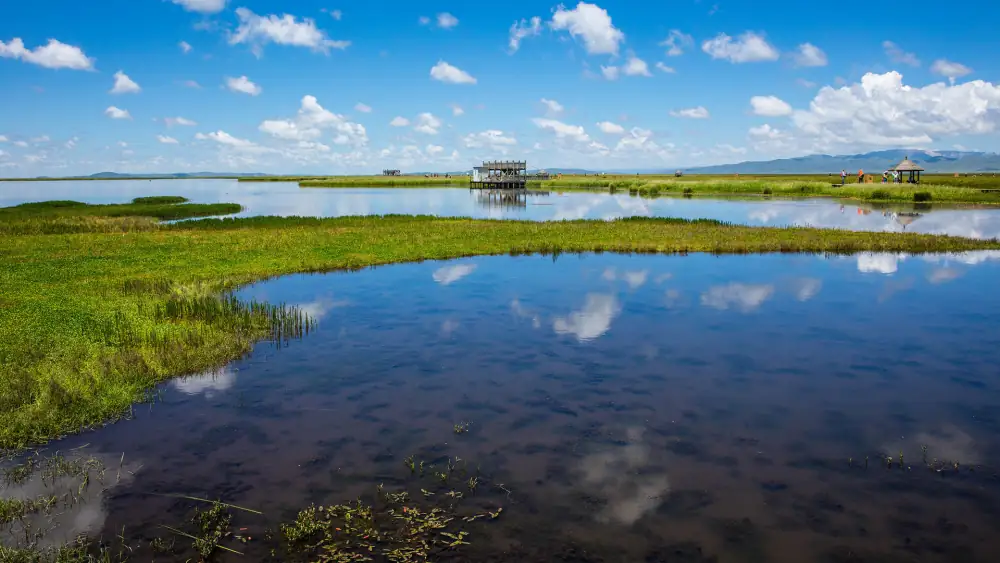
Shuanglang: The most popular overnight stop for lake cyclists. Dozens of guesthouses in the ¥150–500/night range; boutique lakeside hotels ¥500–1,500/night. Book ahead for weekends and holidays.
Xizhou: More rustic; fewer guesthouses. A good option for travelers wanting a quieter overnight.
Old Dali town (start/end point): Excellent accommodation range from ¥60 dorms to ¥800+ boutique courtyard hotels. Best transport connections.
Food Along the Route
Bai cuisine distinguishes itself from mainstream Yunnan cooking:
- Erkuai (饵块): A pressed rice cake, sliced and grilled or stir-fried; the Bai staple starch
- Bai style cold mixing (凉拌): Herb-heavy cold dishes with wild vegetables
- Grilled fish (烤鱼): Erhai lake fish (though lake fishing is now restricted to prevent ecological damage; fish comes from aquaculture)
- Sour and spicy pickled vegetables (腌菜): Preserved vegetables with characteristic Bai sourness
Lakeside cafes: The section around Shuanglang and the Old Dali to Xizhou road has developed a very pleasant café culture. Coffee quality is variable; the lake views are universal.
Practical Planning
Best season:
- March–May: Rape-seed fields and cherry blossoms; clear skies; pleasant temperatures (18–25°C)
- October–November: Golden light, harvest season; excellent visibility
- December–January: Cold nights but perfectly clear days; very few tourists; best for reflections on still water
- Summer (June–September): Rainy season; lake sometimes foggy; still rideable
Full circuit in one day: Possible for fit cyclists (start 07:00, finish 18:00); e-bikes make this much more feasible. Take the clockwise direction to have the sun at your back in the morning.
2-day split: Day 1 clockwise to Shuanglang (65 km); overnight; Day 2 south along the western shore back to Dali (65 km). Most comfortable approach.
Getting to Dali: High-speed train from Kunming to Dali (2 hours, ¥150); from Lijiang to Dali (1 hour, ¥75). Dali is one of the classic stops on the Yunnan loop itinerary.
The Erhai Lake circuit is the benchmark against which all China cycling routes are measured — long enough to feel like a genuine journey, beautiful enough to reward every kilometer, and gentle enough that it’s accessible to people who haven’t ridden a bike in years. The combination of water, mountains, ancient villages and cafe culture creates an experience that gets more nostalgic and treasured in retrospect than any single attraction can.