
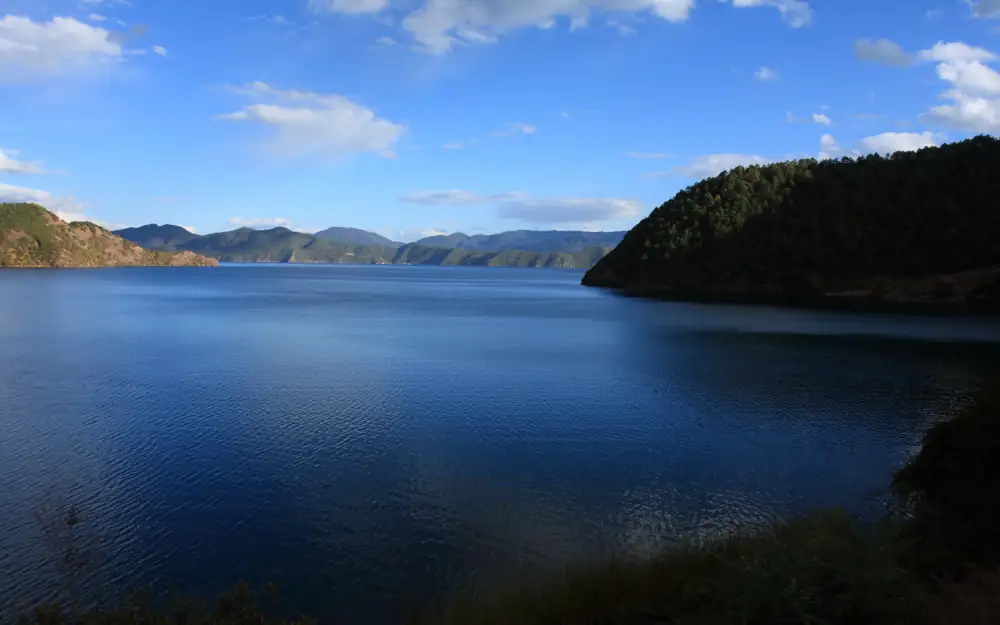
Fuxian Lake (抚仙湖) in Yuxi Prefecture, 60 km southeast of Kunming, holds a distinction that surprises most visitors: it is the deepest freshwater lake in China, reaching 157.8 meters at its deepest point, and its water transparency exceeds 12 meters — you can see the bottom in many sections visible even from a low-altitude aerial view. In a country where most major lakes suffer from eutrophication and pollution, Fuxian’s near-crystalline water is extraordinary.
Why Fuxian Lake is Special

The lake covers 212 km² and holds 20 billion cubic meters of water — more than all the surface freshwater in Yunnan’s other lakes combined. Its water changes at an extremely slow rate (the residence time is over 200 years), meaning any pollution introduced accumulates; local governments have taken this seriously, displacing most lakeside agriculture, restricting development and banning certain motorized boats.
Water color: Depending on season, sky conditions and viewing angle, the lake appears jade green, deep blue or turquoise. The color gradation from the sandy shallows (pale green) to the deep middle (deep blue-black) is visible from lakeside viewpoints.
Beaches and Swimming
Fuxian’s shoreline includes several gentle sandy beaches on the eastern (less developed) side:
Jiangcheng section (江城段): The main tourism development area. Several private beach parks (entry ¥30–60) have changing rooms, sun loungers and food vendors. The water is clean enough for swimming; the sandy bottom is gentle and the slope gradual.
Chengjiang section (澄江段): The northern end of the lake has a more developed beach area with larger hotels and water sports rental.
Huashan section (华山水上游乐园): Water sports park with banana boats, jet skis and kayak rental. ¥50–200 depending on activity.
Best months for swimming: May–September. Water temperature at the surface reaches 22–25°C in summer; the deep water stays cold year-round.
Cycling the Lake
The 40 km lake circuit road is one of Yunnan’s best cycling routes — relatively flat on the eastern side, with some hills on the western approach. The road runs close to the lake shore through fishing villages, orchards, fields of purple globe artichokes (a Yunnan specialty) and small rural settlements.
Bike rental: Available at the main Fuxian Lake visitor center and at several hotels in Chengjiang. Electric bikes ¥40–60/day; regular bikes ¥20–30/day. Most cycling tourists do the eastern half (Chengjiang to Jiangcheng to the southern tip and back) as a half-day trip.
Best cycling time: Early morning before 09:00 for light traffic and fresh air. Autumn (October–November) has the clearest sky and most dramatic water color.
The Underwater Ruins Mystery
In 2001, divers investigating the lake discovered extensive submerged architectural ruins at depths of 5–20 meters — stone platforms, carved steps, walls and what appear to be large buildings covering approximately 2.4 km². The structures have been estimated by archaeologists at 1,750–2,500 years old.
The origin of the ruins is debated. The most widely accepted theory connects them to the ancient Dian Kingdom (滇国), a Bronze Age state that flourished in the region before incorporation into the Han Chinese empire. The Dian people left some of the most spectacular bronze artifacts ever found in China (now in the Yunnan Provincial Museum in Kunming), and an underwater city would be consistent with their documented presence in the Fuxian area.
The mystery element: what caused such extensive stone structures to end up underwater? Gradual shoreline change over 2,000 years? A flood? Seismic activity? Research continues.
Visiting the ruins: Diving tours to view the ruins operate from Chengjiang and Jiangcheng. Certified divers can arrange guided dives through local operators; non-divers can view photos and video at the Fuxian Lake Visitor Center.
Fishing Village Life
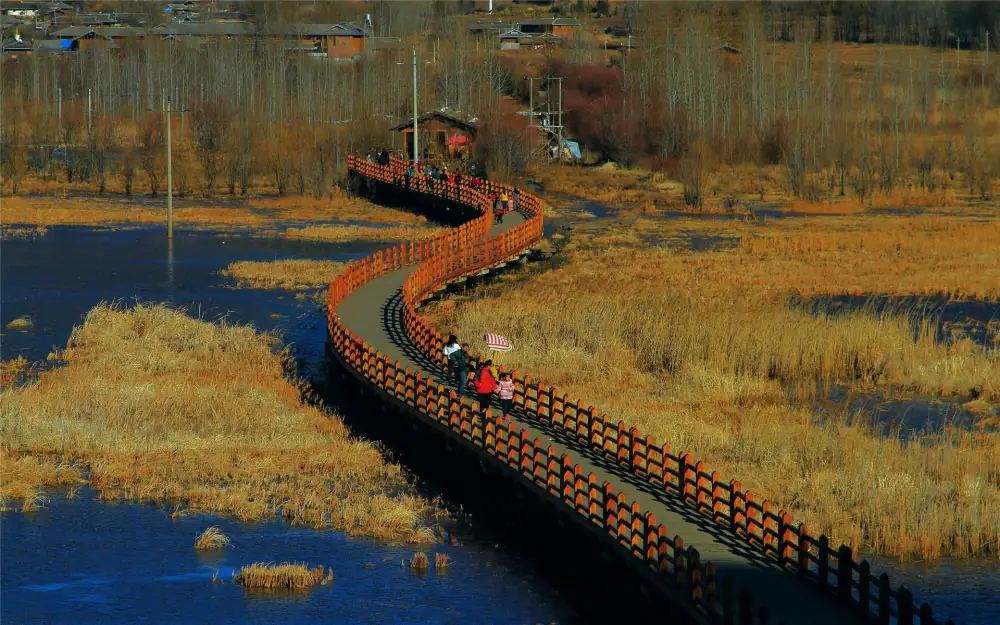
Several small fishing villages on the eastern shore have maintained traditional net-fishing practices. The Guanyin Rock Village (观音岩) area has retained its stone-built whitewashed houses and small harbor. Boats still go out before dawn and return by mid-morning; the catch is sold directly on the pier.
What to eat at the villages: Fresh Fuxian white fish (抚仙湖鲢鱼) — a semi-transparent endemic species unique to this lake. Fried whole with salt and chili; unlike any freshwater fish available elsewhere. Also: dried whitebait (银鱼干), crayfish, wild-caught crab in season.
How to Get There
From Kunming:
- High-speed train: Kunming to Chengjiang North (澄江北) is 30 minutes on the Kunming–Yuxi intercity railway; ¥25. From the station, take Didi to the lakeside (15 minutes, ¥20).
- Bus: From Kunming Nanbu Bus Terminal (南部汽车客运站) to Chengjiang/Jiangcheng (1.5 hours, ¥30–40).
- Self-drive: E55 expressway south from Kunming, then local roads to the lake. Parking at main beach areas.
Day trip feasibility: Yes — Fuxian is a comfortable day trip from Kunming. Leave Kunming at 08:00, arrive by 09:30, cycle 4–5 hours, swim, eat fresh fish, return by 19:00.
Overnight: Staying one night allows a sunset on the lake and an early morning when the mist sits on the water and fishing boats move in the stillness before the day visitors arrive.
Comparing Fuxian with Erhai Lake (Dali)
Both are major Yunnan lakes — very different character:
- Erhai (Dali): More famous internationally; larger shoreline with more towns and transport; better tourist infrastructure; more developed
- Fuxian: Cleaner, deeper, less developed; more natural shoreline; better for swimming; more remote feeling
For travelers who want a genuinely pristine lake experience with minimal crowding, Fuxian is the better choice. For those wanting the full Yunnan cultural-lakeside experience with ancient towns, cafes and easy connectivity, Erhai/Dali is more convenient.
Fuxian Lake is the kind of discovery that stays with you — the memory of water so clear you can see 10 meters down, fish visible from a drifting kayak, the smell of grilling lake fish from a village pier at noon. It’s Yunnan’s beautiful secret that Chinese travelers know and most international visitors miss entirely.