
Kanas Lake is in northern Xinjiang, close enough to the Russian and Mongolian borders that on a clear day from the right viewpoint you can see all three countries. The landscape here is unlike anything else in China: deep blue lake, dense birch and larch forest, rounded grassy hills — it looks more like Switzerland or the Russian Altai than the China most visitors picture.
The autumn colours at Kanas (late September through mid-October) are considered among the finest in China. When the larch turns golden yellow and the birch turns orange-red, with the blue lake as contrast and the snowcapped Altai peaks in the background, the result is extraordinary. Photographers come from all over the country for this.
Table of contents
Open Table of contents
Getting to Kanas
Kanas is genuinely remote. The nearest city is Altay (阿勒泰) in northern Xinjiang, served by Altay Airport (AAT).
By air: Fly from Urumqi (1 hour) or directly from Beijing/Shanghai to Altay Airport. The most practical option.
From Altay to Kanas: Shared buses or private cars from Altay Bus Station to Kanas, about 4–5 hours (200km on mountain roads). Private car hire costs ¥500–800 for the one-way trip.
The scenic drive: The road from Altay to Kanas passes through the Kanas valley and several Tuwa villages. The drive itself is part of the experience — plan to stop at viewpoints.
Entering the Kanas Scenic Area
The Kanas Scenic Area has a timed entry system operating during peak season (late September–mid October).
Entry fee: ¥245 per person (includes shuttlebus within the scenic area)
Timed tickets: Required during peak autumn season; book in advance via the official app or third-party booking sites
Operating hours: 8:00am–6:00pm (outer gate); 8:30am–5:30pm (inner scenic area)
The entrance is at Kanas Village (喀纳斯村), and a park shuttle bus system moves visitors between key viewpoints.
Kanas Lake (喀纳斯湖)
The lake is the centerpiece: about 24km long, 2–3km wide, at 1,374 metres elevation. The colour ranges from deep jade green to cerulean blue depending on light conditions and season — and shifts visibly throughout the day.
Fish Eye Lake Viewpoint (鱼尾湾): About 2km south of the main lake area, a narrow bay where the lake narrows and deepens. The fish-tail shape is visible from the viewpoints above. Great reflections in the morning.
Three Bay Viewpoint (三湾): Three smaller bays where the lake surface reflects the surrounding forest. Best in the 2 hours after sunrise.
Observation Platform (观鱼台): A viewing tower above the lake requiring a 20–30 minute uphill walk. The best high-angle view of the lake and forest; excellent for late afternoon light on the autumn colours.
The Kanas Lake Monster
Kanas Lake has its own Nessie-style legend: large creatures have allegedly been observed in the lake by locals and researchers. The lake is 188 metres deep and contains large Siberian hucho taimen (Taimen salmon), some of which grow to extraordinary size. Whether there’s genuinely something mysterious in the depths is debated; the lake is deep enough that something very large could exist there.
Hemu Village (禾木村)
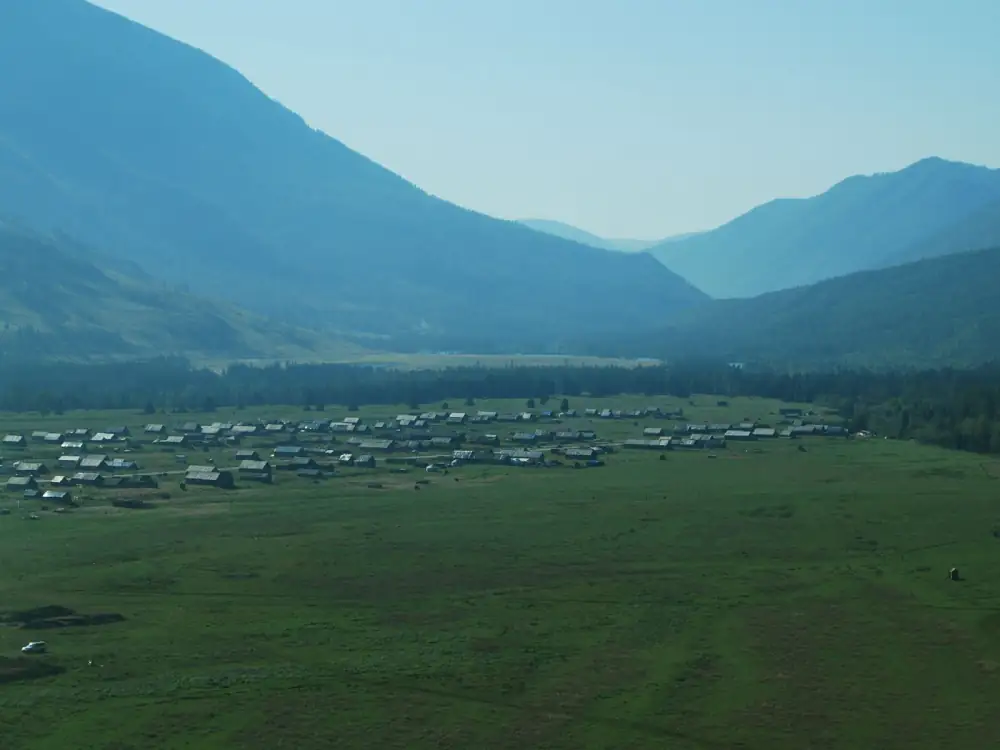
About 50km southeast of Kanas, Hemu Village is a Tuwa people’s settlement of traditional wooden log houses set in a wide valley surrounded by birch forest and mountains. It’s one of the most photographed villages in China.
The Tuwa people: An ethnic group of about 3,000 people, believed to be descendants of Mongol soldiers who settled here. They follow a shamanic religion blended with Tibetan Buddhism, raise horses and cattle, and live largely as their ancestors did.
Dawn in Hemu: The iconic image of Hemu is taken from the hillside viewpoint before sunrise — looking down on the wooden rooftops as morning mist fills the valley, and then the cattle and sheep emerge from their overnight enclosures and stream through the mist toward the pastures. The scene lasts about 20–30 minutes as the sun rises and burns off the mist.
To catch the cattle-and-mist scene, you must be at the eastern hill viewpoint (东山坡) by 6:00–6:30am. The walk from the village centre takes 15–20 minutes uphill. In autumn, local residents guide visitors up the hill in the pre-dawn dark (¥20–30 tip).
Entry to Hemu Village area: ¥55 per person
Baihe Village (白哈巴) — The Third Destination
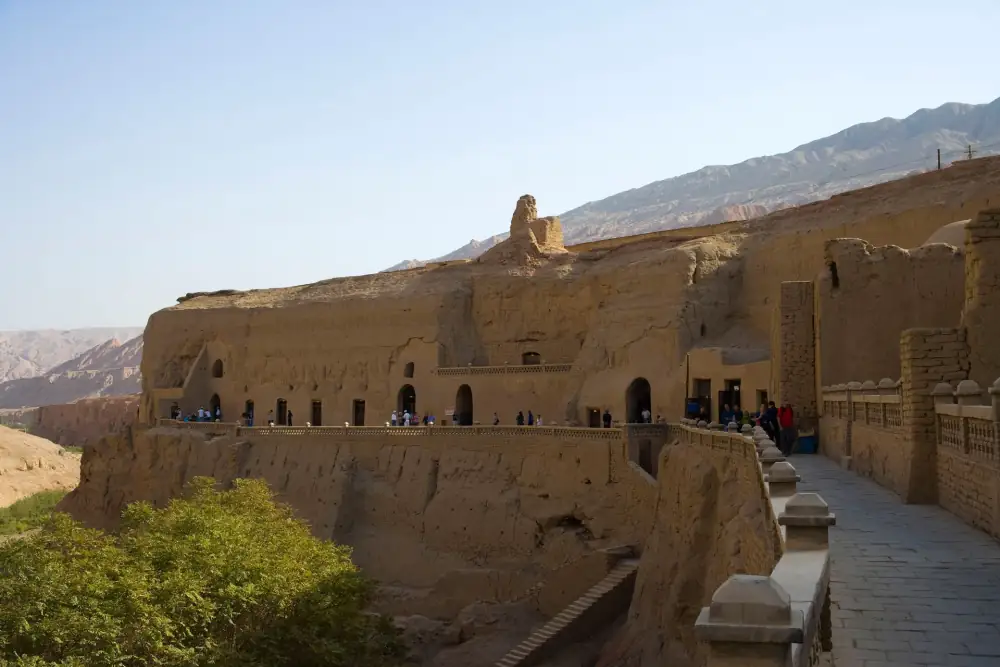
Often overlooked, Baihe Village (白哈巴) is about 40km west of Kanas, directly on the Chinese-Kazakhstan border. It’s the westernmost village in China and another Tuwa settlement with similar wooden log-house architecture.
The border context makes it distinct — you can see Kazakhstan’s territory from the hillside above the village, and the landscape is more open here than at the forested Kanas and Hemu.
Entry: ¥55 per person; border zone permit required (usually arranged by guesthouses)
Practical Information: The Kanas-Hemu Circuit
Most visitors do a 3–5 day circuit covering all three main areas.
Day 1: Arrive Kanas Village; afternoon walk around the lake; sunset from Fish Eye Lake
Day 2: Morning Kanas Lake (early for mist); afternoon Observation Platform
Day 3: Transfer to Hemu Village (2 hours by park bus or shuttle); afternoon walking
Day 4: Pre-dawn to Hemu viewpoint; morning exploration; optional transfer to Baihe
Day 5: Return to Altay for flight
Accommodation in Kanas area:
- Kanas Village: Hotels and guesthouses, ¥300–800/night. Prices peak during autumn colour season.
- Hemu Village: Guesthouses in villagers’ homes or dedicated guesthouses; ¥150–400/night. Facilities are basic but the atmosphere is excellent.
- Yurts: Available in some areas, ¥200–500/night including meals
Autumn Colours: When Exactly
The peak autumn colour window is narrow and varies by year:
- Kanas Lake area: Usually October 1–15 for peak colour
- Hemu Valley: Slightly earlier, sometimes late September
The trees don’t turn all at once — first the birch at lower elevations, then the larch on the higher slopes, giving a gradient effect for 2–3 weeks. In a good year, peak colour lasts about 7–10 days.
Check: Chinese photography forums (摄影吧 on Baidu, or photography sections of Mafengwo) for real-time colour reports in season. Conditions vary year to year.
Other Seasons
Summer (June–August): Green, warm, good hiking. Fewer crowds than autumn, but less dramatic visually. Wildflowers in June–July.
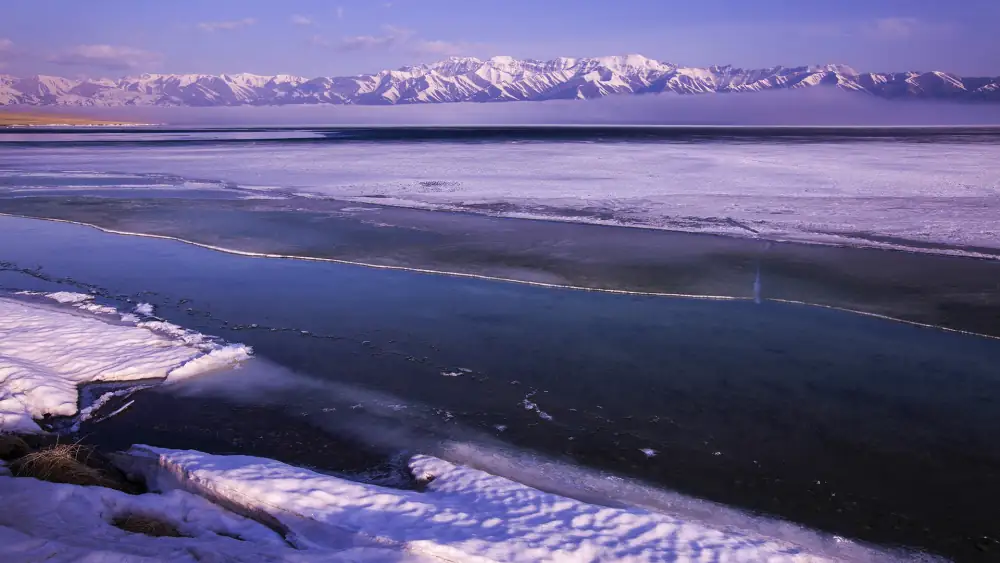
Winter (November–April): The area gets heavy snowfall; most facilities close. The landscape is starkly beautiful but tourism infrastructure is minimal.
Spring (May): Still cold; some years there is late snow. Facilities reopening; minimal visitors.
What to Bring
- Warm clothing even in summer: Evenings at 1,400m elevation are cold year-round; in autumn, morning temperatures can reach 0–5°C at dawn
- Waterproof outer layer: Mountain weather is unpredictable
- Good hiking boots: The viewpoint trails are steep and can be slippery in morning dew
- Camera with extra batteries: Cold kills battery life faster
Combining Kanas with the Rest of Xinjiang
Altay is about 5 hours from Urumqi by road (or 1 hour by air). Most Xinjiang itineraries that include Kanas also include Urumqi (connecting hub), and some include the Nalati grasslands (纳拉提草原) near Yili for a different landscape variation.
A Kanas visit is best combined with Xinjiang’s northern circuit rather than with Turpan and Kashgar, which are in the south and require a separate trip.