
In 1000 AD, Kaifeng was probably the largest city in the world. As capital of the Northern Song Dynasty, it had a population estimated at over one million, sophisticated commercial streets, licensed entertainment districts, and the kind of urban density that wouldn’t appear in Europe for another 700 years. The famous scroll painting “Along the River During the Qingming Festival” (清明上河图) — showing Kaifeng’s harbour district during a spring festival — is one of the great documentary records of medieval urban life anywhere.
The Song Dynasty ended here in 1127 when the Jurchen Jin Dynasty captured the city, marching the emperor and his son northward in what became known as the Jingkang Incident. The city was flooded multiple times afterward by Yellow River diversions, burying the Song-era city underground. What you visit today is built on top of a buried city.
That buried history — and the extraordinary surviving street food culture — makes Kaifeng one of the more interesting stops in central China.
Table of contents
Open Table of contents
The Iron Pagoda (铁塔)
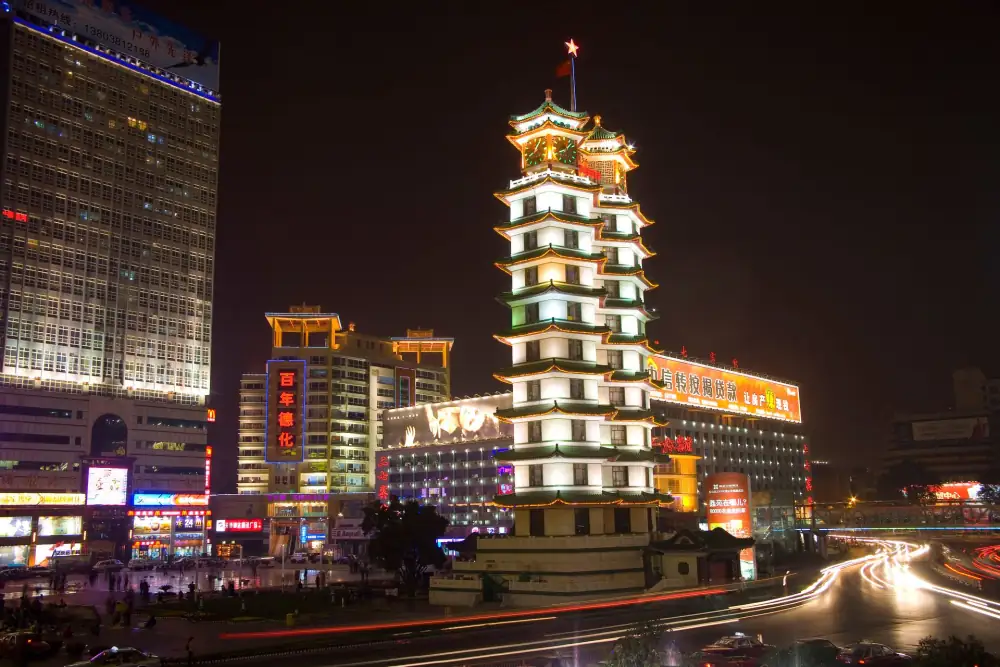
The Iron Pagoda is Kaifeng’s most recognizable landmark — an 11th-century octagonal tower of 13 storeys, 55 metres tall, built from glazed bricks that have turned the dark reddish-brown colour of iron (hence the name; it’s not actually iron). The glazed tile panels covering the exterior are carved with Buddhist figures, flowers, animals, and patterns in over 50 different designs.
It was built in 1049 during the Song Dynasty to house Buddhist relics and has survived floods, wars, and earthquakes for nearly a thousand years. From the top (accessible via interior staircase), you can see the flat Henan plains extending in every direction.
Opening hours: 8:00am–6:00pm
Entry fee: ¥40 per person (includes tower climb)
Location: Northern Kaifeng, about 2km from the city centre
Qingming Shanghetu Park (清明上河园)
This is a large theme-park style recreation of the famous Song Dynasty painting, with period-costume performers, replica Song-era architecture, acrobatic shows, and boat rides on a reconstructed canal. It sounds kitsch and in many ways is — but it’s also genuinely entertaining and gives a vivid sense of what the city’s Song-era commercial district might have looked like.
Daytime performance highlights: Bianjing Meng (汴京梦) — a live action water performance on the lake; Song Dynasty cavalry parade; fireworks shows
Entry fee: ¥120 per person (daytime) or ¥150 for the combined day and evening performance package
Opening hours: 8:00am–9:30pm; evening show from 7:30pm
Location: West of Longting Lake, about 3km from city centre
The evening version of the park is particularly spectacular — lanterns, live performances, and a distinctly cinematic recreation of Song Dynasty nightlife.
Dragon Pavilion (龙亭)
Dragon Pavilion is a large park centered on a hill topped by a Qing Dynasty pavilion built on the site of the Song imperial palace. The pavilion isn’t ancient — it was built in 1692 — but the elevated position gives excellent views over the city and the dual lakes (Pan Lake and Yang Lake, representing loyal minister Bao Zheng and his opponent Pang Ji in Song Dynasty lore).
The park is pleasant for walking and relatively uncrowded. The Song Dynasty City History Museum within the complex has good exhibits on the underground buried city and the Song Dynasty urban culture.
Entry fee: ¥40 per person
Opening hours: 8:00am–6:00pm
Judge Bao’s Inkstone Lake (包公湖)
Bao Zheng (包拯, known to generations of Chinese TV viewers as “Judge Bao”) was a famously incorruptible Song Dynasty official who served in Kaifeng. The lake area contains his memorial hall, garden, and the reconstructed official residence where he held court.
The story of Judge Bao is deeply embedded in Chinese popular culture — he represents the idea of a magistrate who treats the powerful and powerless equally, defies corruption, and ensures justice. Visiting his memorial has a cultural significance beyond the physical site.
Entry fee: ¥30 per person
Opening hours: 8:30am–5:30pm
Kaifeng’s Night Market (夜市)
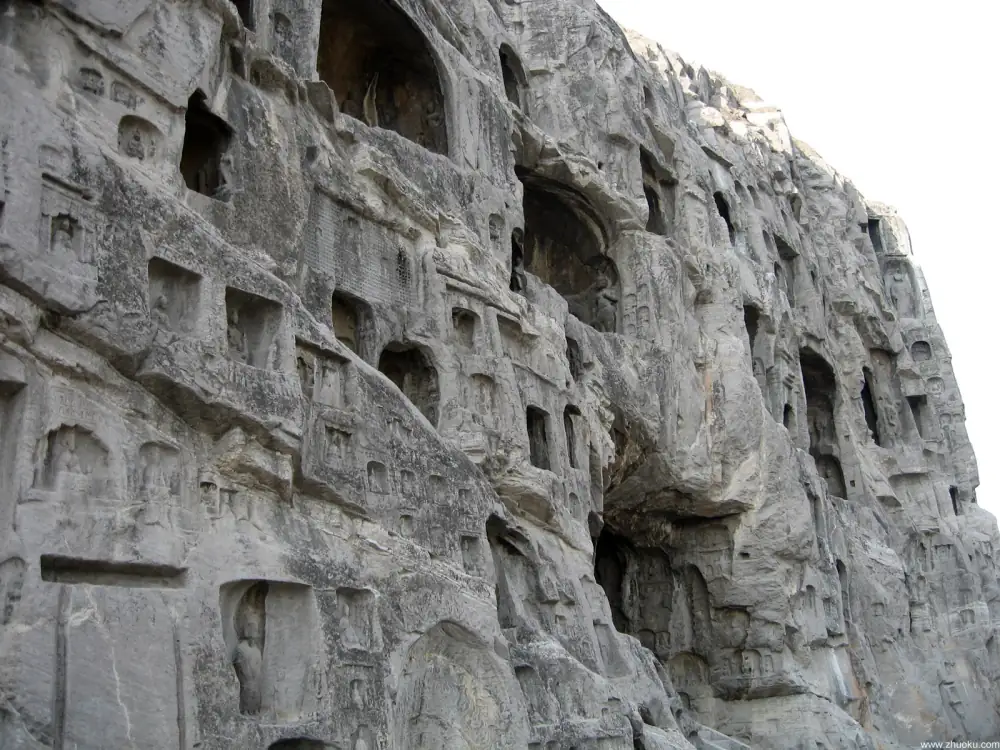
Kaifeng has become genuinely famous across China for its night market food culture. The main area is Gulou Night Market (鼓楼夜市) in the centre of town and the adjacent alley system, which comes alive from around 6pm and runs until midnight.
This is not a sanitised tourist version — it’s a working local night market that happens to be extraordinary. Hundreds of food stalls along narrow alleys illuminated by string lights and lanterns, with a noise level and energy that peaks around 9–10pm.
What to eat:
- Xiaolongbao (小笼包, Kaifeng-style): Larger and slightly different from Shanghai’s — more filling, soupier. ¥15–25 for a steamer
- Spicy beef filling pancakes (灌汤包): A Kaifeng specialty — soft dough pocket with spiced beef and soup inside; essentially a Kaifeng XLB; ¥2–4 each
- Five-spice braised dishes (五香卤味): Braised pig’s trotters, ears, heart, tofu — sold by weight at stalls
- Bean curd skin with filling (豆腐脑): Silken tofu with a savoury broth poured over; a local breakfast-to-late-night staple; ¥8–12
- Stuffed date (蜜枣): Kaifeng dates stuffed with sweet fillings, sold everywhere; ¥3–8
Gulou Night Market area: Open daily; most stalls from 5pm to midnight. Cash and mobile payment both accepted. Budget ¥50–100 for a full evening of street food eating.
The Kaifeng Jewish Community
Kaifeng had a Jewish community from approximately the 10th century — almost certainly Silk Road merchants who settled permanently. At its peak in the Ming Dynasty, the community had a synagogue, preserved Torah scrolls, and maintained Jewish practice for over 700 years. The synagogue was destroyed in flooding and the community gradually assimilated, though some families preserved their identity.
The site of the original synagogue (now a well) is marked near the city centre. A small exhibition in the Cultural Museum documents this extraordinary community, and there are efforts by some descendants to re-establish a Jewish cultural identity in Kaifeng.
Getting to Kaifeng
From Zhengzhou: High-speed train, about 25–30 minutes, ¥30–45. This is the primary connection.
From Luoyang: High-speed train via Zhengzhou, about 1.5 hours total, ¥80–110.
From Xi’an: High-speed via Zhengzhou, about 3 hours total.
Kaifeng’s high-speed station is Kaifeng North Station (开封北站), about 5km from the city centre — take Metro Line 1 or a taxi (¥15–20) from the station.
How Long to Spend
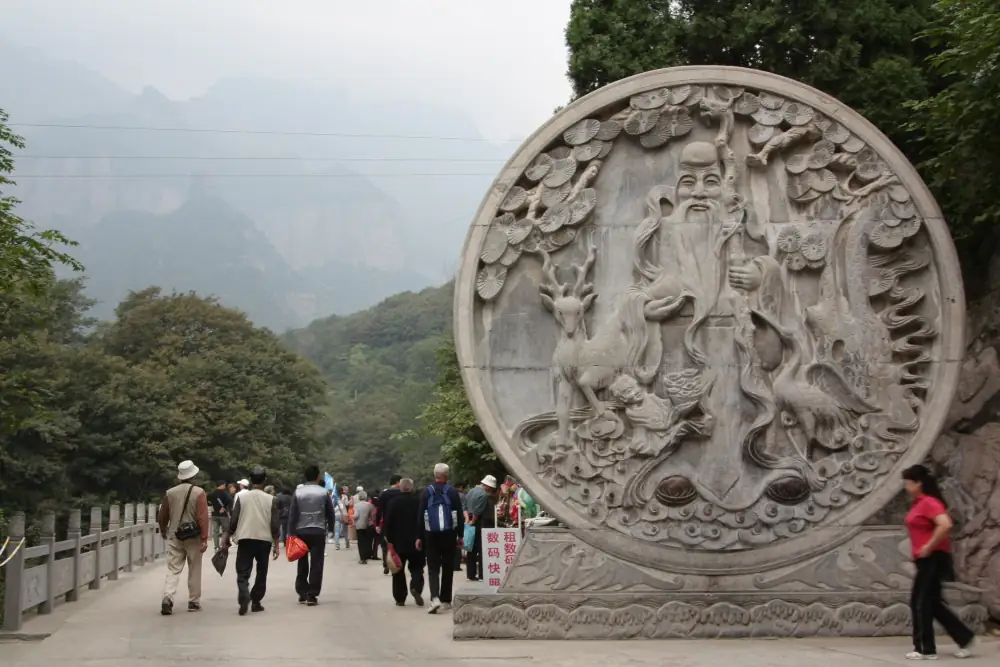
Day trip from Zhengzhou or Luoyang: Entirely feasible — Iron Pagoda, Dragon Pavilion, and Gulou Night Market cover a full day.
Overnight: Recommended if you want the full Qingming Park evening show and a relaxed night market experience.
Where to Stay
Hotels in Kaifeng are inexpensive by Chinese standards — you can get a decent 4-star hotel for ¥200–350/night. The Gulou area (near the night market) and the Longting Lake area (near the main sights) are the two best locations.
Combination with Zhengzhou or Luoyang
Kaifeng makes sense as a half-day or full-day extension when visiting Zhengzhou (Henan’s capital, 30 minutes away by HSR with the Shaolin Temple and other sites) or as a day from Luoyang. The Henan trio of Luoyang-Kaifeng-Shaolin is a logical 4–5 day itinerary for anyone interested in Chinese history and culture.