
Jiuzhaigou (九寨沟, “Nine Village Valley”) contains some of the most photographed water in the world. The lakes here range from impossible turquoise to emerald green to deep cobalt blue, fed by calcium-carbonate-rich springs that create the brilliant clarity and colour. Five Flower Lake (五花海) — where you can see fallen tree trunks through 20 metres of water, surrounded by floating flowers of coloured algae — is genuinely unlike anything in the natural world.
The valley was opened to tourism in the 1980s, became a UNESCO World Heritage Site in 1992, and by 2016 was receiving 20,000+ visitors per day. Then in August 2017, a 7.0 magnitude earthquake caused significant landscape changes in parts of the valley, closing sections and triggering a fundamental review of visitor management.
The valley has been gradually reopening since 2019. The 2026 situation is considerably changed from the pre-earthquake peak, with strict daily visitor limits that protect the ecosystem but require advance booking.
Table of contents
Open Table of contents
The Timed-Entry Ticket System
This is the most important practical information for any Jiuzhaigou visit.
Daily visitor limit: 20,000 people per day (reduced from the pre-earthquake 28,000)
Tickets must be booked in advance: Same-day tickets are rarely available, especially in autumn colour season (September–October) and Golden Week holidays. Book 2–4 weeks ahead for autumn; 1–2 weeks for other seasons.
Ticket price: ¥169 per person (high season, April–November), ¥100 (low season, December–March)
Bus fee: ¥90 per person (eco-buses circulate within the scenic area; included in some combined tickets)
Booking: Official Jiuzhaigou ticketing website (九寨沟官方购票) or accredited agents
Important: Tickets are tied to your passport number. Bring your passport — it will be checked at the entrance.
The Valley Layout
Jiuzhaigou has three main valley branches arranged in a Y shape: the Shuzheng Valley (树正沟), Rize Valley (日则沟), and Zechawa Valley (则查洼沟). Together they cover about 70km of valley floor with over 100 lakes, 17 waterfalls, and various rivers.
The park operates on a bus-and-walk system — eco-buses run continuously up and down the main valley, stopping at key sites. You can board and disembark at any stop. Most visitors spend 6–8 hours in the park.
Key Sites
Five Flower Lake (五花海)
The most famous lake in Jiuzhaigou and one of the most-photographed natural landscapes in China. Shallow enough (maximum 5 metres) that the lakebed is clearly visible, with ancient fallen tree trunks resting on the bottom surrounded by aquatic plants in yellow, green, orange, and red. The blue colour of the water varies from cobalt to turquoise depending on the light.
Location: In the Rize Valley, near the upper end
Best time: 10am–2pm for the clearest light through the water
Nuorilang Waterfall (诺日朗瀑布)
The widest high-altitude waterfall in China — 320 metres wide, 24 metres high. The volume of water after snowmelt or rain is massive. The surrounding forest creates a particularly photogenic frame.
Location: Junction of the Shuzheng and Rize valleys; accessible from the main bus route
Pearl Shoals Waterfall (珍珠滩瀑布)
Water cascades over a wide, shallow limestone shelf covered in grass and aquatic plants — the spray catches the light and creates a continuous pearl-like shimmer. One of the most distinctive waterfalls in the park.
Long Lake (长海)
At 2,340 metres elevation, the highest lake in Jiuzhaigou. A deep mirror-surface lake with minimal aquatic life. The reflection of surrounding peaks in calm conditions is excellent.
Shuzheng Lakes Group (树正群海)
A cascade of about 20 interconnected lakes in the lower valley, linked by waterfalls and channels. The path along the Shuzheng lakes is the most walker-friendly section of the park — wooden boardwalks between the lakes, with multiple photo opportunities.
Post-2017 Earthquake Changes
The 2017 earthquake caused several significant changes to the valley:
- Sparkling Lake (火花海) was destroyed — the lake drained when the earthquake collapsed the dam of travertine material holding it. The area is now a dry depression.
- Arrow Bamboo Lake (箭竹海) vicinity has altered topography
- Several waterfalls changed course or reduced flow
In compensation, some new secondary lakes and waterfall configurations appeared from the earthquake’s geological effects. The overall scenery remains extraordinary, but visitors who saw Jiuzhaigou before 2017 may notice absences.
Current access: As of 2026, most major sites are accessible. Some hiking trails remain restricted. Check the official website for current access status before booking.
Autumn Colours (Best Season)
The autumn colour window is the main event at Jiuzhaigou. The valley floor is mostly coniferous forest, but the deciduous trees — particularly birch, maple, and Tibetan cherry — turn from late September.
Peak colour: Usually October 1–20, varying by year and elevation
Key October concern: This overlaps with China’s National Holiday (Golden Week, October 1–7), when demand for tickets is at its absolute maximum. If visiting during Golden Week, book 6–8 weeks in advance.
Why October is worth the crowds: The combination of the coloured forest, blue lakes, and first dustings of snow on the mountains above produces something close to landscape perfection. The difference between September (green, pleasant, clear) and October (spectacular) is significant.
Spring (April–May)
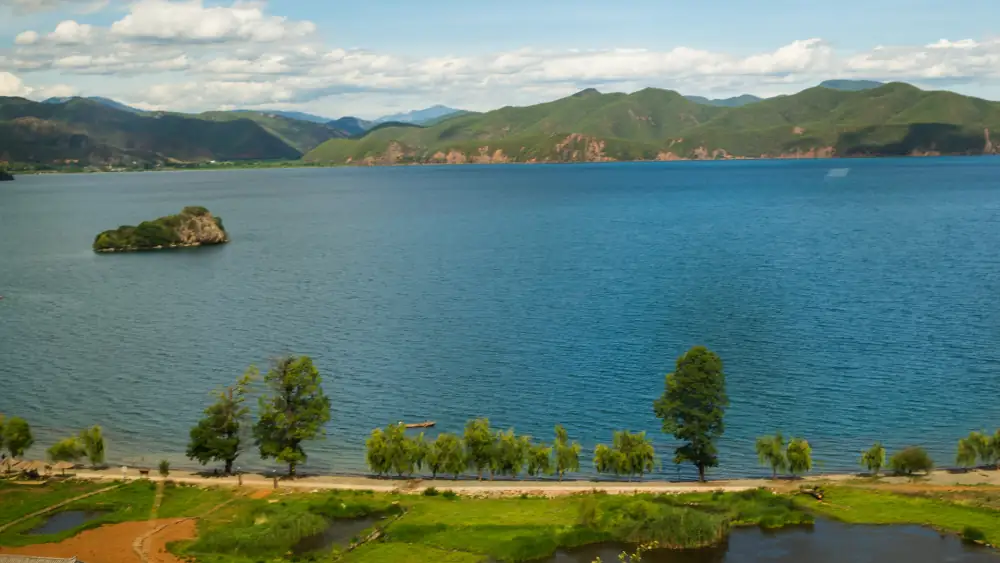
Spring is underrated for Jiuzhaigou. Wildflowers bloom across the valley, snowmelt increases waterfall flow, and visitor numbers are far below autumn levels. The water colour is at its most intense in spring due to snowmelt increasing the mineral content.
Rhododendron bloom: Late April–May, particularly striking on the upper valley slopes.
Getting to Jiuzhaigou
By air: The most practical route. Jiuzhaigou Huanglong Airport (JZH) is 88km from the valley entrance, with flights from Chengdu (45 minutes), Chongqing (1 hour), and some direct flights from other cities. Book early — the airport is at high altitude (3,448m) and weather closures are frequent.
By road from Chengdu: About 300km; takes 5–7 hours by tourist bus or private car on mountain roads. Direct tourist buses operate from Chengdu’s Chadianzi Bus Station (¥110–150 each way, departs morning). Scenic but long.
By road from Songpan: 100km; about 2 hours. Songpan is a Tibetan town worth a stop in itself.
Accommodation
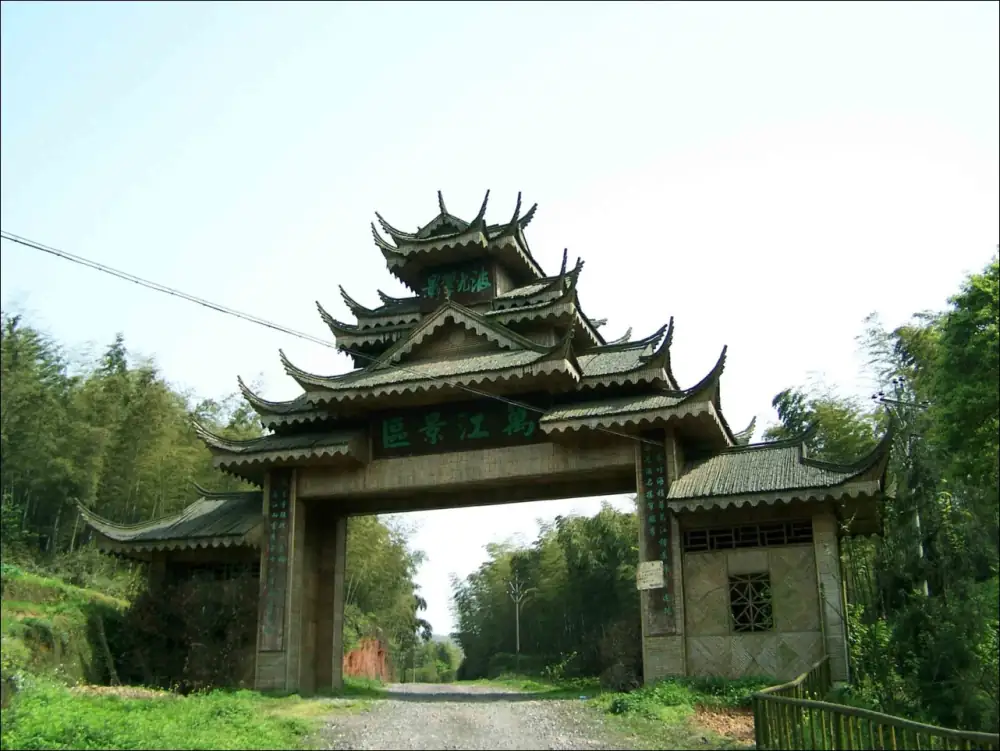
In Jiuzhaigou Valley: A cluster of hotels exists at the park entrance and the nearby Zhangzha town. Range from budget guesthouses (¥200–350/night) to international chains (Sheraton Jiuzhaigou Resort, ¥800–1,500/night).
In Jiuzhaigou County town: More options at lower prices; about 10km from the park entrance.
Tibetan villages outside the park: Authentic guesthouses in Tibetan villages along the Jiuzhaigou valley road offer an alternative base. ¥100–250/night, basic but genuine.
Altitude Considerations
The valley floor is at about 2,000–2,400 metres, with the upper lakes and viewpoints reaching 3,000+. Some visitors experience mild altitude symptoms (headache, fatigue). Acclimatise slowly if arriving direct from sea-level cities.
Combining with Huanglong and Songpan
Huanglong (黄龙): About 100km from Jiuzhaigou, another UNESCO site with similar calcium-carbonate pool formations in a different, alpine setting. Usually combined on a same-trip basis. Altitude here reaches 3,500+ metres.
Songpan: A Tibetan walled town 100km south of Jiuzhaigou with horseback riding tours into the surrounding highlands. A logical overnight stop when driving from Chengdu.
Practical Tips
- Start at the upper end of each valley arm (take the bus to the top, walk down) — the crowds and bus queues are at the bottom, and walking downhill is easier
- Pack rain gear — weather in the valley changes quickly
- No food is permitted in the scenic area (they enforce this strictly)
- Photography tip: bring a polarizing filter — it dramatically improves the colour saturation of the lakes in direct sunlight