
Sichuan packs an extraordinary amount of landscape variety into a single province. The Chengdu basin is urban and sophisticated; an hour south, the Leshan Giant Buddha sits in a river confluence; two hours north, Emeishan is a sacred Buddhist mountain reaching 3,099m; and nine hours north (by road) is Jiuzhaigou, with its vivid alpine lakes that don’t look real. All of this plus the best food in China.
Seven days lets you experience the major attractions without rushing. The logistics are manageable with some advance booking — particularly for Jiuzhaigou, which requires reservation well ahead.
Table of contents
Open Table of contents
Booking Ahead: What You Need
- Jiuzhaigou: Daily visitor numbers are strictly capped. Book at jiuzhai.com at least 2-4 weeks ahead for peak season (Golden Week, July-August, Chinese New Year). This is the most critical advance booking in this itinerary.
- Giant Panda Base: Book online at cdpanda.com — tickets can sell out on popular days.
- Emeishan cable car: Cannot be booked in advance; purchase at the cable car station.
Days 1-2: Chengdu
Already covered in depth in our Chengdu 3-day guide. Summary for this 7-day trip:
Day 1: Giant Panda Base & Jinsha Museum
Giant Panda Breeding Research Base (¥90): Arrive at 8am opening. Pandas are fed 8:00-9:00am — the only time the giant pandas are reliably active. Budget 2.5 hours. Red pandas in the back section of the park are equally fun to watch. Metro: Line 3 to Panda Avenue Station.
Jinsha Museum (金沙遗址博物馆, ¥80): A 3,000-year-old Shu Kingdom archaeological site beneath a modern museum building. The excavation hall where you walk above active archaeological grids is impressive. The Gold Sun and Immortal Birds artifact is the national symbol of Chengdu.
Evening: Chongqing-style Little Swan Hotpot (小天鹅火锅) or Sichuan-style hotpot in the Jinli/Wuhou district (¥80-120/person).
Day 2: Wuhou Shrine & Leshan Day Trip Preview
Morning: Wuhou Shrine (¥50) and Jinli Ancient Street (free) — good for 2-3 hours in the morning.
Afternoon: Walk the Kuan Zhai Alley (宽窄巷子, ¥50 maintenance fee) area and the nearby Baihuatan Wetland Park (free) — an undervisited green space along the Jinjiang River that shows the city at a different pace.
Evening dinner: Dan Dan Noodles (担担面, ¥12-18), mapo tofu (麻婆豆腐, ¥25-40), and kung pao chicken (宫保鸡丁, ¥30-45) at a local Sichuan restaurant — the trifecta of Sichuan dishes.
Day 3: Leshan Giant Buddha & Emeishan Preview
Leshan Giant Buddha
High-speed train from Chengdu East → Leshan (50-60 min, ¥29-45). Boats from the pier near the scenic area (¥70, 30-min cruise) give the best full-body view. The staircase descent to the Buddha’s feet involves queues of 45-90 minutes — still worth it for the scale.
Leshan food: Boba (钵钵鸡, cold spicy skewered chicken and vegetables in Sichuan peppercorn sauce, ¥20-40 per bowl) originated in Leshan. Eat it for lunch.
After Leshan: If time permits, take a bus from Leshan to Emeishan base (30 min, ¥15) and check into a hotel in Baoguo town at the base of the mountain. This positions you for Day 4’s mountain visit.
Day 4: Emeishan
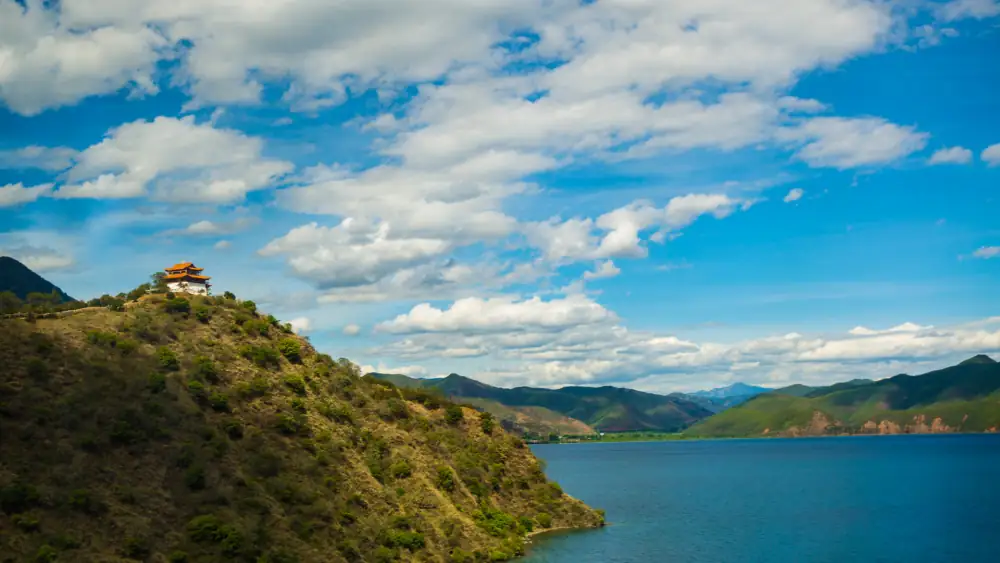
Emeishan (峨眉山, ¥160 scenic area) is one of China’s Four Sacred Buddhist Mountains — a UNESCO World Heritage site with 30 major Buddhist monasteries scattered along mountain trails from 550m to 3,099m.
The Mountain
The summit Golden Summit (金顶) is reached by:
- Cable car from Leidongping to summit (¥65 one-way) after taking a bus or hiking to Leidongping
- Full hiking route: 2-3 days of walking from the base
For a day visit: Bus from Baoguo Town to Leidongping (¥80, takes different routes depending on the season), then cable car to Golden Summit.
At the summit: the Ten Thousand Buddha Summit (万年寺) pavilion has a bronze statue of Samantabhadra Bodhisattva on six white elephants, often wreathed in cloud. The views extend to the Leshan area on clear days. Snow is possible even in spring and autumn.
Warning about Emeishan monkeys: The Tibetan macaques on the mountain are habituated to tourists and can be aggressive about food. Don’t show food, don’t make eye contact with displaying monkeys, and don’t wear dangling accessories they might grab. Monkey attacks are not uncommon — staff rent walking sticks (¥5) specifically because monkeys are deterred by sticks.
Return to Chengdu in the evening, or continue north toward Jiuzhaigou.
Days 5-6: Jiuzhaigou
Journey to Jiuzhaigou (九寨沟):
From Chengdu, the options are:
- Direct tourist bus from Chengdu Xin Nan Men Bus Station (¥100-120, ~8 hours). Overnight sleeper buses also available (¥120-150).
- Fly from Chengdu Shuangliu → Jiuzhaigou Jiuhuang Airport (¥300-600, 45 min) — the most time-efficient option. Note: the airport is at 3,448m altitude and has a challenging approach; flights are frequently delayed or canceled in bad weather.
- Drive — 5-6 hours via Dujiangyan and Songpan on the G213 highway. Gorgeous mountain scenery en route.
Jiuzhaigou Scenic Area (¥190 entrance + ¥90 shuttle bus, both required) — a UNESCO World Heritage Site of 108 lakes connected by waterfalls in three valleys. The lakes’ colors range from turquoise to sapphire to emerald depending on mineral content and depth. They look entirely unnatural.
What to See
The scenic area has three valleys on a Y-shaped road system:
- Rize Valley (日则沟): Mirror Lake, Bamboo Forest, Swan Lake, the famous Five Flower Lake (五彩池) — the most multicolored lake in the park
- Zechawa Valley (则查洼沟): Long Lake (最长的湖), Seasonal Lakes
- Shuzheng Valley (树正沟): Shuzheng Waterfalls, Panda Lake, Bonsai Beach
Day 5 strategy: Rize Valley in the morning (most dramatic colors) → Shuzheng Valley in the afternoon. Day 6 strategy: Zechawa Valley morning (fewer crowds) → revisit favorite sections in the afternoon.
The shuttle buses run frequently throughout the day. Walk sections where you want to linger, bus past sections you’ve seen. Allow yourself to simply sit at the lakeside — the changing light on the water is the whole point.
Altitude: Jiuzhaigou valley floor is at 2,000-2,300m; the upper lakes reach 4,000m. Mild altitude effects are possible. The shuttle buses mean you don’t have to walk the full elevation gain.
Food in Jiuzhaigou: Very limited. Restaurants within the scenic area are overpriced and mediocre. Eat a good breakfast before entering, bring snacks, and save your appetite for dinner in Jiuzhaigou County town (10km from the park entrance).
Accommodation: Hotels within the scenic area are expensive (¥600-2,000/night) but conveniently positioned for early entry. Jiuzhaigou County town hotels are much cheaper (¥200-500) with free shuttle buses to the park.
Day 7: Return to Chengdu & Departure
Return journey. If flying, allow 4-5 hours minimum before your flight due to potential delays at Jiuhuang Airport. If taking the bus, the 8-hour journey arrives in Chengdu in the evening — plan a flight or onward train departure for the following morning.
Last evening in Chengdu: People’s Park teahouse, final hotpot dinner, or wander Jinli one more time.
Practical Information
| Item | Cost |
|---|---|
| Giant Panda Base | ¥90 |
| Leshan Giant Buddha | ¥90 |
| Leshan boat cruise | ¥70 |
| Emeishan scenic area | ¥160 |
| Emeishan cable car | ¥65 one-way |
| Jiuzhaigou entrance | ¥190 |
| Jiuzhaigou shuttle bus | ¥90 |
| Chengdu → Leshan HSR | ¥29-45 |
| Chengdu → Jiuzhaigou bus | ¥100-120 |
| Chengdu → Jiuzhaigou flight | ¥300-600 |
| Jiuzhaigou area hotel | ¥200-500/night |
Key booking timeline:
- Jiuzhaigou tickets: book 2-4 weeks ahead for peak season, 1 week ahead for shoulder season
- Panda Base: book a few days ahead; same-day sometimes available weekdays
- Emeishan: no advance booking needed but arrive early for the cable car
Weather notes: Jiuzhaigou is most dramatic when the lakes are fully thawed (May-November). In winter, the waterfalls and some lakes freeze — a completely different but equally beautiful landscape. The park partially closes in February for maintenance.