
Hailuogou (海螺沟, literally “Conch Gully”) is the name of both a valley and a glacier on the eastern flank of Gongga Mountain (贡嘎山) in the Garzê Tibetan Autonomous Prefecture of western Sichuan. Gongga — at 7,556 meters — is the highest peak outside the Himalayan massif proper, higher than every mountain in the Andes, the Rockies, or the Alps, and it dominates the local landscape with an authority that becomes physically apparent as you approach.
The glacier that descends from Gongga’s eastern flanks is remarkable for one specific reason: it drops so low, so fast, that the glacier terminus reaches approximately 2,850 meters above sea level while the summit ice fields sit above 6,000 meters. The result is that visitors can walk to the edge of an active Himalayan-scale glacier without high-altitude mountaineering skills or equipment — a genuinely unusual experience.
Table of contents
Open Table of contents
Getting to Hailuogou
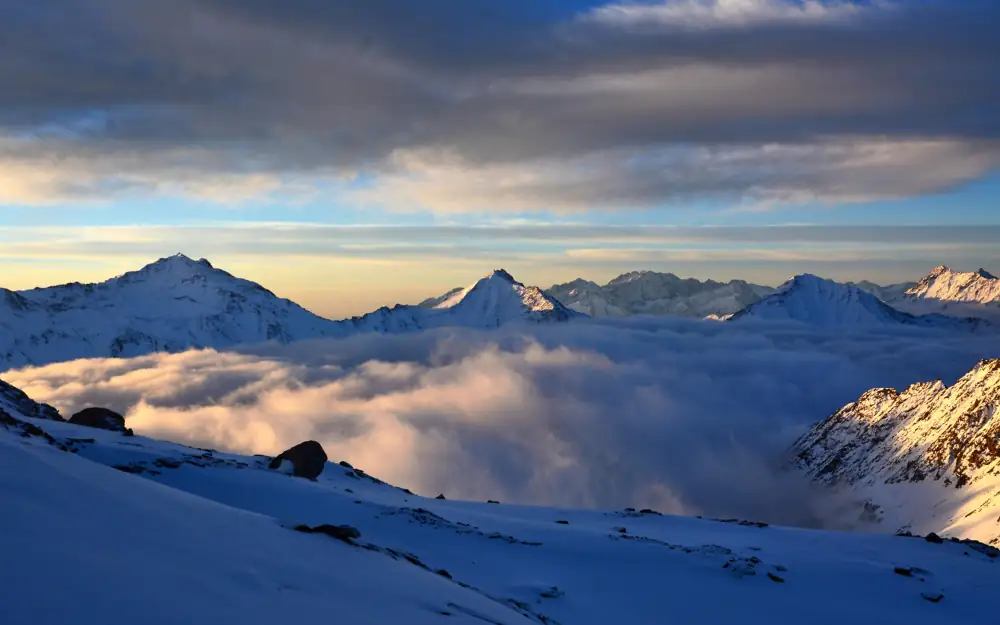
The journey to Hailuogou is part of the experience — the road from Chengdu passes through some of the most dramatic terrain in Sichuan.
From Chengdu:
- Total distance: About 340km
- By bus: Tourist buses from Xinnanmen Bus Station (新南门客运站) in Chengdu depart around 7:00am; journey approximately 7–8 hours; tickets ¥80–120
- By private car or hired driver: 6–7 hours; more flexible but significantly more expensive (¥600–900 for a day’s driving)
- Via Kangding (康定): Many travelers break the journey overnight in Kangding (the “Gateway to Tibet” city with its own attractions); from Kangding to Hailuogou is about 1.5 hours
Key road notes:
- The route crosses the Erlang Mountain Tunnel (二郎山隧道) — one of the longest road tunnels in China; before it opened, the journey over the pass could take hours in bad weather
- From Luding (泸定) the road follows the Dadu River gorge — spectacular scenery and vertiginous drops
Base camp: The main visitor base is Moxi Town (磨西镇), a small Tibetan-Han settlement at the foot of the Hailuogou valley. Most accommodation is here.
The Glacier
Hailuogou’s main glacier (No. 1 Glacier, 一号冰川) is 14.7km long and covers approximately 25 square kilometers of Gongga’s eastern flanks. The glacier tongue extends down to around 2,850m, and from the viewing platforms you can stand within touching distance of 10,000-year-old ice while standing in a temperate forest environment.
The visitor area has three main camps:
Camp 1 (一号营地): At approximately 1,940m — the forest zone; subtropical vegetation; used primarily as a transit point
Camp 2 (二号营地): At approximately 2,660m — the valley opens up; first views of the glacier through cloud forest; accommodation and restaurant available
Camp 3 (三号营地): At approximately 2,940m — the main glacier viewpoint; the primary destination for most visitors; hot springs located here
Access within the scenic area:
- A shuttle bus system connects the camps (included in ticket price)
- Walking between camps is possible on trails alongside the road
Entry fee: ¥110 per person (scenic area entry)
Additional fees: Camp 3 hot springs ¥40–80 per person; chairlift to glacier overlook ¥80 round trip
What the Glacier Actually Looks Like
It’s worth managing expectations: Hailuogou glacier, in the lower accessible section, is not a pristine white expanse. Like all accessible glacier termini, the surface is heavily debris-covered — a grey-brown mantle of rock, silt, and moraine sits atop the ice. The visual drama comes from the crevassed upper sections visible higher on the mountain, and from standing in a rainforest (literally — Hailuogou’s lower slopes have subtropical vegetation) while 50-meter ice cliffs are visible above you.
The glacier ice cliffs (冰崩) are the visual highlight — sections where the glacier calves and drops, exposing blue-white ice walls 30–50 meters high. These are visible from the Camp 3 overlook platforms and from the chairlift.
Ice avalanches: The upper glacier regularly calves large ice blocks that cascade down in thunderous avalanches, visible (and audible) from the viewing platforms. These happen unpredictably, multiple times per day in warmer months. Watching one is spectacular; the sound reaches you several seconds after the visual.
The Hot Springs
The juxtaposition of glacial ice and geothermal hot springs at Hailuogou is one of the most unusual natural combinations in China. Volcanic activity beneath Gongga has created a series of hot springs in the valley, with temperatures ranging from 30°C to over 80°C.
Camp 3 outdoor hot spring pools: The main hot spring facility at Camp 3 has outdoor pools ranging from 38°C to 42°C, with a backdrop of forest and glacier. Sitting in warm water while ice cliffs are visible through the trees is an experience that requires no embellishment.
- Operating hours: 8:00am–10:00pm
- Entry: ¥40–80 per person (included in some hotel packages)
- Bring: Swimsuit and towel (towel rentals available for ¥10)
Natural thermal streams: The valley floor below Camp 3 has several thermal streams where the water is too hot to touch. The colors — orange, yellow, white mineral deposits against the stream bed — are striking in themselves.
Gongga Mountain Views
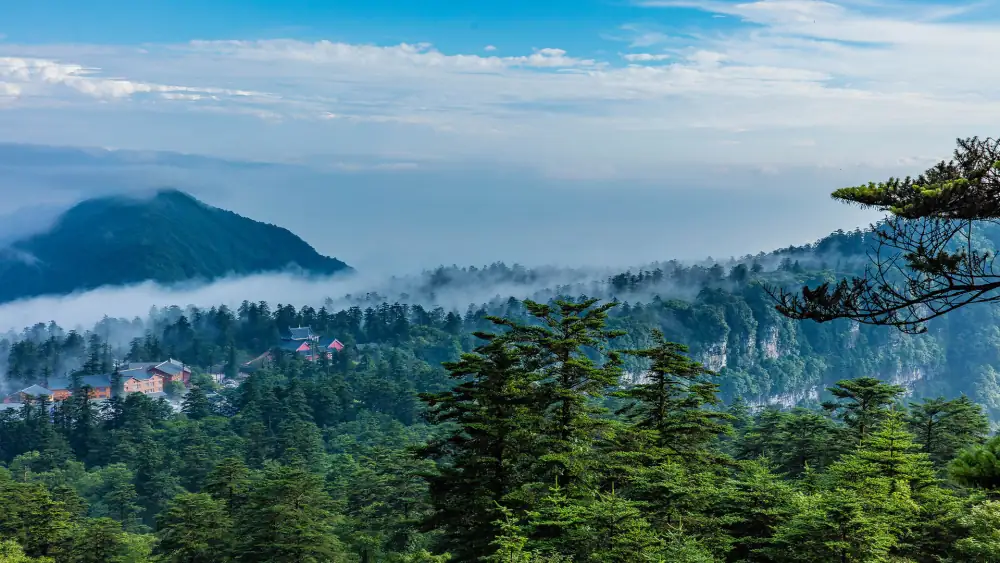
Gongga Mountain (贡嘎山, also called Minya Konka) is only visible in clear weather — cloud and mist obscure it for much of the time, particularly during the summer monsoon season. When it does appear, the view is staggering: a snow-and-ice pyramid dominating the horizon, its summit 4,700 meters above the valley floor.
Best times for summit views:
- Early morning (6–9am) before cloud builds; dawn is the most reliable window
- Late afternoon after rainfall clears; the mountain often emerges briefly before sunset
- October and November have the highest frequency of clear days
The “Sunrise on Gongga” (贡嘎日照金山): When the first light of sunrise strikes Gongga’s glaciated upper flanks, the mountain turns gold then red before settling into bright white. This phenomenon — most reliably seen from high viewpoints above Camp 3 — has made Hailuogou one of China’s premier photography destinations for mountain sunrise shots.
Trekking Around Hailuogou
The main scenic walk (Camp 2 to Camp 3): A 4–5 hour round trip on a maintained path through old-growth forest to the glacier viewpoint area; elevation gain approximately 280m; suitable for reasonably fit visitors.
Gongga Mountain Circuit Trek: A multi-day high-altitude circuit of Gongga Mountain is one of China’s most challenging and rewarding treks, taking 10–14 days and reaching passes above 5,000m. This is a serious mountaineering undertaking requiring full equipment, an experienced guide, and excellent fitness. The Hailuogou valley is the eastern starting point.
Yulongxi Valley (玉龙溪谷): A less-visited side valley south of the main Hailuogou scenic area with pristine forest, waterfalls, and views of the smaller glaciers on Gongga’s flanks. A guide is useful for navigating the unmarked trails.
Accommodation Options
In Moxi Town:
- Budget guesthouses: ¥100–200/night; mostly family-run with basic rooms
- Mid-range hotels: Several comfortable hotels with private bathrooms; ¥250–450/night
- Moxi Town atmosphere: The old town section has preserved Tibetan-style buildings and a small Catholic church (unusual in Sichuan — built by French missionaries in the late 19th century; worth a look)
Inside the scenic area (Camps 2 and 3):
- Camp 2 and 3 both have hotel accommodation ranging from basic (¥300/night) to more comfortable options with mountain views (¥500–800/night)
- Staying at Camp 3 allows early morning glacier access before day-trippers arrive — worth the premium for photography
Moxi Town Attractions
Beyond the glacier itself, Moxi is a pleasant base with its own history:
Moxi Catholic Church (磨西天主教堂): A French-Romanesque style church built in 1918 by French missionaries, still active. It also served as Mao Zedong’s overnight quarters during the Long March in 1935 — a historical note that gives it unusual multi-dimensional significance.
Tibetan village culture: Moxi straddles Han and Tibetan cultural zones; the market area sells traditional Tibetan items alongside ordinary Chinese goods.
When to Visit
Best months: April to June, and September to November
Spring (April-June): Rhododendrons bloom throughout the forest zone; temperatures manageable; some cloud but visibility windows are frequent.
Summer (July-August): The monsoon season brings heavy afternoon rain and reduced visibility. The forest is lush and the hot springs feel more inviting in warm rain. Glacier calving frequency is highest due to melt. Travel in early morning.
Autumn (September-November): The best season overall — clear skies, good Gongga summit visibility, comfortable temperatures. Foliage turns golden and red in late October.
Winter (December-March): Cold (below freezing at night), snow on the access roads, but the glacier and hot springs remain accessible. Very few visitors. Romantic if you have appropriate cold-weather gear.
Practical Tips
Altitude: Moxi Town is at 1,600m — generally fine for acclimatization. Camp 3 at 2,940m may cause mild symptoms; ascend gradually and don’t overexert on the first day.
Weather changes rapidly: Mountain weather at Hailuogou shifts fast. Bring a waterproof layer even on clear days — afternoon showers can arrive suddenly.
Photography notes: The glacier ice cliffs photograph best in flat overcast light (the detail is higher than in direct sun). The hot springs with ice backdrop are best in morning steam. For Gongga sunrise, reach a high viewpoint 30 minutes before first light.
Physical fitness: The standard Camp 3 trail is manageable for most healthy adults. The path is well-maintained and not technical, but the elevation and length require a moderate fitness level.
Bear in mind: The glacier is retreating — visitor information boards document the retreat rate. The experience available today will not be available in the same form in 10–20 years. For anyone interested in glaciers, this is time-sensitive.