
Table of contents
Open Table of contents
- Why Huanglong Is Worth the Effort
- Best Time to Visit Huanglong in 2026
- Understanding the Altitude — Don’t Underestimate It
- How to Get to Huanglong
- Tickets and Entry
- The Valley Walk: What You’ll Actually See
- Photography Tips for Huanglong
- Where to Stay Near Huanglong
- Combining Huanglong with Jiuzhaigou
- Practical Tips for 2026
- Final Thoughts
Why Huanglong Is Worth the Effort
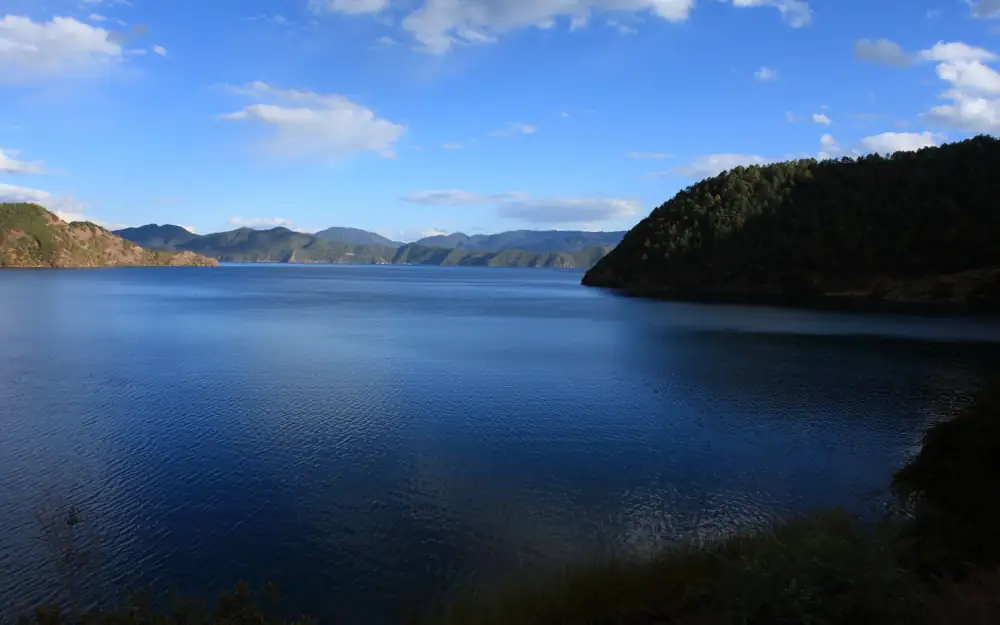
Huanglong was designated a UNESCO World Heritage Site in 1992 alongside nearby Jiuzhaigou. While Jiuzhaigou gets most of the international attention, Huanglong offers something arguably more spectacular per square kilometre: a 3.6km valley filled with roughly 3,400 travertine pools cascading down the hillside like a natural staircase made of calcium carbonate. The colours come from the minerals in the water interacting with algae, sunlight and depth — a combination that produces an almost unreal palette.
The valley is also home to alpine forests, rare orchids, and if you’re very lucky, signs of the giant panda and Sichuan golden snub-nosed monkey that inhabit the surrounding Minshan mountains.
Best Time to Visit Huanglong in 2026
Timing matters enormously here, and not just for aesthetics.
September to November is the consensus pick for most serious visitors. October in particular delivers the full spectacle: golden larch trees blazing across the hillsides, blue autumn skies, and the pools at their most colourful as algae growth peaks in cooler temperatures. Book well ahead — October Golden Week (October 1–7) sees the site genuinely crowded, with queue times of over an hour for the cable car.
May to June is the second window. Rhododendrons and wildflowers bloom at lower elevations, and the snowmelt fills the pools to their edges. Mornings tend to be clearer than afternoons.
Winter (December–February) sees Huanglong partially frozen, with ice formations over the travertine that are otherworldly in their own right. The cable car runs year-round, but the upper sections require crampons and extra caution. Visitor numbers drop dramatically, which is either a selling point or a deterrent depending on your priorities.
July and August is technically possible but frequently cloudy and rainy, with afternoon thunderstorms common. The pools can look washed out in flat light, and trails get slippery.
Understanding the Altitude — Don’t Underestimate It
This is the part most first-timers underestimate. The entrance to Huanglong valley sits at approximately 3,150m, and the Five Colour Lake at the upper end of the valley is at 3,576m. The cable car upper station is at about 3,900m.
For people coming from sea level or low-altitude Chinese cities, this is high enough to cause real altitude sickness symptoms: headache, fatigue, nausea, shortness of breath. The combination of hiking and altitude can turn what looks like a gentle 4km walk into something considerably more demanding.
Practical altitude advice:
- Spend at least one night in Songpan (2,850m) or Chuanzhusi before visiting — acclimatisation makes a significant difference
- Take the cable car up and walk down rather than the reverse, saving energy
- Carry altitude sickness medication (acetazolamide / Diamox) — available at pharmacies in Chengdu and larger towns
- Drink more water than you think you need; 3+ litres on hiking days
- Walk slowly. Seriously. The impulse to power up the boardwalk is strong; resist it
- Oxygen canisters are sold at the entrance and at stalls along the route (¥30–50 each) — they provide brief relief but aren’t a substitute for acclimatisation
If you have a heart or lung condition, consult a doctor before visiting. The site is not suitable for people with severe cardiovascular problems.
How to Get to Huanglong
Huanglong is genuinely remote. Here are your realistic options from Chengdu in 2026:
By Air: Jiuzhaigou Huanglong Airport (JZH) serves both Jiuzhaigou and Huanglong, and is the most convenient arrival point. Flights connect to Chengdu (30 minutes), Beijing, Shanghai, Chongqing and Xian. One-way fares from Chengdu vary between ¥400 and ¥1,500 depending on season — book 4–6 weeks ahead for October visits. From the airport, Huanglong is about 40km (1 hour) and Jiuzhaigou is about 88km (1.5 hours).
Note: The airport sits at 3,448m elevation. Altitude sickness can begin here. Even if you feel fine at the airport, don’t race to the valley the same day.
By Bus from Chengdu: Long-distance buses from Chengdu Xinnanmen Bus Station take approximately 8–9 hours to reach Chuanzhusi (the nearest town to Huanglong) or the Jiuzhaigou valley area. This is only realistic for travellers with plenty of time and iron stomachs — the mountain road involves significant switchbacks. Buses depart at around 7am; arrive at the station early.
By Private Car/Charter: Many travellers hire a driver in Chengdu for a combined Jiuzhaigou-Huanglong itinerary of 4–5 days. Expect to pay ¥1,800–2,500 per day for a private car with driver. This gives you maximum flexibility and someone to help with logistics.
Local Transport to the Gate: From Chuanzhusi town, shared minibuses (¥15–20) run to the Huanglong scenic area entrance. Taxis charge ¥60–100.
Tickets and Entry
2026 Pricing:
- Main entrance ticket: ¥200 per person
- Cable car (one-way up): ¥80 per person
- Cable car (one-way down): ¥80 per person
- Combined cable car round trip: ¥160
Opening hours are generally 8:00am to 5:00pm, with the last entry at 3:30pm. During peak season, arrive before 9am to avoid the worst of the crowds at the cable car.
Discounts apply for students (half price with valid ID), seniors over 65 (free), and children under 1.2m (free). China’s 12306 platform and official Huanglong WeChat ticketing allow advance purchase — strongly recommended for October.
The Valley Walk: What You’ll Actually See
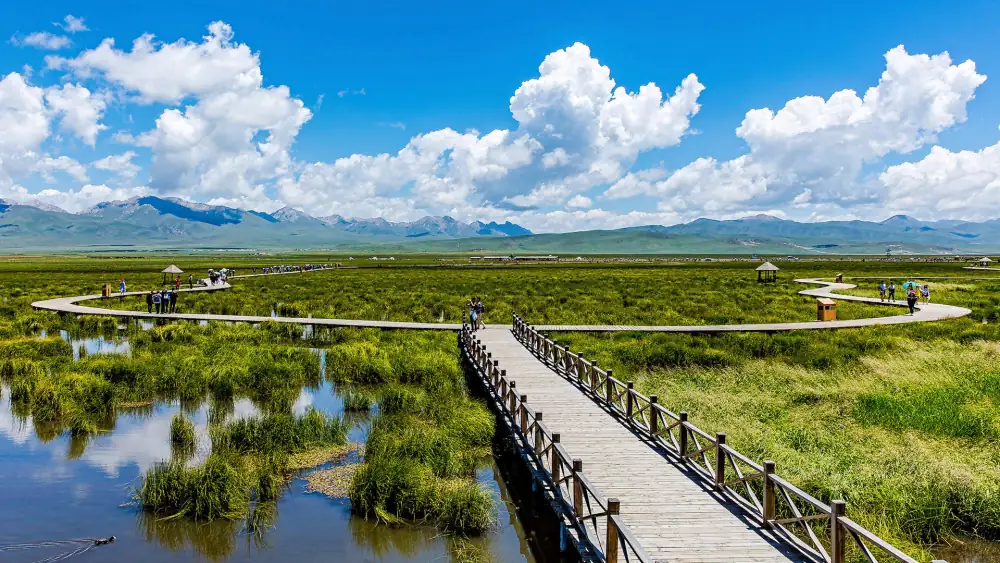
The main route follows a boardwalk along the valley floor for approximately 3.6km one-way, gaining about 400 vertical metres from the entrance to the Five Colour Lake. Most visitors take the cable car to the upper end and walk down, which takes 2–3 hours.
Upper Section (starting near cable car station):
The trail begins at the spectacular Five Colour Lake (Wucaihu) itself — at the right time of day and season, this is genuinely one of the most beautiful natural sights in China. The lake is actually a series of travertine pools of varying depths, producing a mosaic of colour. Give yourself 30–45 minutes here and position yourself on the viewing platforms on both sides.
Treasure Mound Colourful Pool (Zhenbao Caise Chi): A series of terraced pools just below the Five Colour Lake, each slightly different in hue. This stretch is the “yellow dragon” of travertine itself — best seen in the morning light.
Middle Section:
The Mingling Temple (Huanglongsi) sits about two-thirds of the way down. This small Taoist and Buddhist temple complex dates to the Ming dynasty and hosts a local festival every September 15 by the lunar calendar. It’s an incongruous but genuinely atmospheric spot amid the geological spectacle.
Bathing Pool (Yuyu Chi): A large, shallow travertine basin where pilgrims once bathed. The turquoise water here has a different character — more open, less concentrated colour, but beautiful in its own way.
Lower Section:
As you descend further, the pools become smaller and the forest closes in. The entrance zone has several viewpoints of the lower valley before you exit.
Photography Tips for Huanglong
The Five Colour Lake is at its most photogenic between 10am and 2pm when the sun is high enough to illuminate the pool floors and produce the full colour effect. Early morning light (8–9am) is softer and better for the forest sections. Late afternoon can be misty and atmospheric, particularly in autumn.
Bring a polarising filter if you’re shooting with an interchangeable lens camera — it cuts through surface reflection dramatically and transforms pool photography. Smartphone shooters: enable HDR mode and try to avoid the glare from the platforms by adjusting your angle.
The boardwalks mean you can’t get as close as you might like for some shots. A mid-range zoom lens (24–105mm equivalent) covers most scenarios well.
Where to Stay Near Huanglong
There is very limited accommodation within the scenic area itself — a few guesthouses in the car park zone that are basic and expensive for what they are (¥400–800 per night in season). Most visitors overnight in one of the following:
Chuanzhusi: The nearest town, 25km from the entrance. Better food options, more accommodation at ¥150–400 per night, and a useful acclimatisation stopover. Several small hotels cater specifically to Huanglong/Jiuzhaigou visitors.
Songpan Town (45km): A more interesting overnight option — a historic walled town with Tibetan-Hui cultural character, excellent horse trekking agencies, and a growing selection of guesthouses and mid-range hotels (¥150–600). Songpan at 2,850m also makes a better acclimatisation base than arriving directly at the valley.
Jiuzhaigou Valley Hotels: If combining both sites, the cluster of hotels near Jiuzhaigou entrance offers the widest range (¥250–3,000 per night), from budget chain hotels to resort properties. It’s 88km from Huanglong, usually done as a separate day trip.
Combining Huanglong with Jiuzhaigou
These two UNESCO sites are a natural pairing — they share an airport, and many tour companies offer combined packages. The standard itinerary:
- Day 1: Fly to JZH airport, acclimatise in Chuanzhusi or Songpan overnight
- Day 2: Huanglong (full day)
- Day 3 & 4: Jiuzhaigou Valley (2 days to cover the main routes)
- Day 5: Return flight to Chengdu
If you only have 4 days total, drop one Jiuzhaigou day rather than rushing Huanglong. The drive between the two takes 1.5–2 hours.
Practical Tips for 2026
Bring layers: Even in summer, temperatures at altitude drop sharply in the afternoon. A fleece and lightweight waterproof are essential.
Wear proper footwear: The boardwalk is generally well-maintained but can be icy in winter and wet in summer. Trainers are fine; flip-flops are asking for trouble.
Carry snacks and water: Food stalls within the valley are limited and expensive (instant noodles ¥25, drinks ¥15–25). Pack your own lunch.
No swimming: The pools are strictly off-limits for wading or swimming. The ecosystem is fragile, and fines are substantial (¥5,000+).
Environmental rules: Stick to the boardwalk, don’t pick plants, don’t throw anything into the pools. Rangers patrol regularly.
Toilet facilities: Clean facilities at the cable car station, near Mingling Temple, and at the entrance. Plan accordingly on the trail.
Photography drones: Prohibited within the scenic area.
Crowds: The valley boardwalk is narrow in places. Tuesdays and Wednesdays in non-peak months are the quietest days. Saturday and Sunday in October are genuinely packed.
Final Thoughts
Huanglong demands commitment — it’s remote, it’s high, and getting there takes time. But for anyone who has stood at the Five Colour Lake on a clear autumn morning and watched the light shift across those impossible colours, the effort is completely self-evidently worth it. This is one of those rare landscapes that exceeds the photographs. Come prepared, pace yourself, and give yourself a full day rather than rushing through.
The altitude will slow you down regardless of how fit you are. Embrace it — there’s no better excuse to stand still and actually look at what’s in front of you.