
Langzhong (阆中) sits in a bend of the Jialing River (嘉陵江) in northeastern Sichuan, surrounded by low mountains in a configuration that has made it a textbook example of ideal Feng Shui for over two millennia. It’s one of China’s Four Great Ancient Cities (四大古城) alongside Pingyao, Lijiang, and Shexian — and the least visited of the four, which gives it an authenticity that the others have partially lost to tourism.
Two things distinguish Langzhong from other ancient cities in China. The first is its role as the birthplace of the Spring Festival (春节) tradition — the astronomer Luo Xiahong (落下闳), who was born in Langzhong in 156 BC, created the Tai Chu Calendar (太初历) that established the first day of the first lunar month as the beginning of the new year, a date that has been celebrated continuously ever since. The second is its Feng Shui — the city’s layout, oriented to the surrounding mountains and river, is considered the most complete surviving example of classical Chinese geomantic urban planning.
Table of contents
Open Table of contents
Getting to Langzhong
By high-speed train:
- From Chengdu: About 2 hours; ¥90–140; multiple daily departures
- From Xi’an: About 3 hours; ¥150–220
- From Chongqing: About 2 hours; ¥100–150
- Langzhong Railway Station is about 8km from the old town; taxis ¥20–25
By bus:
- From Chengdu: About 4 hours; ¥80–120
- From Nanchong (nearest large city): About 1.5 hours; ¥40–60
By air: The nearest airport is Nanchong Gaoping Airport (about 1.5 hours by road); flights from Beijing, Shanghai, Guangzhou
The Old Town (阆中古城)
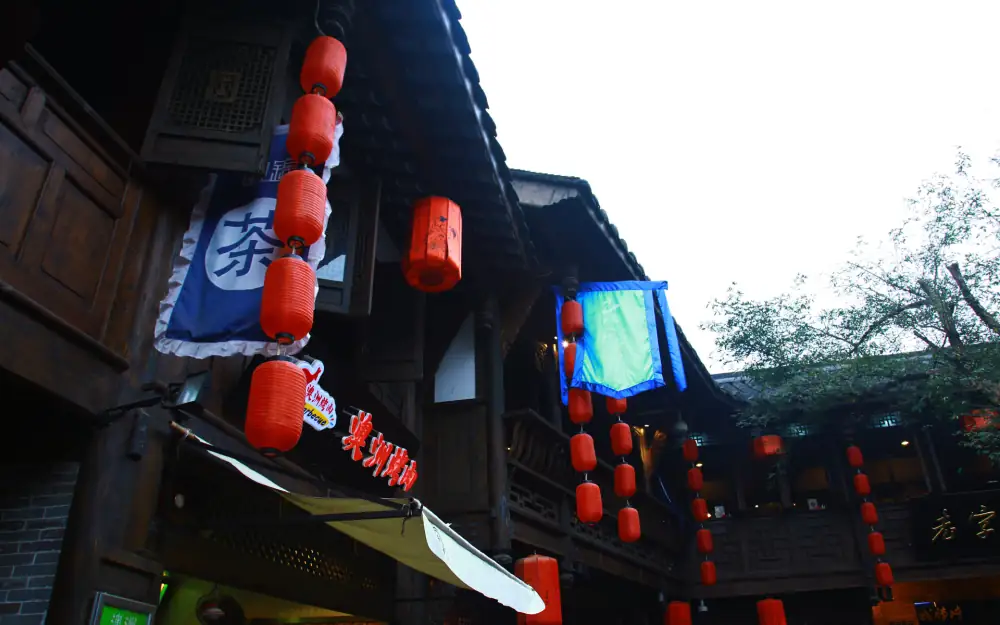
Langzhong’s old town is the real attraction — about 2 square kilometers of Ming and Qing Dynasty courtyard architecture, still largely inhabited and functioning as a real community. The streets follow the grid pattern established over 2,000 years ago, oriented precisely to the surrounding landscape features.
Entry system: The old town itself is freely accessible — you can walk the streets without paying. The entry fee (¥110 for a composite ticket) covers access to the major historical buildings within the old town. If you only want to walk the streets and eat local food, the free option is viable.
Key historical buildings:
Zhang Fei Temple (张飞庙): Dedicated to the Three Kingdoms general Zhang Fei, who was appointed governor of Langzhong and was assassinated here in 221 AD. The temple has been rebuilt multiple times but retains an atmospheric interior with large wooden statues, carved stone tablets, and a deep courtyard. The legend of Zhang Fei — a fierce warrior of enormous physical strength — is one of the most vivid narratives in the Three Kingdoms cycle.
Sichuan Examination Hall (川北道贡院): A remarkably well-preserved Qing Dynasty civil service examination compound where candidates sat the imperial exams in individual cells. The cells are tiny — barely wide enough to sit in — and give a visceral sense of the grueling multi-day exam process that determined the careers of China’s administrative elite.
Hanhou Shrine (汉桓侯祠): Another shrine associated with Zhang Fei, containing artifacts and historical documentation of his governance of Langzhong.
The old town streets: The best way to experience Langzhong is simply to walk. The main streets (Zhandao Street 中天楼街, Wuling Street 武庙街) are lined with wooden shopfronts selling vinegar, beef, silk, and preserved foods. The side lanes are quieter and more residential.
Feng Shui and City Layout
Langzhong’s urban layout is the most complete surviving example of classical Chinese Feng Shui city planning, and the city is studied by architects and geomancers as a reference point.
The ideal configuration: In classical Feng Shui theory, the ideal city site has:
- Mountains behind (north) — “Black Tortoise” position
- Open water in front (south) — “Red Bird” position
- Hills to the left (east, “Azure Dragon”) higher than those to the right (west, “White Tiger”)
Langzhong matches this configuration almost perfectly:
- North: Panlong Mountain (蟠龙山) rises behind the city
- South: The Jialing River curves around the city’s southern and eastern sides
- East: Higher terrain (Dragon position)
- West: Lower terrain (Tiger position)
Feng Shui walking tour: A self-guided walk through the old town following the Feng Shui features is rewarding. Start at the central bell tower (中天楼), which marks the geometric center of the city and the intersection of the main axes. From here, walk to the riverfront for views of the surrounding mountains and the Jialing bend.
The central bell tower (中天楼): The symbolic center of Langzhong, visible from most points in the old town. Climb to the top for a bird’s-eye view of the grid layout and the surrounding landscape. Entry included in composite ticket.
Spring Festival Origin Story
The Spring Festival (春节) — Chinese New Year, celebrated by roughly 1.5 billion people worldwide — traces its formal origin to Langzhong.
Luo Xiahong and the Tai Chu Calendar: Luo Xiahong (落下闳, 156–87 BC) was a Langzhong-born astronomer who was commissioned by Emperor Wu of Han to create a new calendar. The resulting Tai Chu Calendar (太初历, promulgated 104 BC) was revolutionary: it established that the first day of the first lunar month would mark the beginning of the new year — a convention that had not previously existed in Chinese timekeeping. This date became the Spring Festival.
The Spring Festival Culture Museum (春节文化博物馆): A museum in the old town documenting the history of the Spring Festival, the Tai Chu Calendar, and the evolution of Chinese New Year customs over 2,000 years.
- Entry: ¥30 (or included in composite ticket)
- The museum explains the astronomical calculations behind the lunar calendar and the origin of specific Spring Festival customs
Langzhong’s Spring Festival celebration: Langzhong celebrates the Spring Festival with particular intensity, claiming to be the city where the tradition was born. The 15-day celebration includes:
- Lantern displays along the Jialing River waterfront
- Traditional opera performances in the old town squares
- A grand ceremony at Luo Xiahong’s memorial
- Extended temple fairs and food markets
Visiting during the Spring Festival period (late January/February) offers the most intense cultural experience, but also the most crowded.
Food in Langzhong
Langzhong has a distinctive local food culture — different from Chengdu’s more famous Sichuan cuisine:
Langzhong Beef (阆中张飞牛肉): Dry-cured beef with a dark exterior and tender interior, seasoned with Sichuan pepper and other spices. Named after Zhang Fei (whose association with the city is inescapable). Sold throughout the old town; vacuum-packed versions make good gifts. ¥60–120/500g.
Langzhong Vinegar (保宁醋): One of China’s four famous vinegars (保宁醋, along with Zhenjiang, Shanxi, and Yongchun vinegars). Made from wheat bran and medicinal herbs, with a complex sweet-sour flavor. The vinegar is produced locally — the Baoning Vinegar Factory (保宁醋厂) offers tours. ¥15–40/bottle at factory price.
Sour and sweet noodles (白糖蒸馍): Steamed buns with a distinctive sweet-sour flavor from the local vinegar.
Oil tea (油茶): A breakfast staple — a thick porridge of fried flour and crushed peanuts, seasoned with Sichuan pepper and chili oil. Available at street stalls throughout the old town for ¥8–15.
The Jialing River
The river that wraps around Langzhong’s southern and eastern sides adds significantly to the city’s atmosphere:
River cruise: Small boats operate from the waterfront promenade, offering 30–45 minute circuits with views of the old town from the water — the perspective that emphasizes the city’s relationship with its natural setting. ¥50–80 per person.
Evening walk: The waterfront promenade is the best place for an evening stroll — the old town’s lights reflecting in the river, with the mountain silhouette behind. The area around the Huaguang Tower (华光楼) at the river’s edge is particularly atmospheric.
When to Visit Langzhong
Best overall: March to June, September to November
Spring Festival period (January/February): For the most culturally intense experience; book accommodation months in advance
Summer (July–August): Hot (35°C+) but manageable; the old town’s narrow streets provide shade; relatively uncrowded on weekdays
Autumn: Pleasant temperatures, fewer visitors, good light for photography
Practical Tips
Accommodation in the old town:
- Multiple courtyard guesthouses (四合院客栈): ¥150–350/night; authentic atmosphere; some have been sensitively renovated with modern bathrooms
- Booking ahead is essential during the Spring Festival and national holidays
Time required: Two days minimum to see the major buildings and walk the old town at a comfortable pace; add a third day if including the surrounding countryside.
Combine with: Langzhong works well as part of a Sichuan circuit including Chengdu (2 hours by train), Guangyuan (1.5 hours, for Shu Road history), and Deyang (for Sanxingdui archaeological museum).