
Shenzhen is China’s great paradox city. It is only 40 years old — the entire place was rice paddies and fishing villages when Deng Xiaoping designated it China’s first Special Economic Zone in 1980. It has no imperial palaces, no ancient walls, no Buddhist temples of significance, and essentially no history at all in the traditional sense. It is a city built entirely by economic ambition and migrant labour.
That absence of history, which should be a creative handicap, has turned out to be an extraordinary advantage. Shenzhen has no past to be reverent toward. The architecture, the culture, the art, and the design scenes here are entirely forward-looking — and that makes Shenzhen, unexpectedly, one of the most interesting places for contemporary art and design culture in all of China.
Table of contents
Open Table of contents
OCT-LOFT: The Creative Heart of Shenzhen
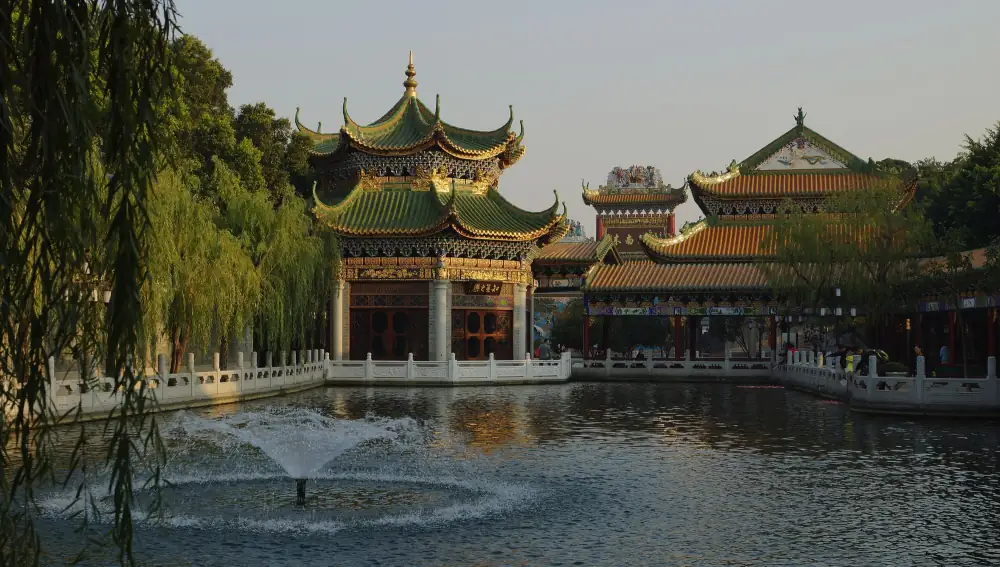
OCT-LOFT (华侨城创意文化园, Huáqiáochéng Chuàngyì Wénhuà Yuán) is a former industrial complex in the Nanshan District that was converted into an arts and creative district in the early 2000s. It remains the most compelling single destination for design, contemporary art, and creative culture in south China.
The complex is divided into North and South areas, connected by a pedestrian street. The buildings — repurposed factories and warehouses — house independent galleries, architecture studios, design firms, craft coffee shops, vinyl record stores, art book shops, and restaurants. Unlike some Chinese “creative districts” that end up being mostly boutique cafés with very little actual art, OCT-LOFT maintains a genuine creative density.
Admission is free. Most galleries are open Tuesday to Sunday, 10am to 6pm. The OCT-LOFT is accessible via Huaqiaocheng Metro Station on Line 1.
A key event to target if possible is the Shenzhen-Hong Kong Bi-City Biennale of Urbanism and Architecture, which runs every two years (next edition 2026-2027) and uses OCT-LOFT and other city sites. It’s considered one of Asia’s most significant architecture and urban design events.
He Xiangning Art Museum
Adjacent to OCT-LOFT, the He Xiangning Art Museum (何香凝美术馆) is one of the more serious public art institutions in south China. Named after the early Republican-era painter and political figure, the museum’s permanent collection spans 20th-century Chinese fine art alongside contemporary works.
The museum rotates exhibitions frequently and has earned a reputation for well-curated shows that engage with broader Asian art discourse. Entry is ¥20, reduced to ¥10 for students. Tuesday to Sunday, 9am to 5pm.
OCAT Shenzhen: Contemporary Art Institution
The OCT Contemporary Art Terminal (OCAT Shenzhen) is a dedicated contemporary art institution within the OCT complex. This is where Shenzhen’s most ambitious exhibition programming happens — large-scale installations, video art, conceptual work, and international touring shows.
OCAT operates across multiple venues in the OCT area and has a rigorous curatorial approach that distinguishes it from the commercial galleries elsewhere. Admission ¥20. The bookshop attached to OCAT is excellent — one of the best art bookshops in south China.
Shenzhen’s Design Identity: The Bi-City and Beyond
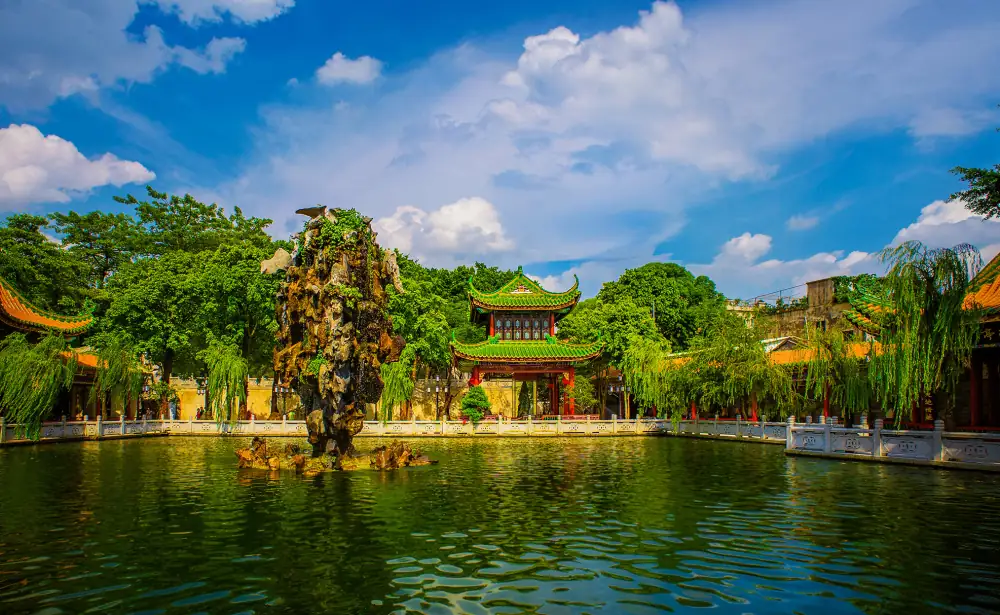
Shenzhen is a UNESCO Creative City of Design (since 2008) — a designation that reflects the genuine centrality of design to the city’s identity. Shenzhen produces a substantial percentage of China’s industrial design output, largely concentrated in electronics manufacturing ecosystems in Longhua, Buji, and Bao’an districts.
The Shenzhen Industrial Design Association (深圳工业设计行业协会) runs design studios and events throughout the year, and the Design Society (设计互联) at Sea World Culture and Arts Center in Shekou has become the city’s premium design venue since its 2017 opening, including a permanent V&A partnership exhibition. Entry varies by exhibition; the building itself (designed by Italian firm Maki and Associates) is striking and worth a visit regardless.
Sea World: Culture, Design & Waterfront
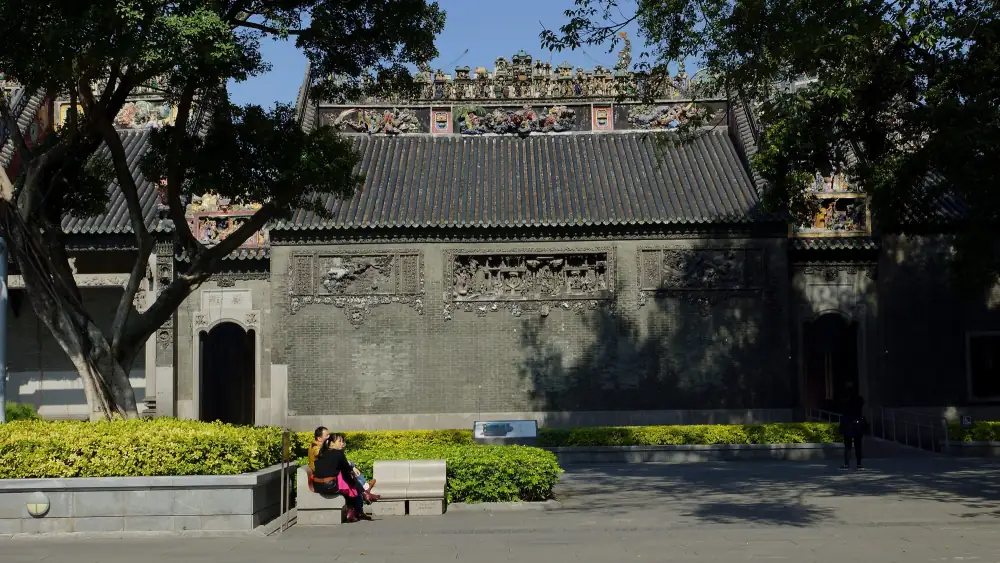
Sea World (海上世界) in Shekou used to be Shenzhen’s expat enclave — a waterfront area with restaurants, bars, and a repurposed ocean liner (the MS Minhua) that served as a floating hotel and entertainment venue. The neighbourhood has been heavily redeveloped over the past decade into a design-forward waterfront district.
The Design Society venue is the anchor, but the surrounding area has independent coffee shops, design boutiques, and restaurants with outdoor seating facing the Pearl River estuary. It’s a short metro ride from OCT-LOFT (Line 2 to Sea World Station) and worth combining into the same day if you have the energy.
Dafen Oil Painting Village
Dafen Oil Painting Village (大芬油画村) in Buji is one of the most unusual cultural destinations in China — a village that has become the global capital of replica oil painting production. Something like 60% of the world’s replica oil paintings (Van Goghs, Monets, Klimts, custom portraits) are produced here by a community of several thousand painters working in small workshops.
This sounds depressing but is actually fascinating and productive as a cultural experience. You can commission a custom portrait for ¥200–¥800 depending on size and complexity, watch painters working with extraordinary technical speed and precision, and think through interesting questions about originality, craft, and global art economics. Some original contemporary work is sold here too.
Dafen is accessible via Metro Line 3 to Baihua Station. The village is free to enter and explore.
Practical Information
Shenzhen’s metro system is excellent — clean, fast, English-signposted, and covers all the main creative districts. OCT-LOFT is on Line 1, Shekou and Sea World on Line 2, Dafen (Baihua Station) on Line 3.
The best day to visit OCT-LOFT is a weekday — weekends bring larger crowds and some galleries get genuinely busy. Most creative spaces are closed on Mondays.
Budget ¥100–¥200 for a full day combining OCT-LOFT, He Xiangning Museum, OCAT, and lunch. Design Society admission runs ¥60–¥120 for major exhibitions.
Shenzhen rewards the visitor who treats it as a contemporary city rather than a tourist destination — there’s nothing ancient to see, but the conversation the city is having with modernity, design, and rapid urbanisation is one of the most interesting in the world. That conversation is most accessible in the OCT-LOFT complex.